


Your child is dressed, helmet fastened, and one boot is already in the stirrup. Then they start tugging at the waistband. The knees feel tight, the fabric bunches inside the boot, or the seat slides every time the pony takes a step. A small clothing problem can quickly become a balance problem, especially for a rider who is still learning to post, steer, and relax in the saddle.
Riding pants for kids are more than miniature fashion pieces. The right pair helps a young rider move freely, stay stable, and concentrate on the lesson instead of on chafing fabric or slipping clothing. The challenge is choosing pants that fit a growing body while working with boots, saddles, base layers, and protective gear.
Table of Contents
- Why the Right Riding Pants Matter for Young Riders
- Comparing Breeches, Tights, and Jodhpurs for Kids
- Understanding Fabric Weights and Durability
- Measuring for Fit and Prioritizing Safety
- English Versus Western Style Differences
- Care Instructions to Extend Garment Life
Why the Right Riding Pants Matter for Young Riders
At the mounting block, a child may look perfectly comfortable. The test begins once they're sitting in the saddle. If loose fabric gathers behind the knee, it can rub during repeated movement. If the waistband digs in or the legs pull tight, the rider may avoid bending the hips and knees naturally.
A young rider who keeps adjusting their clothes may lose focus during a transition or become hesitant when asked to rise in the stirrups. That doesn't mean the child lacks confidence. Often, the equipment is creating a distraction that an adult rider would recognize and correct immediately.
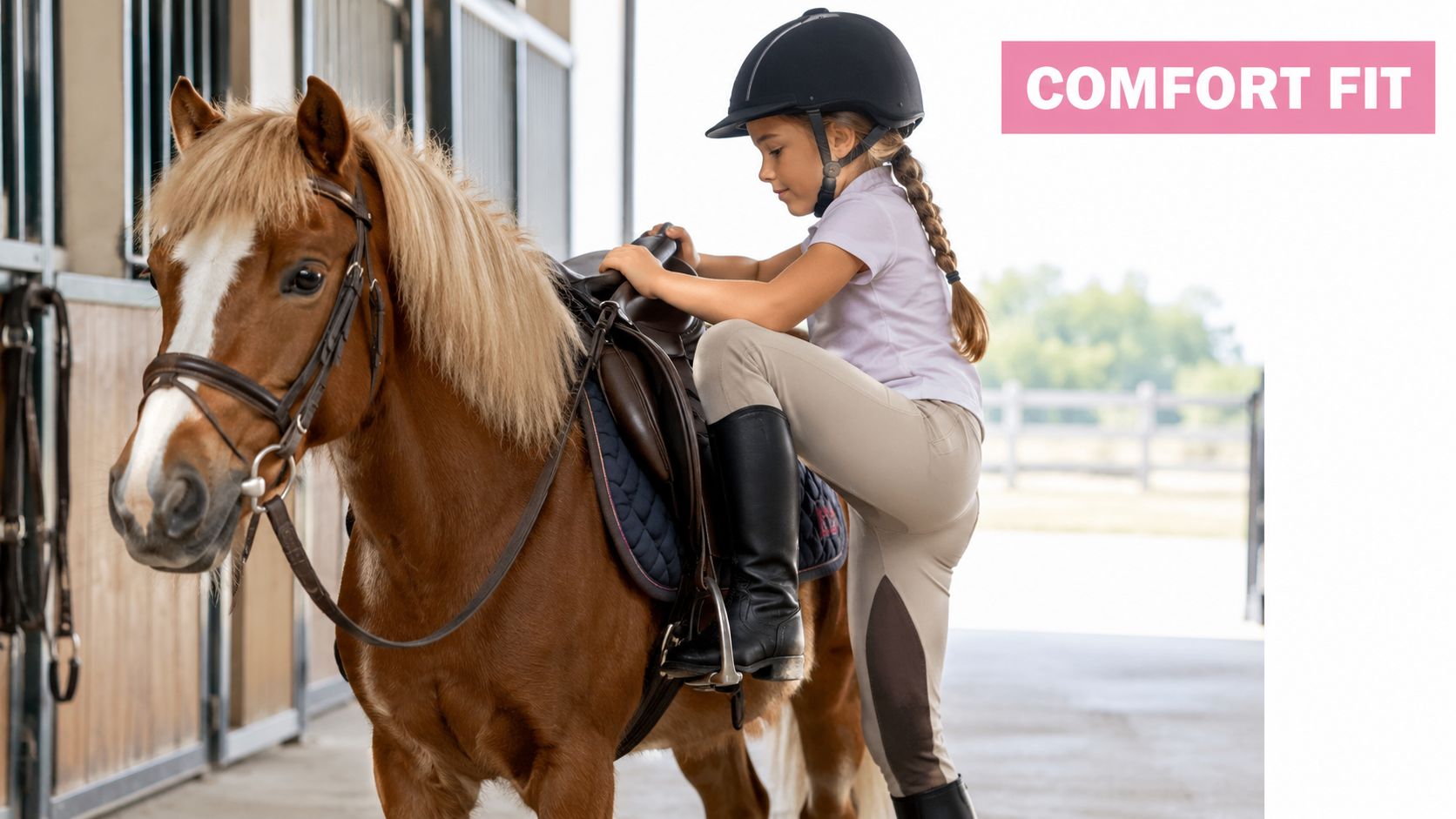
Riding pants are part of the riding system
A useful pair should work with the saddle, the boots, and the rider's position. Close-fitting construction reduces loose material that can snag or rub, while stretch allows the child to flex at the hip, knee, and ankle. Knee patches or a full-seat grip can also help the rider stay more settled without gripping excessively with the legs.
The market reflects how important this category has become. The global equestrian apparel market was valued at USD 6.96 billion in 2025 and is projected to reach USD 11.89 billion by 2035, with a 5.5% CAGR from 2026 to 2035, according to Global Market Insights' equestrian apparel market data. Bottomwear generated USD 1.39 billion in 2025, showing that riding pants are a major apparel category rather than a small add-on.
Barn rule: If a child is constantly pulling, pinching, or rearranging their riding pants, treat that as a fit warning, not a behavior problem.
Parents should also expect children to outgrow pants quickly. Children and youth are projected to generate USD 2.60 billion by 2035, with growth connected to riding-school participation, competition pathways, and parental safety priorities, as reported in the same equestrian apparel market forecast. That makes adjustability and careful measuring especially important. A pair that feels comfortable in the changing room still needs to remain secure when the rider bends, posts, mounts, and wears boots.
Comparing Breeches, Tights, and Jodhpurs for Kids
The names can sound interchangeable, but the construction is different. Breeches usually have a fitted leg that ends above the ankle, often with a zip or close-fitting cuff. Riding tights tend to feel more like athletic leggings, with a pull-on design and generous stretch. Jodhpurs generally extend to the ankle and are traditionally worn with paddock or jodhpur boots.
| Style | Typical construction | Useful for | Main point to check |
|---|---|---|---|
| Breeches | Fitted leg, knee patches or full-seat grip, often a structured waistband | English schooling and competition | Grip placement and ankle closure |
| Tights | Stretch fabric, pull-on ease, lighter casual feel | Lessons, schooling, and riders who dislike fasteners | Opacity, waistband security, and recovery |
| Jodhpurs | Ankle-length cut, often with a full seat and a close hem | Younger beginners using ankle boots | Hem position and boot compatibility |
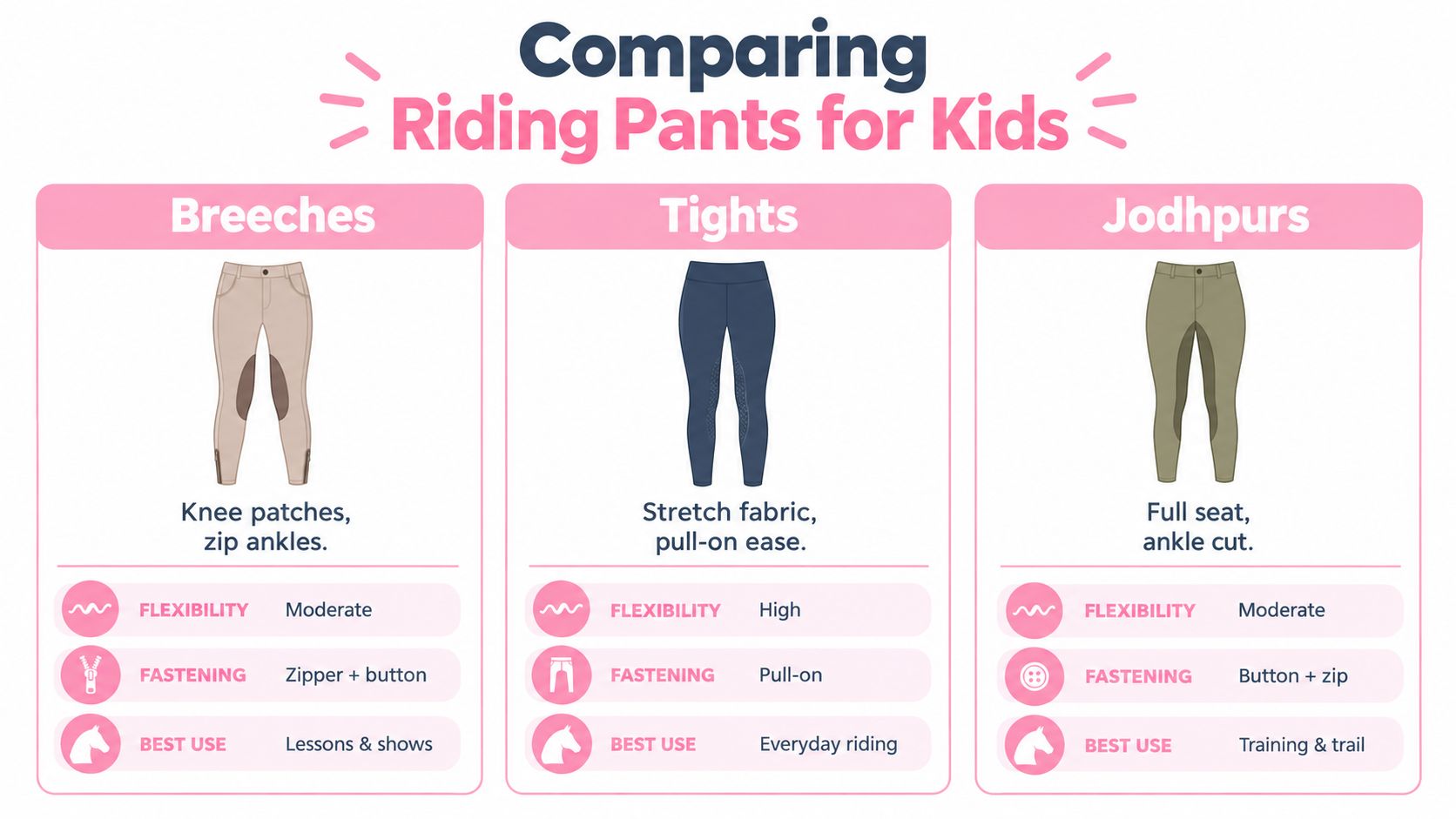
Breeches for structured support
Breeches suit families who want a more traditional English riding garment. They often provide a defined knee patch or full-seat grip, which can help a beginner feel more secure while learning posting and two-point position. The leg should lie smoothly under tall boots or half chaps, with no fold pressing behind the knee.
A parent shopping for this style may also benefit from a practical explanation of full-seat riding breeches, particularly when comparing grip coverage and everyday comfort. Full-seat designs offer contact through more of the seat, while knee-patch designs leave the hip area more flexible.
Tights for easy movement
Tights appeal to children who want a soft, familiar feel. They're often simpler to pull on and can be a good choice for schooling, provided the fabric isn't transparent when the rider bends and the waistband stays in place. A thin pair may work well in warm weather, but it might need a base layer or an outer layer in colder conditions.
Jodhpurs for ankle boots
Jodhpurs are a natural match for young riders who use paddock boots rather than tall boots. The ankle cut can include a strap or close-fitting hem that helps keep the fabric positioned over the boot. If your child spends time on varied outdoor terrain, general guidance about durable riding pants for Nelson trails can offer useful ideas about abrasion, mobility, and practical construction, although trail clothing isn't automatically a substitute for purpose-built riding pants.
This video can help new families recognize common riding clothing and equipment terms before choosing a style.
Understanding Fabric Weights and Durability
A child can look comfortable in the changing room and feel restricted ten minutes into a lesson. Fabric weight helps explain that difference. Measured in grams per square meter, or gsm, it shows how much material covers a given area. It does not define quality by itself, but it helps parents compare a cool, flexible pair with one that offers more warmth and coverage.
Industry guidance commonly places children's riding fabrics around 200 to 280 gsm. Lighter construction near 200 gsm can suit summer riding and improve breathability, while heavier fabric near 280 gsm may provide more warmth and resistance to everyday abrasion during schooling. These figures and related blend guidance appear in the kids' riding wear buying guide.
Match the fabric to the riding season
A lighter pair may work well for an indoor arena, a warm-weather lesson, or a child who overheats easily. It can dry faster and feel less restrictive when the rider bends, posts, or lifts a knee. A heavier pair can feel more comfortable in cold weather because it adds coverage and withstands repeated contact with the saddle.
Warmth and protection still have to be balanced with mobility. Dense fabric may leave a child sweaty and distracted, while a very light pair may wear sooner during regular winter schooling. Consider the arena, weather, lesson length, and the layers worn underneath rather than choosing by the fabric label alone.
Look beyond stretch
Children's riding pants commonly combine polyester or nylon with elastane. Guidance for this category often places elastane content around 3% to 10% by weight, enough to support repeated movement at the hip, knee, and ankle while helping the garment retain its shape, according to the same source.
Stretch works like room to move, but recovery keeps that room from becoming sag. A highly flexible pair is not automatically durable. Look for a balance of stretch, shape recovery, fabric mass, reinforced inner legs, and secure seams. The right balance also matters when safety gear is worn. Pants should flex under a tucked shirt, body protector, or other riding layers without pulling at the knees or shifting at the waist.
Fabric test: Have your child squat, bend one knee, and sit as they would in the saddle. The material should stretch without becoming sheer, pulling sharply across the knees, or forming a thick fold.
Flat seams reduce pressure points during longer lessons. Reinforcement along the inner leg protects an area that receives frequent saddle contact. Read the care label too, since harsh washing or high heat can reduce the performance and shape recovery of technical fabric.
Measuring for Fit and Prioritizing Safety
A child may fit one pair perfectly in September and outgrow it before winter ends. That makes “buy a size up” unreliable. A loose waistband can slide during mounting, while extra length may bunch inside a boot. Measure your child in the layers normally worn beneath the pants, including a winter base layer if lessons continue in cold weather.
Take the measurements that matter
- Measure the waist. Place a soft tape where the waistband will sit. Keep it level and snug without pressing into the stomach.
- Measure the inseam. With the child standing naturally, measure from the crotch to the ankle area. Compare the result with the brand's size chart, not age alone.
- Check the rise. Have the child sit and bend at the hips. The waistband should stay closed at the back without cutting into the front.
- Test the knee area. While seated, check where the knee patch or full-seat grip rests. It should cover the intended contact area without sitting above or behind the knee.
- Inspect the ankle. The hem should lie flat beneath tall boots, half chaps, or around paddock boots. Excess fabric can rub, bunch, or create pressure.
- Perform a movement check. Ask the child to squat, raise each knee, walk, and imitate a posting motion. The pants should remain secure while allowing the hips and knees to move freely.
The right silhouette is snug and smooth, not restrictive. Bunching behind the knee and bulk at the ankle can rub inside riding footwear. Silicone grip is often lighter and easier to maintain than leather or suede-style trims, with less bulk, as explained in guidance on riding breeches and grip construction.
Decide what to do between sizes
If the waist fits but the inseam is short, look for an adjustable waistband or modest extra length that stays smooth inside the boot. If the inseam fits but the waist gaps, a larger size is unsafe unless the waistband can be secured properly. Do not depend on a belt, dangling drawstring, or loose fastener that could catch on tack.
Protective gear changes the fit. Pants that feel comfortable over bare knees may restrict bending when worn over knee pads, affecting how a child moves in the saddle. This guide to kids' equestrian clothing and safety fit explains why protection must leave room for natural movement. For a broader checklist, see this horse-riding gear guide for kids.
Safety check: Try the pants with the exact knee protection, socks, boots, and base layer your child will use. If the knee will not bend naturally or the fabric pulls hard across the guard, choose a roomier cut or another garment.
Fast-growing riders need a fit that works today without creating hazards tomorrow. For regular lessons, prioritise secure fit and comfort. Trail and off-road riding require enough room for protective equipment and varied movement. Competition clothing may have a cleaner silhouette, but it still must allow the rider to maintain a stable position.
English Versus Western Style Differences
English and Western riding pants can look similar on a product page, but they serve different visual traditions and sometimes different movement needs. English breeches and jodhpurs usually create a sleek, close-fitting line designed to sit smoothly under tall boots, half chaps, or paddock boots. Grip placement is often prominent because the rider maintains close contact with the saddle.
Western clothing may offer a more relaxed shape, including balloon-style or roomy pants. The look can suit Western pleasure, ranch riding, trail work, or a child who prefers more space through the leg. A relaxed cut can be comfortable, but excess fabric still needs to stay clear of stirrups and other tack.
Choose for the discipline first
A child attending an English hunter or jumper lesson will usually need a close profile that works with the instructor's expectations and the rider's boots. A Western rider may prefer a garment that accommodates Western boots and reflects the discipline's styling. Clothing rules can vary by show, barn, and organization, so check the specific requirements before buying competition wear.
The most useful question isn't “Which style looks nicer?” Ask, “What does my child do in these pants?” A schooling garment needs to tolerate mounting blocks, arena exercises, and repeated saddle contact. A show garment may need a more traditional appearance. Trail clothing may need room for protective gear and weather layers.
Families comparing the two traditions can use this guide to understand Western and English riding differences before choosing a cut. Style matters, but safety remains the deciding factor. A Western-inspired pair that catches on a stirrup isn't practical, and an overly restrictive English-style pair won't support a relaxed, balanced position.
Try the pants with the child's actual boots. A hem that looks fine over socks may bunch over a tall boot, while a cropped jodhpur can feel awkward with footwear it wasn't designed to cover. The right outfit should look appropriate for the discipline and allow the rider to move without thinking about the clothing.
Care Instructions to Extend Garment Life
Good care protects both the fabric and the fit. Start by checking the garment label, then turn the pants inside out before washing. A cool or gentle cycle helps limit stress on elastane and reduces friction against silicone grip.
Skip fabric softener. It can coat technical fibers and interfere with the grip surface, especially when the garment relies on silicone at the knee or seat. Use a mild detergent, close zippers and fasteners, and wash riding pants with similar soft items rather than rough towels or garments with abrasive hardware.
Dry with less heat
Air-drying is usually the safer choice for stretch riding fabric. High heat can weaken elastane over time and may affect the shape of elastic waistbands or grip details. Hang or lay the pants according to the care label, away from intense direct heat.
Inspect the garment after washing:
- Check the grip: Look for peeling, cracking, or areas that have become smooth.
- Check the seams: Examine the inner legs and seat for loose threads.
- Check the fit: Have your child squat and bend before the next lesson.
- Check the hem: Make sure it still lies flat inside the boot.
Don't keep using pants that have developed a tear, a loose seam, or a grip problem in a high-contact area. Children's gear needs regular reassessment because growth can make a once-safe garment restrictive even when it still looks new.
Bridle Up Hope Shop offers equestrian clothing, children's items, horse-themed gifts, books, toys, and accessories in both English and Western styles. Visit Bridle Up Hope Shop to explore options for young horse lovers and support a store whose annual net profits are donated to the Bridle Up Hope foundation.
Deje un comentario