


You're standing beside the trailer with a garment bag in one hand and a weather forecast open on your phone. The navy coat looks polished enough for the show ring, but the morning feels cold, the afternoon may turn wet, and you still need room for a base layer and protective vest. Choosing an English riding jacket can feel surprisingly high-stakes because the right coat must satisfy several demands at once: tradition, movement, fit, weather protection, and responsible material choices.
A good jacket shouldn't merely look correct when you're standing at the in-gate. It should let you rotate your shoulders, reach forward to the reins, layer safely, and stay comfortable through the long hours that surround a ride. The most useful way to shop is to treat the jacket as riding equipment with a fitted appearance, not as ordinary streetwear.
Table of Contents
- The Evolution of the English Riding Jacket
- Show Jackets, Hunt Coats, and Schooling Styles
- Technical Fabrics and Safety Layering
- Achieving the Perfect Fit for Every Rider
- Sustainable Choices for the Conscious Equestrian
- Care, Maintenance, and Show-Day Prep
- Smart Buying Advice and Charitable Impact
The Evolution of the English Riding Jacket
The coat beside your suitcase has a long practical history. English riding jackets trace back to fox-hunting and hunting attire in England, where riders needed clothing that could withstand outdoor conditions while allowing them to manage a horse at speed. One historical account places the birth of the hunt coat in the late 1600s, with common use developing in the early 1700s. By the late 1790s, the outfit had moved toward a sleeker riding appearance, including a fitted jacket, high-necked shirt, waistcoat, petticoat, and hat, as described in this history of the riding jacket.
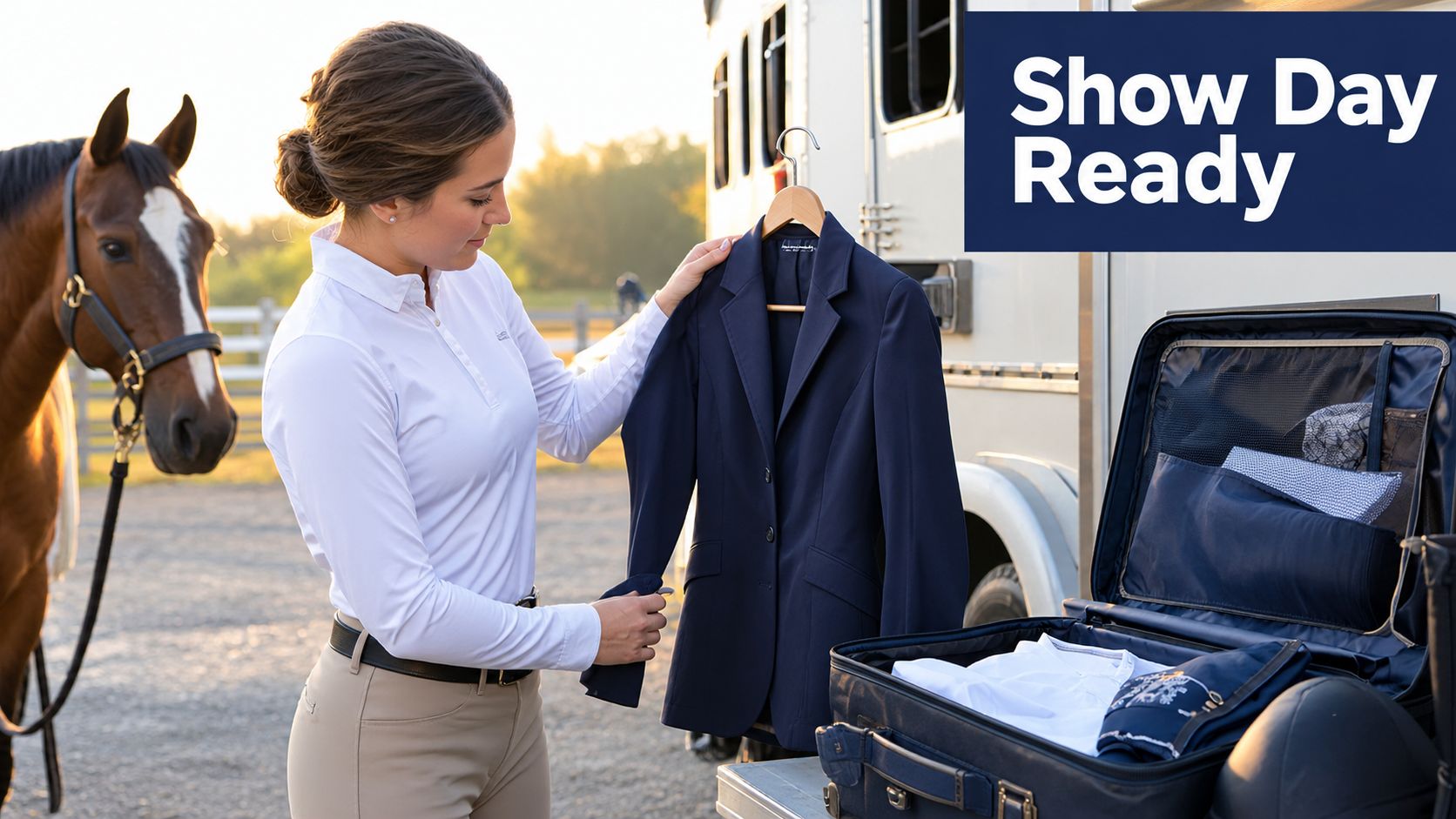
That timeline helps explain why the silhouette still feels formal. The English riding coat became the first official double-breasted jacket, and its structure influenced civilian tailoring. Its recognizable identity came from three connected needs: a shaped fit, construction that supported movement, and a level of formality appropriate to elite equestrian sport. The jacket wasn't invented as a decorative layer added after the riding clothes were solved. Its appearance grew out of the work the garment had to perform.
Function shaped the familiar silhouette
During the nineteenth century, riding clothing became more specialized. Riders had previously adapted ordinary garments for hunting, but vents and revised cuts introduced greater freedom around the back and hips. By the turn of the century, special riding jackets had developed flared skirts and vents, features that helped a coat sit more naturally while mounted.
The Norfolk jacket was especially popular in England and the United States, while early twentieth-century English huntsmen often wore tweed. Some jackets included leather reinforcement at the shoulders. These details show the gradual move from adapted everyday clothing toward purpose-built riding outerwear, where each seam and panel had a job.
Practical perspective: A modern fitted coat looks traditional because the underlying riding problems haven't changed. You still need clear shoulder movement, a stable hem, and protection from changing conditions.
Color and decoration also carried meaning. Red woolen frock coats, often called hunting pinks, identified experienced fox-hunters, while green, dark blue, and brown were common earlier choices. Today's competition jackets may look simpler, but the connection remains. Tailoring communicates discipline and readiness, while technical construction handles the physical demands.
Show Jackets, Hunt Coats, and Schooling Styles
A show jacket, a hunt coat, and a schooling jacket may all resemble a fitted blazer, but they don't serve the same purpose. The best choice depends on discipline, venue, weather, and how much movement your ride demands. A coat that feels perfect for daily training may look too casual at a formal competition, while a lightweight show coat may offer little protection during a long, wet clinic day.
The historical relationship between hunting attire and modern riding clothes is useful when comparing styles. This guide to fox hunt attire provides additional context for the traditional roots behind structured coats, conservative colors, and field-inspired details.
A quick comparison
| Jacket Type | Primary Disciplines | Key Design Features | Formality Level |
|---|---|---|---|
| Formal show jacket | Dressage and hunter competition | Close tailoring, refined collar, clean closure, disciplined silhouette | High |
| Traditional hunt coat | Eventing and jumper settings | Flexible construction, practical vents, field-influenced styling, durable fabric | Moderate to high |
| Tailored schooling jacket | Daily training, clinics, trailering, and barn use | Stretch fabric, breathable panels, easy-care finish, relaxed technical fit | Casual to moderate |
A formal show jacket earns its place when presentation is part of the judging environment. Look for a clean front, a collar that lies flat, sleeves that stay neat when your arms reach forward, and a hem that doesn't flare awkwardly in the saddle. Dark, understated colors often create the most traditional impression, although discipline rules and venue expectations should always guide the final choice.
A hunt coat carries more of the field tradition. It may use hard-wearing cloth, practical vents, or a texture that feels at home outdoors. Eventing and jumping riders often need a garment that accommodates an active upper body and changing weather, so flexibility matters as much as visual polish.
Schooling coats earn their keep
A schooling jacket is the workhorse. It may include a two-way zip, stretch knit inserts, mesh ventilation, or a water-resistant finish. Those features can make it more useful for lessons, travel, and stable chores, but they don't automatically make it suitable for a formal ring. Check the event requirements before treating a schooling coat as a universal substitute.
Small details can help you identify the intended use:
- Vents: A back vent or side vent can improve mobility and prevent the coat from catching as you sit or rise.
- Buttons and closures: Traditional buttons emphasize formality, while concealed zips and snap systems usually signal a training-oriented design.
- Collars: A structured collar creates a sharper show presentation, while a stand collar or soft technical neckline may prioritize weather protection.
- Fabric surface: Smooth, matte cloth tends to read as competition wear. Textured tweed or weatherproof technical fabric leans toward field or schooling use.
If you're selecting a horse-themed gift alongside riding apparel, a resource such as handmade incense candles can suit a home or tack-room atmosphere, but it shouldn't be confused with a riding garment. Keep the jacket decision anchored in the rider's discipline and actual movement needs.
Technical Fabrics and Safety Layering
Modern English riding jackets often use close-fitting, bi-stretch construction rather than a rigid woven cloth. The aim is simple: preserve a fitted outline while allowing the rider to rotate the shoulders, extend the reins, and change position without fabric bunching across the back or lapels.
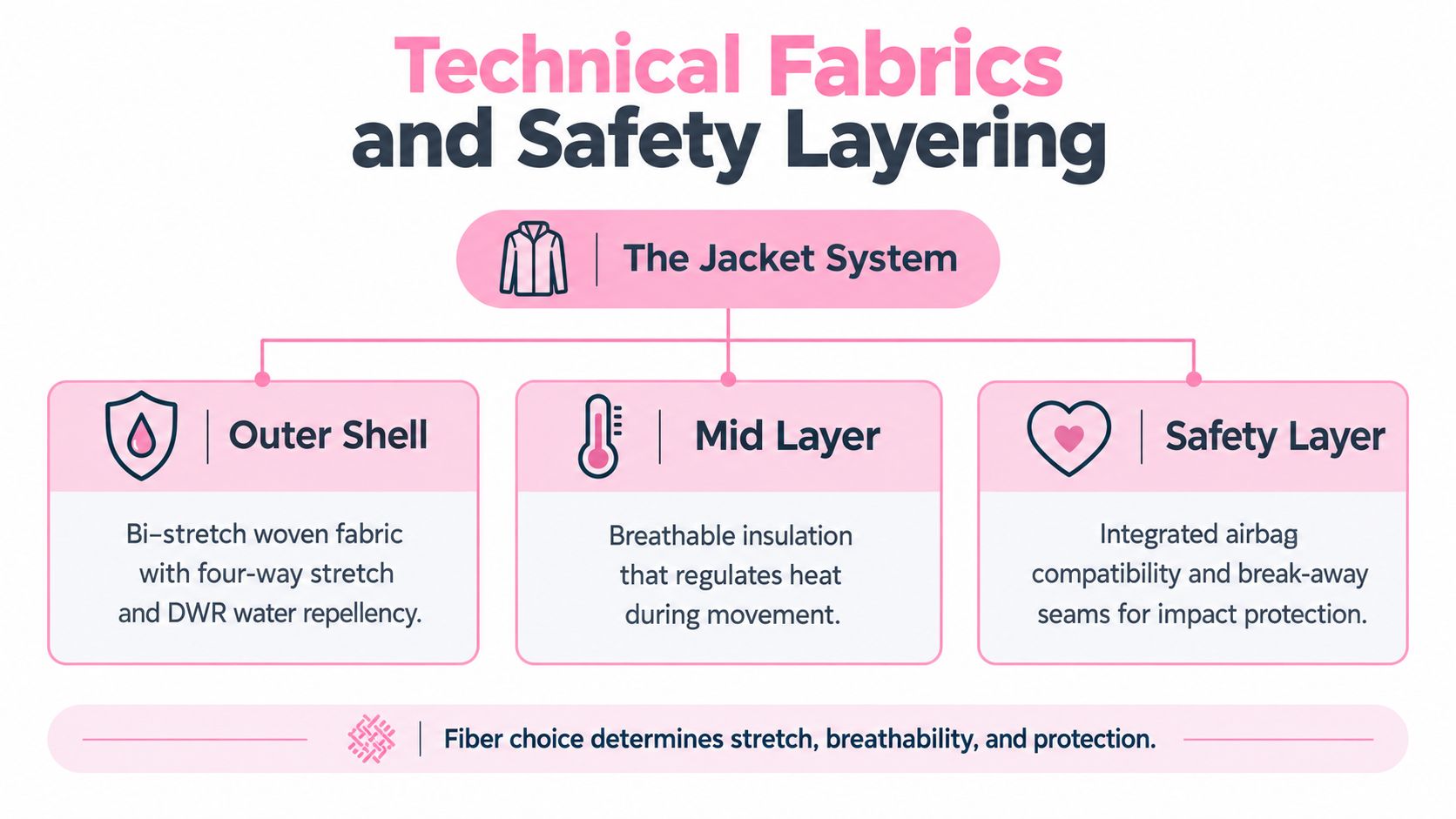
A fabric label can tell you more than the color and care symbols. Equestrian manufacturing guidance recommends examining fiber composition, fabric weight, stretch, recovery, abrasion resistance, pilling resistance, opacity, moisture management, shrinkage, and colorfastness when assessing performance apparel. Common constructions include polyester-elastane, nylon-elastane, and technical mesh, each selected to balance mobility and durability. The equestrian apparel manufacturing guide explains why these specifications matter during product development.
Stretch must come back into shape
Stretch makes a coat comfortable only when it also recovers well. A jacket that stretches at the elbows and then stays loose can lose its polished appearance and may shift as you ride. Strong recovery helps the garment return to its original shape after shoulder rotation, rein extension, or leaning forward over a fence.
Breathability matters for a different reason. A rider can feel comfortable in a jacket that moves well but still overheat if the fabric traps moisture. Look for descriptions that address ventilation or moisture management, especially if the same coat will be worn during active schooling and travel.
Layering rule: Fit the jacket over the exact base layer and protective equipment you'll use. A coat that fits over a thin show shirt may not fit safely over a body protector or air vest.
Treat protection as part of the system
For protective riding outerwear, EN 13158 addresses coverage, sizing, adaptability, adjustability, ergonomics, construction, innocuousness, and impact performance for jackets and body protectors used while riding or handling horses. You can review the standard's stated scope in this EN 13158 reference.
The standard doesn't mean every fashionable show coat is a body protector. It does highlight why fit and adjustability matter when a jacket sits over protective equipment. The outer layer should leave enough space at the shoulders and chest for the safety system, but it shouldn't be so loose that it rides up or shifts during an abrupt movement.
Before buying, check four areas:
- Shoulder movement: Reach forward as though holding the reins, then rotate both arms.
- Front closure: Zip or button the coat over your full safety setup and check for pulling.
- Back coverage: Bend forward and confirm the jacket doesn't expose the lower back.
- Ventilation: Consider mesh or breathable panels if you ride in warm, humid conditions.
A technical fabric can improve comfort, but it can't replace a correctly fitted helmet, body protector, or air vest. The jacket should support the protective system rather than compete with it.
Achieving the Perfect Fit for Every Rider
A riding jacket should feel shaped, not squeezed. The fitting room test is only the beginning because a coat that looks excellent while standing upright can pull across the shoulders once you reach toward the reins or settle into a jumping position.
Start with accurate body measurements taken over the layers you normally wear. A flexible tape and a second person can make the process easier, and this guide to translating measurements into size can help you turn those measurements into a manufacturer's size choice. Don't assume your usual street-jacket size will transfer neatly to equestrian clothing.
Use this fitting sequence
- Check the shoulders first. The shoulder seam should sit close to the shoulder edge without dropping down the arm. Reach forward, make a slow arm circle, and mimic the position you use when shortening the reins. Restriction here usually means the cut is wrong, not that the sleeves need adjusting.
- Close the jacket fully. Take a full breath and twist gently from side to side. The front should lie flat without gaping, pulling at the buttons, or pressing into the chest. If you'll wear an air vest or body protector, wear it now.
- Test the back length. Sit as you would in the saddle, then lean forward. The hem should provide coverage without riding high or flapping behind you. A vent should open naturally rather than pulling sideways.
- Evaluate the sleeves in motion. Your cuffs should remain neat when your arms extend forward. Sleeves that are acceptable at your sides may become too short over a jump or during rein extension.
- Walk, bend, and rotate. Spend enough time moving to identify pressure at the collar, armpits, waist, and upper back. A small irritation in the shop can become a major distraction during a long show day.
The right fit is snug but non-restrictive. You shouldn't size down just to achieve a sharper waist if the shoulders can't move, and you shouldn't size up so far that the coat shifts around your protective equipment.
Fitting children and growing riders
Children and teenagers create a special compromise. Buying a coat with a little room for growth can be sensible, but oversized shoulders and sleeves can interfere with movement and make the garment look untidy. Prioritize shoulder placement and safe layering first, then use adjustable cuffs or a slightly longer body where the design allows it.
A growing rider should repeat the fit test with the clothes and protection used for colder months. If the jacket only works over a thin shirt, it won't serve as a winter show or clinic layer. For a young rider, a clean fit today is more useful than a much larger coat that may fit later but can't be worn confidently now.
Fitting reminder: Let the rider imitate the saddle position before making a decision. The jacket must work where the rider actually rides, not only where the mirror is.
For adults, alterations may solve a sleeve or hem issue, but they can't always correct a narrow shoulder or an unsuitable armhole. If the coat pulls across the upper back, try a different cut before paying for tailoring.
The final check is practical. Fasten the jacket, wear your gloves, reach for imaginary reins, bend forward, and take several deep breaths. If the coat stays in place and your movement remains natural, you've found a better starting point for both polished presentation and comfortable riding. For more English-specific clothing guidance, see riding clothes for women.
Sustainable Choices for the Conscious Equestrian
A serious riding jacket doesn't have to be made from a traditional material to look correct or perform well. Material choice should follow the rider's use case, not an assumption that leather, wool, or a familiar natural fiber is automatically the most responsible or practical option.
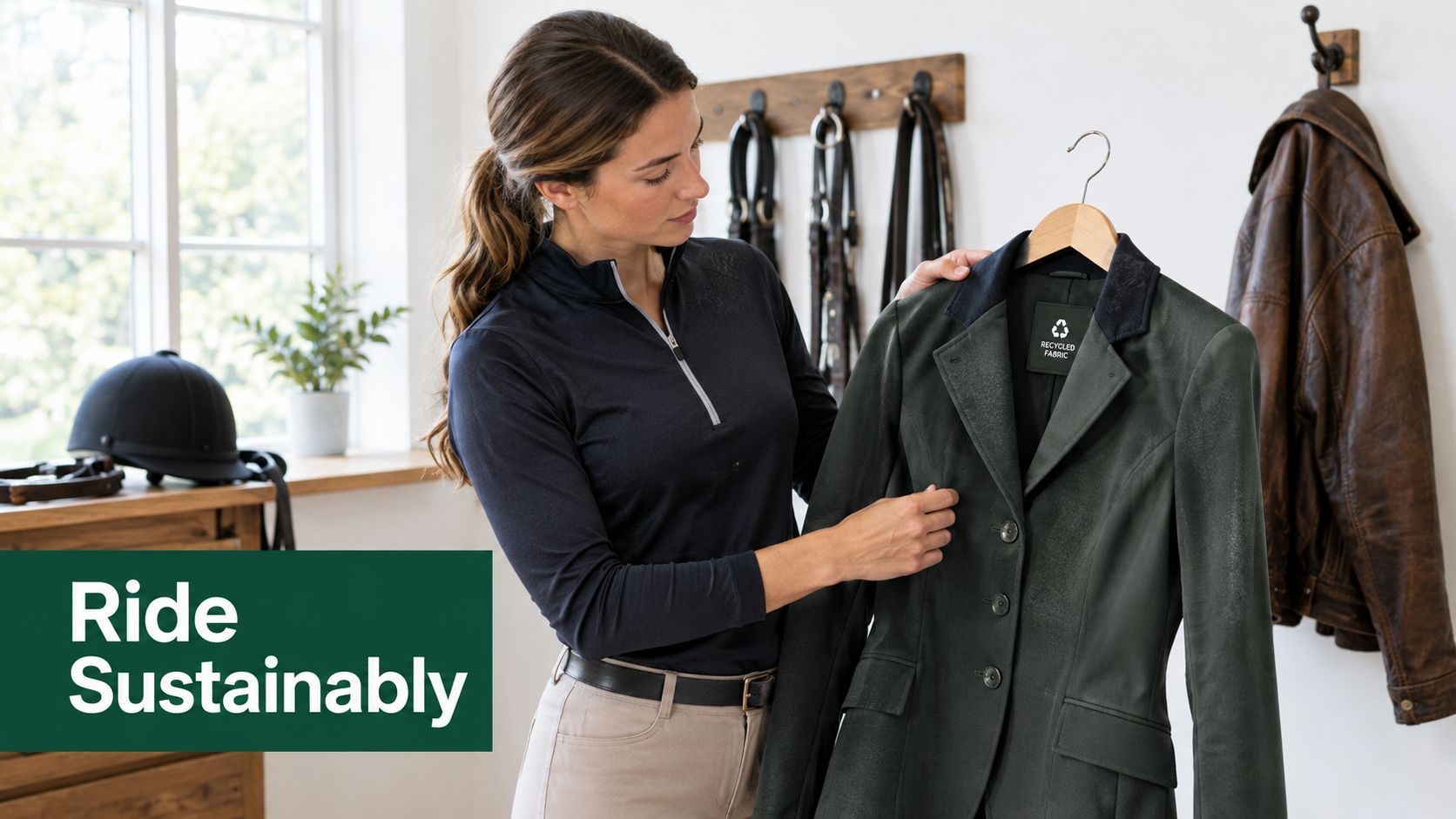
Market coverage points to growing use of recycled polyester, organic cotton blends, biodegradable fabrics, and responsibly sourced leather in equestrian apparel. It also identifies technical benefits such as moisture management, UV blocking, thermoregulation, and lightweight durability, which means sustainability and performance can overlap when the garment is designed thoughtfully. This market overview of horse-riding apparel provides background on those material directions.
Compare the material to the job
A recycled polyester or nylon blend may suit a rider who needs stretch, quick drying, and straightforward care for regular schooling. An organic cotton jacket can feel comfortable and attractive for light training or travel, but it may not provide the same weather resistance or recovery as a technical blend. Responsibly sourced leather can offer a distinctive appearance and durability, yet it may require more specialized care and isn't necessarily the right answer for a hot, wet training environment.
The important question isn't, “Which material is universally best?” Ask instead:
- What weather will the jacket face? Rain-prone areas call for water resistance and quick drying.
- How much movement is required? Jumping and active schooling favor stretch and recovery.
- How formal is the setting? Show-ring polish may favor a smooth, structured surface.
- How will it be washed? A durable jacket that needs complicated care may be worn less often.
- Can it be repaired? Replaceable buttons, strong seams, and repairable construction can extend useful life.
A lower-impact choice still needs to pass the riding test. Check whether the brand identifies recycled or organic inputs clearly, describes responsible sourcing, and gives care instructions that help preserve the fabric. Vague green language shouldn't outweigh evidence about construction, durability, and actual use.
Buy fewer coats with clearer roles
Sustainability also involves avoiding an unsuitable purchase. A rider who buys a formal coat for muddy schooling may damage it quickly, while a rider who takes a fragile casual jacket into bad weather may replace it sooner than expected. Choose a jacket that fits the main job, then maintain it carefully so its materials stay in service.
For a socially conscious equestrian, the best decision may be a versatile technical coat for training and travel, paired with a dedicated show jacket when competition presentation requires it. That isn't a failure of minimalism. It's a realistic response to different performance demands.
Care, Maintenance, and Show-Day Prep
Technical fabric still needs stable-friendly care. Arena dust, horse hair, sunscreen, sweat, and trailer grime can settle into the weave or collect around closures, and aggressive cleaning can damage stretch, finish, or shape.
Build a simple routine
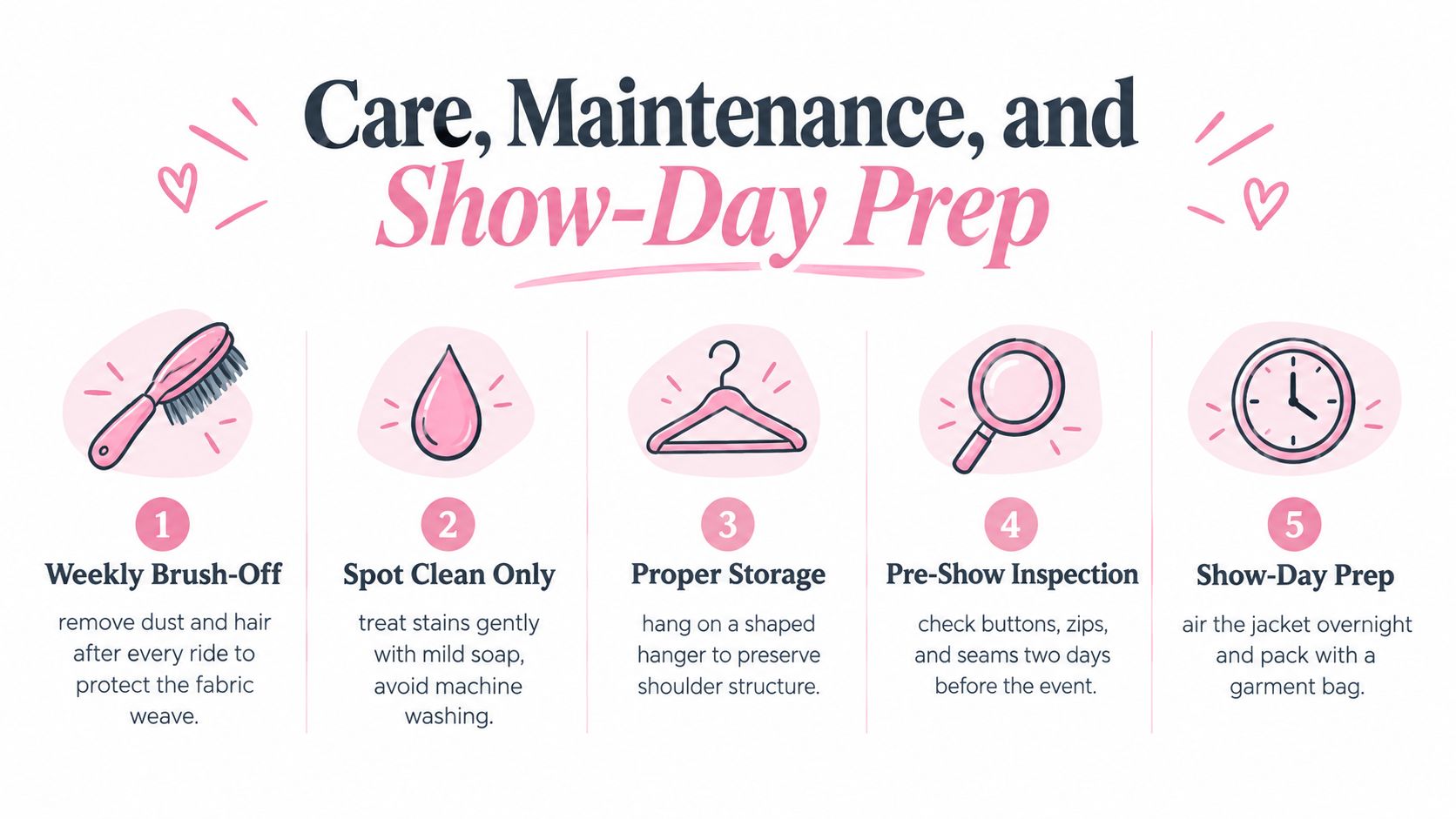
After each ride, let the jacket air before putting it away. Use a soft clothes brush or lint roller to remove loose hair and dust, working gently rather than grinding particles into the fabric. If a stain appears, blot it promptly with a clean damp cloth and mild soap, then follow the care label before using any stronger treatment.
Machine washing isn't automatically safe for every bi-stretch coat. Check the manufacturer's instructions, close zips and fasteners, avoid harsh products, and don't use high heat unless the label specifically permits it. Heat can affect elastane, coatings, trims, and bonded details.
Store the jacket on a shaped hanger with enough room around it. A thin wire hanger can distort the shoulders, while a crowded wardrobe can create deep creases and flatten the collar. Keep the coat in a breathable garment bag if you're transporting it, and make sure it's dry before storage.
Prepare before the show
Inspect the coat before the event rather than discovering a loose button at the in-gate. Check the closure, vents, cuffs, lining, seams, and pockets. Remove chalk, hair, and visible dust, then allow the jacket to air overnight.
A travel steamer can relax light creases, but keep it moving and avoid pressing directly against delicate technical finishes. If you're steaming in a trailer, hang the coat securely and give it time to cool before packing it. Never improvise with a hot iron when the care label warns against direct heat.
Show-day habit: Pack the jacket in a garment bag after it has aired, and keep it separate from damp boots, used saddle pads, and dusty grooming equipment.
Choose a base layer that won't create visible sweat marks or bulk beneath the coat. Test the complete outfit at home, including stock tie or show shirt, gloves, and protective equipment where relevant. A few minutes of preparation can preserve the crisp silhouette that made you choose the jacket in the first place.
Smart Buying Advice and Charitable Impact
The right English riding jacket is the one that matches your discipline, climate, layering system, care habits, and values. Start with the job, then evaluate the fabric and styling. If you begin with color alone, you may end up with a beautiful coat that fails in the weather or restricts you in the saddle.
Use this decision matrix as a final filter:
| Your priority | Look for | Be cautious about |
|---|---|---|
| Formal competition | Structured collar, smooth surface, clean closure, stable hem | Excessive bulk, casual zips, loose shoulders |
| Active jumping or eventing | Bi-stretch fabric, recovery, articulated cut, secure vents | Rigid cloth that pulls across the back |
| Cold conditions | Room for a base layer, breathable insulation, longer coverage | A slim cut that only works over a show shirt |
| Wet or changeable weather | Water-resistant finish, quick-drying fabric, protected closures | Materials that absorb moisture and stay heavy |
| Sustainable purchasing | Recycled or organic inputs, responsible sourcing, repairable construction | Unclear environmental claims |
| Frequent schooling | Easy-care fabric, abrasion resistance, secure pockets | Delicate trims that need constant maintenance |
Read the care label before you buy. A jacket that can be cleaned safely at home may be more practical for regular riding than one that requires specialized treatment after every serious stain. Also inspect the seams, lining, buttons, zipper, and stretch panels. These details tell you how the coat may handle repeated movement and transport.
Let the purchase carry meaning
Your shopping decision can extend beyond the garment itself. Charitable equestrian retailers may combine apparel and horse-themed goods with a stated social mission, allowing shoppers to support work in the wider riding community while choosing clothing or gifts. The equestrian apparel brands guide can help you compare styles and identify options that fit an English-riding wardrobe.
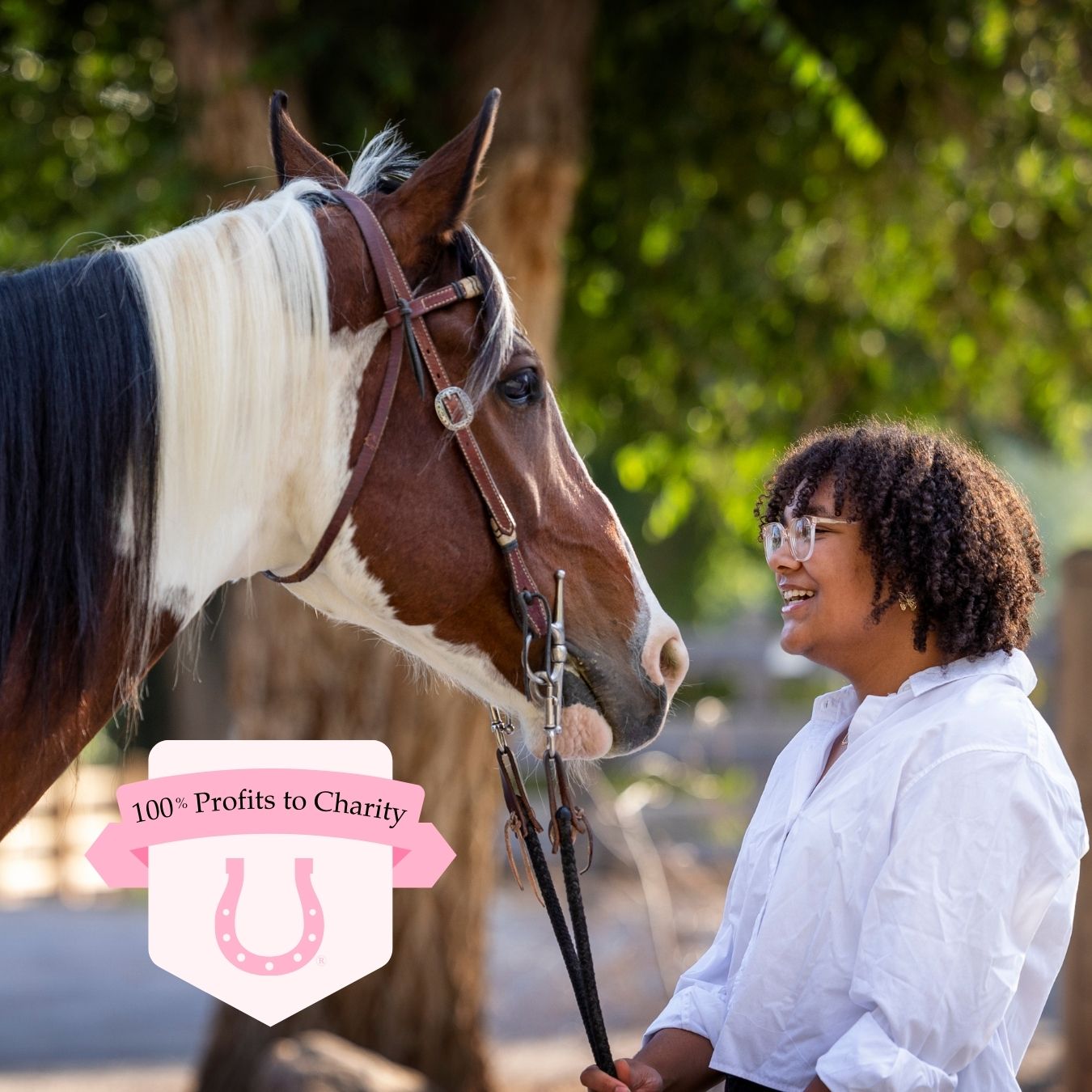
The Bridle Up Hope Shop is an online store offering equestrian apparel and horse-themed goods for women, children, babies, and the home, with both English and Western styles represented. Its charitable model donates 100% of annual net profits to the Bridle Up Hope foundation, which supports girls and women through horses and habits. That kind of model gives socially conscious shoppers another factor to consider alongside fit, fabric, and function.
Before placing an order, write down the conditions your jacket must handle. Decide whether you need a formal show layer, an all-weather schooling coat, or a versatile piece for travel and clinics. Then confirm the size chart, safety-layer compatibility, fabric composition, care instructions, and return terms. A deliberate choice will serve you better than a coat selected only because it looks polished on the hanger.
The Bridle Up Hope Shop offers English and Western equestrian apparel alongside horse-themed gifts, accessories, books, and home goods for riders and families. Visit Bridle Up Hope Shop to explore options that complement your riding wardrobe while supporting a charitable foundation through its profit-donation model.
Deje un comentario