


You're standing in front of the tack-room mirror, and your new riding pants look just right. Then you sit as if you're in the saddle: the waistband folds forward, the fabric pulls behind your knees, or the seat goes slack when you shift your weight. The size on the label hasn't changed, but your body's position has.
That's why English riding pants need a different test from everyday trousers. They're working clothes for a rider's bent hips and knees, and a pair that feels snug while you're standing can still restrict you once you mount. The right choice depends on more than the waist and inseam: you'll want to consider garment style, boot pairing, grip, stretch, and how the fabric holds up after wear and washing.
Table of Contents
- Why English Riding Pants Feel Different
- How Riding Pants Changed with Stretch Fabric
- Breeches, Jodhpurs, and Riding Tights
- What the Saddle Asks of Your Pants
- Fitting English Riding Pants by Body Position
- Fabrics, Grip, and Care That Last
- Choosing English Riding Pants for Real Days
Why English Riding Pants Feel Different
A rider in the tack room may look settled in front of the mirror, only to discover a problem as soon as they bring their knees up. The waistband rolls when they fold forward. A seam presses into the inner leg. Or the fabric that looked smooth over the seat bunches when they sit in a riding position.
Those aren't just wardrobe annoyances. They're signs that the pants may not be shaped for the way you ride. In the saddle, your hips and knees stay flexed, and your legs adjust as you follow the horse's movement. Standing still doesn't recreate those angles, so a label size or a quick mirror check can miss the details that matter.
The useful question isn't “Do these feel tight?” It's “Can I move comfortably in the position I'll ride in?” A close fit can keep fabric from bunching, but tightness alone doesn't make pants perform well. If the hips feel locked or the inner knee is under tension, a smaller size may make the problem worse rather than solve it.
A practical rule: Judge the pants in a riding position, not just in front of the mirror.
As you compare options, you'll come across breeches, jodhpurs, and riding tights. Their lengths and finishes differ, and the boots you plan to wear can help narrow the choice. Grip and four-way stretch are other common features, but they don't automatically make every pair a good fit. Where those details sit, and how they behave when you bend, matters.
You'll also want to think about what happens after the first ride. Sweat, washing, and repeated use can reveal whether the stretch recovers, whether a grip print stays intact, and whether a brand's material and care information is specific enough to help you look after the garment. By the end, you should be able to spot the difference between a pair that moves with you and one that's merely tight.
How Riding Pants Changed with Stretch Fabric
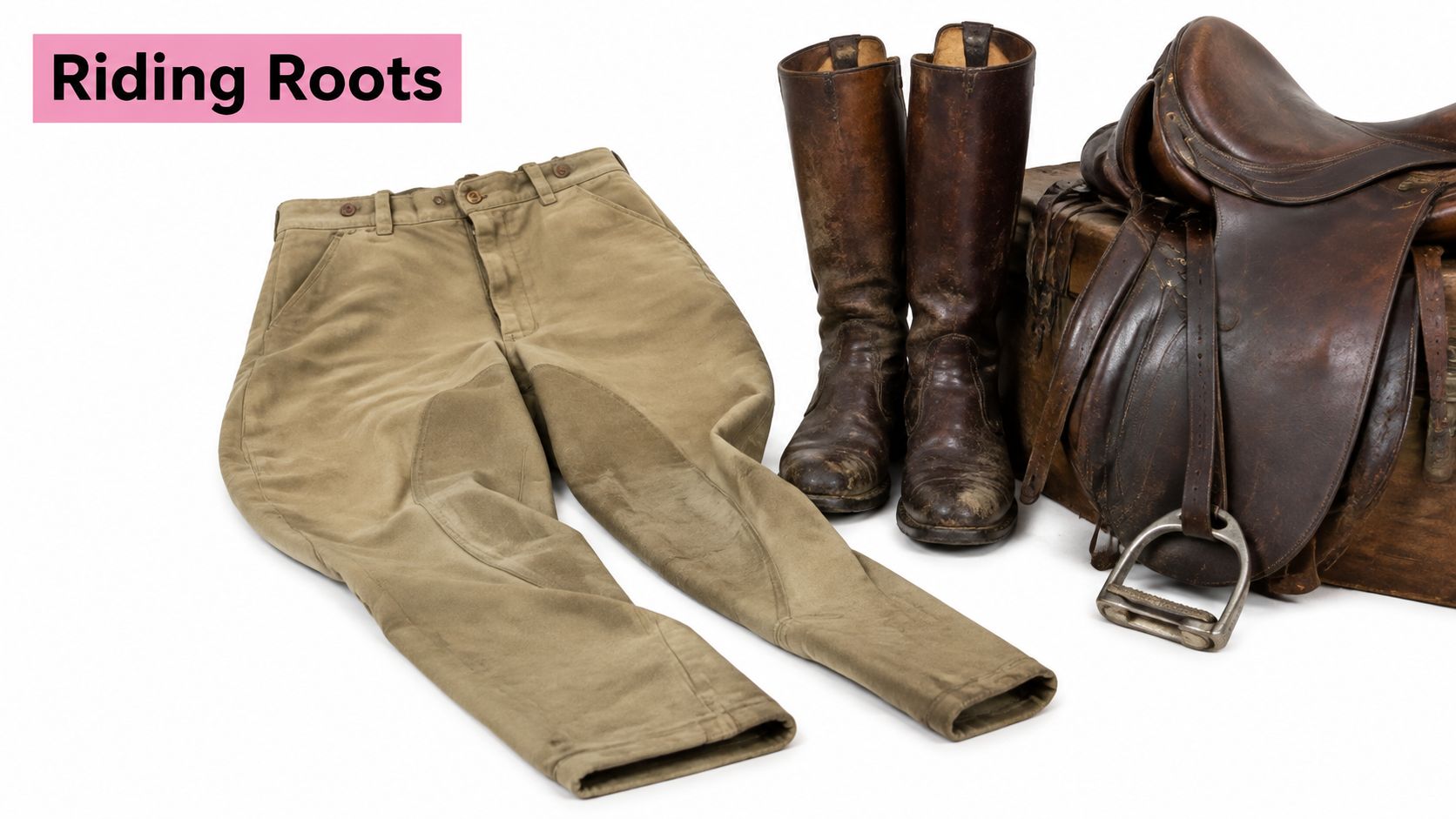
The shape of English riding pants makes more sense when you know what riders wore before stretch fabrics became widely available. Earlier breeches were commonly made from thick cavalry twill, a sturdy fabric that didn't flex like modern performance cloth. Riders wore fuller legs, sometimes called balloon legs, with extra fabric through the thigh to accommodate bent knees and a seated position.
That volume wasn't just a fashion flourish. It gave the rider room to bend and sit in the saddle, at a time when the cloth itself offered little stretch. In the twentieth century, textile technology opened up other ways to build in freedom of movement.
By the 1960s, the wider availability of multi-stretch fibers, including nylon and spandex, enabled a major shift toward thinner, closer-fitting breeches and jodhpurs. Instead of relying on extra material through the leg, designers could make a more contoured garment that stretched as the rider moved. Modern English riding pants carry both ideas forward: a shaped fit for riding, with stretch to reduce the need for the excess fabric used in older designs. The evolution of breeches is summarized in this history of breeches and their construction.
One visible difference between common styles is length. Jodhpurs reach the ankle and generally finish with a cuff or elastic strap intended to work with low riding boots. Their name reflects trousers associated with Jodhpur in Rajasthan, India, which were full through the thigh and tight below the knee before becoming popular for horseback riding among men and women.
This short video provides another look at the riding-clothing context:
Stretch fabrics changed how riding pants could be cut, but they didn't erase the sport's older visual traditions. Formal English competition dress still preserves a familiar ensemble of light-colored breeches, boots, jacket, shirt and tie or stock, hat, and gloves. That combination reflects the sport's military and hunting origins. Modern riding pants are therefore more than fashion leggings with a new label: they're performance clothing shaped by textile changes and a continuing dress code.
Breeches, Jodhpurs, and Riding Tights
If you're choosing a pair, start with the silhouette and the boots you intend to wear. That narrows the field before you get into fit details. Breeches, jodhpurs, and riding tights all come in riding-oriented designs, but they don't have the same length or finish.
| Style | Length and Finish | Usually Paired With | Best First Use |
|---|---|---|---|
| Breeches | End above the ankle, with a close fit for riding | Tall riding boots | Schooling or formal English riding |
| Jodhpurs | Reach the ankle and generally have a cuff or elastic strap | Low riding boots | Riding when you want a pant that extends to the ankle |
| Riding tights | Close-fitting, flexible style, often with a simpler trouser-like finish | Riding boots suited to the individual design | Everyday lessons and schooling |
Grip is a separate choice from garment type. A knee patch places grip at the knee area, while a full seat extends it across more of the seat and inner leg. Some riding pants have little or no grip. More coverage isn't automatically more control; what matters is whether the grip lands where you want it and feels workable against the saddle.
For formal English competition, light-colored breeches remain part of the traditional look. For lessons and ordinary schooling, a riding tight may be the more comfortable option for a rider who wants a close, flexible feel. Neither preference cancels out the need to check how the pants fit when you bend and sit.
It's also useful to separate riding apparel from horse-inspired everyday clothing. Bridle Up Hope Shop carries English and Western equestrian styles for riders and gift shoppers, but fashion pants such as satin lace balloon pants or washed wide-leg jeans aren't competition breeches. For example, Equestrian Belle Époque Lace Balloon Pants have a stretch-satin fabric, lace paneling, flowing balloon-style legs, and horse-inspired details. They're a statement fashion piece, not a technical riding pant.
Pick the style and boot pairing first. Then try the pants in the position you'll ride in, rather than assuming that a familiar name or look guarantees a useful fit.
What the Saddle Asks of Your Pants
A saddle doesn't ask your body to hold one simple shape. Once you're mounted, your pelvis and legs respond to gravity, movement, turns, and small shifts in balance. The clothing between your body and the saddle needs to move without bunching or adding pressure where your leg meets the horse.
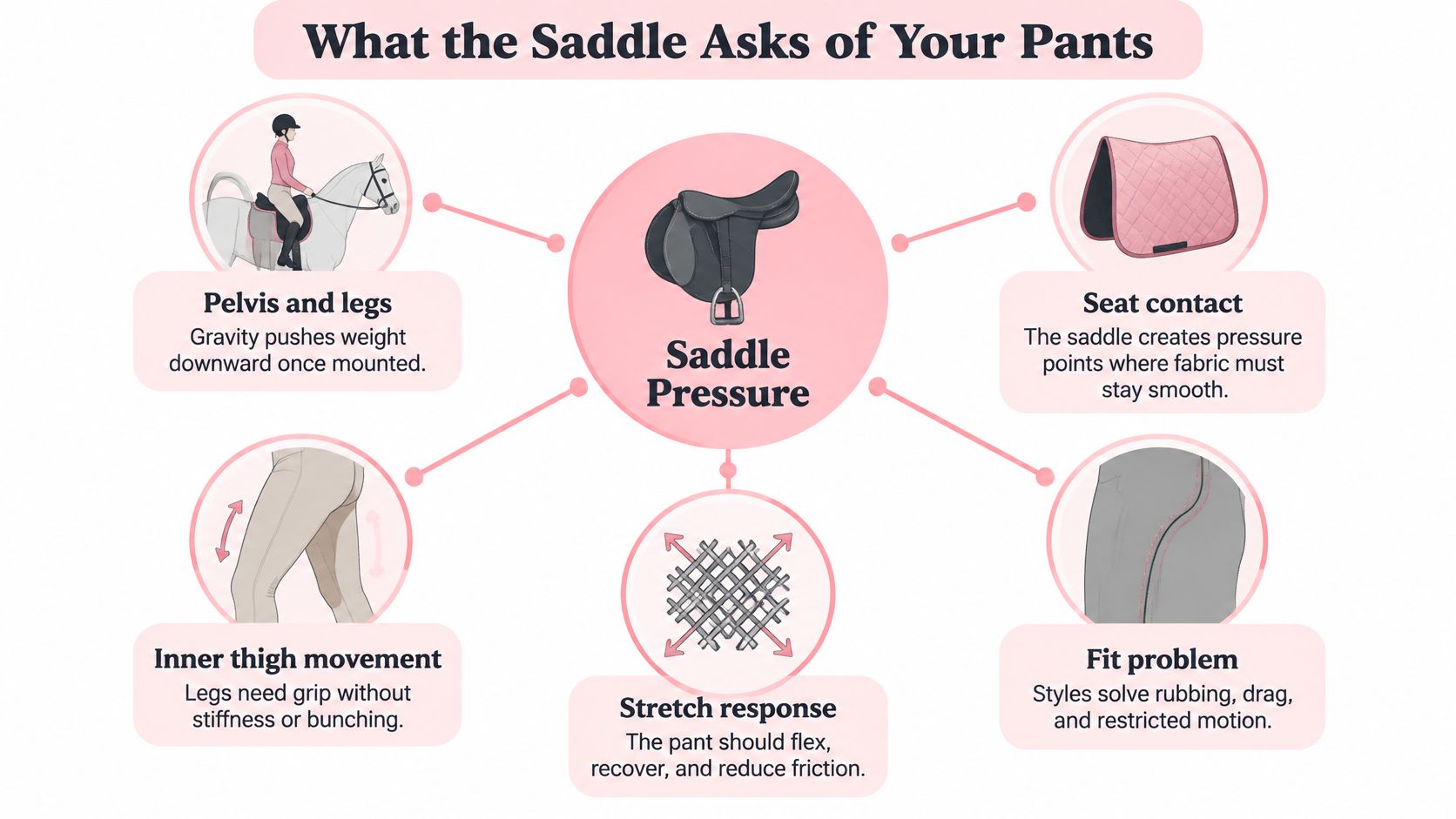
That's why a close, shaped fit can be useful: the fabric is less likely to gather or shift around the leg. A high or contoured waistband should stay in place as you fold forward. Articulated knees, meaning the fabric is cut to accommodate a bend, can help avoid excess pull behind the knee. Low-bulk seams placed away from pressure points can reduce the feeling of a ridge under the inner leg.
Four-way stretch is useful because your mounted posture combines movement at the hips and knees, legs that open away from the body, and repeated rotational adjustments. That's different from stretching in just one direction. A material that moves comfortably when you bend your knees but pulls when you rotate your hips may not suit the full range of riding positions.
Research in equestrian biomechanics and rider movement supports treating clothing as one factor that can help a rider move consistently. It doesn't establish a universal breech size or compression specification, though. A number on a label can't tell you whether the waistband will roll or a seam will press on your leg.
Try the pants in a riding position: sit as if you're in the saddle, raise your knees, rotate your hips, and do a deep squat. Check whether the waist shifts, fabric pulls behind the knees, or an inner-leg seam presses into your skin. Those are practical clues that a pattern may fight your movement during a longer schooling session.
For more context on putting together English riding clothes and style, see this guide to riding in English style. Keep the central test simple: a mirror shows you how the pants look while standing; your body in a riding position shows you how they work.
Fitting English Riding Pants by Body Position
You can start with your waist and inseam measurements, but a size chart can't show how pants behave in the saddle. Try them in your riding position, where you can feel whether fabric gaps, pulls, or rubs.
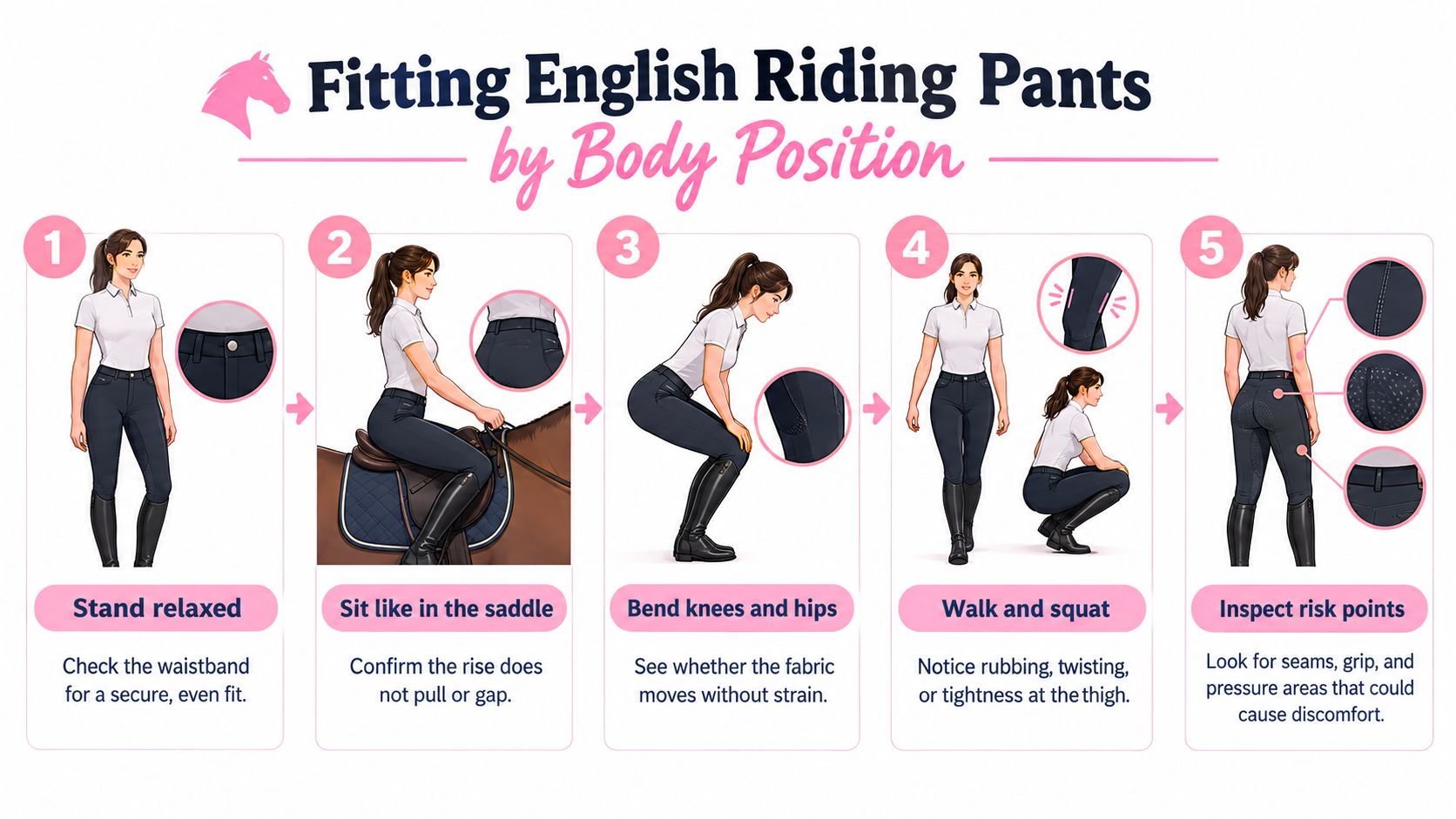
- Sit like you're in the saddle. Bend at the hips and check whether the waistband rolls forward or gaps at your back.
- Mimic a posting motion. Rise and settle as you would at a posting trot. The pants should stay in place without sliding or bunching.
- Bend your knees and move your hips. Check for tension behind your knees, across the crotch, and along the inner leg. Notice where the grip sits as your legs change position.
- Try a deep squat, then lighten your seat. Your hips should be able to move freely. If the seat turns slack when you shift into a two-point position, take note.
- Walk and check the ankle. See whether the legs ride up or twist. Check that seams and grip don't press into your skin.
The goal isn't a squeezed feeling from waist to ankle. Tighter isn't automatically safer or better. Strong compression, a hard seam, or restricted hips can make pants uncomfortable and harder to wear. Extra fabric can rub against the saddle or catch on objects, so a very loose fit has drawbacks too.
Comfortable, properly fitting protective equipment can be easier for riders to use consistently. For additional safety advice, consult current recommendations from an authoritative equestrian injury-prevention organization and follow the manufacturer's fit instructions. Riding pants are not protective equipment, so judge them by comfort, secure fit, and how they move with you.
If sitting creates pulling, waistband rollover, or restricted hip movement, don't force the labeled size to work. Try a different size or pattern. A close-fitting show breech may suit a short competition day, yet feel less comfortable for a long schooling session or trail ride. For ideas on finding garments that fit different bodies, see this guide to plus-size horse-riding clothes.
Fabrics, Grip, and Care That Last
A riding pant is more than its main fabric. The grip print, elastic, thread, labels, zippers, and any coatings all help determine how the finished garment wears. So when a product description promises stretch, water resistance, or grip, look for details you can check after a ride and a wash.
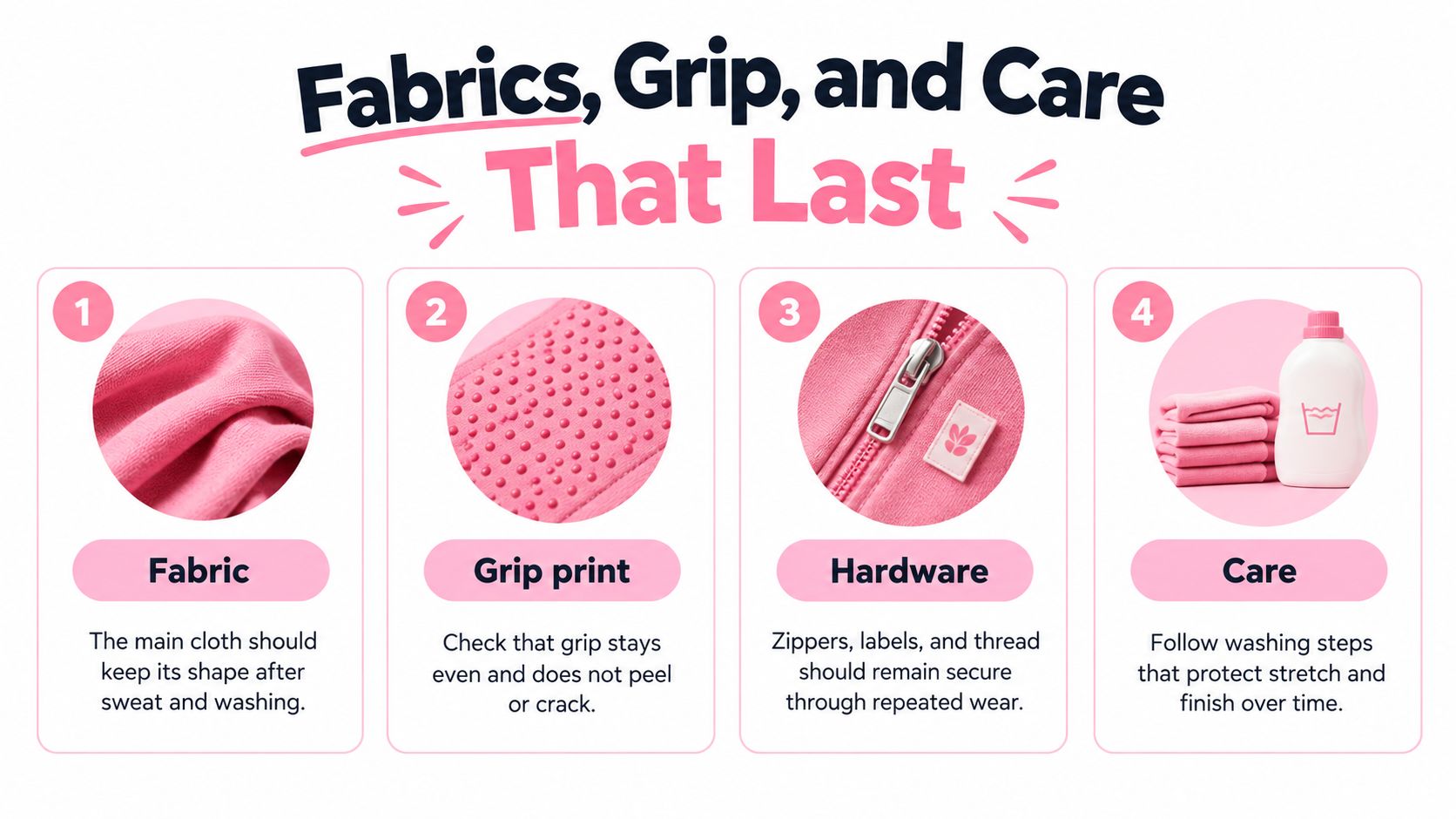
Stretch should recover. A pair that moves well when it's new but stays bagged at the knees after wear may not give you the same fit over time. Polyester with elastane can offer stretch, quicker drying, and a long service life, but the fiber names alone can't tell you how a particular garment will perform.
Water-resistant needs explanation. A water-resistant claim might refer to a surface finish or to a membrane. Those aren't the same construction, so ask what the brand means instead of assuming a short description guarantees a particular level of protection.
Grip can wear. Check silicone or other grip prints for cracking, peeling, and uneven patches. Color is another practical detail: a new-pair product photo can't tell you whether the shade will hold up to sweat and laundering, so look for clear care instructions and information about colorfastness.
Consider every component. Updated textile restricted-substance expectations have increased attention to PFAS-related compounds and the finished product's parts, not just the main fabric. That doesn't mean every riding pant contains PFAS. It does mean vague environmental language isn't a substitute for specific, verifiable material information. This overview of textile standards for equestrian apparel discusses the importance of considering product components.
A serious maker may be able to explain how it assesses abrasion and washing performance using standardized methods such as Martindale abrasion testing and ISO wash procedures. You don't need to perform those tests at home. You can ask what information the brand provides, then follow the garment's stated wash temperature and air-dry it when the care instructions call for that.
A garment that lasts is a more useful purchase than a performance claim you can't check.
If a grip print starts to fail, treat that as a reason to ask about repair or consider replacing the pants, rather than assuming the grip is permanent. A short-lived garment may create more waste than a durable one, regardless of whether its base fabric is synthetic. Durability, care information, and honest material claims are more useful checks than a vague “eco” label.
Choosing English Riding Pants for Real Days
The right choice depends on the day ahead. For a lesson, prioritize a waistband that stays put, knees that bend without pulling, and grip placed where you want contact with the saddle. You don't need maximum compression or the most covered grip to find a pair you can ride in comfortably.
For a formal English show, start with the traditional light-breech look, then do the same mounted-position fit check. A polished outfit can still be a poor choice if the pants bind at the hip or roll at the waist. Dress expectations and comfort aren't competing goals; the garment has to work with both.
Long schooling sessions and less formal rides may call for more comfort and freedom than a close-cut competition breech provides. That doesn't mean you need a special pant for every kind of ride. It means you should be honest about how long you'll wear it, how much you'll move, and where seams or grip will sit against your body.
A useful buying order is boot and riding job first, mounted try-on second, material and care information third. If you're ordering online, try the pants seated before deciding to keep them. Use the return window if the waistband rolls or the inner leg binds only after you bend and move.
For outfit ideas beyond technical riding clothes, this guide to an English riding outfit offers another place to browse. Bridle Up Hope Shop also carries horse-inspired everyday clothing, including More Cowgirls Western T-Shirt, a relaxed, oversized off-white tee with a vintage-inspired wash and cowgirl-themed graphics. That kind of fashion piece is separate from a technical breech, just as everyday horse-themed pants aren't competition riding wear.
Before you buy, run through the riding-position test and read the care label. If the pants pass both checks, you're more likely to get a garment that suits the ride you really have planned, not just the one you imagined while standing in the changing room.
If you're comparing riding apparel with horse-inspired everyday styles, Bridle Up Hope Shop carries English and Western clothing alongside equestrian gifts and home goods. Visit the shop to browse options, and check each garment's description carefully so you can choose technical riding pants for the saddle and fashion pieces for the rest of your day.
Deje un comentario