


You're staring at a gift guide, rejecting one idea after another. She already owns the obvious accessories, buys her own essentials, and responds to “fun” surprises with a polite smile. The more you care about getting the gift right, the more impossible the decision feels.
The problem usually isn't that she's impossible to please. “Hard to buy for” often describes the giver's uncertainty, not the recipient's personality. The reliable solution is to stop chasing novelty and match the present to her relationship with you, her daily life, her identity, and the values she expresses through her choices.
That approach is especially useful for gifts for hard to buy for female recipients who love horses, riding, outdoor life, or equestrian style. A practical horse-inspired gift can feel personal without becoming clutter, and a purchase connected to a meaningful cause can carry more weight than a generic luxury item.
Table of Contents
- Why Some Women Seem Impossible to Shop For
- The Psychology Behind Gifts That Actually Land
- How to Match the Gift to Her Identity and Life Stage
- Equestrian Gift Categories That Work Across Ages and Styles
- When Personalization and Experiences Beat Generic Luxury
- Budget Tiers and What to Buy at Each Price Point
- Shopping With Confidence and Giving Back
Why Some Women Seem Impossible to Shop For
A friend once described her sister as “the hardest person alive to buy for.” Her sister had a polished wardrobe, a carefully organized home, and a habit of purchasing anything she needed before anyone else could think of it. Every conventional suggestion felt wrong: perfume was too personal, décor might not suit her taste, and novelty gifts would probably become drawer clutter.
The eventual choice was simple. Her sister had recently started riding again and spent weekends at the barn, but she rarely bought horse-themed items for herself. A well-made equestrian scarf paired with a handwritten note felt more successful than a dramatic surprise because it connected with a part of her life the giver had noticed.
That distinction matters. Shoppers often assume a difficult recipient needs something unexpected, expensive, or rare. In practice, she may need something that fits a strong personal taste, a demanding routine, or a carefully held value. Generic gifts miss because they ask her to adapt to the item. Good gifts adapt to her.
The giver usually lacks a usable framework
Women are consistently major decision-makers in holiday gift buying, and one recent U.S. survey found women were more likely than men to buy for friends, parents, and adult children, as well as for occasions including weddings, graduations, and births. The same survey found that women most often bought food and drink, clothing and accessories, vouchers or gift cards, and toys and games, while occasion, closeness, and budget ranked as leading selection factors. YouGov's survey of gift-giving habits supports a practical conclusion: shoppers tend to choose flexible, useful, and wearable gifts when they aren't sure what will fit.
A UK market study similarly found that women were more likely to take primary responsibility for household gift buying, shop for more people, and begin festive shopping earlier than men. That makes the phrase “hard to buy for female” especially revealing. Many women are experienced gift selectors themselves, while the person shopping for them may not know how to translate observation into a confident choice. The UK gifting research also identifies partners or spouses as particularly difficult recipients, which explains why intimacy doesn't automatically make shopping easier.
Practical rule: Don't ask, “What would surprise her?” Ask, “What would prove that I pay attention?”
A woman who “has everything” may prefer consumables, an experience, a charitable gift, or a beautifully made version of an item already present in her routine. A minimalist may appreciate one useful object more than a basket of small decorations. A dedicated rider may want something that works at the stable, while an equestrian-style admirer may prefer a subtle scarf, journal, or piece of jewelry.
Once you stop treating her as a mystery and start identifying the life she's already living, the shortlist gets much clearer.
The Psychology Behind Gifts That Actually Land
A gift can be objectively attractive and still feel wrong. A fashionable handbag may not suit her wardrobe. A decorative object may compete with her home. A novelty item may amuse her for a moment but never earn a place in her routine.
The stronger principle is fit over surprise. Gift psychology research describes a recurring mismatch between what givers optimize for and what recipients value. Givers often pursue the excitement of the reveal, while recipients care more about whether the item remains useful and emotionally relevant after the occasion. Research on gift longevity and memorability reports that 55% of respondents kept personalized gifts longer than generic ones, with personalized gifts kept for about one year longer on average, and 66% said personalized gifts were more memorable.

Identity fit makes the gift feel seen
The first question isn't whether she likes horses in the abstract. It's how horses function in her identity. Does she ride daily, follow English disciplines, prefer Western style, collect horse artwork, or love the calm visual language of barns and leather?
A gift that reflects that distinction feels more observant. A serious rider might use a performance top, stable journal, or practical bag. Someone drawn to the aesthetic may prefer horseshoe earrings, a subtle belt, or a framed equestrian print. Both gifts are horse-themed, but only one may match the recipient.
Controlled research on customized gifts found that recipients value personalization because it can create vicarious pride, which raises state self-esteem and the emotional value assigned to the gift. The consumer research on substantive personalization points away from shallow customization. A monogram matters most when it accompanies evidence that you understand her habits, identity, or riding style.
Utility gives the present a longer life
The best present doesn't need to be something she'd never buy. It can be something she'd love but keeps postponing, such as a durable blanket, a well-made journal, wearable jewelry, or a practical kitchen item with a design she enjoys.
Broad utility also reduces fit risk. Research on giver-recipient mismatch shows that givers often choose less versatile gifts than recipients want. For an uncertain shopper, an equestrian item that integrates into everyday life is safer than a highly specific novelty object.
Personalization signals attention
Personalization works when it communicates knowledge, not merely ownership. A meaningful date, a discipline she practices, a phrase connected to a shared memory, or an accessory that suits her established style can turn a standard category into a personal gesture.
If you're interested in the emotional mechanics of messages that accompany gifts, Firacard's resource on the psychology behind digital greeting cards offers useful context. The note matters because it tells the recipient why you chose the item. A short, specific message can make a practical gift feel intentional rather than convenient.
How to Match the Gift to Her Identity and Life Stage
Use three filters before browsing a store. Relationship, life stage, and identity will eliminate weak options faster than scrolling through endless “unique gift” lists.
Start with the relationship. A partner can receive something intimate or sentimental, while a colleague needs a gift with lower personal risk. A mother may appreciate an item that acknowledges her interests beyond her family role. A close friend can receive something playful, provided the humor reflects her actual personality.
Next, consider her current life stage. A college student may value portability and flexible use. A new professional may appreciate polished accessories or an organized work item. A busy parent often needs a gift that removes friction or creates a small pause in an overfilled day. A retiree may prefer a keepsake, hobby item, or experience that gives attention to what she enjoys now.
Finally, identify the interest that carries emotional meaning. Equestrian identity can appear through active riding, horse ownership, Western style, collecting, home decoration, or an affection for animal-centered causes. Don't flatten those differences into one generic horse print.
Apply the three filters in order
- Name the relationship. Decide how personal the gift should feel and what level of sentiment is appropriate.
- Describe her present routine. Note where she spends time, what she carries, what she wears, and what she repeatedly makes room for.
- Choose the identity signal. Select the interest or value that makes the gift recognizably hers.
| Relationship | Life Stage | Identity Marker | Gift Direction Example |
|---|---|---|---|
| Sister | New homeowner | Equestrian and décor-minded | Horse-inspired wall art, a framed print, or a stable-style serving tray |
| Partner | Active rider | English riding | A useful riding layer, personalized jewelry, or a quality journal |
| Mother | Busy traveler | Practical and outdoors-oriented | Compact travel gear, a versatile bag, or a meaningful experience |
| Friend | College student | Horse lover with limited space | A tote, journal, stickers, jewelry, or a small plush horse |
| Colleague | Established professional | Subtle equestrian style | A scarf, mug, notebook, or understated accessory |
The example above is intentionally narrow. A horse-loving sister who has just bought a home doesn't need “something equestrian.” She needs a gift that connects sisterhood, a new home, and horse identity.
For mothers who need more breathing room in a busy routine, browse practical ideas such as HYDAWAY's travel gear for giving mom a break. For a horse-focused shortlist, the guide to horse gifts for adults can help you compare options by lifestyle rather than by novelty.
Equestrian Gift Categories That Work Across Ages and Styles
Equestrian gifts work best when the category matches the recipient's actual relationship with horses. The same image can feel elegant on a scarf, playful on a child's sweatshirt, or overly literal on home décor. Choose the format first, then select the horse motif, material, and level of visibility.
| Category | Best For | Example Products | Ideal Occasions |
|---|---|---|---|
| Apparel | Riders and style-conscious horse lovers | Performance riding top, horse-bit scarf, equestrian sweatshirt | Birthday, holiday, milestone |
| Jewelry | Women who wear small personal signals | Horseshoe stud earrings, stirrup necklace, bridle-leather cuff | Anniversary, graduation, birthday |
| Home décor | Homeowners and collectors | Horse-inspired pillow, framed artwork, stable-style tray | Housewarming, holiday, hostess gift |
| Toys and collectibles | Children, families, and adult collectors | Plush horse, model horse, limited-edition figurine | Birthday, holiday, new baby |
| Books and paper goods | Readers, planners, and lifelong learners | Equestrian photography book, training manual, horse journal | Birthday, retirement, encouragement |
Apparel should earn its space in her wardrobe
For an active rider, choose function first. A performance riding top or weather-friendly layer makes sense if you understand her preferred fit and discipline. For someone who admires equestrian style without riding, a horse-bit scarf, graphic T-shirt, sweater, or polished blouse carries the theme more subtly.
Avoid guessing at technical gear if you don't know her sizing, brand preferences, or riding conditions. An accessory with flexible fit is usually a safer choice for a friend, colleague, or extended family member.
Jewelry creates a daily reminder
Jewelry is strong for partners, sisters, mothers, and close friends because it can be worn repeatedly without taking up space. Horseshoe stud earrings suit someone who favors understated pieces. A stirrup necklace or bridle-leather cuff bracelet works better for a recipient who enjoys a visible equestrian reference.
The design should match her existing jewelry. If she wears delicate metal pieces, choose a refined pendant or small earrings. If her style is rustic or Western, leather, textured metal, or a bolder silhouette will feel more natural.
Home items need to match her interior
Home décor is a good choice only when you know her taste. A horsehair-trimmed throw pillow, framed stable-inspired artwork, candle, ornament, mug, or tea towel can connect with her interest while remaining useful. Don't buy large decorative pieces for someone whose home style you can't describe.
Toys, collectibles, and books serve distinct audiences
A plush horse or illustrated children's book works for a younger recipient, a new baby's family, or an adult who enjoys playful objects. Model horses and limited-edition figurines belong with collectors who already display similar pieces. Books offer the broadest range, from coffee-table photography collections to practical training manuals and journals for recording goals, lessons, or stable notes.
For a horse lover who doesn't want more clothing, a book or paper good may be the most thoughtful answer. It acknowledges the interest without assuming she wants to wear it.
When Personalization and Experiences Beat Generic Luxury
Generic luxury is a tempting shortcut. It looks impressive in a product photo, carries an obvious price signal, and seems suitable for someone who already owns the basics. That logic fails when the item doesn't match her taste. A costly object with poor fit is still a poor gift.
Personalization has a stronger emotional mechanism. Research on customized gifts found that recipients can experience vicarious pride, which raises self-esteem and increases the emotional valuation of the item. That's why a monogrammed leather valet tray, custom-engraved stirrup necklace, or hand-stamped bridle-leather keychain can outperform a more expensive but impersonal accessory. The meaningful detail says, “I know what matters to you,” not merely, “I spent money.”

Choose personalization when sentiment leads
Personalize a gift when she keeps letters, remembers dates, values family history, or prefers objects with a story. Use restraint. Her initials or a significant date usually feel more elegant than adding every available customization field.
A personalized gift also needs an appropriate object beneath the customization. Engraving a flimsy novelty item won't create the same impression as adding a meaningful detail to a durable necklace, journal, keychain, or leather accessory.
Choose an experience when she values memories
An experience suits a woman who dislikes clutter, buys what she needs, or values shared time. Possibilities include riding lessons, a stable tour, an equine photography session, or a donation made in her name to an equine therapy program such as Bridle Up Hope.
Experiences create anticipation before the event and memories afterward. They also remove the problem of choosing a color, size, or display location. Give the experience a physical anchor, such as a handwritten card, small horse-themed token, or printed itinerary, so the opening moment still feels substantial.
If she values sentiment, personalize. If she values novelty, give an experience. If you're uncertain, combine a small personalized token with an experience voucher.
Presentation amplifies the signal. Wrap the item neatly, explain the connection in a handwritten note, and mention the specific habit or interest that led you to the choice. The recipient shouldn't have to reverse-engineer your thought process.
A short video can also help shoppers think about the difference between a generic object and a gift with emotional meaning:
Budget Tiers and What to Buy at Each Price Point
A thoughtful budget starts with the occasion and relationship, not with the assumption that a difficult recipient requires a larger spend. A modest gift with a precise connection will usually beat an expensive item chosen without evidence.
| Tier | Price Range | Example Products | Best Occasions |
|---|---|---|---|
| One | Under $25 | Enamel pin, equestrian sticker set, braided leather keychain | Stocking stuffer, casual thank-you |
| Two | $25 to $75 | Horse-bit scarf, sterling silver horseshoe studs, illustrated equestrian book | Birthday, holiday, friend gift |
| Three | $75 to $150 | Bridle-leather crossbody bag, personalized stirrup necklace, curated gift box | Milestone birthday, close family occasion |
| Four | $150 and above | Handcrafted leather journal, collectible model horse, riding lesson or stable experience | Major celebration, anniversary |
Under $25
Choose small items that have an obvious use or a strong connection to her interests. An enamel pin can personalize a jacket or tote. A sticker set suits a younger recipient, journal keeper, or casual horse fan. A braided leather keychain is practical and carries an equestrian texture without requiring clothing or home-style knowledge.
$25 to $75
This range supports gifts with a more finished presence. A scarf adds style without the sizing risk of fitted apparel. Horseshoe stud earrings work for a woman who wears understated jewelry. An illustrated book can serve both an admirer of equestrian heritage and a reader who enjoys beautiful objects.
For outdoor-minded families, you can also compare ideas in this guide to top presents for adventure parents. For a horse-specific search organized around recipient type, use gift ideas for horse lovers.
$75 and above
Higher tiers should buy durability, personalization, or access to an experience. A leather crossbody bag needs to suit her everyday style. A personalized necklace should reflect the jewelry she already wears. A riding lesson or stable experience is appropriate when you know she wants the activity and can attend.
At any price, include a note. Presentation turns a small item into a considered gesture and helps the recipient understand why you chose it.
Shopping With Confidence and Giving Back
The final decision usually stalls for three reasons: fit, quality, and uncertainty about what the purchase represents. Solve those in that order. Check the product details and sizing information, choose a category with low fit risk when necessary, and confirm the store's return process before placing the order.
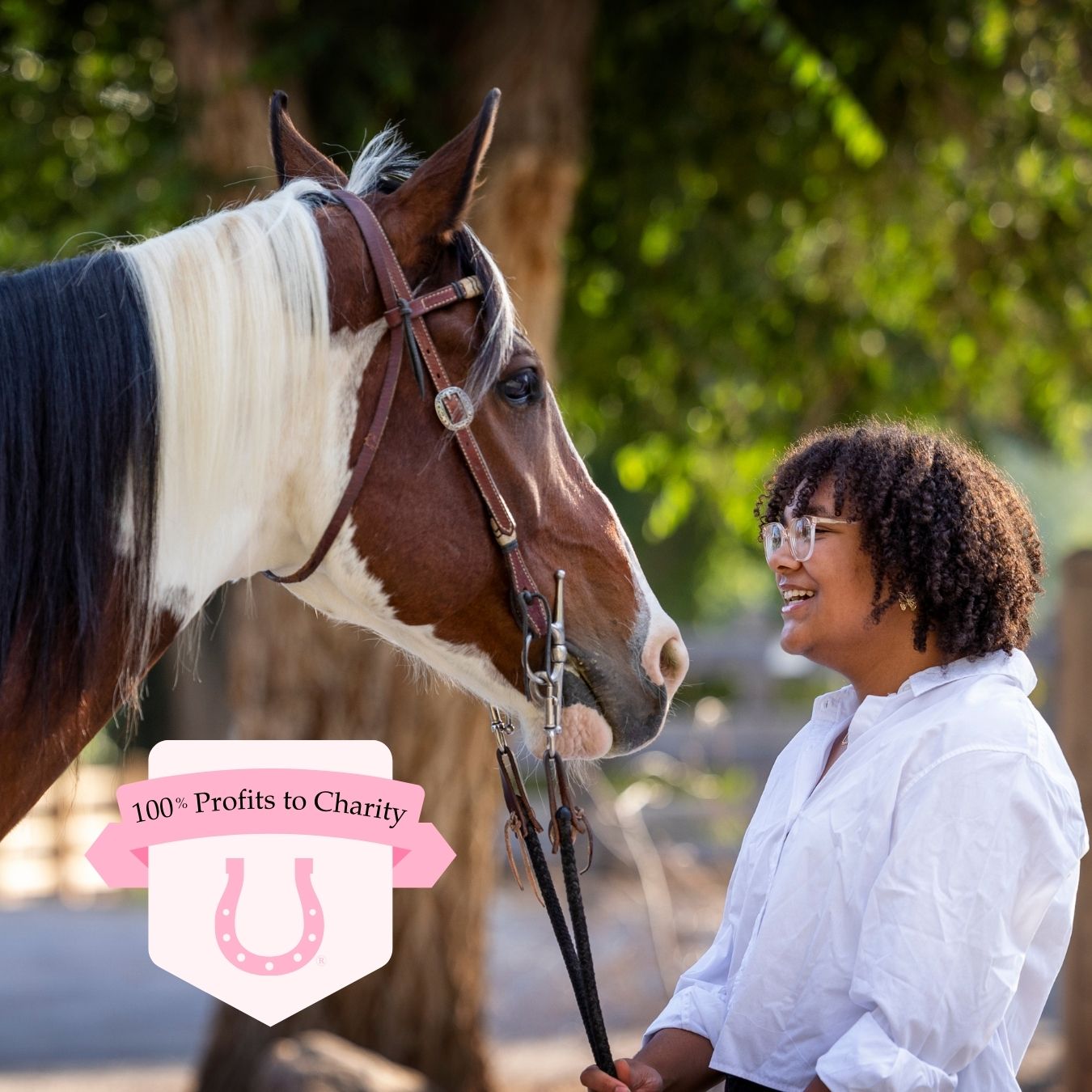
Bridle Up Hope Shop offers equestrian and horse-themed apparel, jewelry, accessories, home goods, toys, books, artwork, kitchen items, and gifting essentials across English and Western styles. Its charitable model donates 100% of annual net profits to the Bridle Up Hope foundation, which supports girls and women through horses and habits. This guide to charity gifts that give back is useful when the recipient values purchases with a social purpose.

Remove the fit risk before checkout
The shop provides an online returns portal, and shoppers can add Redo for unlimited free 30-day returns with shipping protection. That option matters when you're buying apparel or footwear without being completely certain about size. A gift card is another sensible choice when the recipient has exact preferences and you want her to choose the final item.
Review shipping information before an occasion, confirm whether gift wrapping is available, and contact customer support if a product detail remains unclear. A safety net doesn't replace thoughtful selection, but it prevents uncertainty from turning into inaction.
The safest gift isn't the least personal one. It's the one with a clear reason, practical relevance, and an easy exchange path.
Choose the item that reflects her identity, supports a cause she can feel good about, and gives her room to make a different choice if the fit isn't right. That's how gifts for hard to buy for female recipients become specific, useful, and memorable instead of generic.
Bridle Up Hope Shop offers horse-inspired apparel, jewelry, accessories, home goods, toys, books, and gift essentials for women and girls across English and Western styles. Visit Bridle Up Hope Shop to choose a gift that reflects her identity while supporting a charitable mission.
Deje un comentario