


You've found the front door hardware that could make a farmhouse, ranch, or stable-style entry feel unmistakably yours. The challenge starts when you compare listings: one calls itself solid brass, another says brass finish, and a third shows a beautifully aged surface without explaining whether it's lacquered. Before you choose a horse-shaped design, you need to know what the material, finish, fixing method, and daily use will mean for your door.
A brass horse door knocker can be a small architectural detail with a strong sense of place. It can echo working-horse history, complement a split-rail boundary or painted timber entry, and welcome visitors with more character than a standard pull. This guide will help you choose the right form, identify the finish before cleaning, buy with confidence, install it securely, and decide whether it suits everyone who uses the door. For a broader equestrian-home palette, you might also enjoy this guide to horse-themed living room design. If your outdoor setting needs the same rural vocabulary, a resource on split rail fence installation Connecticut can help you think about the entry and boundary as one visual composition.
Table of Contents
- Why a Brass Horse Door Knocker Belongs at an Equestrian Home
- What a Brass Horse Door Knocker Actually Is
- Popular Styles and Design Families
- Material and Finish Differences That Matter
- Buying and Authenticity Tips Before You Click Order
- Installing a Brass Horse Door Knocker the Right Way
- Cleaning and Caring for Your Knocker by Finish
- Accessibility and Who Can Actually Use It
Why a Brass Horse Door Knocker Belongs at an Equestrian Home
A rider arrives at a stable-style front door, brushes a hand over a painted panel, and reaches for a horse's head or a horseshoe suspended in brass. The gesture feels natural because the object does more than announce a visitor. It tells arriving guests that horses are part of the household's identity, whether the property is an active stable, a rural home, or a place where equestrian life matters.
Horse imagery has lasting strength because it carries several associations at once. A horse head can suggest companionship and movement. A horseshoe can bring a folk or riding reference. A bridle detail can make the hardware feel connected to working tack rather than generic countryside decoration. The best design won't overpower the door. It will give the entrance a focal point that feels intentional.
The historical connection is also substantial. The London Museum's documentation of horse brasses records how brass fittings became increasingly popular on working horses' harnesses from the middle of the nineteenth century. Their imagery included horses, suns, wheat, swans, and heraldic forms, so brass ornament already connected practical transport with visual identity. That language later made horse heads, horseshoes, and bridles familiar choices for architectural decoration.
A useful test: If the knocker would still make sense on your door without the word “equestrian” in the product description, its design is probably doing genuine visual work.
By the time you finish choosing, you should be able to match style to door, distinguish solid brass from a brass-colored coating, select lacquered or unlacquered brass knowingly, and install the piece without creating stress around the fixings. You'll also know whether it should serve as the main visitor signal or remain a decorative accent alongside more accessible hardware.
What a Brass Horse Door Knocker Actually Is
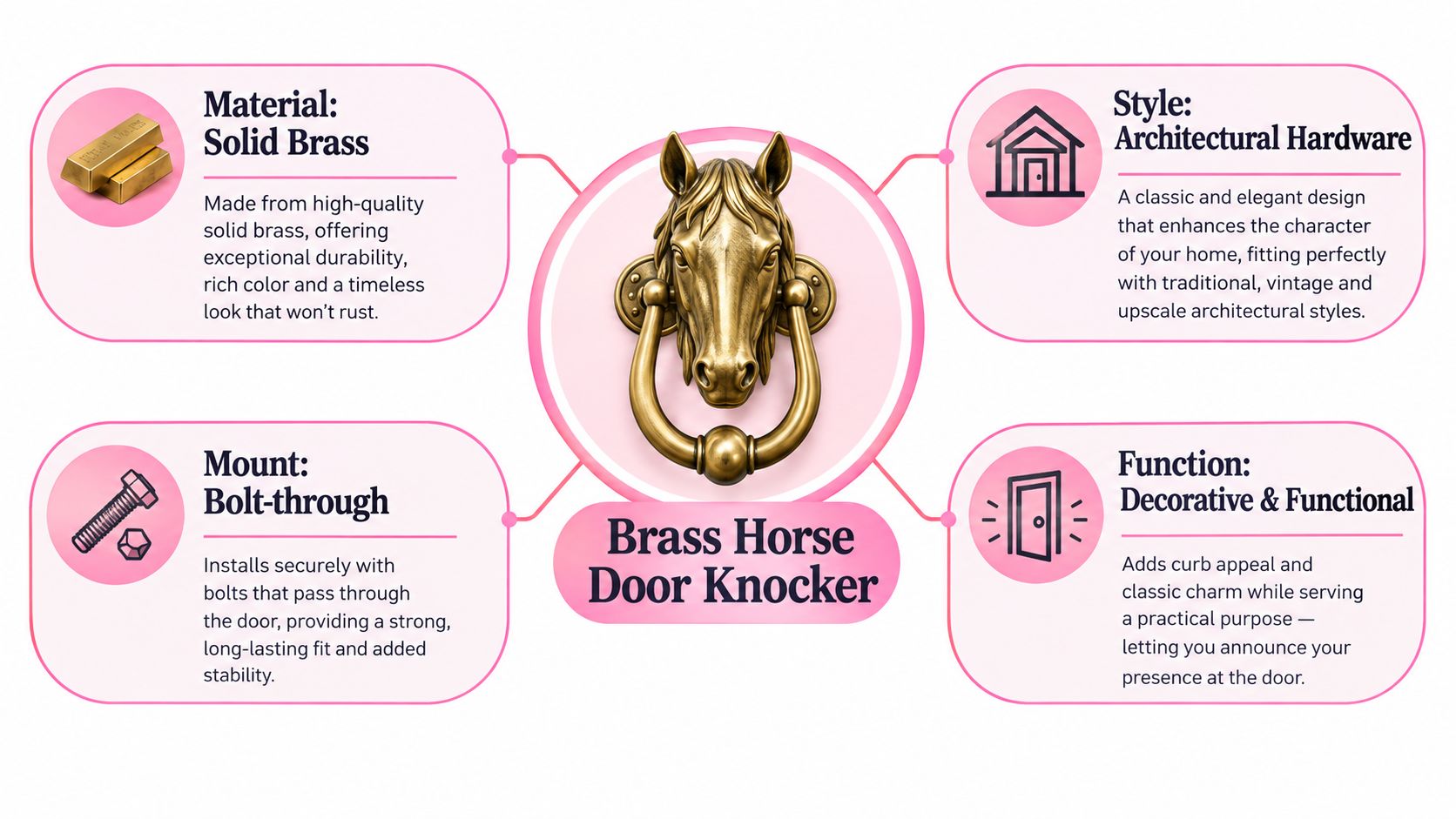
You walk up to a front door, reach for the horse's neck or the ring beneath its head, and hear a sharp knock rather than a bell. That sound comes from a simple piece of hardware. A brass horse door knocker has three working parts: a fixed backplate, a movable striker, and a point of contact where metal meets the door or strike plate. The horse motif may be the whole knocker, as in a sculpted head, or part of the composition, as in a horseshoe or bridle design.
The easiest way to read one is to separate decoration from mechanism. The motif tells you what you are looking at stylistically. The construction tells you how it will behave in daily use. If the ring feels easy to grip, the hinge moves cleanly, and the body sits flat against the door, you are looking at a practical object, not just a decorative casting.
Museum records help more than retail adjectives. The Brooklyn Museum lists an American brass door knocker from the eighteenth century at 7 by 3.5 inches, or about 17.8 by 8.9 centimeters (Brooklyn Museum object record). That is a useful reference size for buyers because it lands in the familiar hand-sized range. Large enough to see from the path. Small enough to fit comfortably on a residential door.
The horse-brass connection
The horse motif has a real hardware history behind it. The London Museum horse brass record shows how horse brasses became popular as decorative fittings on working harnesses in the nineteenth century. Earlier pieces were heavier cast ornaments fixed with studs. Later ones became lighter stamped brass forms. That change matters because it explains why horse imagery feels at home in metal hardware. It moved from tack and harness into domestic decoration without losing its working character.
A horse knocker therefore signals more than “country style.” It echoes a period when horses shaped transport, trade, and household identity.
Before you buy, read the listing the same way you would read tack. First identify the form. Then inspect the material, mounting method, depth, and moving parts. That habit helps you tell a durable door knocker from a brass-colored ornament that only looks convincing in the product photo.
Popular Styles and Design Families
The easiest way to choose is to start with the horse's pose and the visual weight of the door.
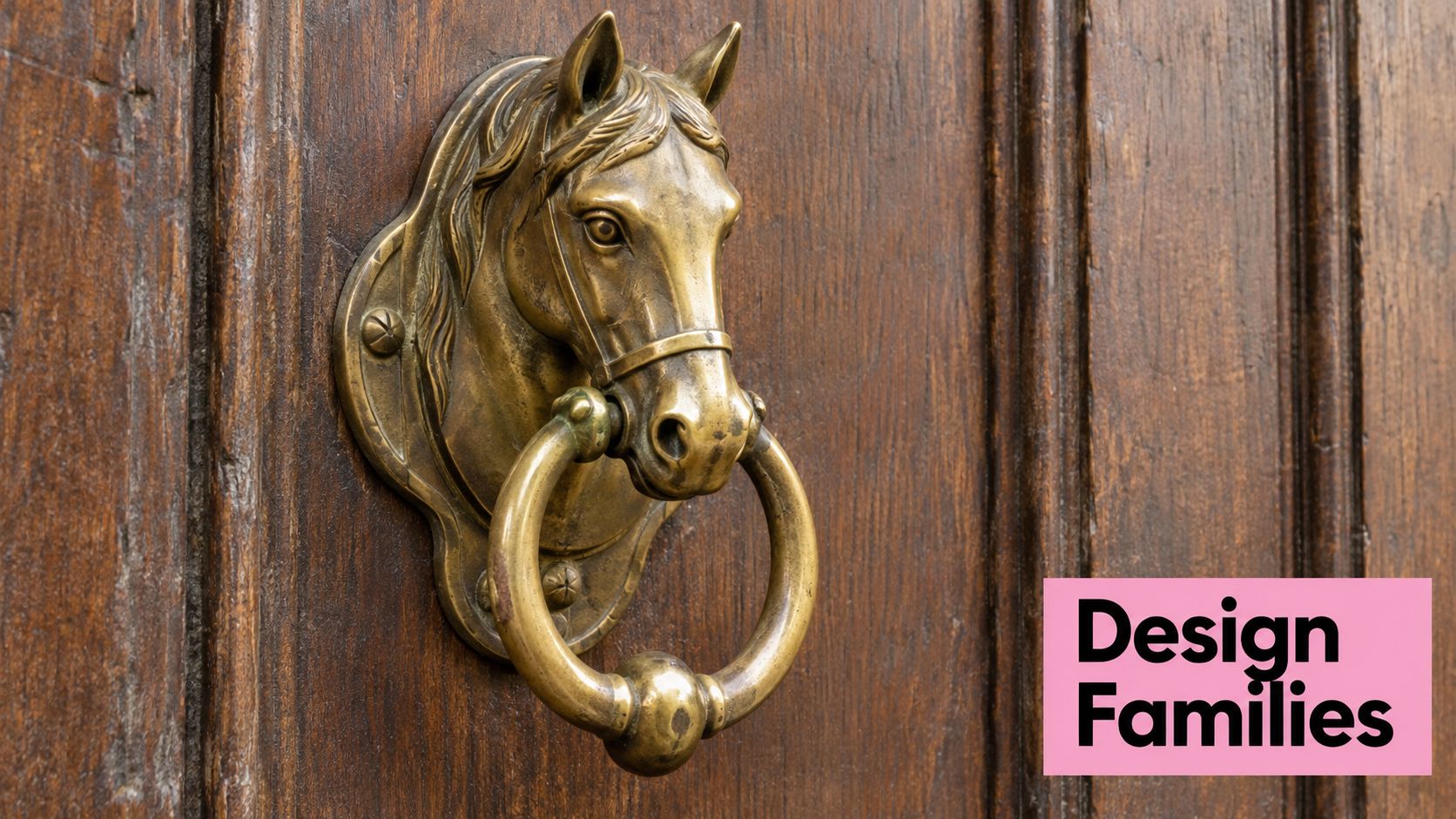
A horse-head knocker puts the animal's face at the center of the composition. The head may project forward from a circular, shield-shaped, or shaped backplate, giving the entrance a sculptural focal point. This style suits a substantial timber, paneled, or stained door, particularly when the door already has strong vertical proportions.
A horseshoe knocker relies on a simpler outline. The horseshoe frames the striker or supports a small central detail, so the design often feels more folk-inspired, Western, or informal. It can work well on a narrower entry, garden gate, mudroom door, or cottage-style panel where a large three-dimensional horse head might feel crowded.
A standing-horse design shows more of the animal's body. It can read as formal, traditional, or distinctly English, depending on the pose and ornament. Because the silhouette contains more detail, it needs enough visual space around it to remain legible from the approach path.
Match the finish to the door
Bright polished brass catches attention against dark stained oak, navy, charcoal, or deep green. Antique brass softens the contrast and works naturally with painted timber, weathered boards, and traditional masonry. Satin brass gives a quieter appearance when the entry already includes several decorative elements.
Door color matters, but so does surrounding hardware. A warm brass knocker can coordinate with lanterns, mail slots, hinges, and house numbers. If the rest of the entrance uses black iron, decide whether the brass should be a deliberate focal point or whether a darker finish would create better continuity. A guide to find stylish entry doors can help you compare the knocker with the broader proportions and material palette of the entry.
Think about operation, not only silhouette
A ring or striker needs room to move. Raised horse details can also affect where fingers land, especially on a heavily sculpted piece. Before ordering, compare the knocker's overall height, width, and projection with the clear area on your door. A design that looks elegant in a close product photograph may feel crowded when mounted near glazing, trim, a lock, or a letter plate.
Material and Finish Differences That Matter
A brass horse door knocker can look convincing in a product photo and still be made three very different ways. “Brass” may describe the whole casting, a thin outer layer, or only the color. That distinction matters most on a horse design because the raised head, ears, ring, and strike point all get touched, knocked, and exposed to weather. In architectural hardware, brass is a copper-zinc alloy, and the alloy choice affects hardness, strength, ductility, and machinability, which is why specifiers treat material and finish as separate decisions, not one label (architectural brass guidance from DSS).
Start with the body.
Solid brass is usually the safer pick for an exterior knocker that will be used often. It handles repeated impact better, resists humid conditions well, and keeps the same metal all the way through. Brass-plated steel or another base metal can still look handsome on day one, but the thin brass layer is the vulnerable part. Once edges wear, especially around the horse's muzzle, the ring, or the backplate rim, the base metal may show through and the finish can shift fast.
A magnet gives you a useful first clue. Brass itself is not usually magnetic, while steel usually is. If a strong magnet grabs the knocker, you are probably looking at a steel core under a brass finish. It is still only a clue. Ask the seller whether the horse head, backplate, and striker are all solid brass, and read listings carefully for terms like “brass-tone” or “brass finish,” which often describe appearance rather than substance.
Then identify the finish, because finish changes how the knocker will age in your hands.
Unlacquered brass is bare brass. It oxidizes over time and develops patina, a little like a leather saddle darkening where it is handled most. Some buyers want that older, worked-in look, especially on Georgian, Victorian, farmhouse, or stable-inspired entrances. Lacquered brass has a clear coating over the metal. That coating slows oxidation and helps the knocker stay brighter and more even in color, but it also means you are caring for a coated surface, not bare metal.
| Finish Type | Durability | Appearance Over Time | Cleaning Approach | Best For |
|---|---|---|---|---|
| Solid, unlacquered brass | Strong choice for repeated impact and exposed hardware | Develops a natural patina | Use a brass-specific product gently, or allow patina | Buyers who like character and changing color |
| Solid, lacquered brass | Durable body with a protective surface coating | Stays brighter until the coating degrades | Mild soap, water, soft cloth, and thorough drying | Buyers who prefer consistent color |
| Brass-plated metal | Depends on the base metal and plating thickness | Worn edges may reveal the underlying metal | Avoid aggressive rubbing | Decorative use where impact is limited |
| Brass-tone or brass-finish metal | Product-specific | May change as the surface wears | Follow the manufacturer's instructions | Budget-conscious decorative applications |
Buyers often get tripped up here. If you polish lacquered brass as if it were bare brass, you can scratch or strip the coating. If lacquer fails and turns patchy, repeated rubbing usually makes the contrast worse. The usual fix is to remove the failed coating, polish the metal properly, then reseal it.
For contrast with darker entry hardware, you can browse black iron door handle finishes. If you want to compare how equestrian metal decor behaves indoors versus on an exposed front door, metal horse wall art offers a helpful reference point.
Buying and Authenticity Tips Before You Click Order
Product pages often hide the most important information behind attractive photographs. A buyer's job is to identify material, finish, and fasteners before focusing on the horse's expression or the color of the patina.
Use this listing check
- Read the construction words. “Solid cast brass” is more informative than “brass look,” “brass-tone,” or “antique brass finish.” If the description only names the color, ask what metal sits beneath it.
- Look for the rear view. A proper bolt-through backplate should show how the hardware attaches. Decorative screws alone may not distribute repeated striking loads well.
- Check every measurement. Confirm height, width, projection, fixing centers, and bolt diameter. Vague dimensions make it difficult to judge clearance or drill accurately.
- Ask about the coating. A seller should be able to tell you whether the brass is lacquered, unlacquered, polished, antique-finished, or plated.
- Request missing details. Ask about weight, alloy composition, country of manufacture, and the recommended door type.
A stock photograph that hides the backplate, a very light product with no stated construction, or a listing that avoids the word “solid” deserves extra scrutiny. A boutique or antique piece may also provide provenance, maker information, or a clearer explanation of how it was produced. That doesn't automatically make it better, but it gives you more information than a generic image and a finish name.
Before drilling, measure the actual door and mark the knocker's fixing centers on paper or masking tape. Check that the striker won't collide with glazing, trim, a lock, or a mail slot. If the door is historic, insulated, hollow, or composite, confirm the fixing method with the manufacturer or a qualified installer rather than assuming a standard screw set will work.
Installing a Brass Horse Door Knocker the Right Way
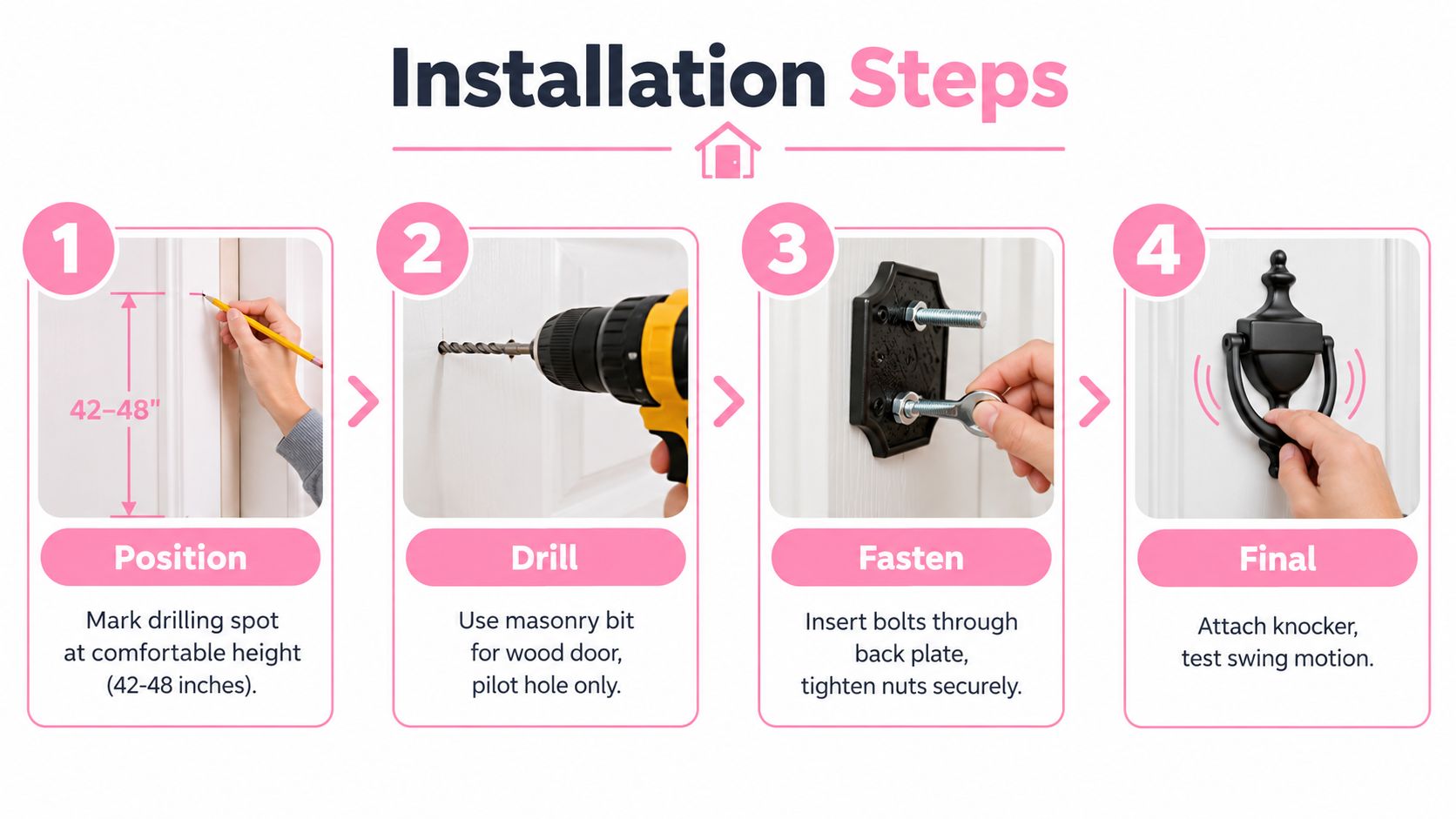
A good installation protects the door as much as it supports the knocker. Start by finding the door's vertical centerline and marking a comfortable operating height. A common eye-level range is approximately 1,450 to 1,550 millimeters above the finished floor, as described in installation guidance from BookaBuilder.
Measure the knocker's fixing centers and bolt diameter before making any hole. A test hole in a suitable scrap or concealed area can confirm the drill size, but don't treat a test as a substitute for checking the door's construction. The door material determines whether you need reinforcement or a specialist fixing system.
Fasten for the door type
For a solid-core timber door, through-bolting spreads the repeated striking load across the inside and outside faces. Fit washers and nuts on the interior side, then tighten evenly by hand. Exterior-grade stainless-steel or brass fasteners help reduce rust streaking and unwanted discoloration around the mounting points.
A hollow or composite door needs a different approach. Use the manufacturer's specified reinforcement or a suitable through-fixing system. Decorative screws driven only into a thin skin may hold the backplate visually, but they can allow wobble or damage as visitors use the striker.
Avoid an impact driver. Uneven or excessive torque can distort a backplate, compress a soft door skin, or pull the knocker out of alignment. Hand-tighten gradually, checking the face from the exterior as you go.
After mounting, lift and release the striker several times. It should move freely, sit firmly, and strike cleanly without scraping. The final adjustment should prevent loose movement and avoid unintended metal-to-metal contact that could chip the finish.
For another small equestrian installation project, learn how to hang a horseshoe, then return to the same principle here: mark carefully first, because a misplaced hole is harder to hide than an incorrect product description.
Cleaning and Caring for Your Knocker by Finish
Cleaning starts with diagnosis, not polish. First decide whether the surface is lacquered or unlacquered. A consistently bright surface with a clear, even film may be lacquered, while gradual darkening and a more variable color often indicate exposed brass. Don't scrape or sand the finish to test it, especially on raised horse details.
For lacquered brass, use a soft cloth with mild soap and water, then dry the surface completely. Hardware guidance warns against brass polish and abrasive cleaners because they can damage the protective layer (Howdens care guidance). Pay special attention to the underside of the striker and the edges of the backplate, where moisture can remain.
Unlacquered brass gives you more freedom, but it also gives you a design decision. You can use a brass-specific cleaner gently, or leave the surface to develop a patina. A darker or more varied appearance isn't automatically neglect. It can be the intended character of exposed brass.
Match the response to the problem
- Patchy darkening on lacquered brass: The coating may be failing. Repeated polishing can make the surface less even, so refinishing generally involves removing the failed coating before polishing and resealing.
- Dull or greenish discoloration on unlacquered brass: Use a gentle brass-specific product, avoid aggressive pressure around sculpted details, and dry-buff with a soft cloth.
- Residue around fixings: Wipe with mild soapy water, dry fully, and inspect the fasteners for rust or staining.
- Loss of detail: Stop using abrasive products. Raised horse ears, bridles, reins, and mane texture can lose visual definition when repeatedly scrubbed.
A practical routine is a quick wipe when the door is being cleaned, a more careful seasonal inspection, and a fastener check at least annually. Coastal air, humid conditions, and high-touch entrances may call for closer observation. The right frequency depends on exposure, not on a promise that brass is maintenance-free.
The better finish is the one you can live with. Bright lacquer is convenient until the coating fails. Unlacquered brass asks you to accept change, but patina can be part of the design rather than a defect.
Accessibility and Who Can Actually Use It
A horse-shaped knocker can look welcoming while remaining difficult for some visitors to operate. Limited grip strength, arthritis, reduced dexterity, a heavy striker, a small ring, or insufficient finger clearance can turn an attractive detail into an awkward barrier. The people using the entrance matter as much as the people viewing it from the path.
U.S. accessibility guidance provides useful benchmarks for door hardware. It states that hardware should support one-hand operation, avoid tight grasping, pinching, or wrist twisting, operate with no more than 5 lbf, and generally sit 34 to 48 inches above the floor (U.S. Access Board guidance). A private home isn't automatically required to meet every formal accessibility provision, but these criteria offer a practical way to assess whether a decorative knocker will work for real people.
Inspect the hand relationship
A ring must have enough room for fingers to enter and withdraw without catching. A projected horse head may create a comfortable grip in one area and an uncomfortable obstruction in another. Heavy solid-metal construction can also make the striker difficult for a child or someone with limited strength to lift.
Mounting height creates another trade-off. A visually centered knocker may sit too high for children, while a lower position may be more usable for a multigenerational household. The best position depends on the door, the people using it, and whether the knocker is intended for occasional decoration or frequent operation.
Use this short evaluation before installation:
- Grip: Can a visitor operate the striker without pinching or twisting the wrist?
- Force: Does the striker lift and fall without demanding uncomfortable effort?
- Clearance: Can fingers move around the ring or handle without touching sharp edges or raised details?
- Reach: Can children, older adults, and seated or shorter visitors reach the operating point?
- Backup signal: Is there an accessible handle, lever, doorbell, or visual notification option?
A knocker may therefore be ideal as a characterful accent on a garden gate, mudroom, or secondary entry, while a main entrance benefits from paired hardware. That approach doesn't diminish the horse motif. It lets more people enjoy it without forcing the knocker to perform a job it wasn't designed to handle for every visitor.
Choose for the hand as carefully as you choose for the eye.
Your ownership plan is straightforward. Match the horse-head, horseshoe, or full-horse style to the door's proportions. Confirm solid construction and identify whether the finish is lacquered or unlacquered before buying. Install through the door with appropriate fasteners, then clean according to the coating rather than chasing maximum shine.
A well-chosen brass horse door knocker becomes a durable equestrian accent because it connects identity, heritage, and daily use. Like other horse-inspired home details, it should feel personal without becoming impractical.
Explore Bridle Up Hope Shop for equestrian home accents, gifts, apparel, jewelry, artwork, and horse-themed goods suited to both English and Western styles. Choose a piece that complements your door and carries the same sense of welcome, while supporting the shop's charitable mission.
Leave a comment