


You find it at an estate sale, half-hidden behind a stack of picture frames. Or perhaps it appears online with a cheerful plant tucked into its back, its ears slightly worn and its glaze marked by fine lines. The seller calls it a vintage horse planter, but you're left wondering whether it's an authentic mid-century object, a newer reproduction, or just an attractive ceramic figure with a hole in it.
That uncertainty matters. The maker's mark, drainage opening, glaze behavior, and structural condition tell you far more than the horse shape alone. Safety matters too, especially if you're thinking about edible plants, children, or a busy family room.
Table of Contents
- Meet the Vintage Horse Planter
- What a Vintage Horse Planter Is
- Why the Horse Shape Has Staying Power
- How to Identify an Authentic Vintage Piece
- Reading Condition, Patina, and Real Damage
- Styling and Placement Ideas That Work
- Care, Cleaning, and the Safety Conversation
- Buying Considerations and a Final Checklist
Meet the Vintage Horse Planter
A vintage horse planter sits at the meeting point of home décor, functional pottery, and animal sculpture. It looks like a small horse, but its purpose is practical. A cavity holds soil or, more safely, a removable nursery pot, turning a familiar animal form into a container for living greenery.
I've found that beginners often make the same first mistake. They judge the object from the front, focusing on color, expression, and whether the horse looks charming. Collectors start underneath. The base can reveal the manufacturer, construction method, drainage design, and signs of later alteration.
Collector's rule: The horse shape attracts your attention, but the underside earns your confidence.
These planters appeal because they're easy to understand visually. A horse suggests gardens, farms, riding, and rural life without requiring a room to follow a strict theme. A small one can sit on a shelf, while a larger example can anchor an entryway or covered porch.
This guide isn't a price sheet, and a horse motif alone doesn't establish rarity. Instead, it gives you a practical way to decide what you're looking at, whether the condition is acceptable, how to style it, and when direct planting is a bad idea. By the end, you should be able to turn a planter over, inspect it calmly, and separate desirable age from expensive trouble.
What a Vintage Horse Planter Is
A vintage horse planter is a molded ceramic or earthenware vessel shaped like a horse, or decorated with a horse motif, and made to display a household plant. In the United States, it belongs to the broader tradition of figural ceramic planters that grew from the 1930s through the 1970s, when manufacturers such as McCoy, Hull, and Roseville made decorative planters for ordinary homes (historical context for figural pottery).
Its function separates it from a horse figurine. The piece needs an intentional planting cavity, a stable base, a usable opening, and, ideally, a factory-made drainage hole. A sculpture can succeed through its exterior appearance alone. A planter must also work as a vessel, which makes the underside and interior as informative as the horse's face or glaze.
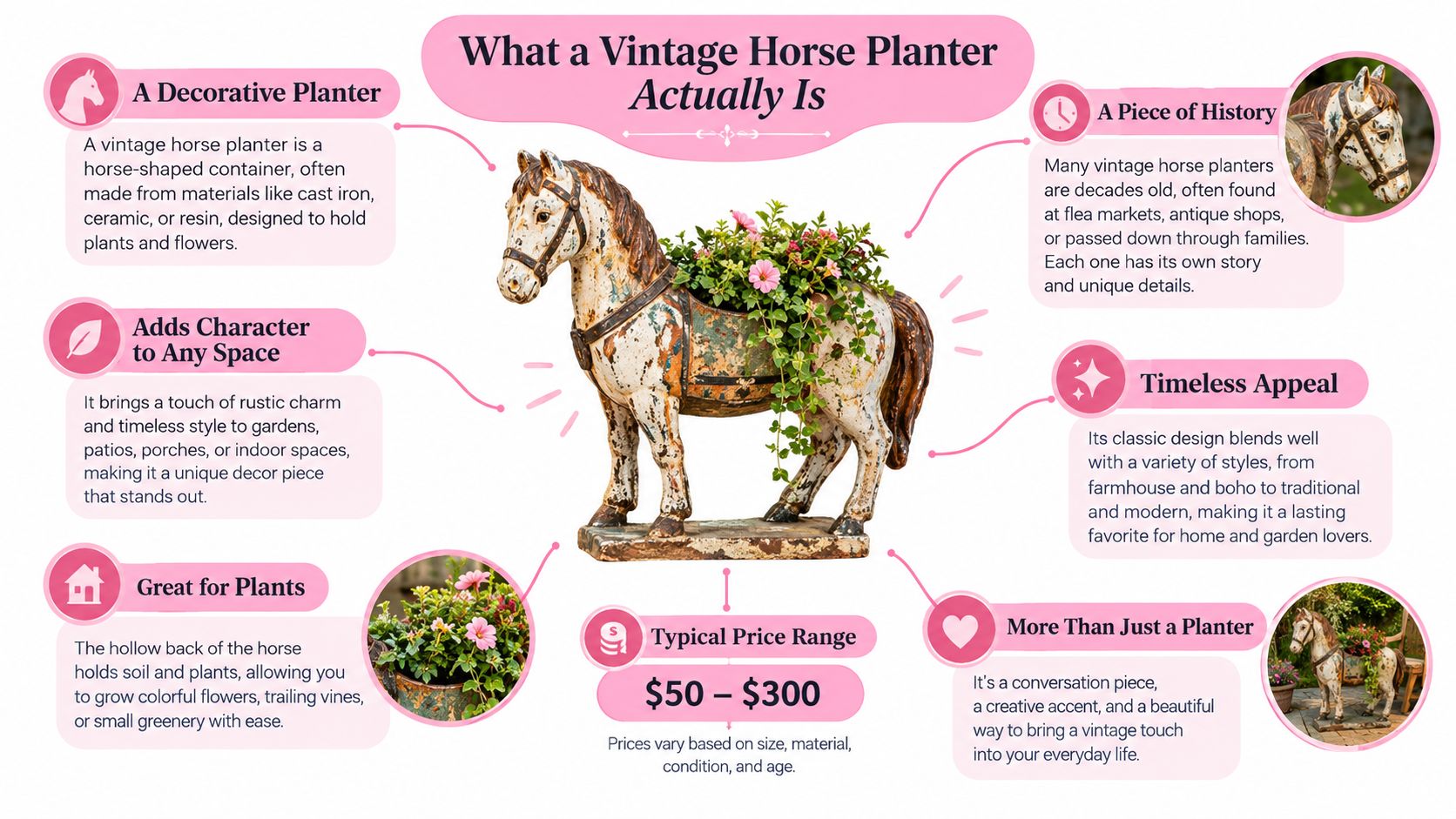
Start with function, then consider age
Manufacturers designed these objects as affordable household goods during the mid-century “window garden” movement. They were intended to hold indoor plants, while the animal shape gave an everyday container more personality. That background matters because many examples were useful homewares first, rather than luxury antiques.
Use also explains some normal wear. Soil, water, handling, and repeated cleaning can mark the interior and base. Mild surface aging may fit the object's history, but it cannot establish a precise date or maker by itself.
The word “vintage” is often applied loosely to newer planters with imitation glazes, molded details, or artificial crazing. Assess several construction clues together:
- A functional cavity: The opening should appear deliberately formed for a plant.
- A stable body: The horse should stand without excessive rocking.
- A plausible base: Mold seams, kiln marks, and a factory drainage opening can support an older attribution.
- A complete description: A careful seller should disclose repairs, drilled holes, staining, and reproduction status.
A drainage hole also changes how you use the piece. If you place it outside, compare its limitations with climate-resistant outdoor containers. Vintage ceramic may retain water, chip on impact, or suffer in freezing conditions, so a removable nursery pot can protect both the planter and the surface beneath it.
Why the Horse Shape Has Staying Power
Before tractor-driven equipment changed farming, horses pulled seed drills through field after field. That working bond left a visual legacy that decorative pottery borrowed freely. In American agriculture, horses powered planting and cultivation equipment before mechanized farming became dominant. A riding corn planter introduced from Galesburg in 1855 used a team of horses, a driver's seat, and a second rider who controlled seed release (history of horse-powered planting equipment).
The equipment also shaped the animal's meaning. Seeds had to be spaced so horses could move through the rows, while check-row attachments helped two-row planters create a regular checkerboard pattern. Horse-drawn drills became widely used for wheat and other small grains during the middle decades of the nineteenth century.
That working association gave the horse a rich visual vocabulary. It could suggest labor, cultivation, independence, rural prosperity, and skilled craftsmanship without showing an entire farm scene. A sculpted horse therefore carried a recognizable story in a compact form.
From working animal to window-garden ornament
The ceramic story arrived later. From the 1930s through the 1970s, American manufacturers produced figural planters in forms ranging from animals to sculptural novelties (overview of American figural planter production). Postwar demand encouraged varied decorative shapes, and the horse offered a balance between familiarity and personality.
A horse planter could suit a rural kitchen, a Western-inspired room, or a home where the owner really liked animals. It made a small plant feel intentional, connecting domestic life with the countryside and an older agricultural tradition.
That connection explains why the form still works in rooms without a strict theme. A ceramic horse beside books feels collected. Near riding boots or a framed rural scene, it becomes more specific. Even a simple brass accent, such as a horse-themed door knocker, reinforces the motif without requiring matching objects throughout the room.
The late 1970s brought a major industrial shift. International competition contributed to the closure of many American pottery companies, and surviving examples gradually changed from everyday décor into representatives of American industrial and design history. The horse shape attracts attention, but a collector should still judge the maker, glaze, production period, drainage design, and condition. Those details separate a meaningful vintage piece from a newer object borrowing an old visual language.
How to Identify an Authentic Vintage Piece
Turn the planter over before judging its color. Chartreuse glaze and softly faded cream can suggest age, but surface appearance is easy to reproduce. The underside often preserves better evidence, including marks, construction details, kiln wear, and drainage work.
Inspect the base in a deliberate order
Photograph the base and every mark before cleaning. Record the maker's name, town, country designation, impressed lettering, painted initials, or partial symbol. An incomplete mark can still help when compared with pottery references. Keep the original residue visible until you have documented it.
Examine how the body was formed. Mold seams may run along the horse's body, legs, neck, or underside. Their presence does not disqualify a piece. Look instead for seams that fit the object's manufacture, alongside areas that may have been heavily ground or altered.
Small kiln-support abrasions can appear where the planter rested during firing. These marks do not prove age or attribution on their own, yet they add useful context when they agree with the mark, clay body, glaze, and overall construction.
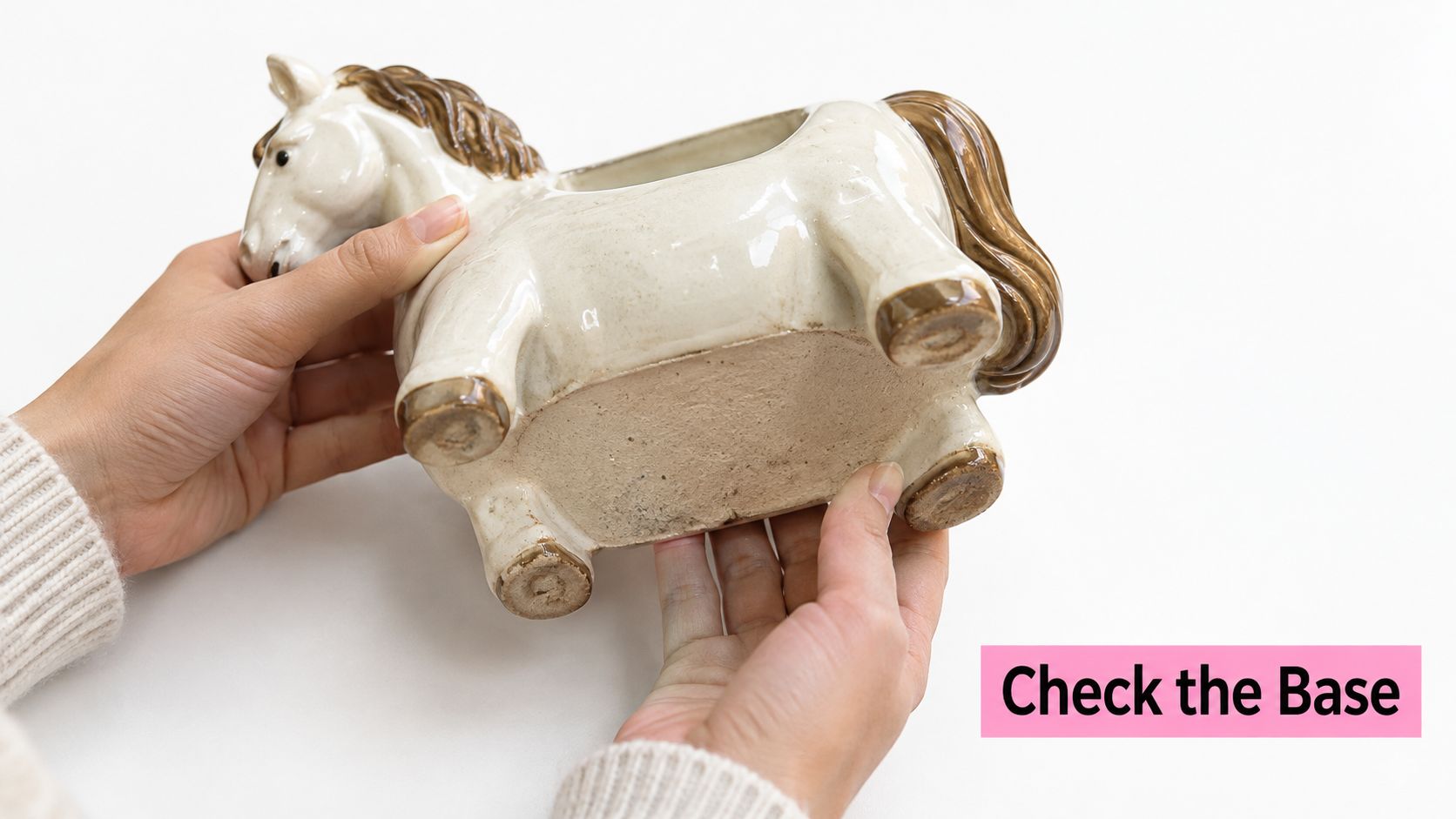
Check the drainage opening closely. A clean, sharp-edged hole is consistent with original manufacture. A ragged or uneven opening may indicate later drilling, which can alter collectible integrity and water management. Look for stress radiating from the hole, especially around a thin base.
A useful documented example
Stanford Pottery of Sebring, Ohio, produced documented novelty and artware examples during approximately the 1940s and 1950s. The company operated from the mid-1940s through 1961, and its production also included kitchenware, as shown by this documented Stanford Pottery example.
Attribution should follow a visible process. Photograph the mark, compare the glaze and body with documented examples, inspect mold seams and kiln abrasions, then review the base and condition before assigning a date range. A period estimate supports the identification, but it cannot replace physical evidence.
Practical inspection: Use a phone light and, if available, 10× magnification around the drainage hole, rim, ears, and tail. Small details often reveal more than the front glaze.
An intact mark can support authenticity, while an unmarked piece may still be vintage. Labels can be lost, paper marks can disappear, and smaller manufacturers may have used limited identification. A mark also does not prove that every part remains original. Repaired ears, tails, rims, and drilled bases require separate disclosure.
For comparison, a carefully made equestrian accent such as a horse collar mirror belongs to another object category. Its construction clues differ from those of a functional ceramic planter, so compare like with like.
Reading Condition, Patina, and Real Damage
Age and damage aren't interchangeable. A planter can have an attractive old surface and remain structurally sound, while a cleaner-looking piece can hide a serious crack or unstable repair.
Fine, interconnected crazing is a glaze-network phenomenon. If the clay body remains intact, those hairline patterns may be cosmetically acceptable and can contribute to the object's character. A crack that travels through the ceramic body is different. So are chips that expose raw clay, soft areas, or moisture that darkens and remains after washing.
Use the surface as evidence, not decoration
Hold the planter under even light and examine the places where stress concentrates. Horse-form planters have narrow projecting features, including ears, legs, tails, and sometimes a raised muzzle. Handling loads collect at those points, so a small repair may be more consequential than a broad patch of glaze crazing.
| Surface Cue | What It Usually Means | Action for Buyer |
|---|---|---|
| Fine interconnected glaze lines | Aging in the glaze surface, with the body possibly intact | Accept only after checking for deeper cracks and moisture problems |
| Crack continuing through the ceramic | Potential structural failure | Ask for close photographs and consider passing |
| Chip exposing raw clay | Loss of protective surface and possible water entry | Treat as a condition defect, especially near the cavity or base |
| Persistent darkening after washing | Possible absorption, microfracture, or moisture retention | Don't plant directly; assess with a removable liner |
| Repaired ear, tail, rim, or leg | Previous mechanical damage | Request repair details and inspect stability |
| Uneven drilled drainage hole | Possible later modification | Factor in altered originality and water behavior |
A darkened interior isn't automatically disastrous. Porous ceramic can absorb moisture, and glazed surfaces don't guarantee that the clay body or seams are waterproof. The concern rises when darkening persists unexpectedly, the body weeps, or the planter feels soft around a damaged area.
Don't “improve” the evidence before you've assessed it. Wire brushes, abrasive pads, and acidic cleaners can remove glaze, alter painted decoration, and erase clues useful for attribution. For loose debris, conservation-oriented care favors distilled water and soft nylon brushes (gentle inspection and cleaning guidance).
Pass on the piece, not the patina: Original wear can be charming. Unstable appendages, spreading cracks, and trapped moisture are functional problems, whatever the seller calls them.
Styling and Placement Ideas That Work
A horse planter registers best when the surrounding arrangement leaves its silhouette visible. Bury it among small figurines and the form disappears. Give the head, neck, and any projecting details enough open space to read clearly from the doorway.
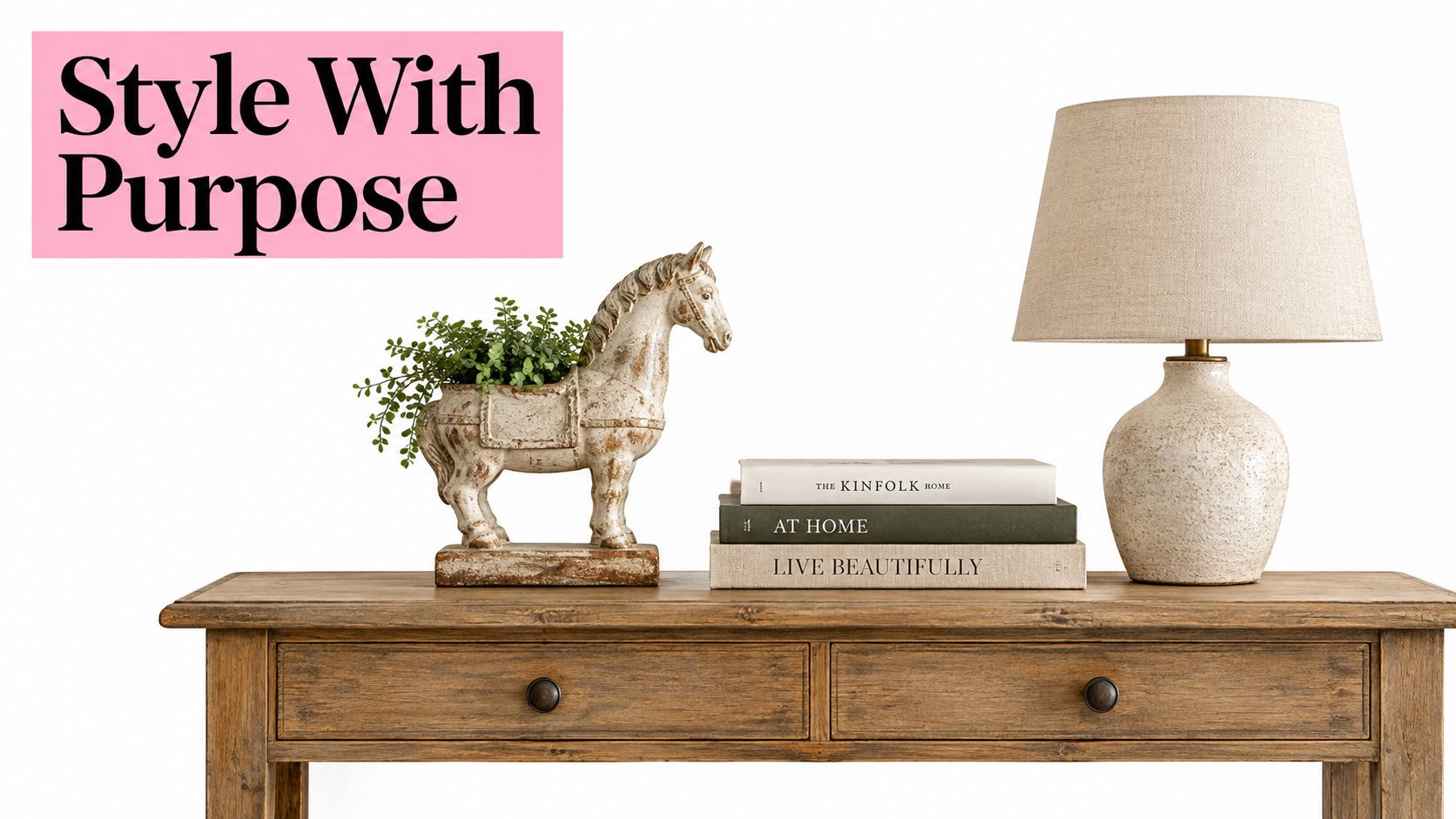
An entryway console provides a dependable starting point. Set the planter toward one side, place a short stack of books near the center, and balance the opposite side with a lamp or framed photograph. Choose greenery with a restrained shape, such as a small trailing plant or compact foliage. A sprawling plant can hide the face that gives the piece its character.
Match the display to the room
A mantel suits a horse planter when nearby materials echo its age without repeating its shape. Wood, woven texture, an old-looking print, or one metal accent can support the display. Keep the palette quiet if the glaze is colorful. The goal is a found object with a practical history, not a themed centerpiece assembled from matching horse motifs.
On a bookshelf, use the planter as a visual pause between vertical rows of books. A small plant softens the arrangement, while a removable nursery pot keeps loose soil away from the ceramic. Measure the inner cavity before buying a plant. The root ball should leave an air gap instead of pressing against the walls, since tight contact makes removal and watering harder.
A kitchen nook can hold the planter as decoration. Keep herbs and other edible plants in containers made for food use, with suitable drainage. An unknown vintage vessel belongs nearby as an ornamental accent, not as the growing container for something you plan to eat.
Decide where water can safely go
Indoor placement gives you better control over spills, temperature, and handling. For a porch or sheltered outdoor grouping, put the planter on a saucer or raised surface, and keep thin ears, tails, and legs away from busy paths. Porous ceramic can suffer in freezing conditions because retained water expands inside the body.
If several containers need to work together, AI garden design can help test grouping, scale, and placement before you move heavy pots. Treat the result as a layout aid. Check the planter's real drainage, balance, and surface before adding water.
Here's a short visual reference for combining vintage forms with plants and surrounding décor:
A covered porch grouping might place the horse planter beside a modern weather-resistant pot, a low stool, and one taller plant. That contrast keeps the vintage piece from appearing overly delicate or precious. For further ideas on combining equestrian objects with furnishings, explore this guide to vintage horse décor.
Care, Cleaning, and the Safety Conversation
A vintage horse planter should be treated as ornamental pottery, especially when its glaze, paint, and manufacturing history are unknown. Antique and unknown-source pottery may contain lead in glazes or painted decoration. The FDA specifically flags antique, damaged, excessively worn, handmade, and unreliable-source pottery as higher-concern categories and advises against using untested pieces for cooking, serving, or storing food (FDA guidance on lead-glazed pottery).
That makes the safest setup straightforward. Put a nursery pot inside the horse planter, use it for a non-edible plant, and prevent drainage water from contacting soil used for food crops. Don't assume that an attractive patina means the surface is harmless.
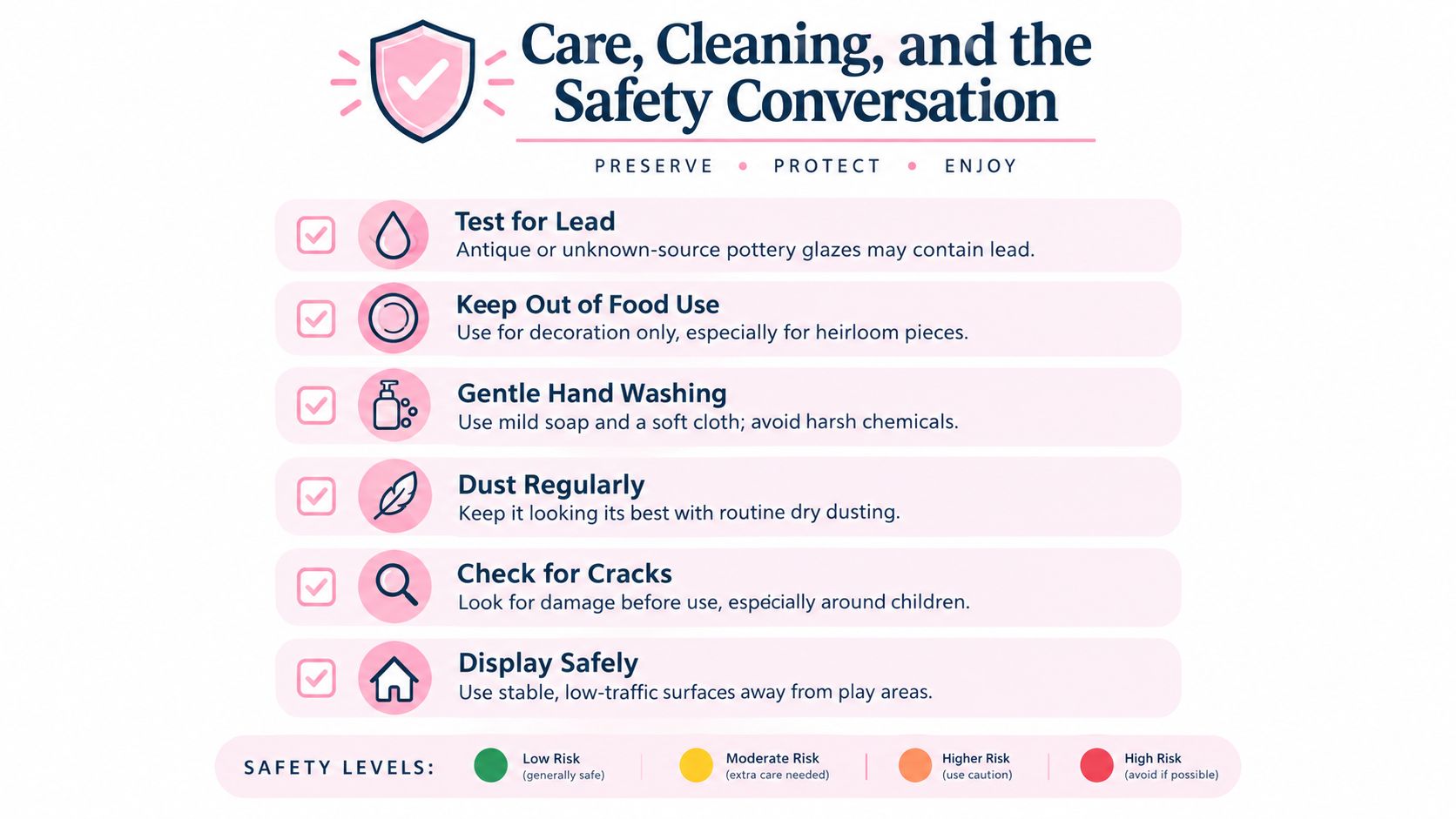
Make the home environment part of the decision
Damaged pieces deserve extra caution around children and pregnant people. Keep them on stable, low-traffic surfaces away from play areas, and avoid dry sanding, scraping, or activities that could release dust from old finishes. If the object has extensive wear, old paint, or a questionable repair, ask a qualified conservator about testing and treatment.
Home lead-testing kits are available, but a negative or unclear result shouldn't encourage food use in an object with an unknown history. Testing and professional advice are more appropriate when the planter has painted decoration, significant damage, or a restoration project attached to it.
Clean gently and preserve the evidence
Begin with loose dust. Use a soft cloth or soft nylon brush, then use distilled water sparingly on a small area. Don't soak the planter, seal the drainage hole, or use acidic cleaners to brighten discoloration.
Avoid:
- Wire brushes: They can scratch glaze and remove surface evidence.
- Abrasive pads: They may change the finish around crazing and repairs.
- Acidic products: They can affect glaze, decoration, and exposed ceramic.
- Direct food planting: Unknown materials and drainage water make this an unnecessary risk.
- Sealing a drainage opening: Trapped water can produce persistent saturation and root problems.
If the planter lacks drainage, keep the plant in a removable nursery pot. Confirm that the root ball leaves an air gap inside the cavity, because a tight fit can limit ventilation and make removal difficult.
Safe-use baseline: Display the horse planter with a removable liner and ornamental plants. If you can't verify the glaze and history, don't use it for food, cooking, serving, or storage.
Buying Considerations and a Final Checklist
The cleanest horse planter isn't automatically the best one. Current garden-design reporting identifies nostalgia, patina, durability, and buy-it-for-life products as growing 2025 preferences, while also recognizing that visible age can be difficult to separate from structural failure (garden-design reporting on 2025 preferences).
That distinction should shape your purchase. Fine crazing may preserve the history of the surface. A spreading body crack, loose tail, unstable base, rust-through on a metal component, sharp edge, or waterlogged interior is a functional defect. “Authentic wear” isn't a magic phrase that makes those problems disappear.
Ask these questions before paying
- Maker mark: Is the underside photographed clearly, including partial or faint marks?
- Construction: Can you see mold seams, kiln-support abrasions, or evidence of later alteration?
- Drainage: Is the opening clean and factory-made, or ragged and possibly drilled later?
- Scale: Will the cavity fit a removable nursery pot without forcing the root ball?
- Weight and stability: Does the piece stand securely, and can the seller describe its material?
- Repairs: Are ears, tails, legs, rims, or painted details repaired?
- Water behavior: Has the seller disclosed staining, weeping, or a missing drainage hole?
- Returns: Can you return the object if hidden damage appears after delivery?
A seller who provides underside photographs, repair details, and clear condition language gives you more useful information than one who relies on “rare-looking” color or exaggerated age claims.
When in doubt, buy it for display rather than direct planting. Preserve the original wear, clean only what you understand, and resist repainting a surface just because it isn't bright. The most appealing piece may be the one with honest character, provided its structure is sound and its use is safe.
Bridle Up Hope Shop offers horse-themed home décor, kitchen goods, artwork, books, toys, and gifts for equestrian households, with 100% of annual net profits donated to the Bridle Up Hope foundation. Visit Bridle Up Hope Shop to find a complementary horse-inspired piece while supporting its work with girls and women through horses and habits.
Leave a comment