


You're standing in front of a wall of western boots for women, forty pairs deep, with tags swinging from every pull strap. The sales associate is drifting closer, you've already rejected three colors, and somehow none of the boots feels like an obvious yes.
That's because the useful decision rarely starts with embroidery or heel color. Start with what you'll do in the boots, what your foot and calf need, and how much break-in you'll tolerate. A beautiful boot that pinches your instep or fights your stride is an expensive decoration.
Western boots are built around structure. The shaft, heel, toe box, and construction determine whether a pair works for riding, walking city streets, styling with an English wardrobe, or wearing only for occasional events. The practical details matter even more if you want your purchase to support equestrian causes.
Table of Contents
- Finding the Right Pair When the Wall of Boots Feels Overwhelming
- What Makes a Boot a Western Boot
- Cowboy, Roper, and Fashion Styles Compared
- How a Western Boot Should Fit Your Foot and Calf
- Materials, Toe Shapes, and Heel Types That Change Everything
- Styling Western Boots for English and Western Looks
- Breaking In and Caring for Your Boots So They Last
- Buying With Heart and What to Look For First
Finding the Right Pair When the Wall of Boots Feels Overwhelming
A crowded boot wall gets easier once you decide how the pair must perform. Choose among riding, daily walking, wardrobe styling, or occasional wear before judging stitching or color. Riders need a stable heel and a shaft that stays in place. City wear demands an easy stride and a silhouette that works with your clothes. Occasional wear allows more break-in time, never a poor fit.
Start with the three decisions that matter
Check heel geometry first. A lower roper-style heel suits walking, while a more angled heel creates a stronger riding profile. Western boots commonly pair a 1 to 2 inch heel with a tall shaft, using their structure to support the foot and keep the boot secure. A technical breakdown of shaft height and heel geometry for women's cowboy boots explains how shaft height, heel height, and opening measurements affect pull-on ease, calf room, and stirrup stability.
Measure the shaft opening against your calf. Flexible-looking leather does not guarantee enough room. Compare the opening with the widest part of your calf, then account for whether jeans will sit inside the shaft. A boot that works over bare legs may feel restrictive over denim.
Choose the toe shape based on both appearance and time on your feet. Pointed and snip toes create a sharper line. Round and square toes leave more usable room for your toes, a practical advantage for walking, errands, and long barn days.
Practical rule: If a boot fails the heel, shaft, or toe test, its color won't rescue it.
For equestrians, this western riding apparel guide helps distinguish a pair meant for a genuine riding wardrobe from one that borrows western details. Narrow the rack to three candidates, then test each one for calf clearance, heel stability, and a natural stride. The pair that passes those checks deserves your money. The prettier pair that pinches belongs on the shelf.
What Makes a Boot a Western Boot
A western boot earns its identity through structure, not decorative stitching. The design grew from riding, repeated wear, and pulling the boot on without traditional laces. For an English rider adding western boots to her wardrobe, heel geometry and fit matter more than a flashy pattern.

Read the boot from the ground up
The shaft extends above the ankle, shielding the lower leg from brush, stirrup leathers, and friction. Women's western boots often have shafts around 11.5 to 13 inches and openings around 13 to 15.3 inches. Those dimensions affect pull-on ease, calf room, and how securely the boot sits during riding or long wear. A technical overview of shaft height and boot opening measurements explains why those proportions influence coverage, comfort, and stability.
The heel is generally stacked or angled instead of flat. A defined riding heel helps keep the foot positioned in a stirrup, while a lower roper heel provides a steadier base for walking. Judge the shape and placement, not the word “cowboy” in a product description. For an English wardrobe, a moderate heel usually integrates more easily with breeches, denim, and everyday trousers.
The toe affects appearance and usable space. Round, wide square, snip, and pointed shapes all belong to western design, yet each gives your toes a different amount of room. Pointed toes create a refined line, but an aggressively narrow last can make long barn days miserable.
The construction controls flexibility, durability, and repair options. Traditional boots may use welted construction, while fashion pairs often use cemented construction. A welt can support future resoling, though it may add stiffness and weight. Cemented boots can feel lighter and more flexible, making them suitable for a rotating wardrobe rather than demanding barn work.
A modern western boot can soften these conventions. Shorter shafts, quieter stitching, and less dramatic heels still communicate western character without looking like costume wear. Check the whole boot: shaft, heel, toe, and construction should suit how you ride, walk, and dress. A charitable purchase adds another filter, so favor a pair whose quality supports long use rather than a short-lived trend.
Cowboy, Roper, and Fashion Styles Compared
Choose by how you will use the boots, not by the label alone. The classic cowboy, roper, and fashion western styles share western roots and a pull-on design, yet their heel geometry, shaft proportions, and outfit compatibility differ sharply.
| Style | Shaft Height | Heel Height | Common Toes | Best For | Trade-off |
|---|---|---|---|---|---|
| Cowboy | Around 12 to 13 inches | Around 1.5 inches | Pointed, snip, or round | Riders and traditional western wardrobes | More decorative and less universally easy to style |
| Roper | Around 10 inches | Near 1 inch | Round or square | City walking, casual jeans, practical daily wear | Less dramatic western profile |
| Fashion western | Varies, often softened | Varies, often stacked | Pointed, snip, or softened square | Dresses, cropped trousers, occasional wear | Construction and comfort can vary sharply |
The classic cowboy boot suits a rider who wants an authentic shaft, a defined riding heel, and unmistakable western character. Its 12 to 13 inch shaft and roughly 1.5 inch heel create the traditional profile. Decorative stitching adds personality, but it can make the pair harder to wear with fitted English pieces or restrained city clothing. For an English wardrobe, inspect the heel angle and shaft line before choosing elaborate decoration.
A roper is the practical choice for a woman who walks more than she rides. Its shorter shaft and lower heel work well with jeans, sit more subtly beneath straight-leg trousers, and feel less imposing on concrete. The trade-off is a less dramatic western outline, which may matter if traditional riding style is the point of the purchase.
Fashion styles earn their place through versatility
Fashion western boots keep the western vocabulary while changing the proportions. A softened shaft, gentler toe, or stacked heel can work with dresses, cropped trousers, and everyday denim. Choose this style for occasional wear, especially if you want one pair that supports both western outfits and polished English-inspired clothing.
Current styling coverage favors pared-back western and equestrian silhouettes, neutral chestnut and cognac shades, subtle stitching, patinaed leather, and architectural heels over heavy themed decoration. Current western boot direction and styling coverage supports choosing a refined pair if you want the boots to stay useful beyond one trend cycle.
Prioritize the construction behind the appearance. A striking toe or tall shaft cannot compensate for a heel that feels unstable or proportions that fight your wardrobe. If the purchase also supports a charitable cause, select the pair with durable materials and a shape you will wear repeatedly. Long use gives both the boots and the purchase greater value.
How a Western Boot Should Fit Your Foot and Calf
A boot can look perfect on the shelf and fail within minutes of walking. Judge the fit by your instep, heel, toes, calf, and stride together. Pull-on construction gives you no laces to fine-tune the hold, so the first try-on matters.

Use five checks before judging the size
- Test the instep. The leather should hug the top of your foot without pinching or leaving a large gap. Firm contact is right. Numbness, sharp pressure, or restricted foot flexion means the fit is wrong.
- Watch the heel. A new pull-on boot may lift slightly at first while the sole and leather adjust to your stride. That movement should settle as the boot breaks in. Dramatic lift with every step points to excess length, a loose fit, or a last that does not suit your foot.
- Check toe movement. Your toes need room to wiggle, and your longest toe should stay clear of the front. Do not size down just to stop ordinary heel movement. A cramped toe box will not become comfortable through break-in.
- Measure your calf. Measure the widest part of your calf while wearing the socks or light layers you plan to use. Compare that measurement with the listed shaft opening. Women's western boots commonly list openings around 13 to 15.3 inches, so shaft width deserves the same attention as foot length. The boot measurement guide explains how the opening affects calf accommodation.
- Walk before deciding. Try both boots and walk long enough to expose rubbing, pressure, or a collapsing arch. Bend your knees, sit, and cross a firm surface. A boot that feels acceptable while standing can become painful once your stride and posture change.
Size by the boot's last, not the label
Traditional western boots vary between brands, and a recommendation to size down only works when the length, instep, and toe space already suit you. Treat the label as a starting point. Use your instep, heel hold, toe room, and calf measurement together, then check the maker's chart.
A good fit feels close, not hostile. Wear the socks you plan to use, and make sure the shaft clears the back of your knee without digging into it or catching against your calf. That fit matters even more when you move between an English wardrobe and western clothing, because a boot that pinches or shifts will not earn regular wear in either one.
Materials, Toe Shapes, and Heel Types That Change Everything
A boot's material, toe box, and heel geometry determine how it breaks in, carries your weight, and fits your wardrobe. Full-grain leather usually molds most precisely over time when cared for properly. It can feel firm at first, but the vamp and counter respond to repeated wear.
Suede feels softer and looks more relaxed, though wet conditions demand stronger protection and consistent care. Exotic skins, including snakeskin and ostrich, add texture but may stretch unevenly. Buy them with a precise fit from the start. A loose exotic-skin boot rarely improves with wear.
Match the toe and heel to the day ahead
| Feature | Best For | Trade-off |
|---|---|---|
| Pointed or snip toe | Dressier outfits and a longer visual line | Less forgiving if your forefoot needs room |
| Square toe | Wider feet and modern everyday styling | A broader, less traditional silhouette |
| Round toe | Balanced comfort and classic casual wear | Less sharply tailored than a pointed toe |
| Lower roper heel | Walking, commuting, and stable daily wear | Less lift and less dramatic posture |
| Angled cowboy heel | Riding influence and traditional western shape | Can feel less relaxed for extended city walking |
| Taller fashion heel | Statement outfits and polished styling | More fatigue during a long day |
Heel geometry matters more than height alone. A lower, stable heel keeps your foot from feeling pushed forward. An angled heel gives the boot a stronger riding identity and changes how your weight settles through the sole. Western boots commonly use heels near 1.75 to 2 inches, with retail specifications also showing options around 1.75 inches and 2 inches. Shaft proportions affect that balance too, so compare the full boot shape rather than judging height in isolation.
Fit beats finish: A square toe in excellent leather will serve you longer than a fashionable pointed toe that compresses your forefoot.
For wider feet, start with a square or generous round toe. A pointed or restrained snip toe suits a sleek English wardrobe, but only if your forefoot has enough room. The toe should refine the outfit, not force your foot into a shape it cannot tolerate.
Daily barn work calls for a stable heel and sole matched to the ground you cover. Before choosing a fashion-first pair, compare riding-focused construction and priorities in this western riding boot comparison guide. Spend on the structure that supports your stride first, then choose the finish.
Styling Western Boots for English and Western Looks
Western boots work with an English wardrobe when you focus on shared equestrian lines instead of forcing a full rodeo outfit. A dark walnut or black boot with a slim shaft pairs well with breeches, a fitted button-down, and a quilted vest. The result looks intentional because the boot echoes the practical shape of riding gear without competing with every other piece.
For a Western-leaning outfit, use the boot as the anchor. Pair a mid-rise boot-cut jean with a brushed cotton shirt and a leather belt whose buckle picks up the boot's hardware. Keep the rest simple. One strong western element looks considered; a matching hat, oversized buckle, embroidered shirt, and elaborate boot can quickly become too literal for everyday wear.
Build the outfit around the hem
The shaft should meet the clothing cleanly. Let boot-cut jeans cover the shaft when you want a long, uninterrupted leg line. Tuck slim jeans into a taller shaft when the boot is the main feature and the fabric won't bunch uncomfortably.
Dresses and skirts give fashion western boots more room to show their shape. A restrained boot in cognac, chestnut, dark brown, or black can ground a simple dress, while a decorative pair should remain the only loud element. For more outfit formulas, this boots with dresses style guide is useful because it focuses on proportion and hem placement rather than treating boots as a costume accessory.
Three combinations worth repeating
- English-inspired: Dark walnut boots, fitted breeches, a crisp shirt, and a quilted vest. Keep jewelry minimal and let the boot's shaft create the vertical line.
- Western everyday: Boot-cut denim, a brushed cotton shirt, a leather belt, and a simple jacket. Match the mood, not every color.
- Crossover weekend: A midi skirt or relaxed dress, a neutral fashion western boot, and a structured blazer. The blazer keeps the outfit polished while the boot supplies the equestrian edge.
The equestrian style clothing collection can help you think in terms of coordinated English and Western pieces. Buy the boot that complements the clothes you already wear, not the fantasy wardrobe you rarely reach for.
Breaking In and Caring for Your Boots So They Last
New leather boots are a short project, not instant footwear. Start at home with thin socks and a brief session of roughly 30 to 60 minutes a day, then increase wear only when your feet show no hot spots. Practical western boot care guidance also recommends wearing quality leather boots around the house before relying on them for a major outing.
A calm break-in routine works best
Begin with the vamp and counter, the areas most likely to resist your foot. Apply a suitable leather conditioner within the first week, testing it on an inconspicuous area first. If the instep feels tight, a boot stretcher or professional cobbler is safer than aggressively forcing the leather.
A light application of warm water can help some leather soften, but don't soak the shaft. Excess moisture can distort the shape, stain the finish, or leave the boot drying unevenly.

Keep dirt, water, and bad storage under control
Brush off dust after each wear, especially around the welt and stitching. Condition when the leather begins to look dry, and apply a waterproofing product before a wet season if it suits the material. Suede needs a product made for suede, while smooth leather needs a compatible cream or conditioner.
Store boots upright with boot trees, shaped inserts, or rolled material inside the shaft. Don't leave them collapsed under a bed. Rotate pairs so the leather has time to dry between wears, and take the boots to a cobbler when the heel cap or sole shows meaningful wear.
Cobbler rule: Repair the heel or sole when the damage is still local. Waiting until the wear reaches the structure makes the repair harder and more expensive.
Good leather can serve through years of weekends, barn chores, and city days, but only if you treat care as part of the purchase. A sturdy boot without maintenance is still a neglected boot.
Buying With Heart and What to Look For First
You are standing through a lesson, walking across concrete, or moving between the barn and town. Your boot needs to suit that day before its stitching wins you over. A lower roper-style heel handles daily walking more comfortably, while a sharper riding heel preserves traditional Western geometry. Skip a tall fashion heel for standing, walking, or barn work, even if it photographs beautifully.
Test the shaft sitting and walking. A tall shaft should cover the leg without pressing into the back of your knee, and the opening must fit your calf without painful pressure. Then inspect construction. A welted sole can justify a higher price if you want future repairs, while cemented construction works for a lighter fashion boot that rotates with other shoes.
Put your purchase to work twice
Choose a neutral boot with restrained detail if you want one pair to serve both English and Western wardrobes. Versatile silhouettes, cognac and chestnut shades, patinaed leather, subtle stitching, and hybrid styling work with dresses, blazers, midi skirts, and wide-leg trousers. That direction favors a refined boot over an aggressively themed rodeo design when repeated wear matters.
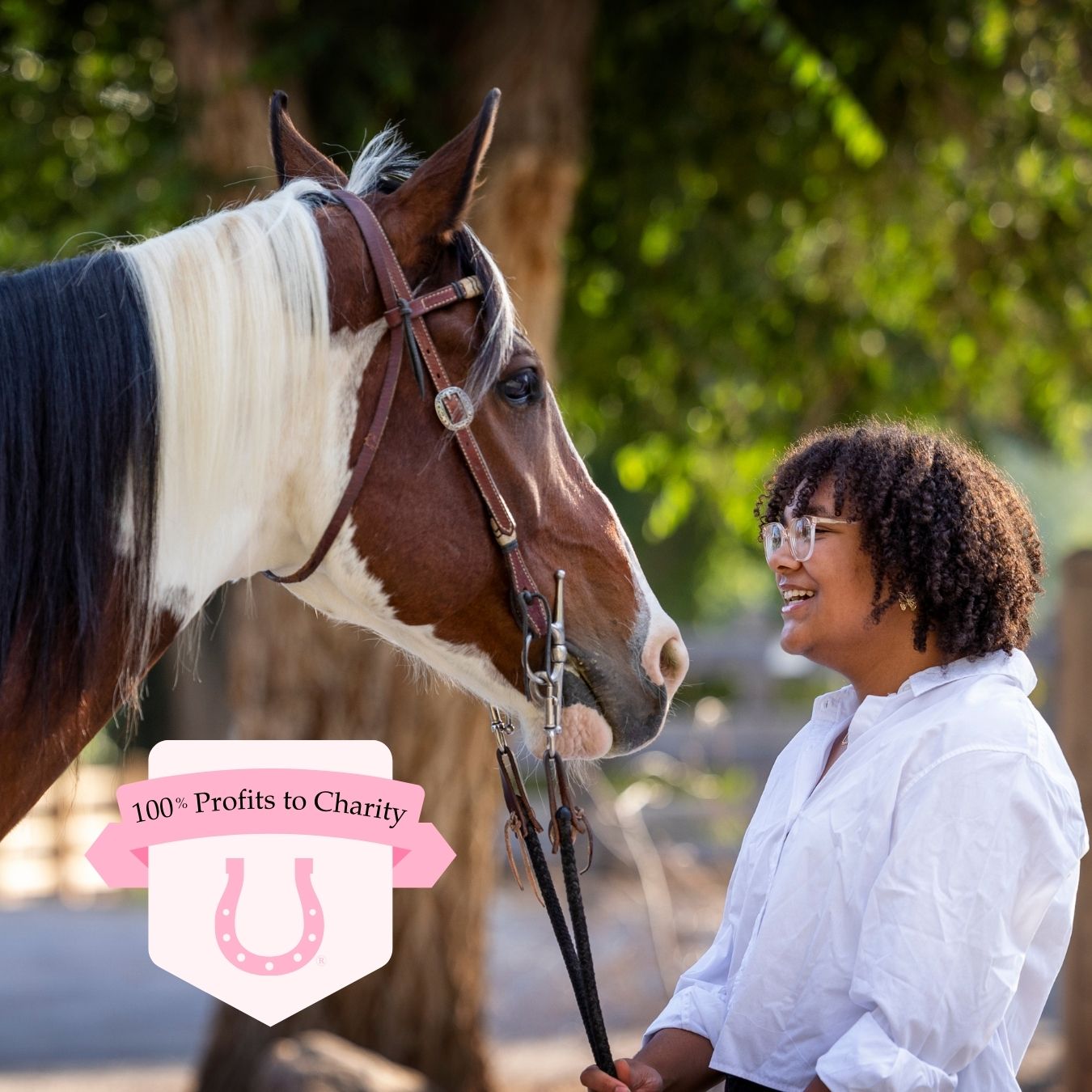
Decide where your spending should go. Bridle Up Hope Shop sells handcrafted Western boots and belts, plus equestrian apparel, accessories, gifts, and home goods. Its stated charitable model directs 100% of annual net profits to the Bridle Up Hope foundation, which supports girls and women through horses and habits. Your purchase can therefore support an equestrian cause as well as your wardrobe.
Fit still comes first. Measure your calf, test the instep, choose the heel for your actual routine, and confirm the return policy before ordering. Select the pair you will wear repeatedly. A meaningful purchase creates value only after it leaves the box and earns a place by the door.
Visit Bridle Up Hope Shop to browse Western boots, belts, and complementary English and Western equestrian goods. Choose a pair that fits your feet and wardrobe, then support a shop whose annual net profits benefit the Bridle Up Hope foundation.
Deje un comentario