


A farrier's discarded nail can look insignificant in a dusty workbench drawer. Bent into a curve, polished until its square head catches the light, it becomes a small piece of equestrian history worn on the hand.
Table of Contents
- The Enduring Appeal of Horseshoe Nail Rings
- History and Symbolism Behind the Design
- Materials and Craftsmanship in Equestrian Jewelry
- Finding Your Perfect Size and Fit
- Styling and Gifting Ideas for Horse Lovers
- Caring for Your Horseshoe Nail Ring
- Shopping with Purpose and Social Impact
The Enduring Appeal of Horseshoe Nail Rings
A horseshoe nail ring begins with a shape riders recognize before they ever think of it as jewelry. The shank tapers like a working nail, the head keeps its squared profile, and the curve follows the practical geometry of a fastener made to secure a horseshoe. In a thoughtfully made piece, those details remain visible. The ring doesn't merely display a horse motif. It preserves the silhouette of a farrier's tool.
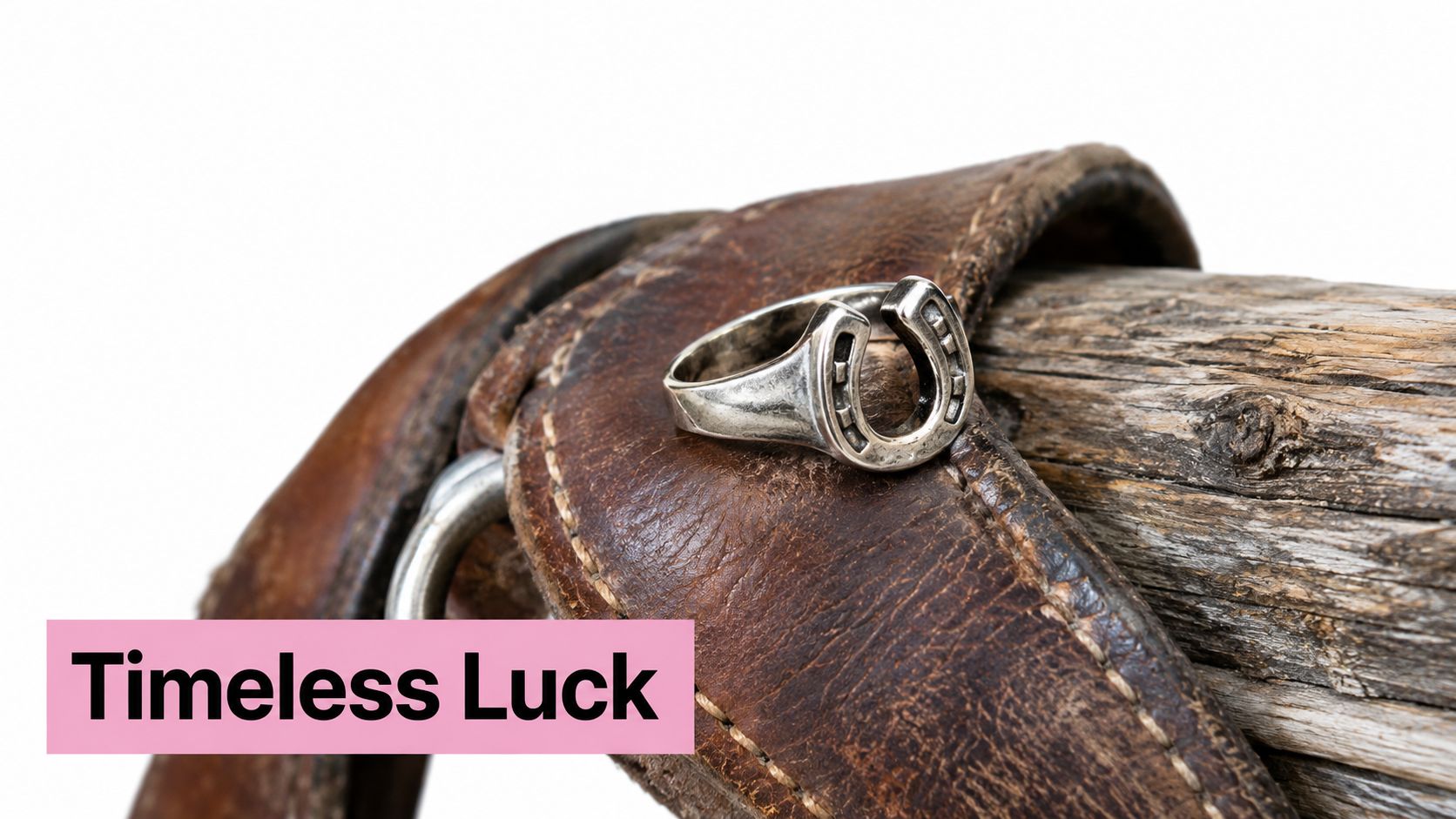
That distinction matters to an equestrian. A generic horseshoe charm can suggest luck, but a nail ring carries the working world of the horse with it. Its inspiration comes from the object a farrier heats, holds, drives, and replaces as part of caring for a horse's soundness. The finished ring turns a practical piece of equipment into something intimate, close enough to feel while gathering reins or fastening a stable door.
The form also makes the ring more interesting than a conventional polished band. The tapered shank creates visual movement, while the square nail head gives the design a small architectural point. Some versions are refined in silver or gold, and others retain a more rugged steel character. Either way, the recognizable proportions are what separate a genuine nail-inspired design from a ring that just carries a printed horseshoe.
Why the silhouette feels authentic
Authenticity doesn't require a ring to be made from an old working nail. A modern artisan may use sterling silver or gold while modeling the piece after an authentic horseshoe nail. What matters is whether the maker has respected the original object's geometry instead of flattening it into a generic fashion shape.
That approach creates a bridge between English and Western wardrobes. With a slim silver finish, the ring can sit beside a watch or a simple band at a show. With heavier texture or darker metal, it belongs naturally with denim, leather, and everyday barn clothing. Its meaning stays legible in both settings because the design begins with function.
Curator's eye: Look for the tapered profile and defined nail head first. Decorative horseshoe details are common, but the nail's proportions give this ring its story.
History and Symbolism Behind the Design
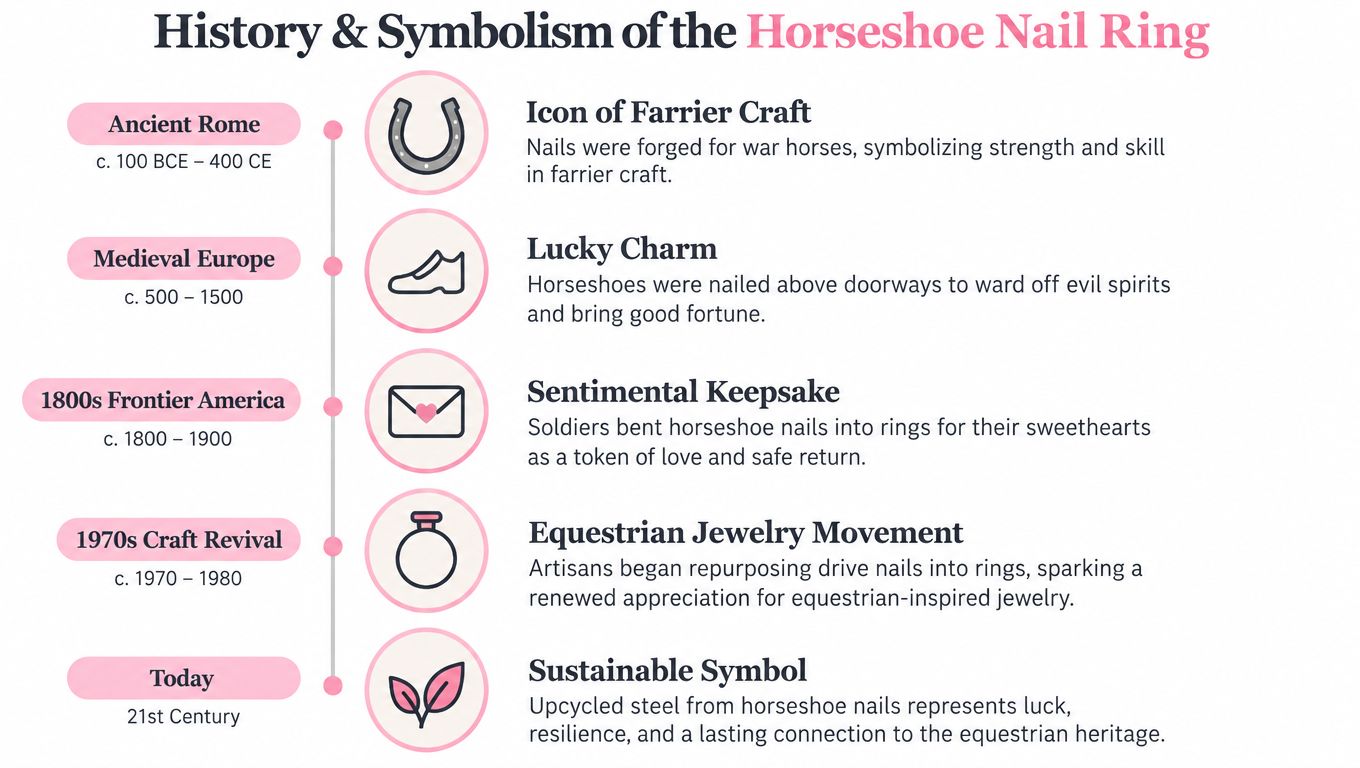
The story of horseshoe nail rings reaches beyond contemporary Western fashion. Fire Mountain Gems' history of Western jewelry describes a nail-making tradition that reflects more than 3,000 years of nail use. Early nails were forged by heating iron, drawing it into a pointed form, and finishing it with a square head. That basic shape still appears in the ring on a modern wearer's finger.
The horseshoe developed its own long history. Cast bronze horseshoes with nail holes became common in Europe around 1000 AD, while nailed iron horseshoes were certainly in use by the early Middle Ages, around the 9th and 10th centuries. These dates don't prove that today's jewelry form existed unchanged, but they show why the motif carries such a deep association with the horse, the forge, and practical protection.
From protective iron to personal talisman
A historical account in Martin Duffy's discussion of nail symbolism records that horseshoe nails were fashioned into rings in medieval France. Brides wore them to draw favorable auspices, and people also treated them as protection against evil and bad luck. Scholars have identified horseshoe nail rings as one of the common magic charms worn to protect against accident and injury.
The symbolism rests on more than the horseshoe outline. Iron itself was repeatedly associated with protective power, while the blacksmith's ability to transform heated metal gave forged objects an almost mysterious authority. A nail ring therefore joined three ideas: the horse as a source of livelihood and movement, iron as a ward, and craftsmanship as a form of resilience.
That meaning has never been fixed. One wearer may see the ring as a lucky charm before a competition. Another may value it as a reminder of a first horse, a trusted farrier, or a family connection to rural work. The historical record supports the protective association, but modern wearers are free to interpret it through their own riding culture.
The industrial turn
By the 1800s, the horse industry had become industrialized enough for horseshoe nails to be mass-produced. Daniel Dodge, Silas Putnam, and George Capewell patented nail-making machines in the mid-1800s, and Daniel Dodge received the first horseshoe nail patent in 1863, as described in the Fire Mountain Gems reference above.
Mass production changed access to the working nail, but it didn't erase the older folklore. Instead, it helped the form travel beyond individual blacksmith shops. When a utilitarian nail became a keepsake, the wearer could carry a fragment of farrier tradition without owning a forge.
For a broader look at how equestrian symbols carry meaning in jewelry, explore Bridle Up Hope's guide to horseshoe necklace meaning. The same themes of luck, protection, and horse-human connection continue in modern accessories, even when the original working context has changed.
Materials and Craftsmanship in Equestrian Jewelry
A farrier's horseshoe nail begins as working hardware, not jewelry. Made from hardened steel, it must withstand the demands of the hoof, so its strength can make direct bending unsafe. The jeweler's first challenge is to respect that material while changing its purpose.
Before shaping, the maker heats the steel to a dull red and lets it cool slowly. This annealing process softens the metal for controlled forming on a ring mandrel. Once the curve is established, the maker removes scale, refines the edges, and polishes the surface. Each step affects how convincingly the finished ring carries the character of a farrier's tool.
Steel, silver, and gold
Actual steel keeps the strongest visual link to the forge. Its dark, workmanlike surface suits an understated riding wardrobe, yet the finish deserves close attention. Steel forced into shape without proper softening may crack, and an uneven polish can leave edges that catch on gloves, clothing, or horsehair.
Sterling silver and gold offer a different route. They preserve the nail's recognizable head and tapered shank while giving the wearer a surface designed for regular jewelry use. Handmade sterling silver designs in the equestrian market show how the nail's form, rather than a generic band, carries the identity of the piece. Jamie's Horse Jewelry's horseshoe collection provides examples of this approach.
Details that signal careful work
Run a fingertip over the point where the nail head meets the shank. That transition should feel deliberate, without a sharp ridge or bulky lump. The taper should look balanced from above, and the underside should sit smoothly against the finger.
Before ordering, ask the seller about:
- Base metal: Confirm whether the ring is solid steel, sterling silver, gold, or another material.
- Surface treatment: Check whether it is polished, oxidized, plated, or intentionally patinated.
- Construction: Ask whether the piece is forged, cast, or assembled from separate parts.
- Sizing policy: Confirm the available size, since the curved profile can limit later alteration.
A low-cost ring can copy the outline while missing the details that make it wearable. Careful work preserves the meeting point between utility and refinement, allowing a small piece of farrier heritage to function as thoughtful equestrian jewelry rather than a novelty accessory.
Finding Your Perfect Size and Fit
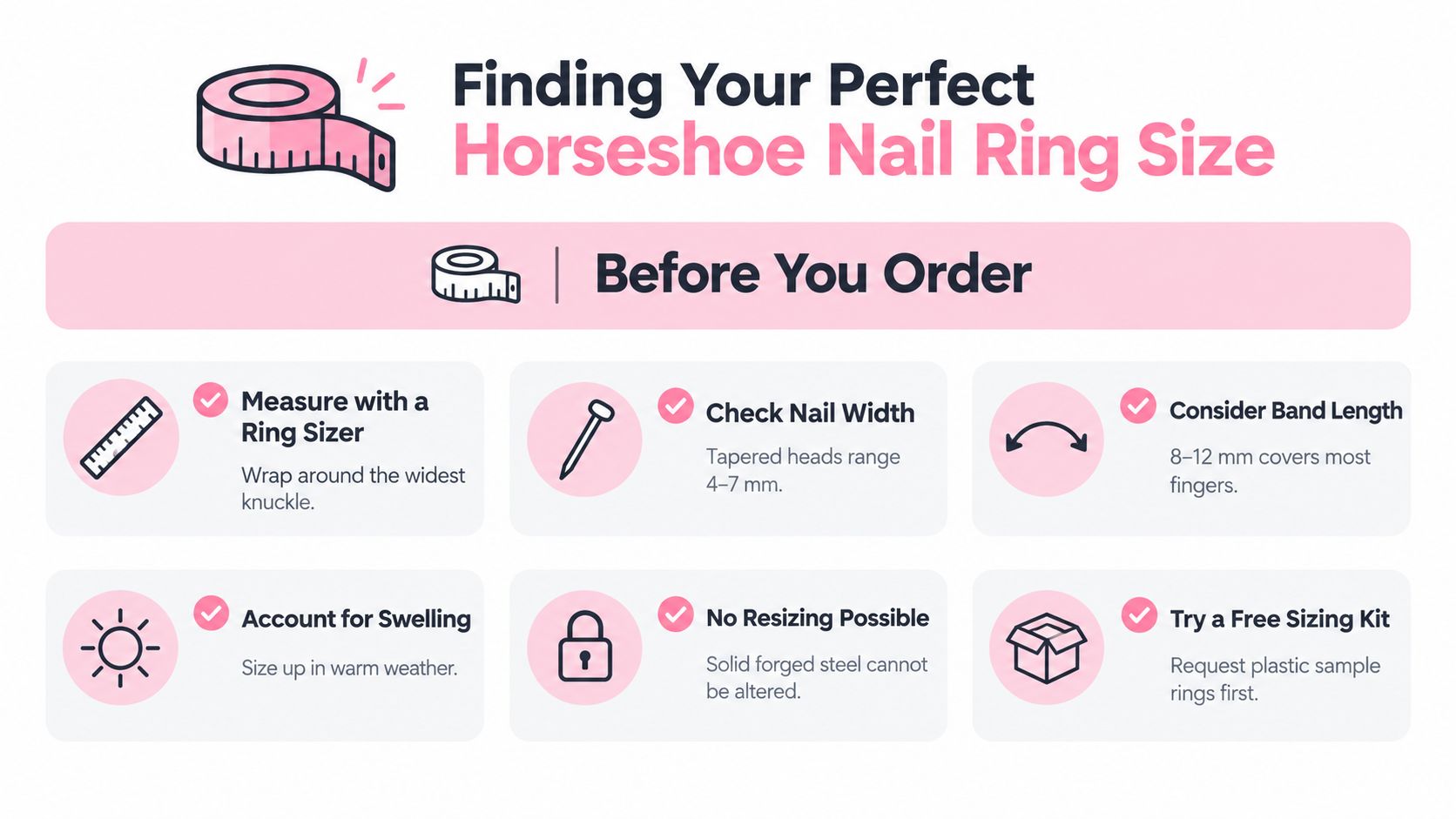
A farrier shapes a horseshoe nail into a ring with a particular curve, so sizing begins before the metal takes its final form. Unlike a plain band, this profile may offer limited adjustment afterward. Makers commonly produce horseshoe nail rings in whole ring sizes, following standard jeweler guidance for shaped bands.
Measure for the finger you'll actually use
Start with the finger and hand that will wear the ring. Your left and right hands may differ, and a size that feels comfortable on one index finger can pinch on the other. Measure when your hands are at a normal temperature, not immediately after riding, barn work, or exercise.
A professional ring sizer gives the most dependable starting point. At home, compare an existing ring that fits the same finger with the seller's sizing chart, checking the inside diameter rather than the outer profile. A paper strip can help estimate circumference, but changes in tension can produce an unreliable result.
Account for the nail's shape
The nail head changes how the ring wears. It may sit prominently across the top of the finger, while the tapered shank leaves more room on one side. Slip the ring on and rotate it gently. The head should remain centered without pressing against the neighboring finger.
Fit rule: The ring should pass over the knuckle with steady resistance, then sit securely without pinching at the base.
Ask the maker these questions before ordering:
- Does the listed size refer to the inside measurement or the usual ring size?
- Does the nail head change the recommended fit?
- Can the ring be exchanged if the selected whole size feels uncomfortable?
Daily comfort also depends on the underside and your routine. Look for polished edges, then consider whether the nail head could catch on gloves, reins, or clothing. A ring worn at the barn may need a different fit from one reserved for work or evenings. Choosing carefully matters because reshaping a formed nail ring may be limited.
For a less size-sensitive alternative, Bridle Up Hope's gold horseshoe charm guide offers a useful comparison with jewelry worn away from the hand.
Styling and Gifting Ideas for Horse Lovers
A horseshoe nail ring can whisper or speak clearly, depending on the rest of the outfit. In an English wardrobe, pair a slim silver version with a crisp shirt, fitted knitwear, or a dark show jacket worn away from competition. The squared head adds a subtle reference to tack and farrier work without competing with polished buttons or a refined watch.
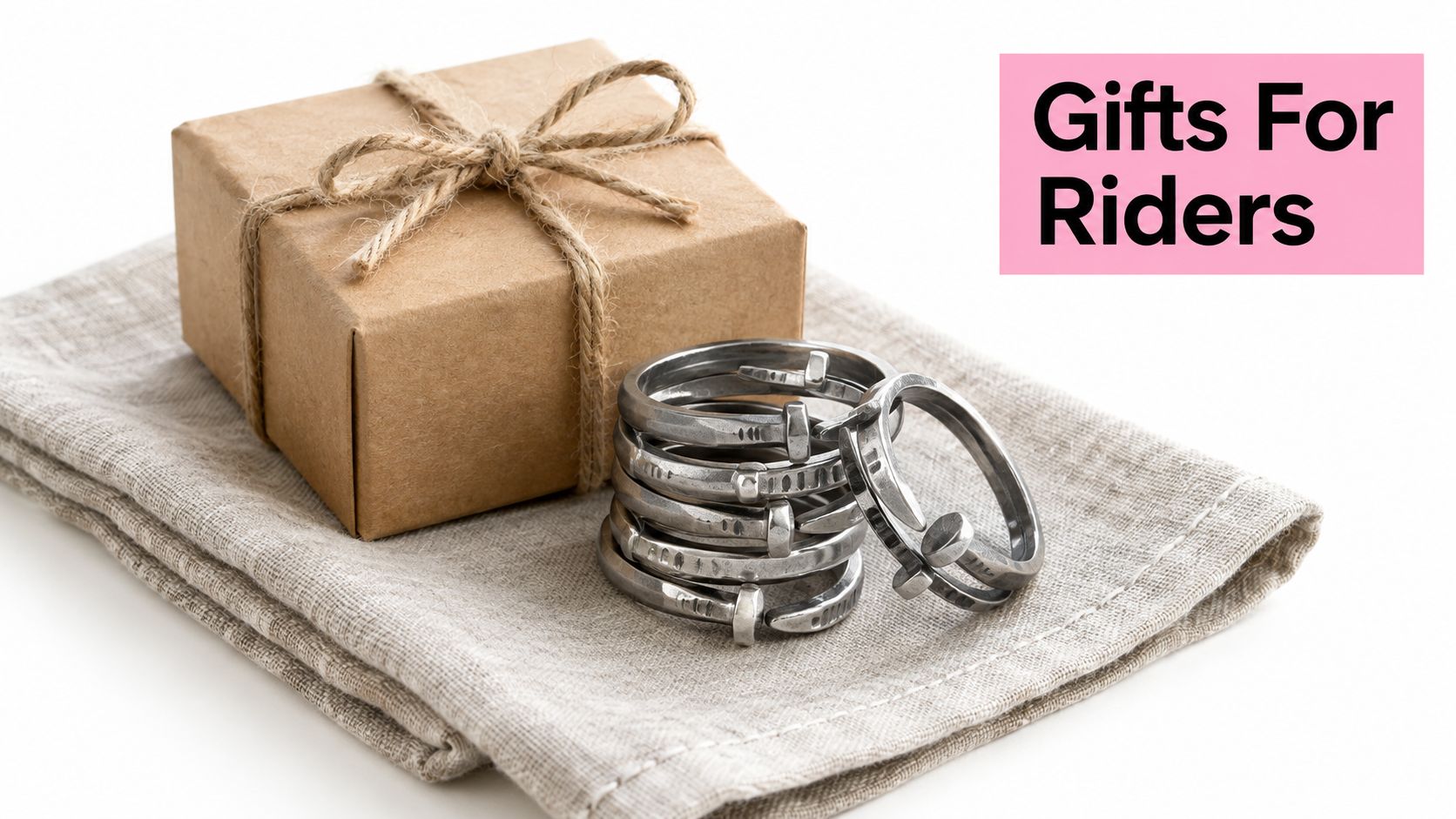
Western styling gives the same ring a different voice. Wear it beside a leather cuff, turquoise-inspired color, denim, or a simple belt buckle. A darker finish or heavier shank can hold its own against textured fabrics, while polished silver creates contrast with worn leather and workwear.
One ring, several wardrobes
For a quiet look, wear the nail ring alone on the index or middle finger. The distinctive head becomes the focal point, and the tapered shank remains easy to read. If you prefer layers, combine it with narrow, plain bands rather than several highly detailed horse motifs. That keeps the ring from disappearing into visual clutter.
For an evening outfit, let the material do the work. Silver suits cool neutrals and formal tailoring, while gold brings warmth to cream, brown, and autumnal colors. The ring can move from a barn-side lunch to dinner without requiring a complete change of personality.
A short visual guide can offer additional inspiration before you build a full equestrian jewelry look.
Giving the design a personal meaning
As a gift, the ring works best when the symbolism matches the recipient. For a riding instructor, it can acknowledge patience, teaching, and the confidence built lesson by lesson. For a barn owner or farrier, the nail shape recognizes the practical labor behind every sound ride. For a young equestrian, it can mark a first horse, a new discipline, or a milestone that deserves more than a generic fashion ring.
Ask yourself whether the recipient prefers English restraint or Western character, and whether they normally wear silver or gold. If you don't know their size, a horseshoe necklace or another adjustable accessory may be safer. Bridle Up Hope's guide to horse jewelry for women offers a useful comparison point when the buyer wants horse-inspired style without committing to a fitted ring.
Caring for Your Horseshoe Nail Ring
Care begins with knowing the finish. Sterling silver naturally develops tarnish, while gold and plated surfaces require gentler handling. A ring with an intentional dark patina may lose some of its contrast if it's polished aggressively, especially around the square head and textured shank.
A simple routine
After wearing the ring, wipe it with a soft, dry jewelry cloth. This removes skin oils, dust, and residue before they settle into small surface details. For sterling silver, use a suitable silver-polishing cloth sparingly and follow the maker's instructions.
Use mild soapy water only when the seller confirms that the finish can tolerate it. Rinse carefully, dry completely, and avoid leaving moisture around the underside or any recessed texture. Don't use abrasive powders, rough brushes, or harsh chemical cleaners unless the maker specifically recommends them.
Keep the ring in a soft pouch or a separated jewelry compartment. Silver can tarnish more quickly when exposed to air and certain materials, while a separate space prevents the nail head from scratching smoother pieces.
Know when to remove it
The working world that inspired the ring can also damage it. Remove the piece for heavy barn chores, lifting, cleaning stalls, handling equipment, or any task where the head may snag. Riding itself may also call for caution, particularly if the ring catches on gloves, reins, fasteners, or other gear.
Barn rule: If your hands are doing forceful work, take the ring off before the ring takes the force.
Inspect the ring occasionally for looseness, sharp edges, surface wear, or a change in shape. Don't try to straighten a hardened steel version at home, and don't force a precious-metal ring back into place with pliers. A jeweler can assess whether the piece needs professional repair without damaging the proportions that define it.
Shopping with Purpose and Social Impact
A horseshoe nail ring already carries a story about labor, protection, and the bond between people and horses. The seller adds another layer. Buyers can choose a purely decorative purchase, or they can look for a shop whose business model sends part of the transaction back into the equestrian community.
For socially conscious shoppers, that distinction turns the act of giving into a more deliberate decision. The ring can honor a rider's personal history while the purchase supports work that helps girls and women through horses and habits. This is especially meaningful when the recipient's own life has been shaped by lessons, stable routines, mentorship, or the confidence that develops around horses.
Questions to ask before ordering
Responsible shopping doesn't require assuming that every handmade claim means the same thing. Read the product description and look for clear information about materials, sizing, finish, production, and returns.
- Material clarity: Does the listing identify the base metal and surface treatment?
- Sizing transparency: Does the seller explain whole-size availability and exchange options?
- Craft detail: Does the description show how the nail profile is preserved?
- Mission alignment: Does the business explain where its proceeds go?
- Practical support: Can you contact someone about fit, care, or a gift order?
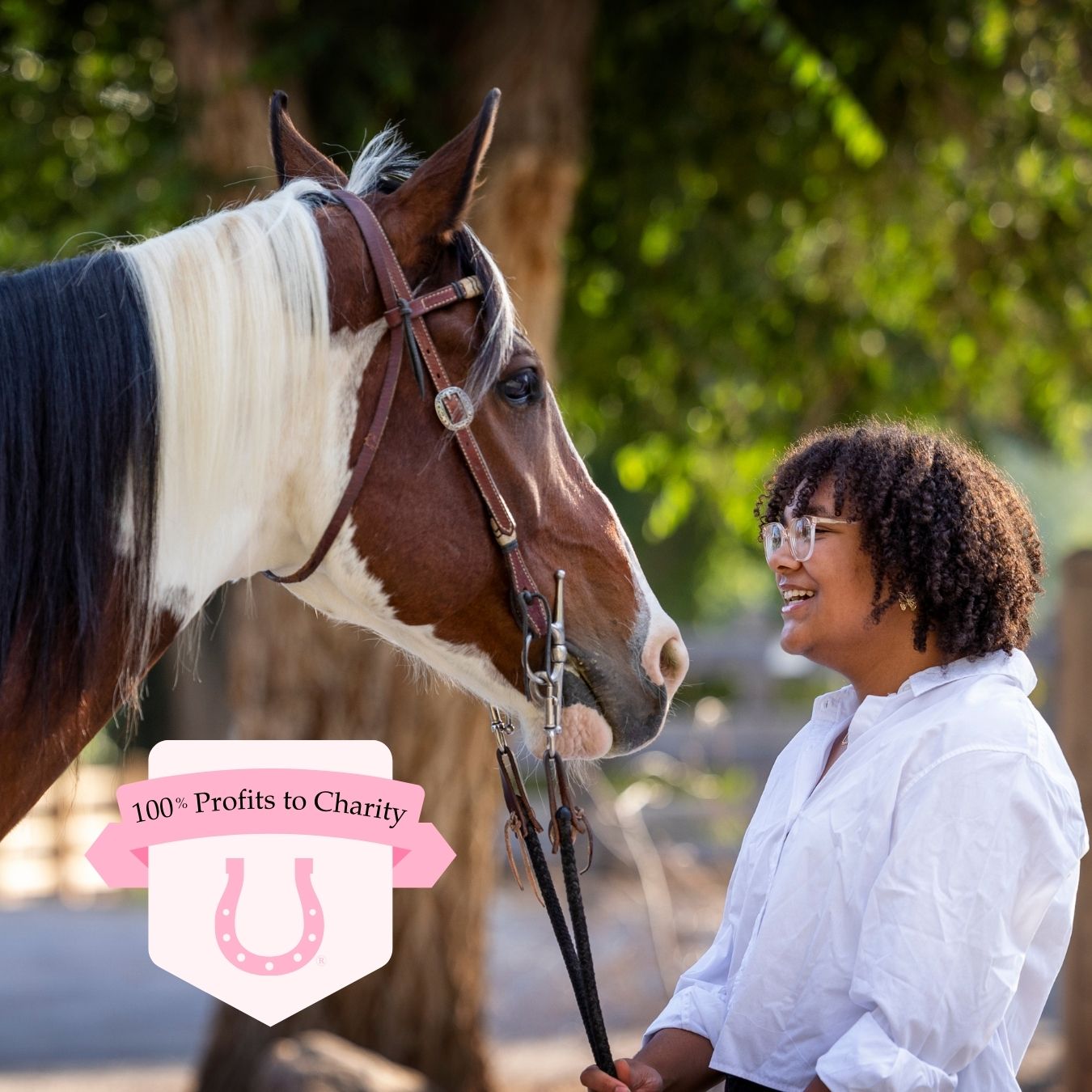
Bridle Up Hope Shop offers equestrian and horse-themed merchandise across jewelry, apparel, accessories, home goods, books, toys, and gifts, with both English and Western styles represented. Its charitable model donates 100% of annual net profits to the Bridle Up Hope foundation, which supports girls and women through horses and habits.
That model gives a horseshoe-inspired gift a wider purpose. The object remains personal, but the purchase can also contribute to a mission connected to the community that gives equestrian symbols their emotional weight. For a graduation, birthday, riding milestone, or thank-you gift, that added meaning can matter as much as the metal itself.
Choose a horseshoe nail ring or another horse-inspired piece that reflects the rider's style, size, and story, then explore the jewelry and equestrian gift selection at Bridle Up Hope Shop. Your purchase can celebrate the farrier tradition behind the design while supporting work that helps girls and women through horses and habits.
Leave a comment