


You're probably here because the charm looks simple, but the buying decision doesn't. You want something pretty, meaningful, and wearable. Maybe it's for your own everyday necklace, maybe it's for a horse-crazy daughter, a barn friend after a first show, or a sister who'd wear a little piece of luck every day if you picked the right one.
That's where a gold horseshoe charm gets interesting. It isn't just a symbol, and it isn't just a metal choice. The shape, the karat, the chain, the bail, and even where the charm will be worn all change whether it becomes a keepsake that lives on the body for years or a cute piece that spends most of its time in a jewelry dish.
Table of Contents
- Why the Gold Horseshoe Charm Still Wins Hearts
- A Brief History of the Horseshoe in Jewelry
- Solid Gold, Filled, Vermeil, or Plated
- How to Read Hallmarks and Spot Real Quality
- Sizing, Weight, and Chain Pairing Tips
- Where to Wear Your Gold Horseshoe Charm
- Caring for Your Charm Through Daily Wear
- Choosing and Gifting a Gold Horseshoe Charm
Why the Gold Horseshoe Charm Still Wins Hearts
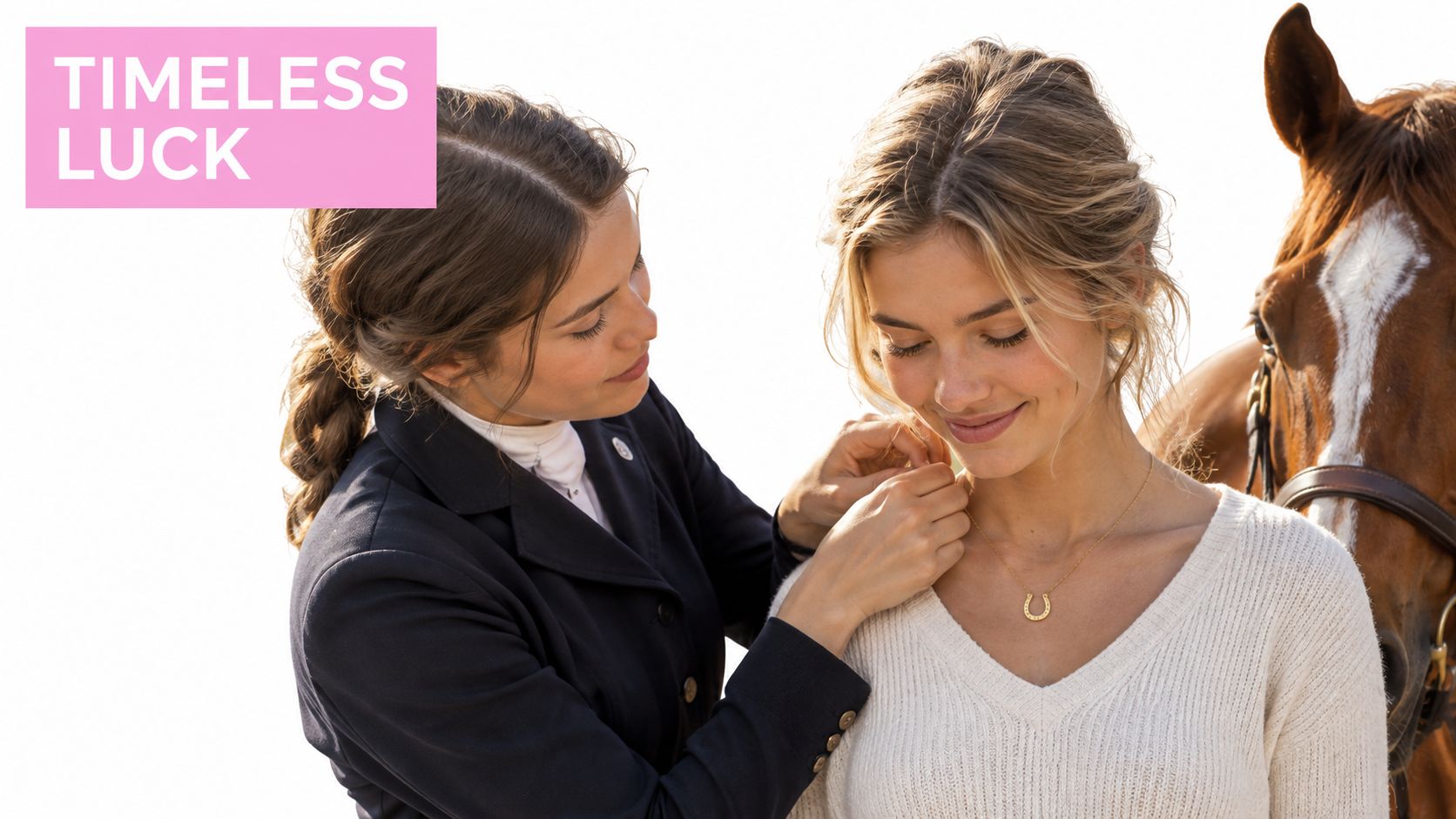
At a barn early in the morning, gifts tend to be small and emotional. A rider hands her younger sister a tiny gold horseshoe charm before a first show. It's not flashy. It's not the kind of gift that needs a speech. But it lands, because the symbol already says a lot. Luck. Protection. Nerves. Courage. Home.
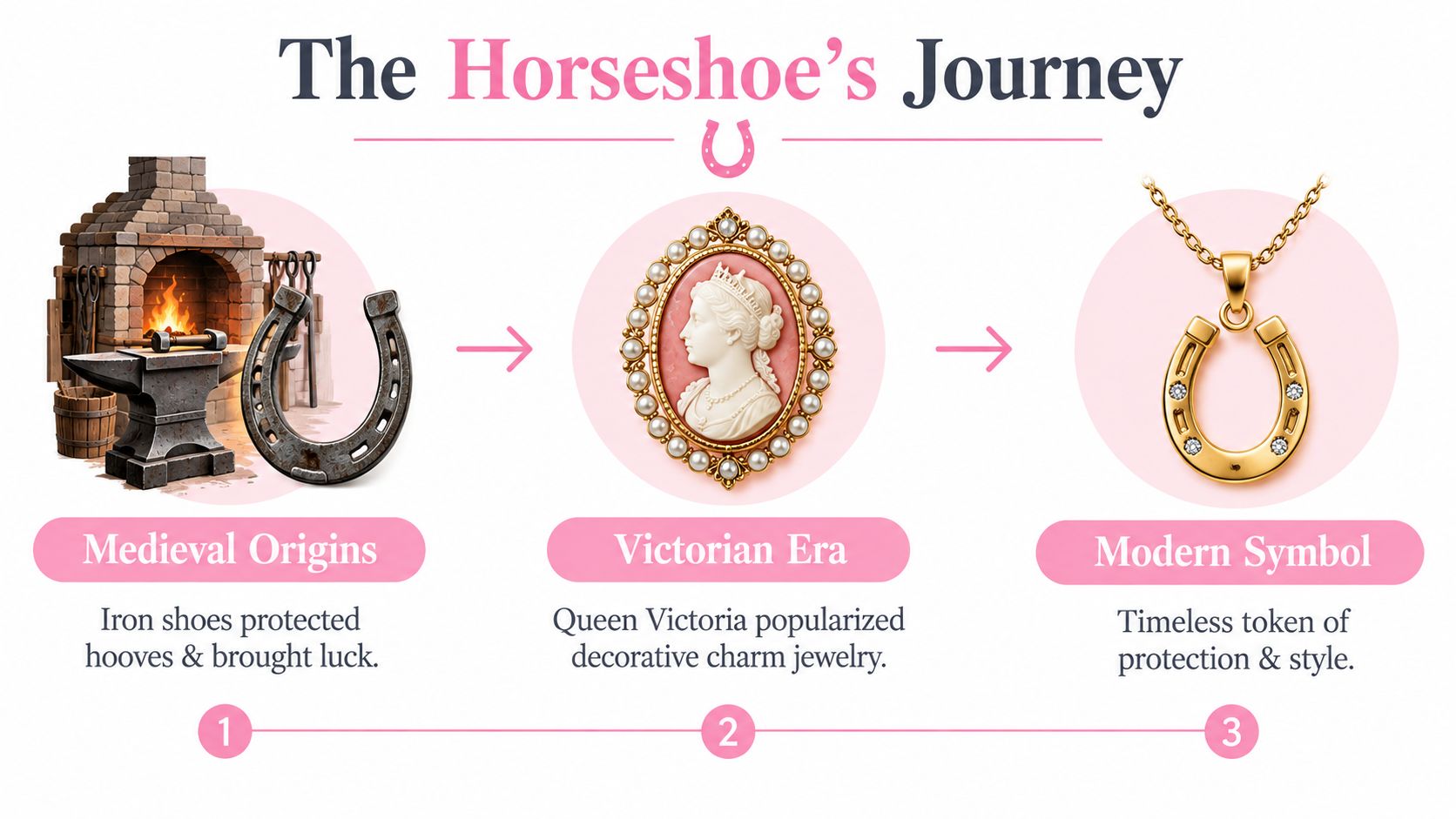
That mix of meaning is a big reason the horseshoe keeps showing up in jewelry. The symbol has a long documented history, moving from practical hoof protection in the Early Middle Ages into a decorative lucky charm in Victorian jewelry, where the wearable version of the motif became especially recognizable between 1837 and 1901 according to Angara's overview of horseshoe meaning and symbolism. It still works today because it reads clearly without needing explanation.
It fits real life
A gold horseshoe charm also does something many themed pendants struggle to do. It blends in easily.
- At the barn: It feels personal without getting in the way.
- At work or school: It reads as a classic shape, not costume jewelry.
- For gifting: It suits birthdays, graduations, first-horse milestones, and quiet encouragement gifts.
A lot of readers also get stuck on what the charm is “supposed” to mean. If that's you, this explanation of horseshoe necklace meaning is a helpful place to compare traditional symbolism with how people wear it now.
Practical rule: The best symbolic jewelry works even when the wearer doesn't explain it.
Why one small charm can feel bigger than it looks
Horseshoe charms carry emotion efficiently. A heart can feel romantic. A cross can feel overtly faith-based. A horse head can feel very literal. A horseshoe sits in the middle. It can signal equestrian identity, but it can also mean steadiness, luck, or protection.
That's why it works across ages. A teenager can wear it on a fine chain. A longtime rider can stack it with heirloom pieces. A non-rider can still enjoy it as a good-luck token.
The details matter, though. A charm that's too soft may bend. One that's too light may flip. One on the wrong chain may snag or wear awkwardly. Those are the choices that decide whether your gold horseshoe charm becomes part of daily life.
A Brief History of the Horseshoe in Jewelry
The horseshoe didn't begin as decoration. It began as protection. Practical horseshoe use for hoof protection dates to the Early Middle Ages, and nailed iron horseshoes were certainly in use by the 9th and 10th centuries according to Nobbier's history of the horseshoe in jewelry. That practical beginning matters because the symbol's protective meaning grew from what the object did.
From useful object to lucky sign
In medieval European folklore, the horseshoe became tied to protection from evil. That shift makes sense. People often turn useful tools into symbols, especially when those tools are linked with safety and survival.
Earlier cultural associations also helped the shape stick. Nobbier notes that crescent-like forms in ancient Greek traditions were linked to moon goddesses such as Artemis and Diana, which gave the open curve a broader symbolic life before the jewelry version became standard.
Why the Victorian era matters
The horseshoe became especially popular in jewelry during the Victorian era, from 1837 to 1901, when sentimental motifs flourished and symbolic adornment became part of everyday dress, as described in that same Nobbier horseshoe jewelry history. That period helped turn the horseshoe from a household protective sign into something worn close to the body.
Here's a quick visual summary of that timeline.
For people who love carrying horse symbolism beyond jewelry, some also translate that attachment into art on the body. If you're exploring horse-inspired personal symbols in a different medium, you can book your horse tattoo at Fountainhead New to browse simple horse tattoo ideas with a similar sentimental feel.
The horseshoe lasts because it still feels legible. You don't need to know every layer of folklore to understand why someone would wear it.
Modern jewelers may use hand-finishing or digital design tools, but the outline remains instantly familiar. That's why a gold horseshoe charm doesn't feel like a novelty. It feels inherited, even when it's brand new.
Solid Gold, Filled, Vermeil, or Plated
A rider buys a gold horseshoe charm after a first big show, clips it onto a chain, and wears it almost every day. Six months later, the question is no longer which one looked best in the product photo. The question is which metal could handle sweat, motion, and constant rubbing against the clasp, the chain, and a jacket zipper.
That is why construction matters as much as symbolism.
Solid gold and why 14K is usually the best daily-wear choice
Solid gold means the charm is made from a gold alloy all the way through, not just covered in a gold-colored surface. For a horseshoe charm, that matters because the stress points are small. The bail, jump ring, and lower curve take repeated knocks, especially if the charm is worn while driving, walking the barn, traveling, or layered with other pieces.
For daily wear, 14K solid gold is often the most balanced choice. It contains 58.3% pure gold, with the rest made up of metals that add strength and improve resistance to bending. A higher-karat piece such as 18K gives you a richer yellow color, but it is usually a bit softer in real use. Pure 24K gold is much softer still, which is why it is uncommon for hard-working little charms.
If that sounds abstract, here is the easy way to read it. Lower-karat solid gold works like a well-made riding boot. It gives up a little softness and richness in exchange for better day-to-day toughness. Higher-karat gold is more like a dress boot. Beautiful, but less forgiving if you are rough on it.
Commonly cited hardness comparisons also place 14K above 18K and far above 24K for resistance to denting and deformation, which lines up with standard metallurgical references summarized by the International Gem Society's gold hardness guide.
Filled, vermeil, and plated options
If solid gold is outside budget, the next step is to match the finish to the life the charm will live.
| Gold Charm Material Comparison | Karat / Gold Content | Durability | Best For |
|---|---|---|---|
| Solid gold | Varies by karat. 14K contains 58.3% gold | Best for frequent wear, especially in small moving charms | Everyday necklace or bracelet wear |
| Gold-filled | Real gold mechanically bonded over base metal | Usually holds up better than standard plating with regular wear | Budget-conscious regular wear |
| Vermeil | Sterling silver coated with gold | Better for lighter or occasional wear | Giftable look with lower upfront cost |
| Gold-plated | Thin gold surface layer over base metal | Wears fastest with friction and moisture | Fashion use or occasional styling |
Gold-filled is often the practical middle ground for someone who wants a real gold exterior and plans to wear the charm fairly often, but not nonstop. Vermeil suits a gift where the look of warm gold matters and the piece will come out for dinners, events, or weekend wear. Plated charms are fine for short-term styling, but they ask for realistic expectations. The gold layer is thin, so high-contact spots can fade first.
How to choose by lifestyle
A horseshoe charm is rarely a still object. It swings, taps, twists, and rubs. That is why lifestyle should guide the material choice.
- For constant wear, including layering and active days: choose solid 14K if budget allows.
- For regular wear with more price flexibility: gold-filled often gives the best balance.
- For a gift that may be worn occasionally or kept for special outfits: vermeil makes sense.
- For trend-driven styling or a short-term look: plated can work.
This is especially useful for equestrian gifting. A teen rider who wants to wear her lucky horseshoe to school, lessons, and shows will stress a charm very differently than a grandmother receiving one as a sentimental keepsake to wear on holidays. Same symbol. Very different job description.
How to Read Hallmarks and Spot Real Quality
You are turning a tiny horseshoe charm over in your hand at a tack-shop counter or opening a gift box before a show. The front looks pretty. The story is often on the smallest parts.
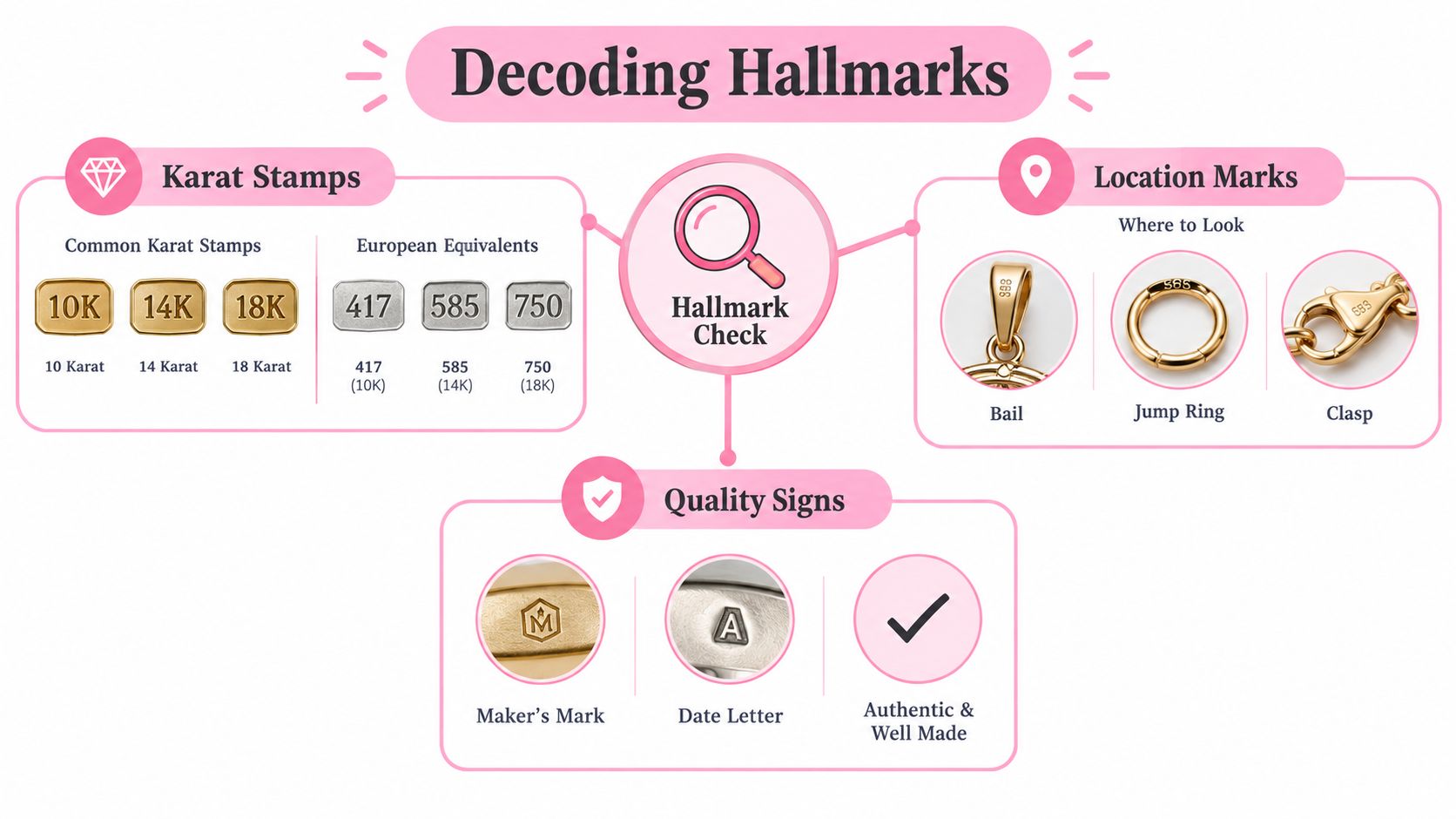
A gold charm does not have much room for markings, so makers usually place them on the bail, jump ring, clasp area, or a flat spot on the back. A phone flashlight and a simple loupe help, but you can still catch a lot by looking carefully and knowing what the marks are supposed to say.
Marks that matter
Start with the purity mark. On gold jewelry, common stamps include 10K, 14K, and 18K. You may also see number marks such as 417, 585, and 750, which are another way of showing gold content.
For context, 585 means 58.5 percent gold, which is the same purity as 14K. That matters in real life because 14K is often the sweet spot for an equestrian charm that will be worn to school, to the barn, or layered every day. It gives you better wear resistance than higher-karat options without losing the warm gold look many gift buyers want.
Hallmarks can also include a maker's mark or, in some countries, an assay mark. Official hallmarking authorities such as the UK Assay Office explain that these marks identify metal fineness and, where applicable, show independent testing under that system. In plain terms, a clear hallmark is a useful quality sign, but the exact format depends on where the piece was made and sold.
If you also wear silver horse jewelry, comparing stamps across metals can sharpen your eye. This guide to a sterling silver horse necklace helps show how silver markings differ from gold hallmarks.
Construction clues you can spot quickly
A stamp is only the label. Construction is the build quality.
Start with the bail, because it does the same job a good stirrup leather does. It carries stress over and over. If the bail looks paper-thin, slightly open, or badly soldered, the charm may fail long before the front shows wear.
Then check the horseshoe itself. The curve should look balanced from one side to the other. On a well-made charm, the edges are crisp, the surface finish is even, and any decorative nails, stones, or filigree details look intentional rather than soft or smeared.
A few quick checks help:
- Bail: firm, even, and securely attached
- Jump ring: closed neatly, not gapped or twisted
- Surface: smooth polish, no gritty patches
- Seams: clean solder lines, no blobs or sharp ridges
- Stone settings: straight and snug, especially on petite pavé styles
High-karat gold can be softer, so tiny prongs and delicate openwork need especially careful finishing. That does not make higher karat bad. It just means charm design and daily routine should match. A keepsake worn for dinners and anniversaries has a different job from a lucky pendant that gets knocked against zippers, helmets, and layered chains.
If a small charm already looks blurry around the edges in the box, the problem is usually workmanship.
Easy at-home checks
A magnet can help with very obvious base-metal problems, but it is not a full test for gold. Many non-gold metals are nonmagnetic too, so use that check as a filter, not a verdict.
A loupe is more useful. Under magnification, a quality hallmark usually looks clean and intentional, not shallow, crooked, or half missing. You can also see whether gold color looks consistent across the bail, ring, and body of the charm.
The final test is simple. Hold the charm the way you plan to wear it. If it feels tidy, balanced, and secure, that is a good sign. Fine jewelry at this size should feel delicate, not flimsy.
Sizing, Weight, and Chain Pairing Tips
A gold horseshoe charm can be beautifully made and still wear badly if the chain is wrong. “Cute in the box” turns into “why does it keep flipping?” The fix is usually proportion.
Start with charm size and chain scale
Small to medium charm sizes work best. Think in terms of visual balance rather than statement impact. A petite horseshoe looks elegant when the chain doesn't overpower it, and a thicker chain needs enough charm presence to avoid looking accidental.
| Charm-to-Chain Pairing Reference | Recommended Chain | Chain Length | Bail Gauge |
|---|---|---|---|
| Small | Fine cable chain | Collarbone to just below collarbone | Slim bail |
| Medium | Cable, box, or light rope chain | Versatile everyday pendant length | Medium bail |
| Bracelet charm size | Sturdy bracelet chain | Close-fitting bracelet length | Secure, compact bail |
| Lightweight anklet charm size | Fine anklet chain | Personal, lower placement | Low-profile bail |
The basic rule is simple. The charm and chain should look like they belong together. If the chain is much heavier than the charm, the pendant can look lost. If the charm is too wide or thick for the chain, it may rotate or catch awkwardly.
Watch the bail and movement
The bail is the unsung hero. It's the small connector that lets the charm move on the chain. Too small, and the charm sticks or rubs. Too loose, and it can swing in a sloppy way.
For horse-themed jewelry that's worn often, I'd rather see a modest charm with a secure bail than a more decorative charm with a weak connection. That matters even more if the wearer layers necklaces or puts the charm on a bracelet.
A silver version can help you test proportions before committing to gold. This article on a horseshoe necklace in silver is useful if you want to compare how the same symbol behaves in a different metal and styling weight.
Pairing examples that work in real life
- For daily solo wear: A small or medium charm on a simple cable chain usually hangs cleanly.
- For layering: Keep the horseshoe on the shorter or middle chain so it doesn't tangle with bulkier pendants.
- For bracelets: Choose a sturdier link style because wrist movement creates more impact than necklace wear.
- For younger wearers: Lightweight, balanced pairings tend to stay centered better and feel more comfortable.
A charm that hangs straight will get worn more often than a charm that needs constant adjusting.
If you're between two chain options, choose the one that makes the charm feel stable. Stability often matters more than visual drama in everyday jewelry.
Where to Wear Your Gold Horseshoe Charm
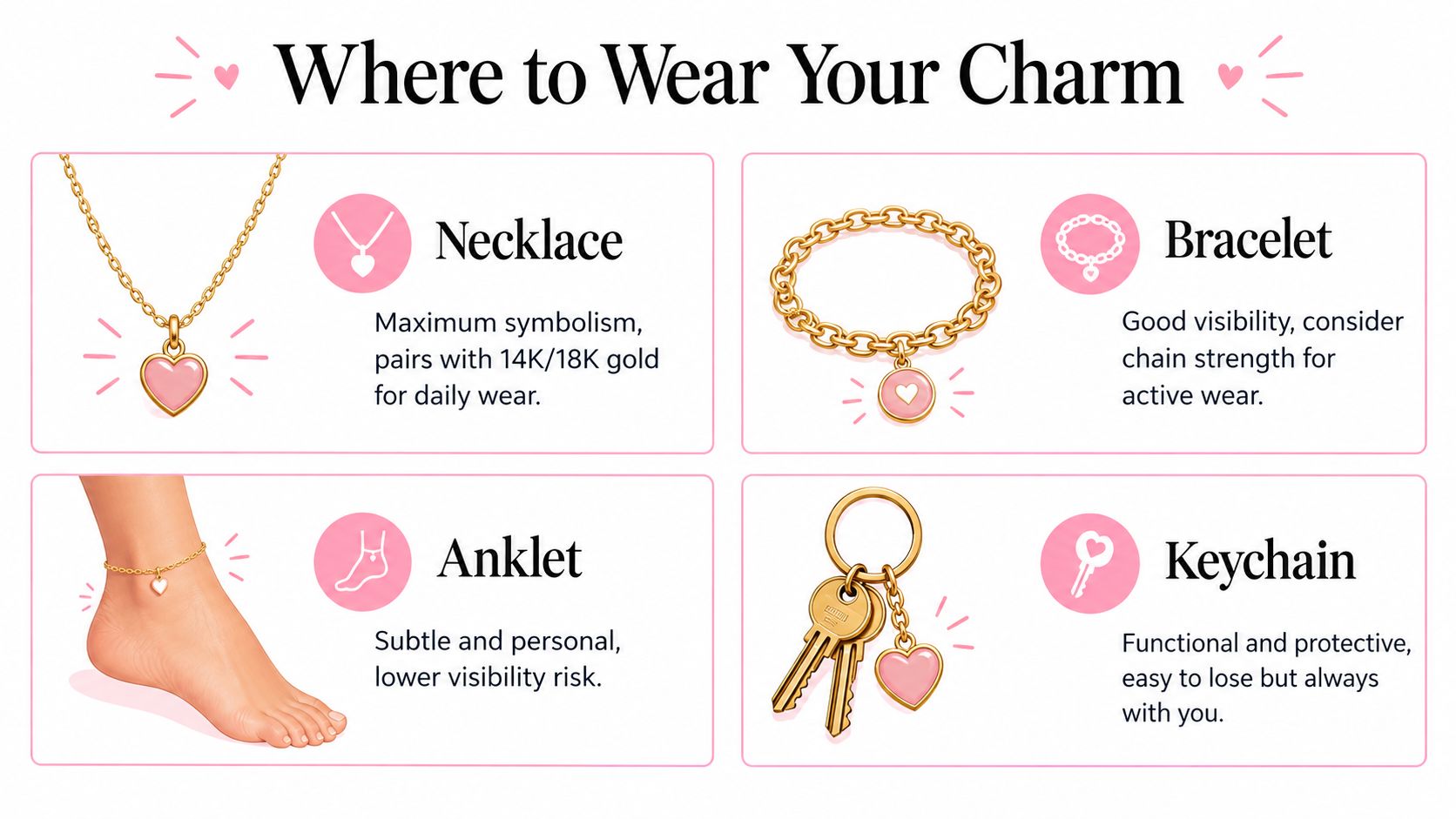
Placement changes everything. The same gold horseshoe charm can feel sentimental on a necklace, sporty on a bracelet, playful on an anklet, or practical on a zipper pull or bag charm. The best choice depends on how much contact, motion, and visibility you want.
Necklace, bracelet, anklet, or bag use
Necklace wear is the easiest starting point. It gives the symbol the most visibility, keeps the charm closer to the body, and usually exposes it to fewer hard knocks than a bracelet does. For many riders, it's the most natural home for a meaningful piece.
Bracelet wear feels lively because the charm moves more. That movement is charming, but it also means more impact. If someone is active with their hands all day, bracelet placement needs stronger construction.
Anklet wear is more personal and seasonal. It's subtle and stylish, but it usually sees more friction from shoes, socks, sand, and water exposure. That makes it a poorer choice for a piece meant to last through constant wear.
Zipper-pull or bag-charm use is underrated. A horseshoe on a riding jacket, tote, or tack bag can still carry the symbolism without constant skin contact.
Matching placement to the person
- For the everyday rider: Necklace wear is usually the safest balance of symbolism and practicality.
- For someone who loves motion jewelry: A bracelet charm can feel more interactive.
- For vacation style: Anklet placement has a lighter, more playful mood.
- For a practical gift recipient: Bag or zipper use can be smart if they don't wear much jewelry.
Some equestrian families also like to extend the charm idea beyond personal jewelry and into pet accessories. If you're building a coordinated gift around a horse or animal theme, these premium pet charms and accessories can offer a nice companion idea for a broader gift set.
One question to ask before you decide
Ask where the charm will spend most of its life. On skin? Against clothing? Around salt air? Smacking into a bracelet link? Sitting safely on a jacket zipper?
That answer often tells you more than style photos do.
Caring for Your Charm Through Daily Wear
Barn life is hard on jewelry. So is normal life. Sweat, lotion, sunscreen, perfume, dust, soap residue, and friction all build up faster than people expect. A gold horseshoe charm doesn't need a fussy routine, but it does need a consistent one.
The simple weekly routine
Start with a soft wipe-down. A microfiber cloth removes surface oils and grime before they settle into the curve of the charm or around the bail.
If the charm looks dull, use a mild dish-soap soak in lukewarm water, then rinse and dry it well. Don't rush the drying step. Moisture likes to linger where the charm connects to the chain.
- After riding or sweating: Wipe the charm before putting it away.
- After sunscreen or perfume use: Let products dry before the jewelry goes on.
- After a deeper clean: Dry the bail and jump-ring area carefully.
What to avoid
Showering in jewelry sounds harmless, but soap film builds up over time. That buildup can make a charm look cloudy, especially in small creases and around settings.
Chlorine, strong cleaners, and rough storage are bigger risks than commonly thought. Tossing a charm into a drawer with keys, hair clips, and loose rings is an easy way to scratch or stress the connection points.
Jewelry usually doesn't fail in the middle. It fails where two parts meet.
That's why the bail, jump ring, and clasp deserve regular attention. They do the work.
Storage and seasonal checks
A lined jewelry box or soft pouch works well. Keep the charm away from items that can abrade it or press against it oddly. If the piece is plated, be gentler with polishing. Aggressive rubbing can wear the surface faster.
A few times a year, hold the charm close and check these points:
- The bail connection should look closed and stable.
- The jump ring shouldn't show gaps or twisting.
- Any stones or detailing should still sit neatly.
- The curve of the horseshoe should look symmetrical.
If something looks slightly off, stop wearing it until it's checked. Small issues are much easier to repair than a lost charm is to replace.
For riders who wear one piece daily, this habit matters. The goal isn't museum-level care. It's keeping a beloved charm in serviceable condition through ordinary use.
Choosing and Gifting a Gold Horseshoe Charm
The right gold horseshoe charm usually reveals itself once you stop shopping by photo alone and start shopping by lifestyle. A beautiful charm for occasional dinners is not the same purchase as a charm someone will wear to work, to the barn, and on weekends without taking it off.
A simple buying checklist
Use this order when deciding:
- Start with wear frequency: Daily wear points you toward solid gold, especially 14K.
- Check the hallmark and build: Look for a clear karat mark and a sturdy bail.
- Match the chain to the charm: Proportion matters more than trend.
- Choose the life placement: Necklace, bracelet, anklet, or bag use all wear differently.
If you want one place to compare horse-themed gift options across jewelry and accessories, Bridle Up Hope Shop carries equestrian gifts including horseshoe-themed pieces, which can be helpful when you're choosing for different ages or riding styles.
Good gifting moments for this symbol
A horseshoe charm works especially well when the gift needs meaning without too much formality.
- First show or first lease: It marks courage and a beginning.
- Graduation: It carries luck without feeling childish.
- Birthday: It feels personal even if you don't know the recipient's exact jewelry taste.
- Bridesmaid or wedding-adjacent gifting: It can nod to luck and safe passage in a subtle way.
- Barn milestone: New horse, big recovery, championship memory, or moving barns.
Personal touches help. Initials, a discreet stone, or a small engraved back can make a simple charm feel chosen rather than generic.
Material expectations by budget
| Gold Horseshoe Charm Buying Tiers | Typical Material | Best For |
|---|---|---|
| Entry tier | Plated or vermeil | Style-focused gifts or occasional wear |
| Mid tier | Gold-filled or select vermeil | Regular wear with budget awareness |
| Higher tier | Solid 14K gold | Daily wear, milestone gifts, heirloom potential |
The best gift isn't always the most expensive one. It's the one that suits the wearer's habits. A plated charm for someone who rotates jewelry carefully can be a lovely gift. A rider who never takes necklaces off may need sturdier construction from the start.
Presentation matters too. A horseshoe charm given already paired with the right chain feels much more complete than a loose pendant in a box. It removes guesswork and makes the gift wearable immediately.
And that's really the goal. Not just a pretty object, but a charm that enters someone's life right away.
If you're choosing a horseshoe piece for yourself or someone horse-mad in your life, Bridle Up Hope Shop offers equestrian jewelry, gifts, and accessories that fit the same thoughtful, wearable spirit covered here. You can browse horse-themed necklaces, charms, and gift options at Bridle Up Hope Shop and pick something that feels personal from the start.
Leave a comment