


You're halfway through a canter transition, your horse feels ready to go forward, and yet your seat keeps sliding just enough to make the moment feel untidy. A friend suggests riding breeches full seat, you try them at the next lesson, and the difference is immediate. You're not clamping harder with your knees. You feel more anchored through your seat and upper leg.
That extra security can be helpful, but full-seat breeches aren't automatically the right answer for every rider. The material, rise, fit, weather, saddle, and discipline all change how a pair feels in use. This guide explains what full-seat breeches do, where they outperform knee patches or riding tights, and where their added grip can become a disadvantage.
Table of Contents
- What Full Seat Riding Breeches Actually Are
- A Quick History of Full Seat Breeches
- Full Seat vs Knee Patch Side by Side
- Grip Materials and How They Perform
- Getting the Fit Right Every Time
- Matching Full Seat Breeches to Your Discipline
- Caring for Your Full Seat Breeches
- Choosing the Pair That Is Right for You
What Full Seat Riding Breeches Actually Are
Full-seat riding breeches are close-fitting equestrian pants with a continuous grip panel extending from the knee, up the inner thigh, and across the seat. That panel may use suede, leather, synthetic leather, or silicone, depending on the design and intended feel. Unlike knee-patch breeches, which grip only at the inner knees, a full seat creates a much broader contact zone between rider and saddle. Ariat's breech guide describes this construction and its association with dressage and eventing.
Think of the breech as two garments working together. The outer shell uses stretchy technical fabric to accommodate posting trot, two-point position, mounting, and deep bending at the hip. The waistband may be contoured, mid-rise, or high-rise, while the lower leg usually ends above the ankle so it sits smoothly inside tall boots.
The main parts
- Stretch shell: This should move with your hips and knees without sagging or creating folds under the thigh.
- Waistband: A stable waistband keeps the garment from sliding down when you sit low or lean forward.
- Leg cut: Some pairs use a traditional fitted leg, while others have a sock-style cuff or a slightly more flexible ankle finish.
- Seat panel: This is the defining feature. Silicone prints can be subtle dots, lines, or more complete patterns, while suede and leather usually create a continuous tactile surface.
The grip doesn't hold you in place by itself. Your balance, core position, leg alignment, and the saddle still matter. What it can do is reduce unwanted sliding, particularly during flatwork movements that ask you to remain quiet through the pelvis.
Full seats are most strongly associated with dressage, where a deep, steady seat and subtle weight aids are central. Riders also use them for eventing, jumping, schooling, and trail work when they prefer a more connected feel. The useful questions are whether the grip suits your body and whether it gives you security without interfering with the way you ride.
A Quick History of Full Seat Breeches
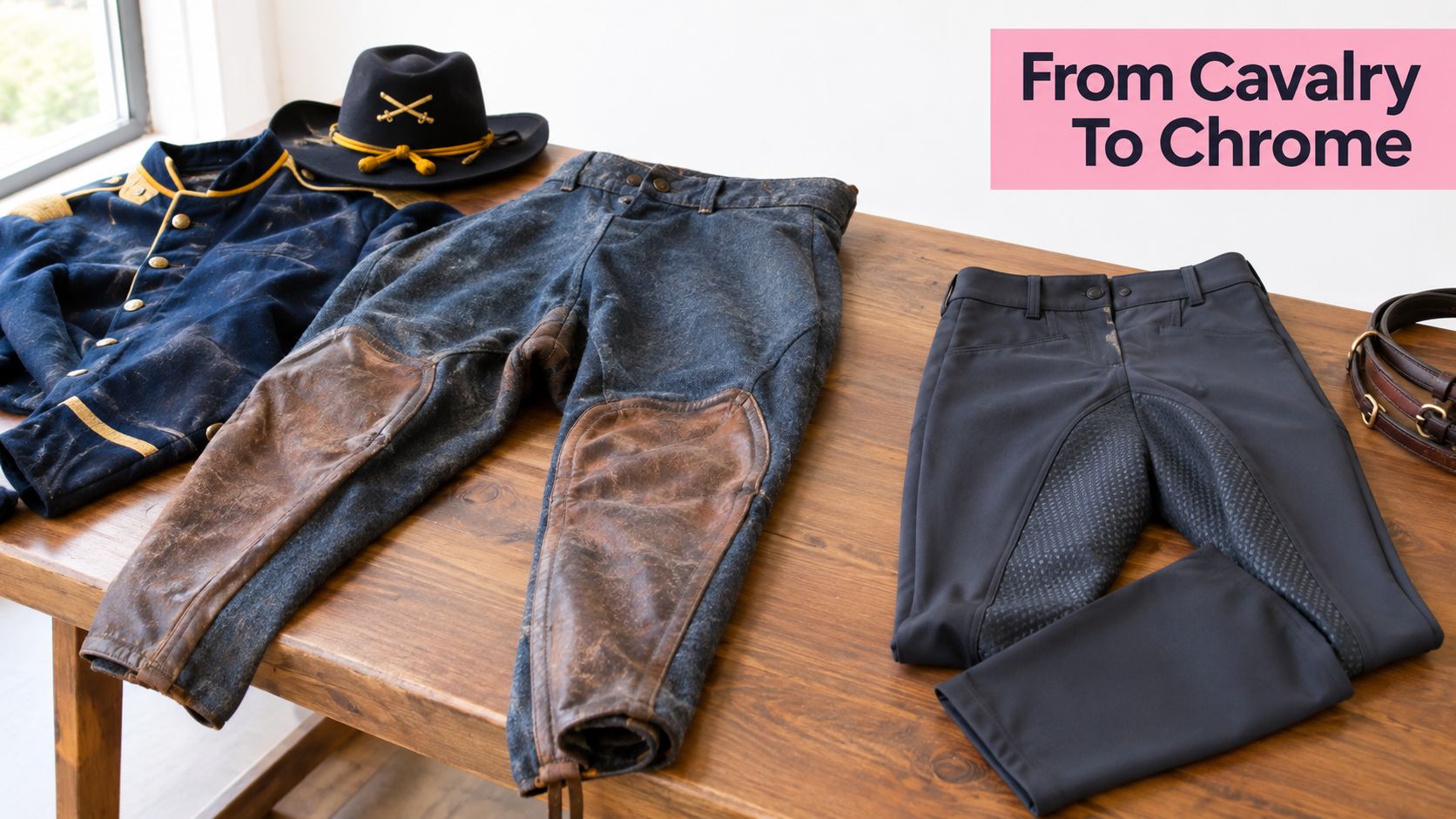
A rider settling into a wool saddle blanket needed clothing that could survive friction, damp weather, and long hours on horseback. Breeches were already part of riding tradition by the 16th century, and specialized riding breeches were established by the late 19th century. One account records a horseback-riding style in the 1890s. The historical overview of breeches on Wikipedia places modern full-seat designs within that longer development.
Early garments emphasized durability, shape, and security. Leather reinforcement protected fabric where the rider's seat and legs met the saddle, especially when wool or other woven materials rubbed against tack. That old solution still explains a modern choice: suede or leather often suits riders who prefer a broken-in feel and steady contact, while silicone usually offers a lighter, more pronounced grip. A rider with a sensitive seat may find a softer suede panel more comfortable, while someone riding in wet conditions may prefer the consistent traction of synthetic grip.
From reinforcement to performance fabric
During the second half of the 20th century, seat reinforcement became more common, while elastane and synthetic stretch fabrics let breeches move with the rider. This breeches history reference describes that shift toward reinforced seats and flexible modern materials.
Manufacturers could then build breeches for different bodies and riding conditions. Stretch fabric helps accommodate a fuller hip or powerful thigh without restricting the leg, while a carefully shaped seat can reduce bunching for riders who spend more time sitting. Silicone prints can feel secure during humid schooling sessions, though they may feel tacky against some saddles. Suede and leather usually offer less instant stick but can feel more natural over long rides and in changing temperatures.
Full-seat breeches remain strongly associated with dressage, where a quiet pelvis and consistent contact matter. They also suit eventing, schooling, and trail riding when the rider wants a connected feel. History explains the materials, but the right choice still depends on body shape, weather, saddle feel, and discipline.
Full Seat vs Knee Patch Side by Side
The simplest distinction is placement. Knee-patch breeches put grip at the inner knee and leave the seat and upper thigh comparatively free. Full-seat breeches extend grip across the seat and inner legs, so more of the rider's contact with the saddle has a tacky or textured surface.
Neither design wins every category. A rider who values a secure flatwork position may find a full seat reassuring, while a jumper who needs to move freely over a fence may prefer less material gripping the saddle.
| Feature | Full Seat | Knee Patch |
|---|---|---|
| Grip area | Knee, inner thigh, and seat | Inner knee only |
| Saddle feel | More anchored and connected | Freer and easier to adjust |
| Common use | Dressage, eventing, and stability-focused schooling | Hunter, jumper, and riding that demands frequent position changes |
| Warm-weather comfort | May feel warmer because more material contacts the saddle | Usually feels less covered |
| Mobility | Can feel restrictive if the grip is very tacky | Leaves the upper leg and seat more mobile |
Security and movement
A full seat can help reduce sliding during sitting trot, canter transitions, lengthenings, and other flatwork where the rider wants the pelvis to remain steady. It can also support a rider who feels less confident in a deep saddle position or who tends to lose contact when the horse changes rhythm.
Knee patches preserve more freedom around the upper thigh and seat. That matters when a rider needs to close the hip over a jump, adjust position quickly, or allow the body to follow a horse's motion across varied terrain. The trade-off is that the rider receives less grip through the seat itself.
Practical rule: Choose the amount of grip that supports your position without forcing your body to stay fixed.
Everyday comfort adds another layer. Knee patches often feel cooler for summer schooling and may be easier to wear for chores before or after a ride. Full seats can feel warmer, particularly when the panel is thick or heavily printed, but they provide a stable sensation that some riders prefer for long flatwork sessions.
The right comparison is therefore personal, not just disciplinary. Ask whether you want to stay more anchored or move more freely, then consider your horse's movement, your saddle, your climate, and the way your body responds to a sticky surface.
Grip Materials and How They Perform
A rider with sensitive skin may prefer soft suede, while someone schooling in humid heat may find dense silicone too warm. The same full seat design can feel entirely different depending on its material, pattern, saddle, and care routine.
Suede and synthetic suede
Suede gives a textured, gradual grip rather than a strongly sticky surface. It settles against the saddle like a familiar pair of gloves, offering contact without making every position change feel difficult. Synthetic suede can provide a similar feel with a more uniform surface and simpler manufacturing.
Its main weakness is surface wear. Heat, harsh detergents, and repeated friction can flatten the nap or alter its texture. Riders who wash breeches often should use gentle cycles and avoid treating suede as though it were ordinary stretch fabric. A well-maintained synthetic grip may keep its feel more consistently over time.
Silicone
Silicone appears as dots, fine lines, geometric prints, or dense honeycomb patterns. A light print provides mild traction and usually leaves the fabric feeling more flexible. A dense pattern feels tackier, which may suit riders who want the seat of the breeches to stay firmly connected to the saddle.
That extra adhesion can become uncomfortable during mounting or jumping, especially if the rider needs frequent position changes. Large silicone panels may also hold more heat because more material sits between the body and saddle. In hot weather, a lighter print can feel less enclosed. In cooler conditions, a fuller panel may be more comfortable.
Leather and faux leather
Leather offers a traditional dressage feel and can soften as it is used. It generally feels smoother and less artificially sticky than strongly printed silicone, though it requires more careful ownership. Moisture, humidity, and unsuitable cleaning products can affect the material. Genuine leather may also cost more than faux leather.
| Grip Type | Feel in Saddle | Hot Weather | Durability | Care Needs |
|---|---|---|---|---|
| Suede or synthetic suede | Textured, gradual grip | Can feel comfortable but may warm with coverage | Can wear as the surface changes | Gentle washing and careful brushing |
| Silicone | Tacky, from subtle to highly adhesive | Light prints may feel cooler than thick panels | Can remain effective but may peel if mistreated | Cold washing, no softener, air drying |
| Leather or faux leather | Traditional, smooth to textured | May feel warm and less forgiving in humidity | Leather can last well with proper care | Specialized cleaning and conditioning as appropriate |
Your saddle changes the result. Dense silicone on a highly grippy saddle may feel excessive, while a smoother saddle may pair well with a broader or more noticeable panel. Skin sensitivity matters too. If a rigid print creates pressure points, try softer suede or a lighter silicone pattern before assuming the breeches are the wrong size. Winter-weight full seats can feel warmer and reduce close contact, so lighter silicone prints suit hot weather, while suede may work better for cooler schooling.
Getting the Fit Right Every Time
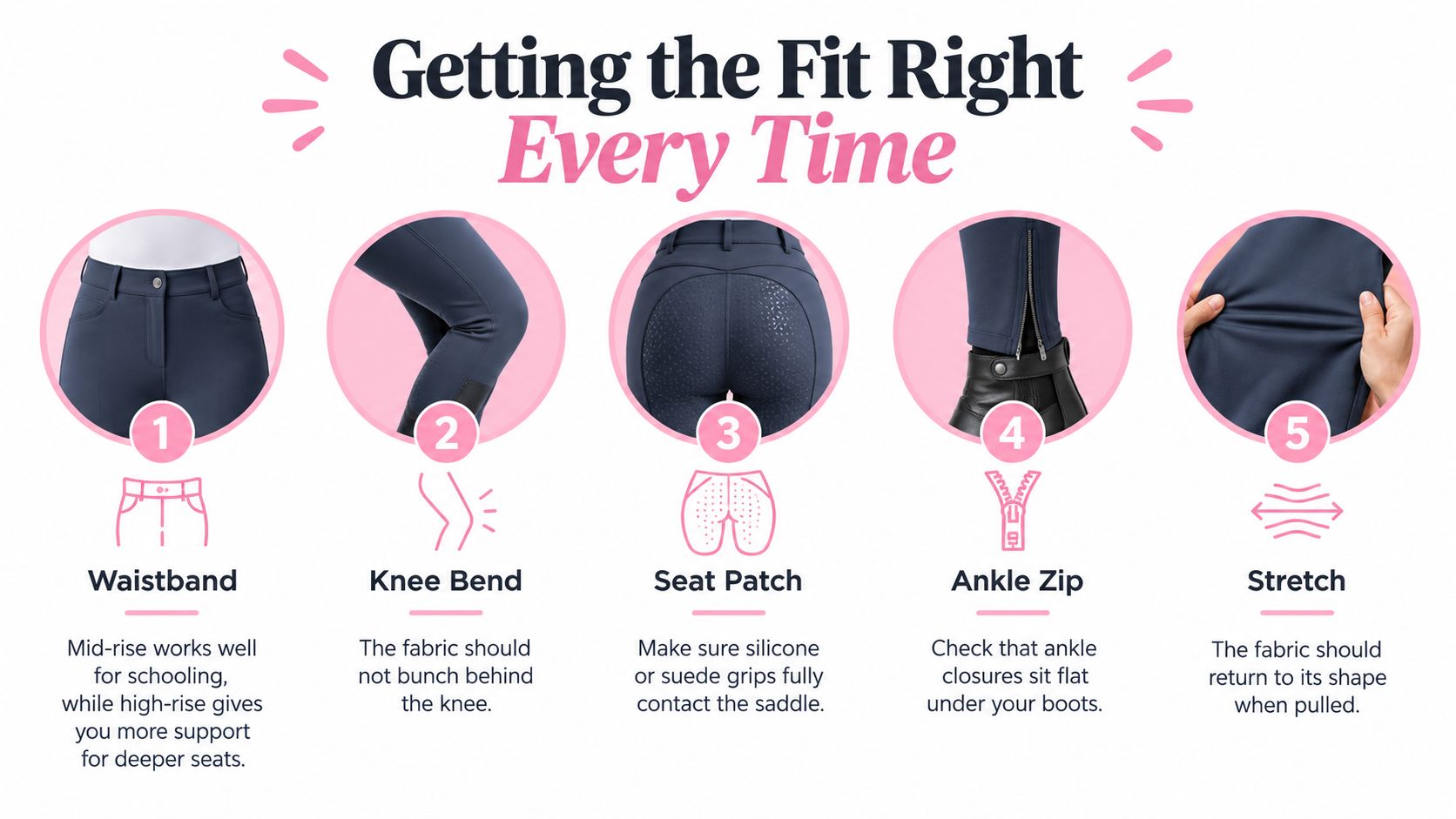
A full seat only helps when the panel stays where your body and saddle need it. Breeches should feel close and supportive, but they shouldn't pinch, pull the waistband down, or create folds behind the knees.
Start at the waistband
Try the pair standing and seated. A mid-rise often suits everyday schooling because it balances coverage and freedom around the torso. A high-rise can feel more secure for riders who prefer extra coverage or spend long periods in a deeper dressage seat.
Bend forward, sit into a chair, and lift one knee at a time. The waistband should remain flat rather than rolling, gaping, or sliding toward the hips. If it shifts, the issue may be the rise or waistband shape, not just the size.
Test the fabric in motion
Squat in front of a mirror, then bend each knee as if you're preparing to mount. Look for pulling across the seat and upper thigh, and check whether excess fabric bags behind the knee. Four-way stretch should let you move without making the grip panel wrinkle or pull the waistband downward.
Leg length affects comfort inside tall boots. Too much fabric can bunch behind the knee and create rubbing, while a hem that rides upward can expose skin or place pressure in the wrong spot. An ankle cuff should lie flat and stay smooth under your boot.
Check the seat panel
Sit on a firm chair and shift through a riding position. The grip should cover the areas that contact the saddle, without stopping short at the point where you need support. If the panel pulls across the buttocks or drags the waistband down, the cut may not match your shape.
Use the retailer's measurement chart rather than relying only on your usual jeans size. If you're between sizes, compare the waist and hip measurements, then consider how much the fabric is designed to stretch. A pair for winter riding may need room for a base layer, but sizing up too far can leave the seat panel loose.
For more practical clothing guidance, see this guide to riding clothes for women. Try breeches with the boots and base layers you'll wear, and keep the tags on until you've tested every seam and closure.
Matching Full Seat Breeches to Your Discipline
The best pair reflects what your ride asks your body to do. A dressage lesson, a cross-country schooling session, a jumper round, and a quiet trail ride all involve different combinations of contact, movement, weather, and time in the saddle.
| Discipline | Best Grip | Fabric Weight | Key Features |
|---|---|---|---|
| Dressage | Light silicone, fine suede, or a moderate leather seat | Lightweight to mid-weight | Stable waistband, close contact, useful pockets |
| Eventing | Flexible silicone or durable synthetic grip | Mid-weight and quick-drying | Versatility, recovery after moisture, reinforced construction |
| Show jumping | Light silicone or knee patch, depending on preference | Breathable and flexible | Freedom through the hip, flat seams, secure ankle finish |
| Trail and casual schooling | Light silicone or soft synthetic grip | Lightweight, breathable stretch | Comfort over long rides, practical pockets, easy care |
Dressage
Dressage riders often appreciate a full seat because the design supports a steady connection through sitting work and transitions. Choose a panel that provides security without feeling so adhesive that you can't make small pelvic adjustments. A high or mid-high rise can also help the waistband stay put during a deep seat.
Eventing
Eventing creates a compromise. You may want stability for dressage and warm-up, then more freedom for jumping and cross-country. A mid-weight, quick-drying fabric with a flexible silicone panel can serve across phases, although some eventers keep both full-seat and knee-patch pairs available.
The comparison of Western and English riding can also help clarify why tack, position, and clothing preferences differ between riding traditions.
Show jumping
Knee patches remain a natural choice for riders who want the upper thigh and seat to move freely over fences. A full seat can still work, especially for a rider schooling a young or strong horse, but choose a lighter grip and flexible fabric rather than a dense panel that locks the body against the saddle.
Trail and schooling
For casual riding, comfort usually matters more than maximum adhesion. Soft stretch fabric, breathable construction, and a lighter grip can make a full seat practical without creating a heavy or restrictive feel. Pocket placement matters here too. A secure phone pocket should sit where it won't press into the hip or interfere with the saddle.
Caring for Your Full Seat Breeches
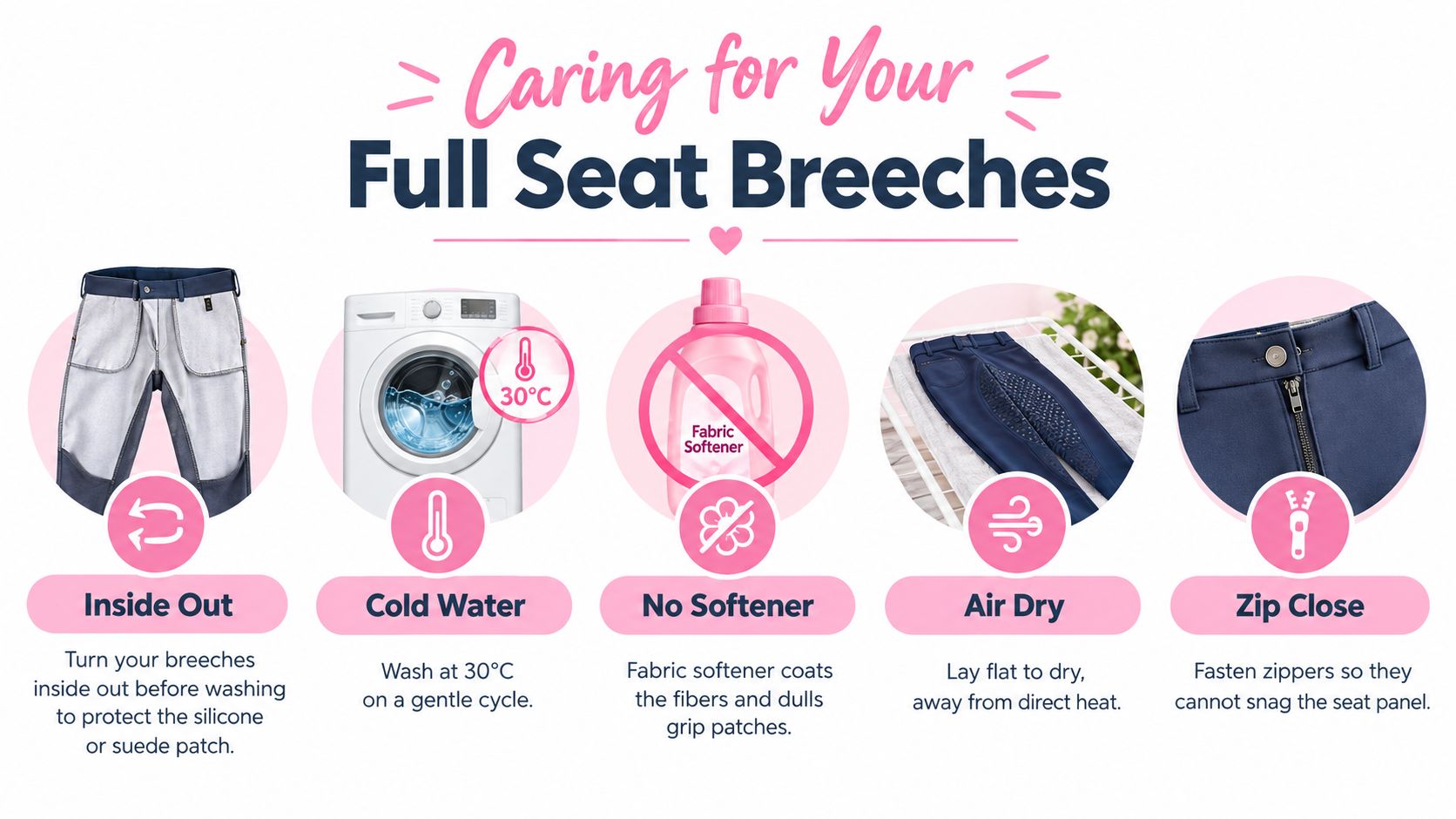
Treat full-seat breeches as technical riding equipment, not as ordinary jeans. The grip panel experiences saddle friction, sweat, dust, and repeated bending, so a gentle routine helps preserve both the fabric and the seat construction.
- Turn them inside out: This protects silicone or suede from zippers, hook-and-loop fasteners, and rough items in the wash.
- Close every zipper: Fasteners can snag the seat panel or pull at stretch fabric.
- Use cold water: A gentle cycle reduces stress on elastic and grip materials.
- Skip fabric softener: Softener can leave a film over silicone and reduce the clean contact you expect.
- Air dry: Hang the breeches or lay them flat away from direct heat. A dryer can encourage silicone to peel and weaken waistband elastic.
Suede needs a slightly different touch. Once the garment is fully dry, use a soft-bristle brush to lift dust and residue without scraping the surface. Spot-clean a small mark when possible, rather than washing the entire pair after every minor barn stain.
Store breeches folded in a drawer or shelf. Hanging them by the waistband can stretch the elastic over time, while folding keeps the knee and seat panels from bearing unnecessary tension.
If a grip suddenly feels dull, check the care history before blaming the product. Hot water, softener, high dryer heat, and contact with rough fasteners can all change performance. Follow the garment's own care label when it gives more specific instructions than this general routine.
Choosing the Pair That Is Right for You
Your best pair depends on what your body does in the saddle, not just on its color or logo. A dressage rider spending long sessions in a deep, quiet seat may prefer a mid-to-high rise that supports the waist without shifting. A jumper may favor a lower mid-rise and a lighter seat panel that follows the hips over fences. An eventer needs a practical middle ground for flatwork, jumping, and changing conditions.
Your build matters too. If a waistband presses when you sit, a higher rise may feel supportive only while standing and restrictive once mounted. If you have a shorter torso, a lower rise may prevent excess fabric from bunching under a coat or tucked shirt. Sit in the breeches before deciding, because the saddle reveals fit problems that a mirror can hide.
Weather changes the useful balance between grip and contact. Breathable silicone can suit hot lessons, especially if you have sensitive skin and want light traction without a heavy, locked-in feeling. Suede or leather may provide the familiar, gradual contact many riders prefer in cooler weather, though it can feel warmer and require more careful maintenance. Winter-weight fabric protects against cold but can reduce the close feel between rider and horse, so reserve it for cold-weather schooling and choose lightweight stretch for summer.
Use this shortlist
- Rise: Choose a waistband that stays flat when you bend, sit, and mount.
- Grip density: Select light silicone dots for heat or sensitive skin, moderate suede for gradual grip, or more coverage if sliding is your main concern.
- Fabric stretch: Look for material that moves through the hip and knee, then returns to shape instead of sagging.
- Seat placement: Check that the panel matches your actual contact points while seated.
- Care tolerance: Match silicone, suede, or leather to the washing and brushing routine you can maintain.
- Exchange policy: Choose a retailer that allows enough time to test the fit with boots and normal riding layers.
One well-fitted mid-range pair can serve you better than several inexpensive pairs that twist, sag, or lose grip. Test them sitting, squatting, bending, and walking. Check that the ankle closure stays smooth beneath your boot and that the seat does not pull when you mount.
Bridle Up Hope Shop offers equestrian apparel, accessories, gifts, and home goods, with annual net profits donated to the Bridle Up Hope foundation. Its equestrian apparel guide can provide another way to compare riding clothing.
This video provides a visual reference for practical fit:
The right riding breeches full seat should support your movement without making you feel trapped. Test the pair in the positions, weather, and discipline you ride.
Visit Bridle Up Hope Shop to browse equestrian apparel and horse-themed goods in English and Western styles, including accessories, books, toys, and home items.

Leave a comment