


You're half-dressed at the barn with one boot on, one hand on the tack trunk, and a shirt in your lap that's either too warm, too loose, too stiff, or somehow all three. That's usually when women's riding shirts stop feeling like a style choice and start feeling like a practical one. The right shirt decides how you feel in the saddle, how polished you look in a lesson or show ring, and whether you spend the ride adjusting sleeves instead of riding.
Table of Contents
- Why the Right Riding Shirt Actually Matters
- How Modern Riding Shirts Evolved From the Habit Shirt
- Show, Training, and Casual Shirts Compared
- Choosing Fabrics That Protect and Breathe
- Getting the Fit Right From Shoulder to Hem
- Seasonal Picks and Climate-Smart Choices
- Caring for Riding Shirts So They Last
- Styling, Gifting, and Where the Shop Comes In
Why the Right Riding Shirt Actually Matters
A riding shirt has a bigger job than most tops. It has to work under pressure, under layers, and often under sun, sweat, and a protective vest. If it fits badly, you notice every minute of the ride, because the problem doesn't stay at the mirror, it follows you into the saddle.
The useful way to think about women's riding shirts is simple. First, what kind of ride are you doing. Second, what fabric will keep you comfortable in that weather. Third, how will it behave with the rest of your gear, especially if you wear a body protector.
The shirt should serve the ride, not the hanger
A shirt that looks great on a hanger can still be wrong for a long school, a hot trail ride, or a show morning when you need a clean line under a jacket. The right one lets you move, breathe, and stay present. It also keeps the look of the outfit tidy, which matters more than many riders admit.
Practical rule: if you keep tugging at the hem, cuffs, or shoulders before you've even mounted, the shirt is already distracting you.
That's why this topic is less about shopping for a pretty top and more about matching the shirt to the day. A rider who wants all-day sun coverage, a rider who needs a crisp show layer, and a rider who wants an easy barn shirt all need different things. The details matter because they change how the shirt performs once you're riding.
How Modern Riding Shirts Evolved From the Habit Shirt
The modern riding shirt didn't appear out of nowhere. Its roots sit in the habit shirt, a formal layer worn beneath structured riding dress in the early nineteenth century. Historical clothing evidence from the 1830s shows women wearing habit shirts with large collars and colored neckties under riding habits, and surviving examples were often shortened to end around the under-bust line so they'd sit cleanly beneath the fitted jacket and skirted silhouette described in museum and costume collections (historical costume reference).
Layering came first, then mobility
That old outfit was built for side-saddle riding, social respectability, and controlled movement. The riding habit itself paired a fitted jacket with a skirt or apron-like overskirt, borrowing from men's tailoring while keeping the expected shape of women's dress. In that system, the shirt wasn't meant to stand alone. It was part of a coordinated whole.
The shift toward astride riding changed the clothing logic. The Metropolitan Museum of Art notes that women kept wearing side-saddle habits until the 1930s, while the National Museum of Australia records that more women were openly riding astride by the 1890s, even though side-saddle remained more popular then (National Museum of Australia). Astride riding required more leg movement, a more secure seated position, and clothing that could work with breeches or divided garments instead of a fixed skirt line.
Why that history still shows up in today's shirts
That's why modern shirts still favor clean layering, close fit, and a polished front. The old habit shirt taught the category to sit neatly under another garment, while astride riding pushed it toward mobility and function. Even casual equestrian tops often still carry that same idea, a shirt should look composed, move well, and stay out of the way.
Today's women's riding shirts inherit both traditions. They're meant to look smart and behave technically, which is why you still see structured collars, smooth seams, and cuts that tuck cleanly under coats or layer without bulk.
Show, Training, and Casual Shirts Compared
Different riding days call for different shirts, and that's where a lot of shopping confusion starts. A show shirt, a training shirt, and a casual riding shirt can all be “riding shirts,” but they solve different problems. If you treat them as one category, you'll either overbuy or end up wearing the wrong thing for the job.
| Riding Shirt Types at a Glance | Best For | Defining Features | Watch Out For |
|---|---|---|---|
| Show shirt | Lessons, clinics, competition days | Crisp collar, polished finish, tidy silhouette under a coat | Fabric that wrinkles easily or feels stiff in motion |
| Training shirt | Schooling, conditioning, long practice rides | Stretch, moisture-wicking fabric, close but comfortable fit | Overly compressive cuts that restrict breathing or shoulder rotation |
| Casual riding shirt | Barn chores, relaxed rides, barn-to-town wear | Easy comfort, versatile styling, simple closures or casual tops | Loose fabric that catches, flaps, or feels sloppy in the saddle |
A show shirt is about presentation first. It should disappear neatly under a jacket and keep its shape when you're standing still, warming up, or waiting for your turn. A training shirt is about repeat motion, so stretch and sweat management matter more than a formal finish. Casual tops can be the most forgiving, but they still need to stay secure enough for riding.
Choose by job, not by category label
If you only buy one type, most riders end up compromising. A shirt that looks perfect in the ring can feel too warm for schooling. A relaxed barn shirt can look too informal for a clinic. A technical top can be excellent for work in the saddle and still be the wrong choice under a coat.
For riders who switch between English and Western styles, this guide to Western vs English riding clothing helps separate what's about discipline and what's about the ride. The point isn't to own every version. It's to know which shirt earns its place in your closet.
Choosing Fabrics That Protect and Breathe
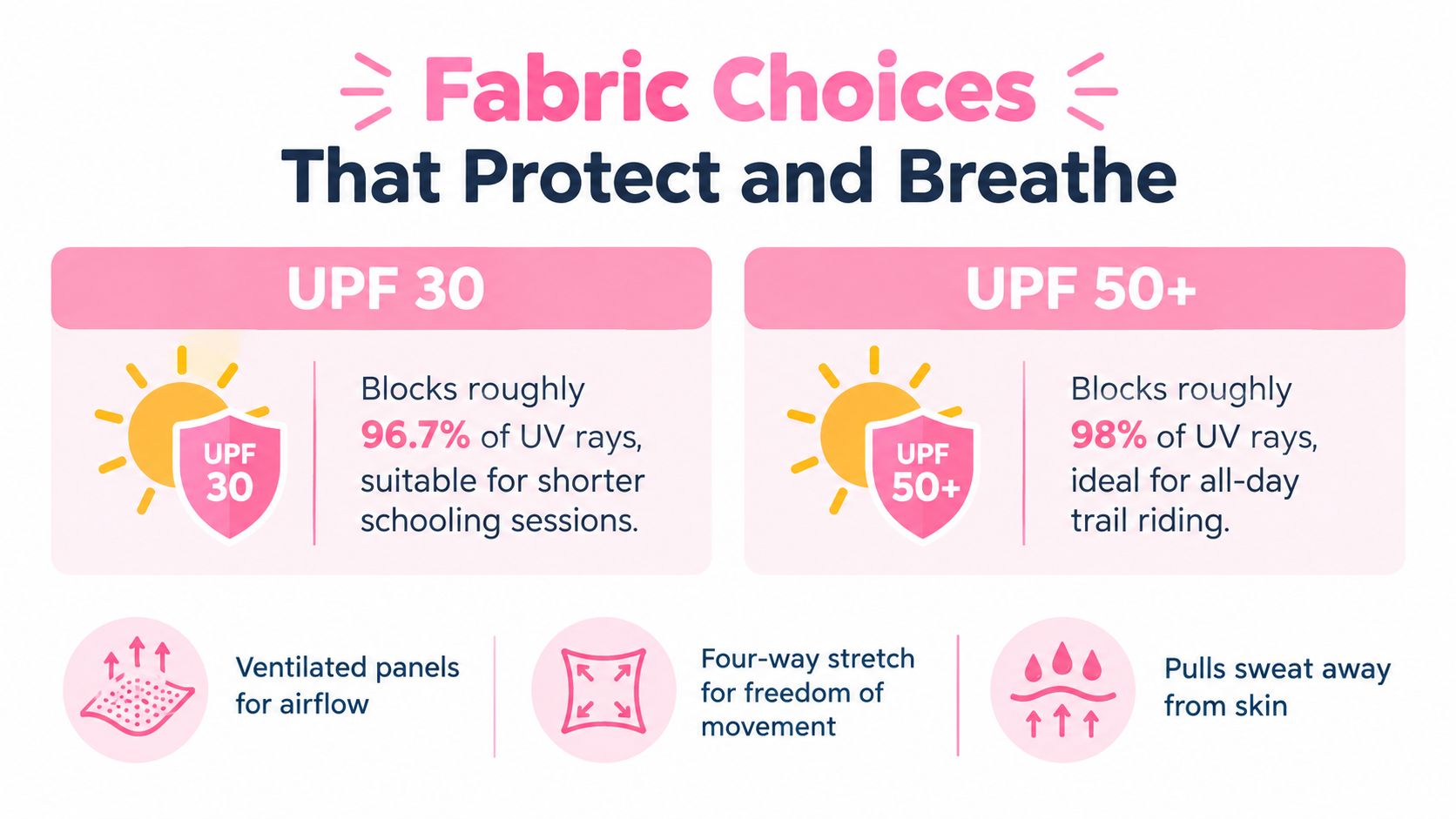
You're three hours into a summer trail ride, and your shoulders are starting to feel it. That's the moment fabric choice stops being a detail and becomes the ride. For outdoor riding, fabric matters as much as cut, so start with the UPF rating rather than the fiber label. UPF 30 blocks roughly 96.7% of erythemally effective UV radiation, while UPF 50+ blocks roughly 98% (fabric protection research).
Density beats guesswork
The key technical idea is cover factor, which describes how much of the textile surface is occupied by yarn. The same study found that cover factor correlates strongly with protection against erythema, non-melanoma skin-cancer-related exposure, and photoimmunosuppression. In plain language, a dense knit or weave often protects better than a light, loose one, even when both fabrics use similar fibers.
A thin shirt that feels airy isn't automatically the better sun shirt. The same research also found that darker fabrics, especially black polyester and cotton, often provide higher UPF values, and that double-layer constructions can improve protection. So if a product page says "sun shirt" but names no test method or rating, treat that as marketing, not evidence.
Shopping rule: for exposed riding, prioritize a tested UPF 40 to 50+ rating, dense fabric construction, and full sleeve coverage that stays put in the saddle.
Breathability still matters
Here's the trade-off riders feel. A shirt can be excellent at blocking UV and still feel sticky if it traps sweat, especially under a body protector where air barely moves. UPF tells you about UV transmission, nothing else. It says nothing about breathability, drying speed, or cooling. Research on sun-protective clothing recommends balancing UV protection with heat protection and transpiration capability, rather than chasing one at the expense of the other (sun-protective clothing research).
The best riding shirts solve this with structure, not just fiber. Ventilation zones, thoughtful knit density, and a fit that lets air move can make a dense shirt feel comfortable on a long ride. If you're comparing options, this equestrian sun shirt guide walks through how to weigh fabrics before you buy.
Getting the Fit Right From Shoulder to Hem
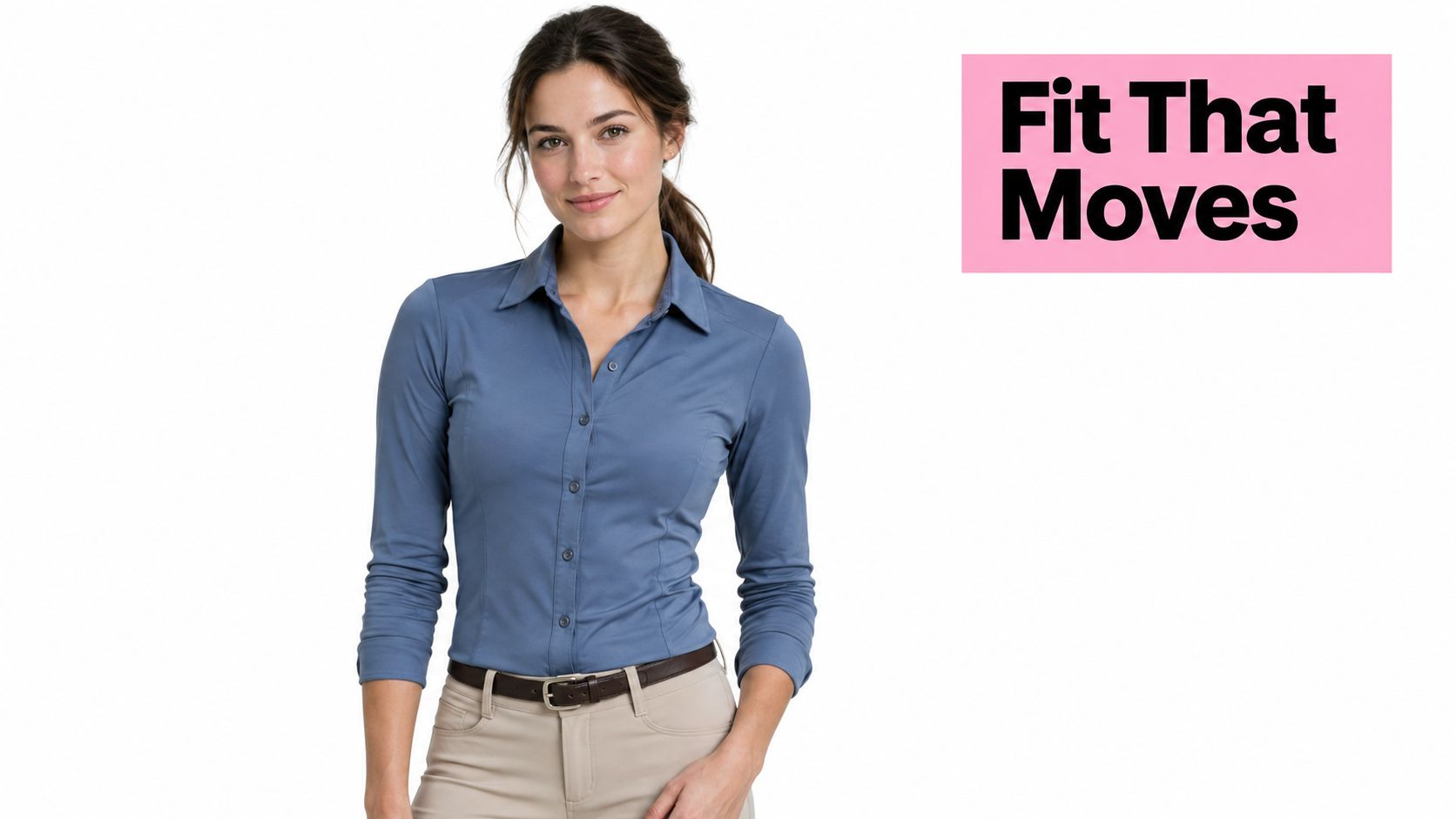
A riding shirt should feel like it belongs to your body in motion, not just in a fitting room. Start at the shoulders. If the seam sits too far in, you'll feel pinching when you reach forward. If it sits too far out, the shirt can slide and twist when you pick up contact.
The bust and torso matter just as much. A shirt with shaping can fit a fuller bust without hanging loose at the waist, and that helps keep fabric away from tack. For riders who prefer to wear a shirt tucked in, torso length needs to be long enough that the hem stays put. If you prefer untucked styles, check that the bottom edge doesn't flare in a way that catches on the saddle.
Sleeves should work with reins and elbows
Sleeves need enough room for shoulder rotation, but they shouldn't be baggy. Cuffs that are too loose can bunch under gloves or flap around rein contact, while sleeves that are too short can ride up when your arms lift. In a riding shirt, that balance is more important than in a casual top.
A sizing chart from a non-riding category can still be helpful, because it forces you to measure rather than guess. A sizing guide for women's caddie wear can be a useful reference point for bust, waist, and shoulder measurements when you're comparing structured tops.
One detail riders often miss is layering under a vest. In a survey of 1,010 riders, 97.8% of whom were women and 89.8% amateurs, 61.5% said body protectors altered their position, and non-users were three times more likely to cite stiffness or rigidity as a reason for avoiding them (body protector survey). That makes shirt fit under armor a real issue, not a minor preference.
Try the shirt on with the vest or body protector you actually ride in, then reach forward, twist your torso, and take a few deep breaths. If the shirt binds at the shoulders or bunches across the chest, size or style is wrong.
For another perspective on riding apparel fit and movement, the women's riding clothes guide is a practical companion. The goal is a shirt that feels stable without feeling restrictive, because a rider who's busy adjusting clothes usually isn't riding as well as she could.
An instructor's eye usually catches the same problem first, the shirt should disappear once you mount. If the hem shifts every stride or the sleeves creep up at the elbow, the cut is fighting your position.
Seasonal Picks and Climate-Smart Choices
The smartest shirt drawer is small. It just covers different weather instead of duplicating the same thing in four colors. A hot-weather shirt, a shoulder-season layer, and one more polished option will cover most riders better than a closet full of near-matches.
A lightweight ventilated sun shirt makes sense for summer schooling and trail rides, especially if you're outside for long stretches. A midweight knit or technical long sleeve works well in spring and fall because it layers under a vest without getting bulky. A heavier sweater-weight top belongs in cold weather, where warmth and comfort matter more than sun protection alone.
Match the shirt to the ride, not just the forecast
Loose sun shirts and fitted base layers are not interchangeable. A looser shirt can feel cooler in humid weather and offer better airflow. A fitted layer can sit more smoothly under a jacket or protector, which matters more in clinics, shows, or colder months.
One rider might wear a breezy top for trail miles, then switch to a structured shirt when she needs a neat collar and cuffs. That's normal. The shirt that works best for a schooling day in July is rarely the same one you'd want for a cool-weather show morning.
If you want one smart rule, make it this. Buy for the longest part of the ride, not the first ten minutes. If you'll be standing in the sun, layered under tack, or waiting around between classes, choose the shirt that handles the full day, not just the ride start.
Caring for Riding Shirts So They Last
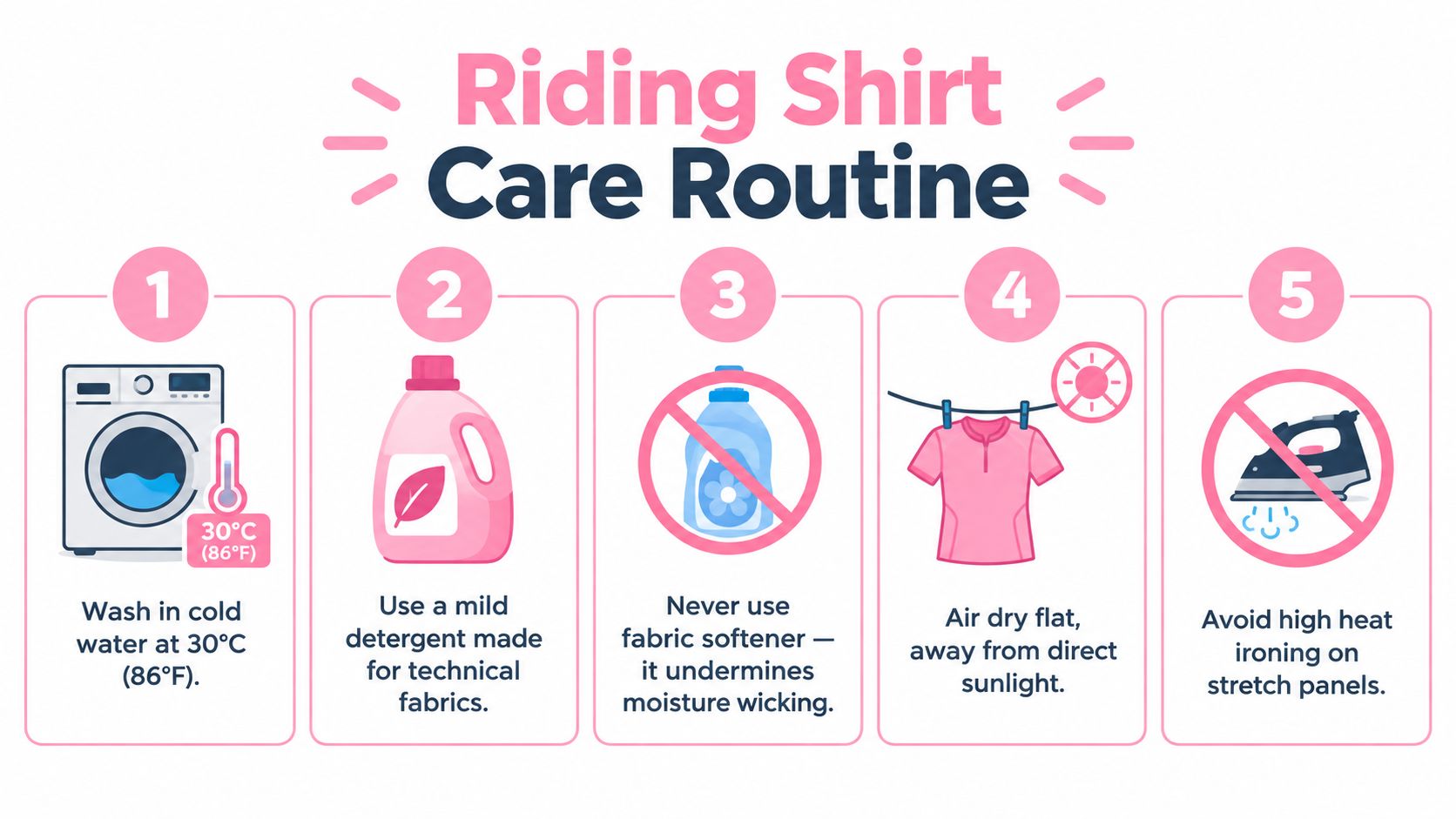
Technical riding shirts need simple care, not fussy care. Wash them in cold water, use a mild detergent made for technical fabrics, and skip fabric softener because it can weaken moisture-wicking performance. If the shirt has stretch panels or a crisp collar, high heat is the fastest way to shorten its life.
Drying matters too. Air dry flat or hang it away from direct sun so collars hold shape and snaps don't warp. If you wear the shirt hard in summer, change out of it promptly and let it air between rides. That helps with odor control and keeps sweat from settling into the fibers.
Small habits protect performance
Store show shirts on hangers so collars keep their structure. Fold casual shirts neatly if they have prints or embellishments you want to preserve. If a shirt wrinkles badly after washing, that's usually a sign it needs gentler drying, not hotter ironing.
A riding shirt that's washed and stored well keeps its shape, its feel, and its polished look. That matters because fit and performance are connected. A shirt that loses stretch or warps at the collar stops behaving like the shirt you bought.
Styling, Gifting, and Where the Shop Comes In
A good riding shirt can move from barn to errands without looking out of place. A jacquard sweater or pearl-snap top works well when you want equestrian style that still feels wearable off the horse. A delicate bit necklace or bracelet can finish the look without making it feel costume-like, and that's often the difference between “horse themed” and well styled.
For riders who like embroidered details, this embroidered shirt inspiration is a useful reminder that texture and stitching can make a simple top feel more personal. In a gifting moment, that matters. A shirt, a small piece of jewelry, or a coordinated accessory can solve the problem of what to give someone who already owns plenty of practical gear.
Bridle Up Hope Shop carries equestrian apparel and gifts in both English and Western styles, and it's one place where a rider can find clothing, jewelry, and horse-themed pieces that fit that barn-to-town rhythm. The shop also has a 4.9/5 rating based on 3,546 reviews, offers free U.S. shipping on orders over $99, and donates 100% of annual net profits to the Bridle Up Hope foundation. That makes the purchase feel tied to something larger than the wardrobe itself.
If you're shopping for a rider who needs a shirt that works in real life, start with fit, fabric, and the kind of riding day she has in mind. Then visit Bridle Up Hope Shop to browse equestrian apparel and gifts that fit the same practical standard.
Leave a comment