


The first thing many riders notice about a horsebit is its feel. In the hand, a bit is cool, weighty, and carefully shaped for movement, yet on the wrist its curved links become a quiet reminder of the relationship between rider, horse, and tradition. A sterling silver horsebit bracelet carries that history into everyday style, but choosing one well means looking beyond a pretty outline.
Table of Contents
- The Heritage of a Timeless Equestrian Symbol
- Decoding Sterling Silver Standards and Hallmarks
- English Versus Western Styling in Equestrian Jewelry
- How to Choose the Perfect Fit and Finish
- Styling Tips and Daily Care Instructions
- Why a Horsebit Bracelet Makes the Ultimate Gift
The Heritage of a Timeless Equestrian Symbol
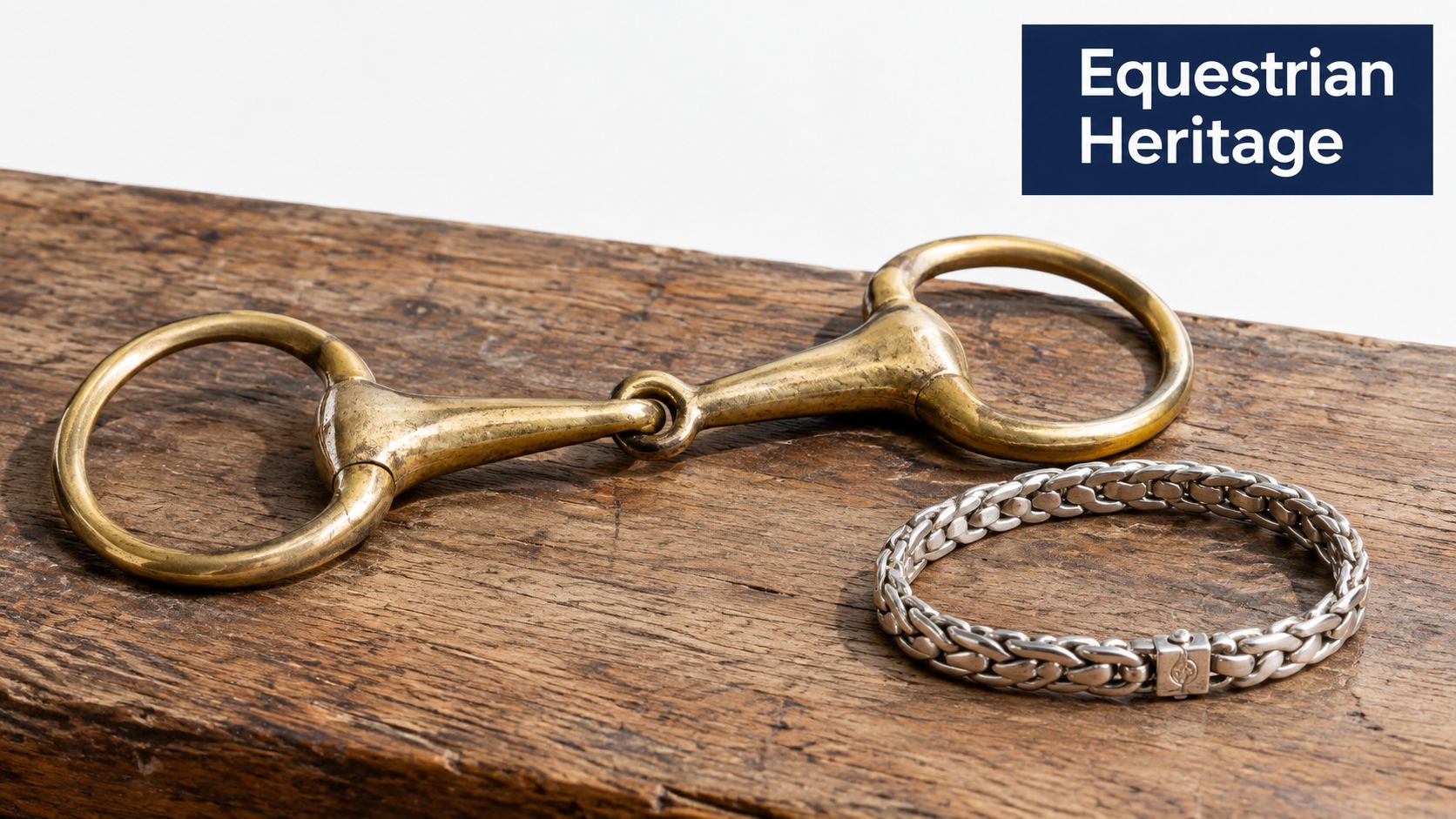
A horsebit began as working tack, not decoration. Its bars, rings, and cheek pieces help a rider communicate with a horse, so every curve has a practical origin. Hold an old brass bit and you'll notice the balance immediately: the metal isn't merely ornamental, and the joined parts are designed to move, connect, and respond.
Jewelry designers borrow that visual language. A bracelet may simplify the original hardware, but the best designs retain recognizable features such as paired curved bars, rounded rings, and a central connection that resembles a snaffle or curb-bit structure. The result feels meaningful because it preserves the idea of functional equipment transformed into wearable design.
From the tack room to the fashion house
The motif's major fashion milestone came in 1953, when Gucci used the horsebit on its now-iconic Horsebit loafer, as documented by Country & Town House's account of Gucci Horsebit jewelry. The symbol later appeared across the house's handbags, belts, and jewelry, shifting the horsebit from stable hardware into a recognizable luxury design code.
That history gives the bracelet more depth than a generic horse charm. It can speak to someone who rides, someone who grew up around horses, or anyone drawn to the discipline and balance associated with equestrian life. For a broader home expression of that tradition, an equestrian decor throw blanket can echo the same visual vocabulary without duplicating the jewelry.
Look closely: The charm of a horsebit bracelet comes from the tension between utility and elegance. It should look as though its shape could belong in a tack room, while its finish belongs in a jewelry box.
If you're comparing related motifs, the snaffle bit belt guide offers another useful example of how equestrian hardware becomes a refined wardrobe detail.
Decoding Sterling Silver Standards and Hallmarks
A genuine sterling silver piece is defined by its metal content, not by a bright finish or a convincing product photograph. The long-standing 925 standard means the alloy contains at least 92.5% pure silver and 7.5% another metal, usually copper, according to Britannica's explanation of sterling metallurgy.
Pure silver is relatively soft for a bracelet that must bend, clasp, and withstand contact with clothing. Adding another metal gives the material greater practical strength while retaining silver's familiar color and workability. That balance is why sterling silver remains a foundational choice for chains, bracelets, and other jewelry.
What 925 tells you
The number 925 usually appears on a clasp, tag, or another discreet part of the bracelet. It identifies the alloy's fineness, but it doesn't tell you everything about construction. A buyer should still ask whether the bracelet is solid sterling silver throughout, silver-plated over a base metal, or made with mixed components.
English history helps explain the standard's staying power. Britannica traces the composition to medieval English coinage practices and notes that the 925-parts-silver standard remained the basis of English coinage until the silver content was reduced to 500 parts per 1,000 in 1920. For a buyer, the practical lesson is simple: a 925 mark connects the bracelet to an established precious-metal benchmark, but transparency about every component still matters.
A useful companion resource is Evo Dyne Products' guide to what to know about silver. Before buying, inspect the hallmark image, read the materials list, and check whether the seller explains the clasp and connecting rings. You can also compare the symbolism of another equestrian piece through this guide to a sterling silver horse necklace.
English Versus Western Styling in Equestrian Jewelry
English and Western riding share a connection to horses, but their visual languages differ. An English-inspired bracelet often feels refined, restrained, and polished. Its horsebit may be narrow, symmetrical, and closely integrated into a fine chain, making it suitable with a button-down shirt, a knit sweater, or a dress.
Western styling tends to give the motif more room. You may see heavier links, antiqued surfaces, engraved details, leather combinations, or a larger central bit. These choices create a grounded, rustic character that works naturally with denim, boots, turquoise accents, and textured belts. Neither approach is more authentic. They tell different stories about the wearer's relationship with equestrian culture.
| Style direction | Typical visual language | Works well with |
|---|---|---|
| English-inspired | Slim proportions, bright polish, balanced symmetry | Tailoring, knitwear, understated jewelry |
| Western-inspired | Heavier links, darker detailing, mixed textures | Denim, leather, boots, turquoise |
| Bridging style | Moderate links with a clean silver finish | Everyday wardrobes and mixed influences |
Choosing the story you want to wear
Consider the rest of your wardrobe before choosing the bracelet. If your daily clothes rely on clean lines and neutral colors, a high-polish chain can act like a small piece of equestrian punctuation. If you favor ranch-inspired layers, a wider link or oxidized detail may feel more natural and less formal.
Your riding discipline can guide the choice, but it doesn't have to dictate it. An English rider might prefer a substantial bracelet away from the show ring, while a Western rider may choose a delicate piece for office wear. The strongest choice is the one that feels connected to your life rather than treated as a costume.
The horsebit itself provides continuity. Whether the finish is bright or subdued, the shape still recalls the bridle and the hand-to-rein connection. That lets you move between styles without losing the motif's original character.
How to Choose the Perfect Fit and Finish
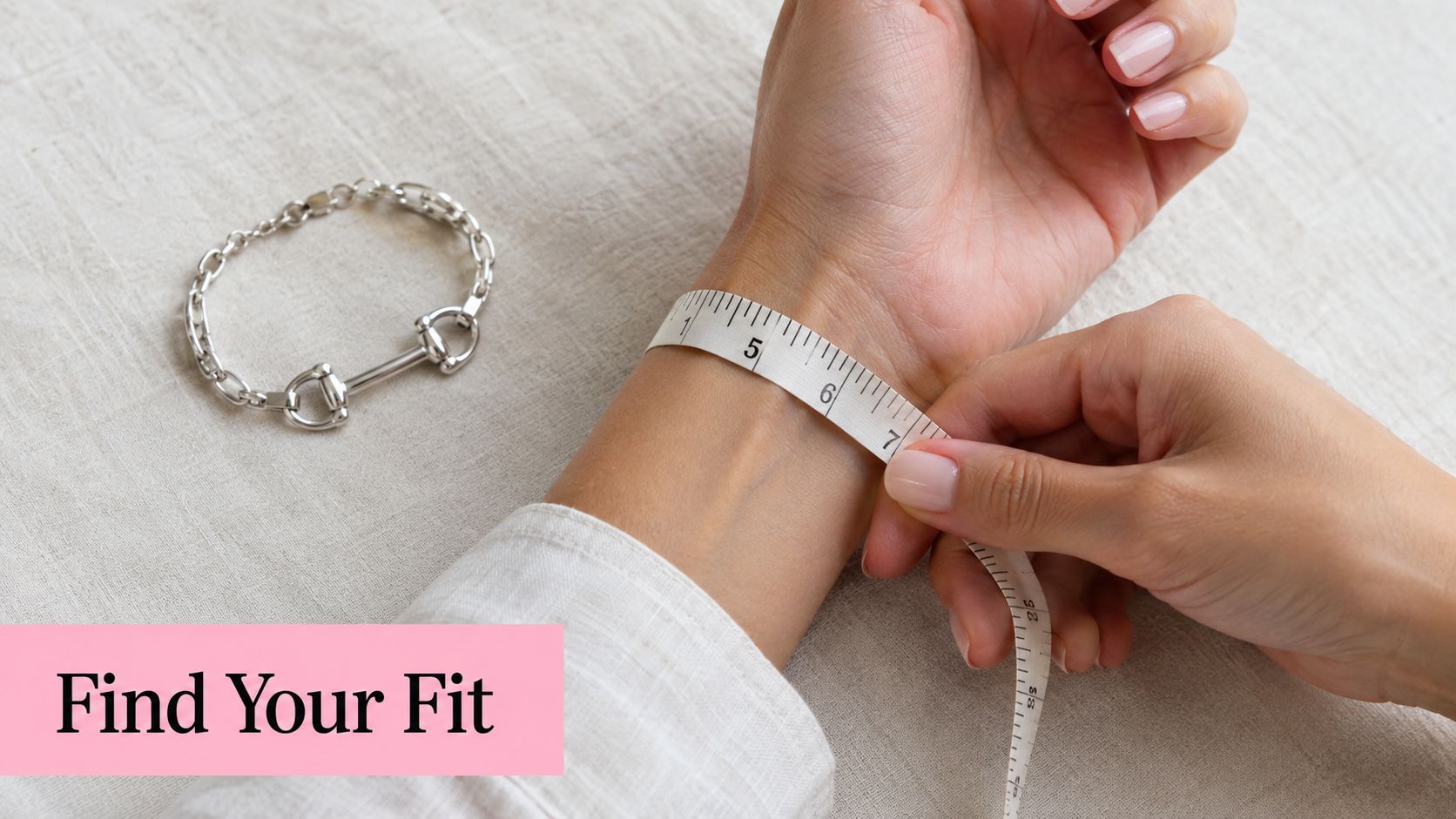
Start with fit, because even beautifully made silver becomes frustrating if it pinches, slides, or catches on clothing. Wrap a flexible measuring tape around your wrist where you plan to wear the bracelet, keeping it comfortably close without tightening it. Compare that measurement with the seller's finished bracelet length and adjustment range rather than relying on a vague small, medium, or large label.
Match the closure to your routine
A bracelet with clasped chain architecture offers more flexibility than a fixed bangle. Independent jewelry listings describe horsebit bracelets with adjustable closures and lobster-style clasps, a practical arrangement that helps the bracelet accommodate different wrists and stay secure during movement.
Check three points before ordering:
- Adjustment: Look for enough chain or sizing options to position the horsebit comfortably without letting it rotate constantly.
- Clasp action: A lobster-style closure should open smoothly and close firmly. If the product photographs don't show it clearly, ask the seller for a close-up.
- Connection points: The rings joining the horsebit sections should look neatly finished, without visible gaps or rough edges.
Practical rule: A secure clasp matters more than a dramatic centerpiece. If the closure feels unreliable, the bracelet won't be an easy everyday piece.
High polish reflects light and gives the bracelet a crisp, contemporary appearance, but it also makes fingerprints and surface marks easier to notice. Oxidized detailing darkens recessed areas, emphasizing the relief around the links and often creating a more archival tack-room effect. Choose the finish that supports your maintenance habits and wardrobe, not just the one that looks most striking in a product photograph.
A visual demonstration can help you judge how a bracelet should sit before purchasing.
Styling Tips and Daily Care Instructions
Sterling silver is often described as easy-care jewelry, but “easy care” doesn't mean “wear it through everything.” Tarnish develops faster when silver meets chlorine, bleach, salt air, sulfur-containing materials, perfume, lotions, and moisture, as summarized in Tiffany's sterling silver care guidance.
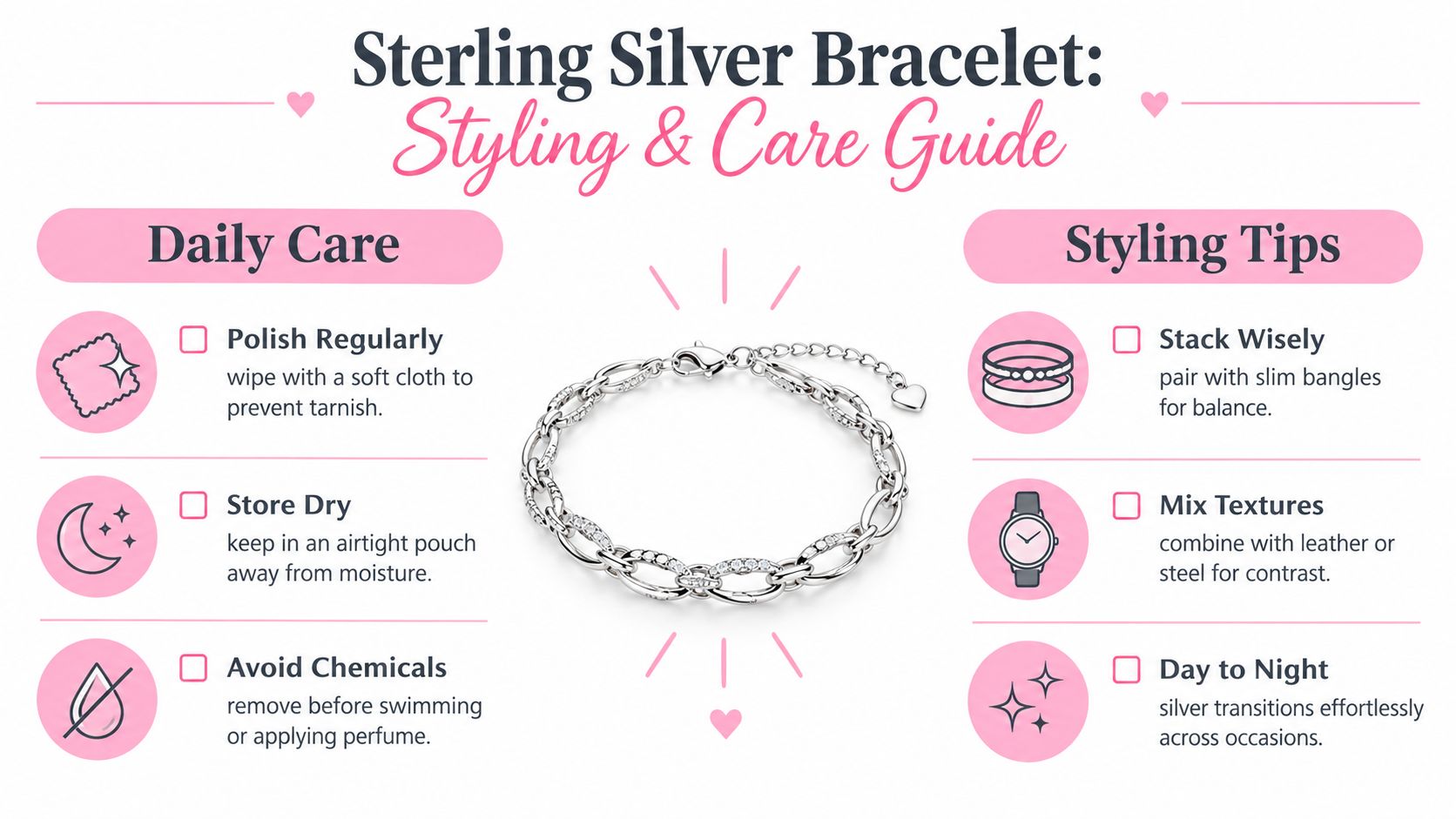
A horsebit bracelet deserves extra attention because its recessed edges, clasp, and joining points can hold residue. Remove it before swimming, showering, exercising, or applying fragrance, then wipe it with a soft polishing cloth when you take it off. Store it in an airtight, dry pouch, away from damp bathrooms and direct contact with other jewelry.
A practical care rhythm
You don't need to wait until the bracelet looks dark. A light wipe after regular wear removes skin oils and surface residue before they settle into the links. If tarnish appears, use a cloth suitable for sterling silver and work gently around, rather than aggressively across, any oxidized detailing.
For travel, place the bracelet in its own airtight pouch. This limits moisture and reduces friction against watches, buckles, and harder jewelry. If the bracelet contains plated or mixed-metal components, follow the seller's instructions instead of assuming that every silver-cleaning product is appropriate.
Build balanced layers
A horsebit bracelet has a strong central idea, so it usually looks better with supporting pieces than with several competing statement designs. Try a slim bangle on one side of the chain, or pair the bracelet with a simple silver ring that repeats the metal without copying the horsebit.
Texture can add contrast. Leather recalls the tack-room origin, while steel or a matte watch introduces a cleaner industrial note. Keep the proportions intentional, especially if the bracelet has larger links. A delicate chain can sit close to a watch, while a bold design may need space to remain legible.
Wear it with confidence: The bracelet should accompany your day, not dictate it. Let the horsebit be the recognizable detail, then keep the rest of the stack quiet enough for its shape to breathe.
Why a Horsebit Bracelet Makes the Ultimate Gift
A horsebit bracelet makes a thoughtful gift because it carries several meanings at once. The silver offers lasting material value, while the motif speaks to horses, riding, heritage, and personal memory. That combination gives the recipient something more intimate than a generic accessory, even when you don't know their exact jewelry style.
It also works for different kinds of horse lovers. A committed rider may appreciate the connection to real tack, while someone who loves equestrian fashion may respond to the motif's journey into modern design. The bracelet can mark a birthday, a riding milestone, a new horse, or a simple expression of affection.
Choose meaning as carefully as metal
Before ordering, check the recipient's preferred finish and whether they react to mixed metals. Dermatology guidance from the American Academy of Dermatology on nickel allergy explains why buyers with sensitive skin should ask about alloy composition, plating, and findings. Pure silver is generally considered a safer choice for nickel-sensitive wearers, but some sterling alloys or components may still contain trace nickel.
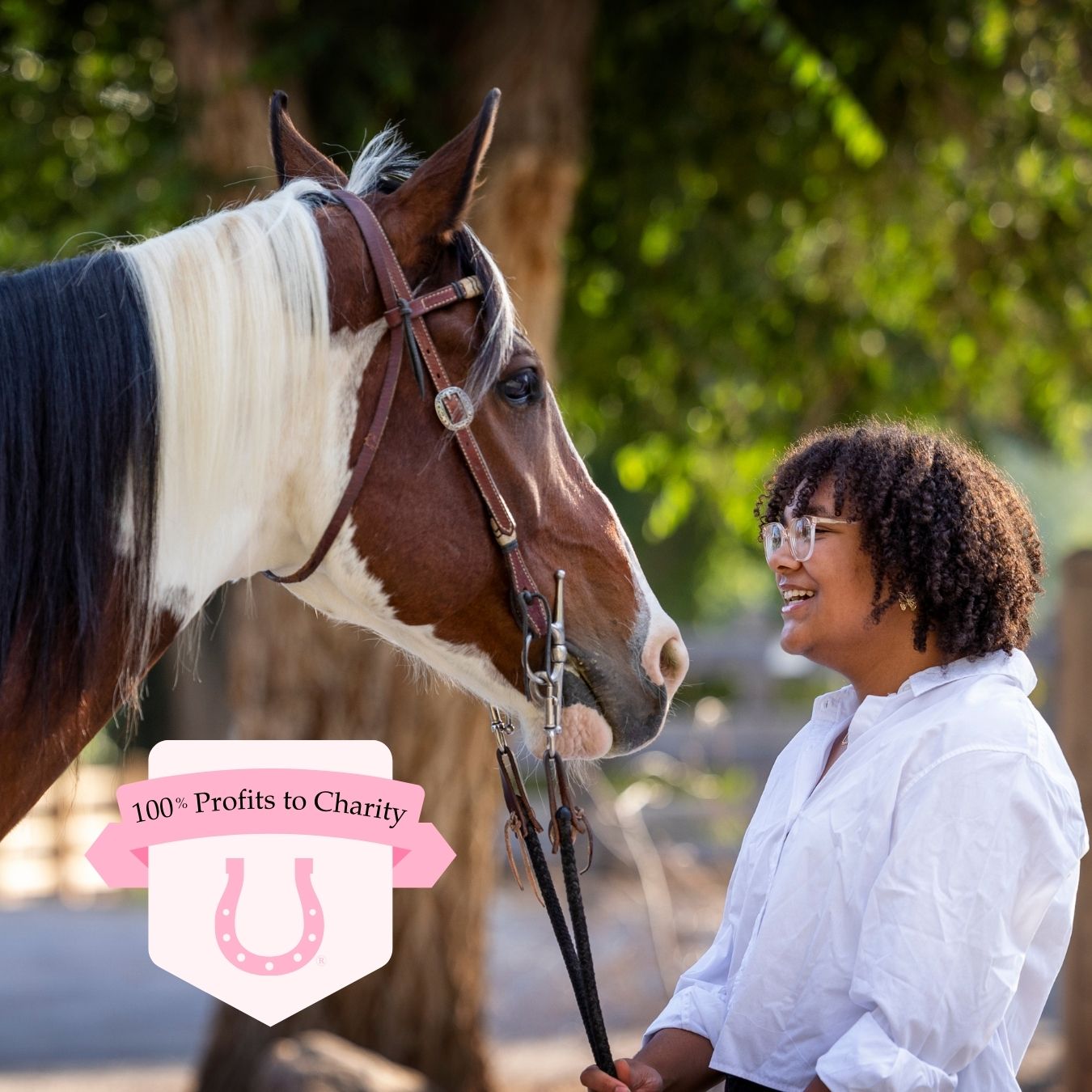
A charitable purchase can add another layer of purpose. Bridle Up Hope's model directs its annual net profits to a foundation supporting girls and women through horses and habits, so a horse-themed gift can also reflect a wish to support equestrian-centered community work. For more ideas across jewelry and other categories, browse these jewelry gift ideas.
The best gift is chosen with the wearer in mind. Match the bracelet's scale to their usual style, confirm the materials, and include a short note about the horsebit's working heritage. That explanation turns a beautiful object into a story they can carry.
Bridle Up Hope Shop offers equestrian jewelry and horse-themed gifts in both English and Western styles, including bracelet designs connected to traditional tack. Visit Bridle Up Hope Shop to choose a meaningful piece and support a charitable model through your purchase.
Deje un comentario