


You're searching for a gift for someone who can identify a horse by its footsteps, or perhaps you want to carry a private reminder of a beloved animal close to your heart. A generic horseshoe pendant may capture the theme, but a horse locket necklace can do something more personal. It can express an equestrian identity, hold a photograph or keepsake, or preserve a small part of a horse's mane or tail.
The difficulty is that the same product name describes two very different pieces. One is a symbolic fashion necklace with a horse design. The other is a custom memorial locket made to hold real horse hair. They may look similar in a photograph, yet they serve different emotional purposes and require different questions before purchase.
Table of Contents
- Introduction Why a Horse Locket Necklace Feels So Personal
- How Horse Symbolism and Locket Tradition Came Together
- Two Very Different Meanings Behind the Same Name
- Materials and Hardware That Determine Lasting Quality
- How to Choose Chain Length Personalization and Style
- Gifting Ideas Care Rituals and Everyday Wear
- Finding a Horse Locket Necklace That Gives Back
Introduction Why a Horse Locket Necklace Feels So Personal
A horse locket necklace sits at the meeting point of symbolism and memory. The horse can represent freedom, confidence, loyalty, movement, or a lifelong connection to riding. The locket adds a private layer, because its front tells one story while its interior may hold another.
That makes the necklace suitable for several moments. A parent might give an engraved pendant to a young rider after a first competition. A friend might choose one for a graduation, birthday, or new barn chapter. Someone grieving a horse may look for a custom design that holds mane or tail hair rather than a simple decorative charm.
The right choice depends less on the word “horse” and more on the meaning you want the recipient to carry. Before comparing finishes or chain lengths, ask yourself one question: is this necklace meant to celebrate an equestrian identity, or preserve a specific horse?
The most meaningful locket is the one whose interior and exterior tell the same emotional story.
This guide helps you make that distinction, then evaluate the history, metal, moving parts, personalization, fit, care requirements, and gifting experience. You'll also find practical ways to avoid buying a beautiful pendant that doesn't suit everyday wear or a memorial piece that feels too intimate for its recipient.
A horse locket can be a style purchase, a sentimental keepsake, or both. Understanding those roles makes shopping calmer and helps you choose a necklace that feels intentional rather than merely horse-themed.
How Horse Symbolism and Locket Tradition Came Together
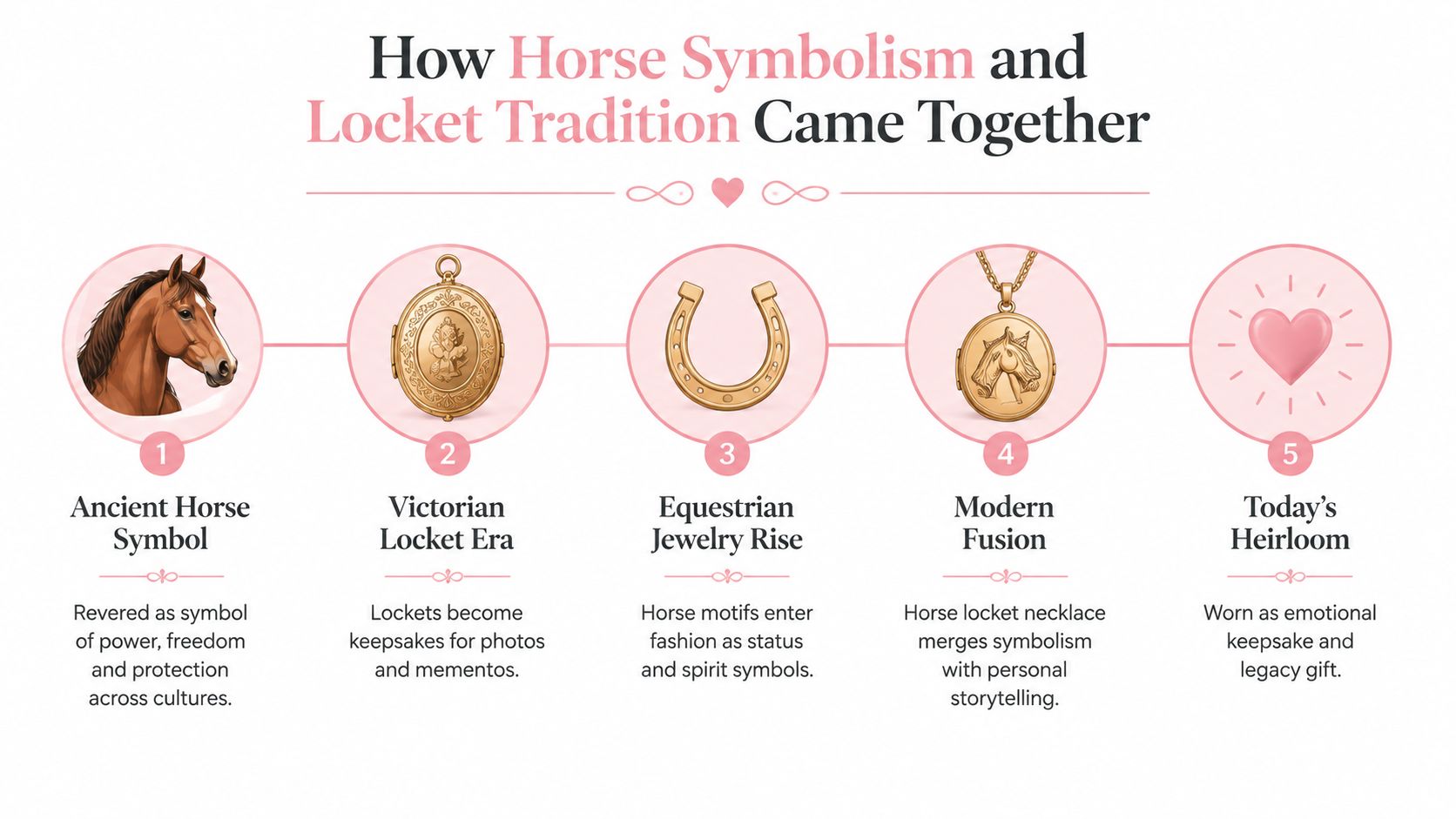
The horse motif carries a long history before it ever appeared on a modern pendant. Jewelry history sources trace equine-inspired ornamentation to Egypt, Greece, and Rome, while horse imagery also appeared in early Celtic and Mongol relics. In those societies, horse-related metal amulets were worn as protective objects believed to ward off evil, so the animal represented more than decoration. It could stand for power, status, protection, and good fortune, as documented in this history of the horse motif in jewelry.
The locket contributes a different but complementary tradition. Locket-style jewelry can be traced to antiquity, and by the 15th and 16th centuries in Europe, sealed pendants were used to conceal charms, religious tokens, and small keepsakes. During the 1600s, mourning jewelry increased the locket's popularity, including pendants containing miniature portraits worn as private tributes after the execution of King Charles I in 1649, according to this history of locket necklaces and their meaning.
Two traditions with one emotional language
The horse and the locket work together because each offers a form of protection. Historically, the horse motif was connected with protective amulets and social standing. The locket provided a discreet place for a charm, portrait, lock of hair, or remembrance. A horse locket necklace therefore feels less like a novelty and more like a contemporary heirloom built from two established jewelry ideas.
The Victorian era strengthened that connection. Horse and equestrian motifs became important in fashionable jewelry as riding and horse racing influenced elite taste. Lockets, meanwhile, became familiar sentimental jewels used to hold portraits and locks of hair. The result was jewelry that could signal a person's interests publicly while preserving a private reminder inside.
That dual role still explains the appeal today. The front may show a running horse, horseshoe, or engraved equestrian profile. Inside, the wearer might keep a photograph, a written note, or a small memorial element. If you're comparing related symbols, the discussion of horseshoe necklace meaning offers useful context for understanding how equestrian jewelry communicates luck, protection, and identity.
Why heritage matters to modern buyers
A buyer choosing this necklace isn't only selecting an image. They're choosing how much of the story should remain visible. A bold horse silhouette makes the equestrian connection clear. A small oval locket can keep that connection understated. An engraved interior transforms the piece into a private message.
That flexibility gives the horse locket its staying power. It can suit someone who rides every week, someone who admires horses from a distance, or someone preserving a bond with one particular animal. The design is modern, but the emotional logic is centuries old.
Two Very Different Meanings Behind the Same Name
Most confusion starts with the product name. A fashion symbol locket may feature a horse-shaped front, an engraved horse, a horseshoe, or a small equestrian charm. A horse-hair memorial locket is designed to hold real mane or tail hair, often through a custom-order process that requires the buyer to send the material to the maker.
Both can be meaningful, but they shouldn't be treated as interchangeable. One celebrates a theme or lifestyle. The other preserves a specific relationship and may be connected to grief, remembrance, or a treasured working partnership.
Which Horse Locket Necklace Fits Your Intent
| Feature | Fashion Symbol Locket | Horse-Hair Memorial Locket |
|---|---|---|
| Main purpose | Expresses equestrian style, affection, or symbolism | Preserves a specific horse's mane or tail hair |
| Interior | May hold a photo, note, or remain empty | Holds real hair, often secured in resin or a dedicated compartment |
| Personalization | Engraving, portrait, initials, or decorative details | Hair submission, custom layout, engraving, and sometimes a portrait |
| Emotional tone | Celebratory, stylish, and broadly giftable | Intimate, commemorative, and deeply personal |
| Buying process | Usually a conventional jewelry purchase | Often a made-to-order custom process |
| Best recipient | Rider, horse lover, graduate, friend, or family member | Someone preserving or honoring a particular horse |
| Key questions | Does the style suit their wardrobe and jewelry habits? | Does the maker explain hair handling, privacy, timing, and returns? |
A symbolic locket is usually the safer choice when you aren't certain about the recipient's emotional circumstances. It can honor a love of horses without assuming that the person wants to discuss loss or share a personal keepsake.
A memorial locket requires more care. Confirm whether the buyer must provide hair, how it will be packaged, whether the material is returned, and how the maker protects personal information. Read the customization instructions before ordering, because a memorial piece may not be eligible for the same changes or returns as a standard necklace.
If the product listing doesn't clearly say whether it holds real horse hair, ask before buying.
The distinction also affects the design. A fashion locket can prioritize a clean silhouette, visible horse engraving, or easy layering. A memorial piece must give equal attention to the interior compartment, closure, hair security, and the emotional experience of opening it.
Materials and Hardware That Determine Lasting Quality
A pendant may catch your eye first, but the parts that determine long-term satisfaction are often less visible. Metal choice affects wear, tarnish, weight, and sensitivity. The hinge, clasp, and jump rings determine whether the locket opens smoothly and stays attached to its chain.
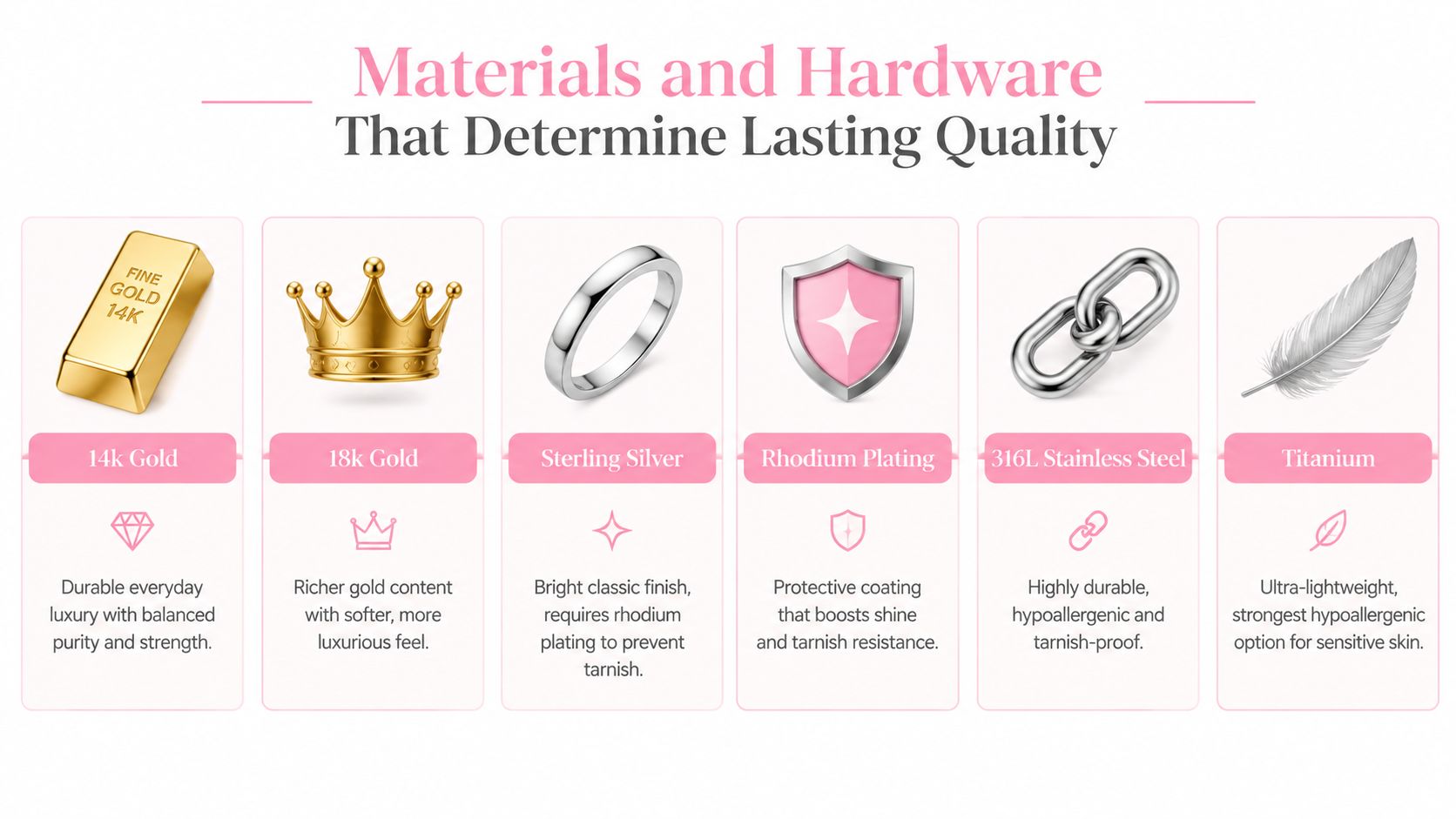
For daily locket wear, 14k gold is commonly treated as a practical balance between gold content and mechanical strength. 18k gold contains more gold but is softer, so makers generally need thicker casting and reinforced hinge barrels to reduce deformation from repeated opening and closing. The material comparison guide for horse necklaces explains these trade-offs in greater detail through its discussion of jewelry metals.
Choosing a metal for the way you live
Sterling silver contains 92.5% silver and 7.5% copper, and it can capture fine detail at a lower cost than gold. It also tarnishes more readily in humid or high-contact conditions. Rhodium plating can slow oxidation and create a bright surface, although plated finishes eventually need maintenance.
For harder everyday use, 316L stainless steel and titanium are practical alternatives. They're favored for scratch resistance, skin sensitivity, and conditions involving frequent movement or barn-like wear. A rider who wants a necklace for ordinary errands and stable time may value resilience more than precious-metal content.
If you're also comparing equestrian accessories beyond jewelry, this guide to finding crazy horse leather bags provides useful material context for understanding how finishes respond to handling and daily use. Leather and jewelry behave differently, but the same principle applies: choose the material according to the environment, not only the appearance.
Inspect the hardware before admiring the decoration
Locket failure often begins at the moving hardware. Manufacturing benchmarks cited in a professional jewelry findings guide include clasp retention targets of about 1.5 kilograms for standard pieces and 2.5 kilograms for premium pieces, plus jump-ring strength around 1.0 kilogram for a 6 millimeter ring made from 0.8 millimeter wire. The same guidance identifies a maximum closure gap near 0.1 millimeter to help reduce accidental opening and loss of contents. These specifications are discussed in this guide to jewelry findings and manufacturing quality.
Look for a hinge that opens smoothly but doesn't feel loose. Check that the clasp closes decisively, the jump ring is fully joined, and the locket halves meet cleanly. Hallmarks such as 925, 14K, or 18K can help verify the stated metal, but a hallmark doesn't replace an inspection of construction.
For a technical visual explanation of material differences, watch the following jewelry guide:
For an heirloom or memorial horse-hair locket, 14k gold or rhodium-plated sterling silver may offer a sensible balance of appearance and long-term wear. For a rugged everyday accessory, stainless steel or titanium may be the more practical decision.
How to Choose Chain Length Personalization and Style
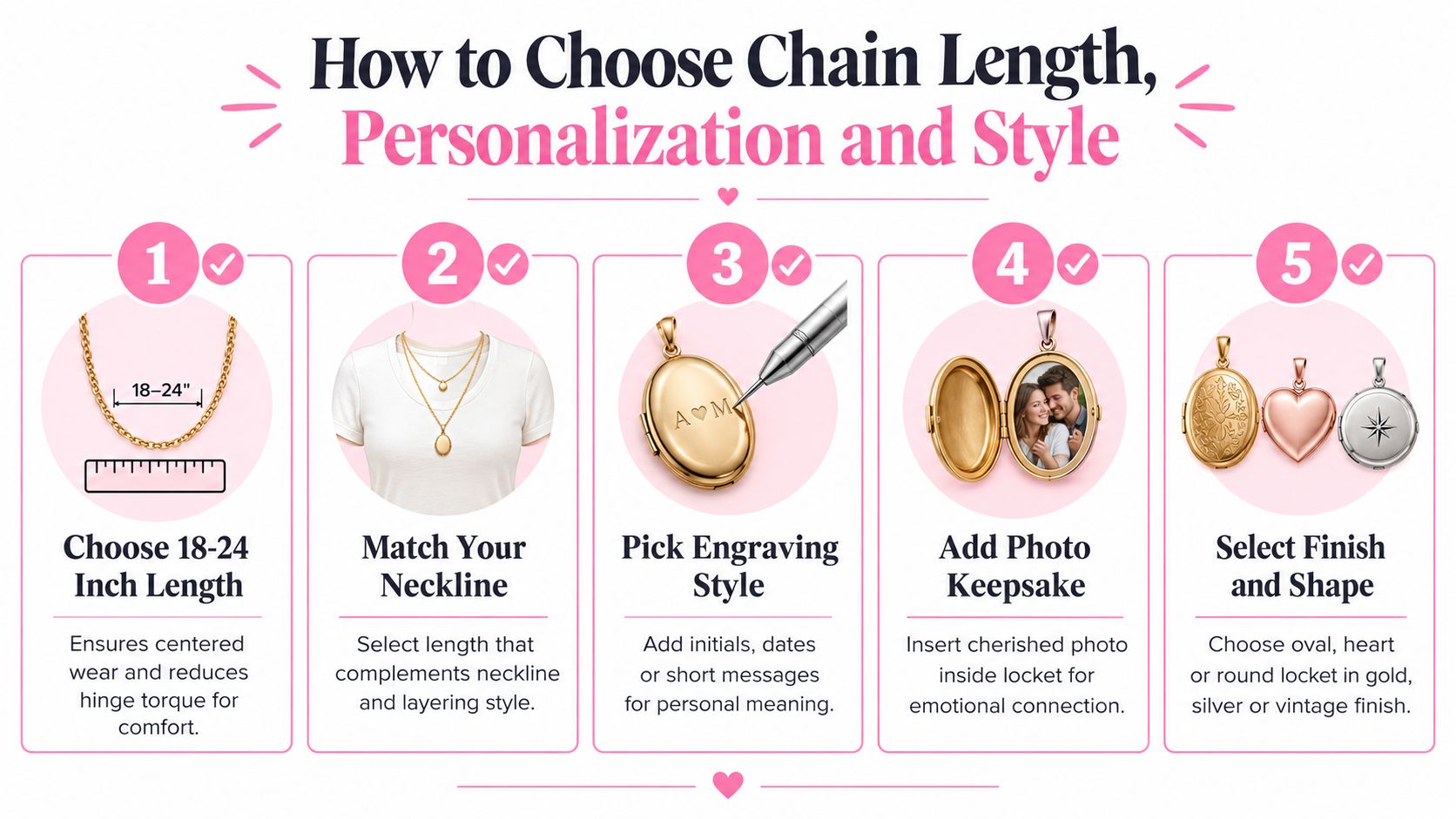
Start with the way the wearer normally dresses. A locket should rest where it can be seen and handled without pulling against the neck or catching constantly on collars. 18 to 24 inch necklaces are common for locket pendants because they help keep the pendant centered and reduce torque on the hinge compared with shorter choker-style lengths, as explained in the jewelry hardware guidance cited earlier.
A shorter length may suit open necklines and small pendants. A longer option can work over a shirt or alongside other necklaces. To compare necklace proportions visually, this guide on how to stock necklace lengths can help you think about placement before ordering.
Match the design to the person
A quiet, oval locket with a small engraved horse may suit someone whose wardrobe is understated. A heart-shaped or round pendant can feel more openly sentimental. Western-inspired tooling, a horseshoe detail, or a polished English riding profile creates a different visual language without changing the necklace's core meaning.
Personalization should also match the occasion. Consider:
- Engraving: Initials, a name, or a short private message can make a symbolic locket feel personal without requiring a photograph.
- Photographs: A small portrait inside works well for family gifting or a keepsake connected to a particular horse.
- Custom portraits: A maker may translate a horse's features into an engraved or illustrated design, but confirm the image requirements before ordering.
- Hair-in-resin designs: These are made-to-order memorial pieces and require clear instructions for submitting and protecting real mane or tail hair.
The phrase “horse locket necklace” isn't standardized across markets. One seller may mean a decorative pendant, while another means a specialized memorial product. Read the interior specifications, customization notes, material description, and delivery terms rather than relying on the title alone.
Verify the construction before placing the order
Ask whether the necklace has been pull-tested, whether the clasp and jump rings have been corrosion-checked, and how the maker measures the closure. If the seller doesn't provide technical details, request them directly. A beautiful engraving can't compensate for a locket that opens accidentally or a chain connection that bends under ordinary movement.
Gifting Ideas Care Rituals and Everyday Wear
A horse locket makes a thoughtful gift because it can mark a relationship without requiring a large display. For a birthday, choose a polished symbolic design and add an engraving. For a graduation, pair the necklace with a note about the recipient's next ride, school, or personal goal. For a memorial, confirm that the recipient wants a keepsake containing real horse hair before ordering a custom piece.
Presentation can stay simple. Place a photograph or handwritten message inside a standard locket, if the design allows it. For a memorial necklace, keep the focus on the horse and the relationship rather than adding unnecessary decoration.
For more equestrian present ideas across different ages and occasions, browse these horse jewelry gift ideas.
Build a small care routine
Gold generally needs gentle cleaning and protection from impacts. Sterling silver benefits from dry storage and a soft polishing cloth, while rhodium-plated surfaces should be handled carefully to avoid wearing through the coating. Stainless steel and titanium are resilient, but they still need rinsing and drying after exposure to sweat, dust, or moisture.
A barn environment deserves extra caution. Remove the necklace before riding, grooming, lifting equipment, or handling anything that could pull the chain. Even a strong pendant can suffer hinge stress when an enclosed keepsake shifts or the chain catches.
Open the locket over a clean, quiet surface, and store it closed in a dry pouch when you aren't wearing it.
Keep the pendant separate from harder jewelry that could scratch it. Don't force a stiff hinge or pry open a clasp. If the closure changes from firm to loose, have a jeweler inspect it before the contents or pendant become vulnerable.
The best care ritual is consistent rather than complicated. A quick wipe after wear, dry storage, and removal during physical activity can preserve both the finish and the private object inside.
Finding a Horse Locket Necklace That Gives Back
Choosing well starts with a clear sequence. Decide whether you want a symbolic equestrian necklace or a horse-hair memorial keepsake. Select the metal according to daily conditions, inspect the hinge and clasp, confirm the chain length, and ask detailed questions about engraving, photographs, custom portraits, or hair submission.
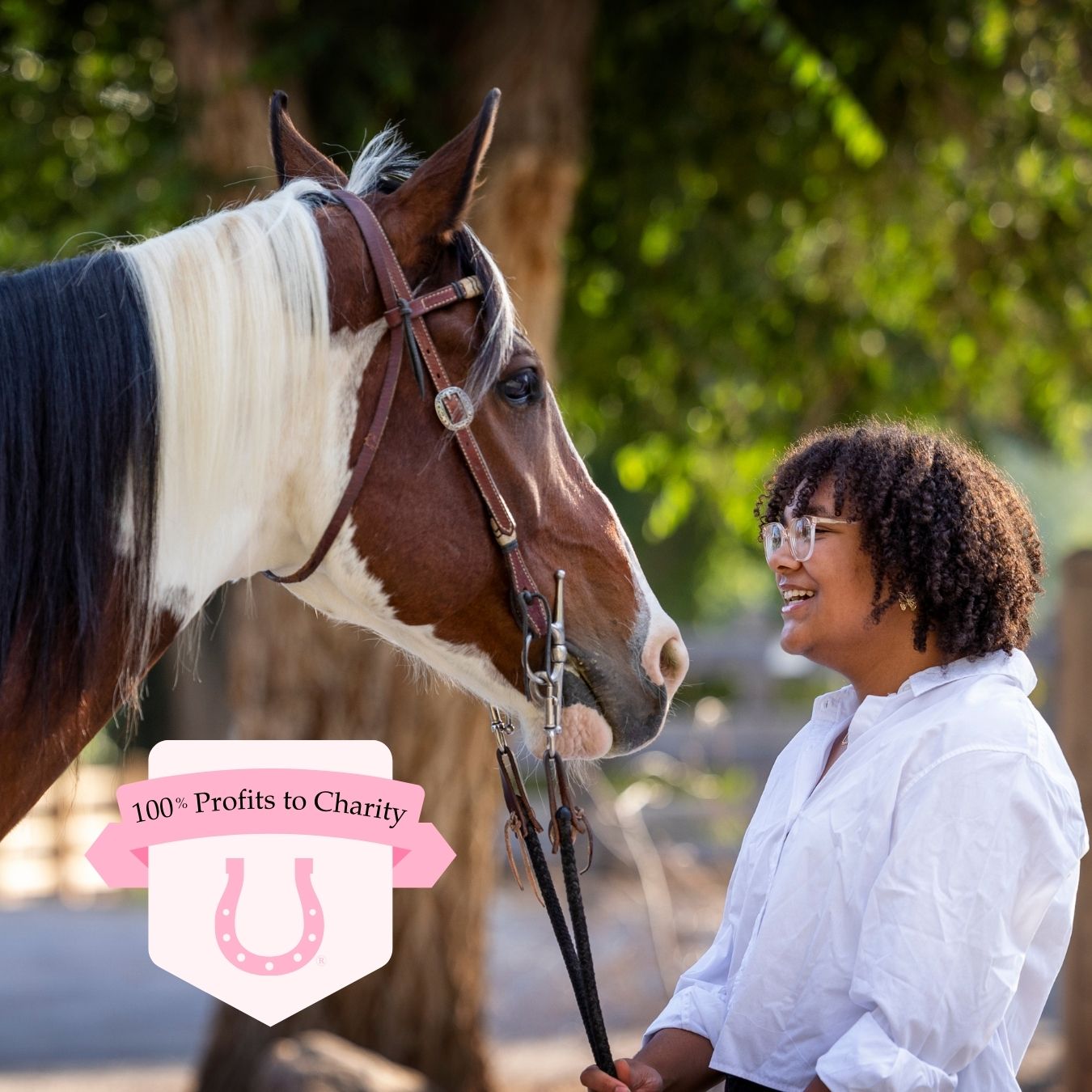
A values-led purchase adds another consideration: what does the seller support beyond the transaction? Bridle Up Hope Shop offers equestrian necklaces and other horse-themed merchandise in both English and Western styles. Its charitable model donates 100% of annual net profits to the Bridle Up Hope foundation, which supports girls and women through horses and habits, according to the publisher information provided for this guide.
That model can give a symbolic horse necklace an additional layer of meaning, especially when you're buying a gift connected to encouragement, riding, or personal growth. It doesn't replace careful checking of metal, hardware, fit, or customization, but it lets the purchase participate in a wider equestrian purpose.
Bridle Up Hope Shop offers horse-themed necklaces alongside gifts, apparel, accessories, books, and home items in English and Western styles. Visit Bridle Up Hope Shop to explore an equestrian necklace or gift that connects personal meaning with support for girls and women through horses and habits.
Deje un comentario