


Would you buy a horse bit belt buckle for its looks without checking whether it fits your strap, sits comfortably against your waist, or has a finish your skin can tolerate? Those details matter more than a polished product photo can show.
A good buckle should be attractive, but it's also wearable hardware. Understanding its parts, materials, fastening system, and care needs helps you choose something you'll enjoy wearing, rather than something that stays in a drawer.
Table of Contents
- What a Horse Bit Belt Buckle Is and What It Is Made Of
- Where the Horse Bit Motif Comes From
- English and Western Styles Compared
- How to Choose the Right Size and Finish
- Nickel Safety and Skin Contact
- Care, Wear Points and Lifespan
- Choosing a Gift Buckle and Checking the Shop
What a Horse Bit Belt Buckle Is and What It Is Made Of
Lay an equestrian belt flat on a table and look at the metalwork at the fastening end. A horse bit belt buckle uses the shape of a horse's bit as its decorative face, usually a central mouthpiece bar flanked by rings or cheekpieces, the side pieces of the bit.
Sometimes that outline sits on a solid front plate. Other designs leave the center open, so the bar and rings form the face themselves. A horse head, bridle, or horseshoe may accompany the bit motif, although horse-themed decoration alone doesn't make a buckle a bit design.
Recognizing the working parts
Turn the belt over before judging it. The decorative front and the fastening mechanism aren't necessarily the same component.
- Front plate or face: The visible decoration, whether solid or open.
- Bar-and-ring design: The recognizable bit outline. Its rings may be decorative rather than moving parts.
- Tongue or fastening hook: The piece that enters the belt hole and holds the belt closed.
- Back loop or attachment bar: The connection between the buckle and strap.
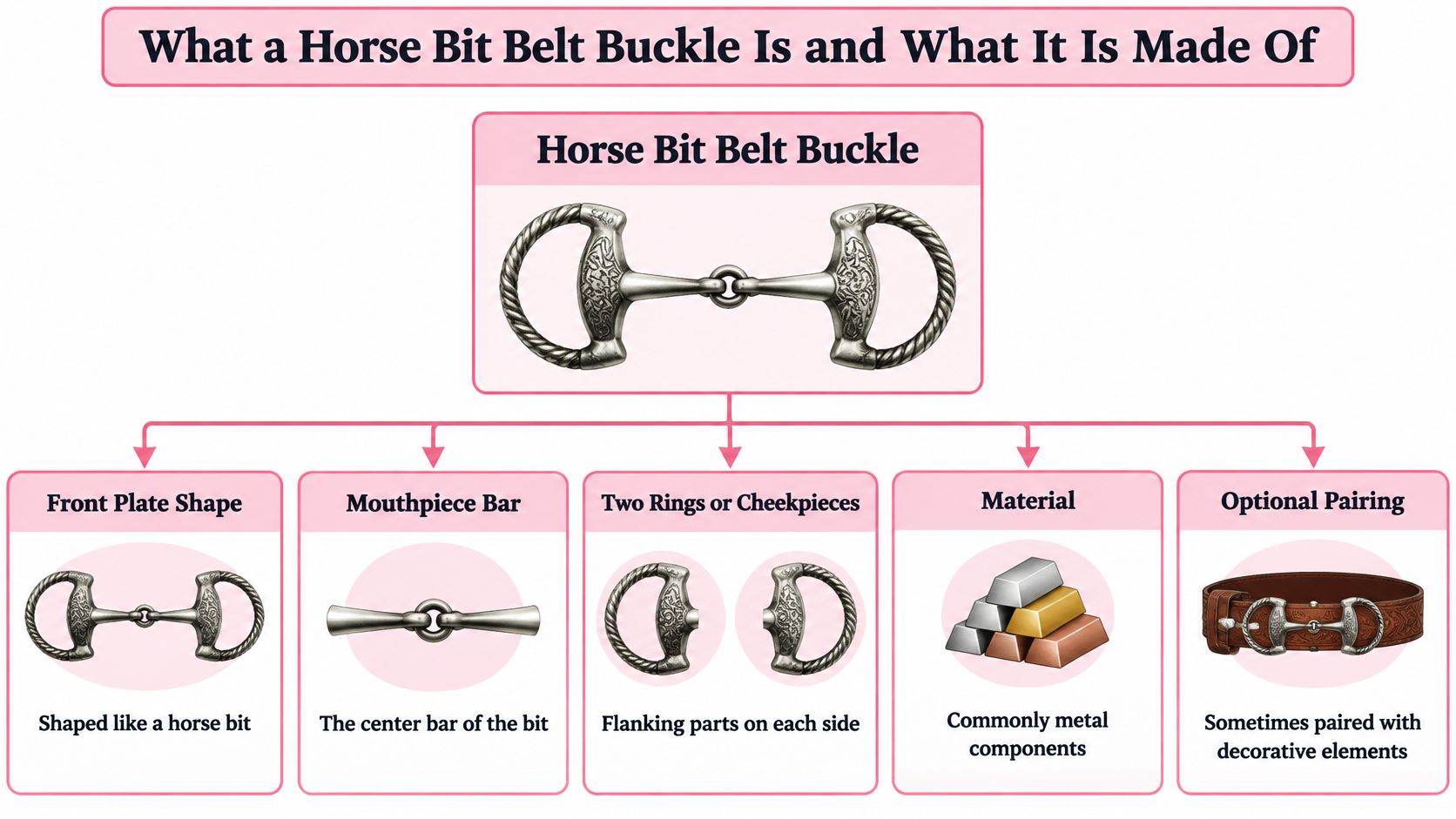
Not every buckle uses a conventional tongue. A trophy-style buckle may fasten with a rear hook, while a compact fashion belt may use another closure. A back-view photograph is often more useful than another front-view photograph.
The strap deserves its own fit check. California Cowboy's women's leather belt sizing guide is a useful companion when you're choosing the leather belt as well as the hardware.
Common buckle materials and finishes compared
Material means the metal underneath. Finish means the surface treatment or appearance. A silver-tone buckle isn't necessarily made from silver, and a gold-colored surface doesn't establish that the buckle is solid brass.
| Material | Look | Care needed | Nickel note |
|---|---|---|---|
| Solid brass | Warm gold tone, often antiqued | Polish bare brass occasionally; preserve intentional antiquing | Check the specification because some brass alloys contain nickel |
| Stainless steel | Bright, sleek silver | Low maintenance; wipe after sweaty days | Often low-release, but confirm with a test report |
| Zinc alloy with plating | Detailed shapes, often a lower-cost option | Keep dry and protect the coating | Assess both the underlying alloy and coating; ask for test data |
| Silver-tone plated | Bright, classic Western appearance | Avoid abrasives; inspect exposed edges | Ask for an EN 1811 test result |
Zinc alloy doesn't become structurally sound merely because it has attractive plating. Likewise, a hefty buckle isn't automatically well-made. Once you know the underlying metal, surface finish, and attachment method, you can judge the price, feel, and likely upkeep more sensibly.
Where the Horse Bit Motif Comes From
The shape on your belt began as working horse equipment, not decoration. A bit's mouthpiece and side fittings provided a practical connection between horse and rider, and that recognizable outline eventually became an equestrian symbol.
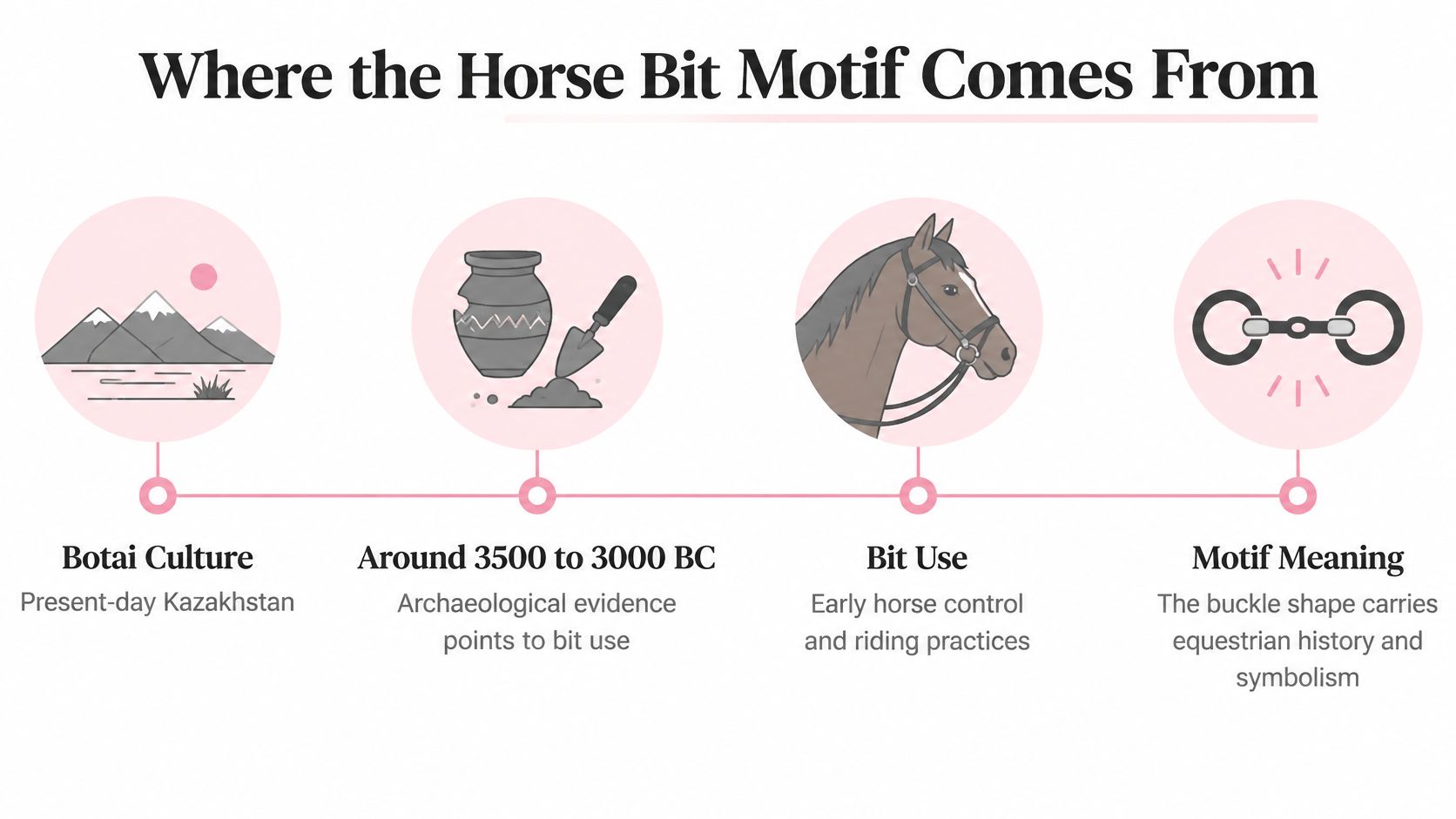
Heels Down's horse-bit history describes archaeological evidence from the Botai culture in present-day Kazakhstan pointing to bit use around 3500 to 3000 BC, with early examples and reconstructions involving rope, bone, horn, and hardwood. The familiar metal accessory therefore refers to a much older tradition of horsemanship.
From riding equipment to wearable recognition
The buckle has a separate history. It began as a fastening device, then acquired decorative and symbolic roles. The Western trophy tradition adds another layer: a buckle can signify achievement as well as hold clothing in place.
According to the Western belt guide from The Modest Man, which recounts the American Quarter Horse Association's account, early cowboys and rodeo competitors wore leather kidney belts with carved metal rewards attached after victories; by the 1920s, buckles served as prizes in rodeos and horse competitions.
A bit-shaped buckle references horse equipment. A trophy-style buckle adds the visual language of Western achievement.
Those traditions can meet in a modern accessory without making every decorative buckle an award. Nor does wearing the motif mean its owner rides in a particular discipline.
For a closer look at the recognizable ring-and-mouthpiece shape, the snaffle-bit belt guide helps connect tack terminology with everyday accessories.
For a gift note, keep the explanation personal and simple: The bit shape is a nod to horsemanship and your connection with horses. That gives the recipient meaning without assigning them a trophy they haven't won.
English and Western Styles Compared
English-inspired buckles usually keep the bit outline quiet; Western-inspired buckles give the decoration more visual weight. These are useful shopping descriptions, not rigid rules about who may wear what.
An English-style design might use a slim mouthpiece outline on a plain leather strap. A Western design might place the motif within an engraved plate, surround it with floral detail, or pair it with a raised horse. Neither style tells you the alloy, skin-contact suitability, or fastening quality.
Choose for the outfit and the activity
Say a dressage rider wants a subtle accent for a leather belt. A restrained bit outline can work without competing with the rest of the outfit. For actual competition clothing, the rider should check the relevant dress requirements rather than assume a fashion belt is suitable.
A barrel racer choosing a buckle for a denim outfit might prefer an ornate plate that becomes the focal point at the waist. That's a styling choice, not proof that the buckle is appropriate for every riding situation.
The comparison of Western and English riding gives useful context for these different equestrian traditions.
Before choosing, settle these questions:
- What will you wear it with? Consider the actual waistband, belt loops, shirt, and jacket.
- How noticeable should it be? An open outline reads differently from a broad engraved plate.
- What will you do while wearing it? Sitting, bending, and moving matter as much as standing in front of a mirror.
Mixing the styles can work well when the buckle is the main accent. You don't need matching horse motifs on every accessory. For a coordinated equestrian gift rather than a fully matched outfit, plaid throws from That Blanket Co offer a separate home-gift option.
English and Western buckle styles side by side
| Feature | English style | Western style |
|---|---|---|
| Typical buckle size | Smaller, understated | Larger, with a broader visual presence |
| Design | Plain bar or bit outline | Raised-relief horse, engraved or ornate detail |
| Finish | Matte, brushed, or polished metal | Antiqued silver-tone, gold-tone, or brass |
| Pairs with | Leather dress or hunt-style belt, jodhpurs | Jeans, leather Western belt, rodeo-inspired outfits |
| Best for | Quiet detail for everyday equestrian styling | Statement accessory and trophy-style appearance |
Try the buckle with your shirt tucked in and then sit down. If its edge presses into your abdomen, a handsome design has failed a basic comfort check.
How to Choose the Right Size and Finish
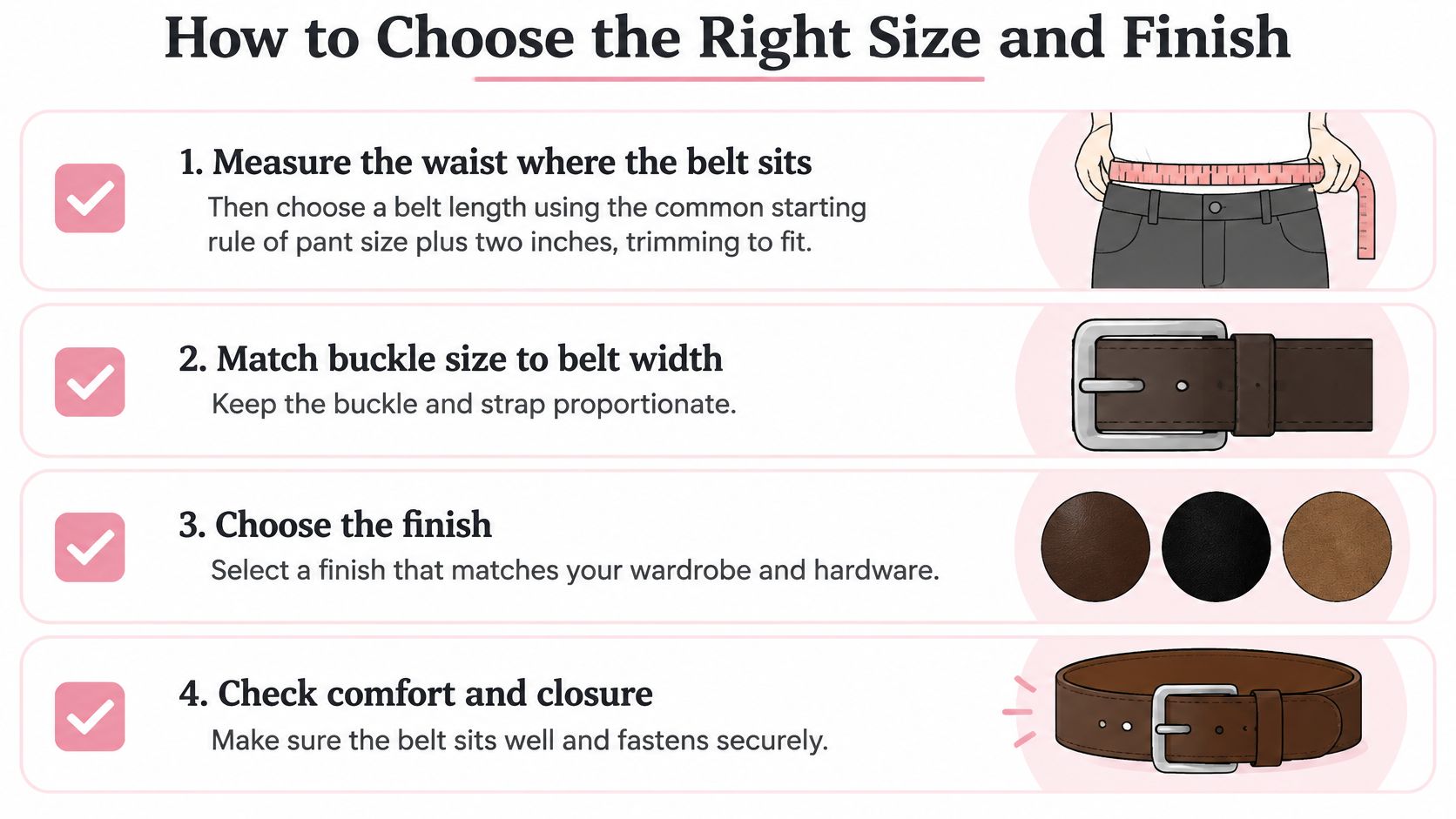
Buckle-face width and strap-fitting width are different measurements. The face determines how much metal you see; the opening behind it determines which strap it accepts. Don't order a replacement buckle from its front dimensions alone.
Measure before matching
- Measure where the belt will sit. Thread a flexible tape through the loops of the trousers you'll wear, or measure a comfortable existing belt using the seller's measurement method. Trouser size is a clue, not a substitute for a belt size chart.
- Match the attachment opening to the strap. Measure the strap's width and inspect its thickness at the folded end. A buckle can have enough width but still lack clearance for thick leather.
- Check the fastening and removal method. Look for snaps, screws, stitching, or another attachment at the strap end. Don't assume you can fit a replacement buckle to a permanently sewn belt.
- Choose the finish for your wardrobe and routine. Brass offers warmth, while silver-tone finishes suit cooler-colored hardware. For humid or sweaty wear, prioritize clearly identified materials and straightforward care over a decorative coating you'll have to protect.
- Test the closure while moving. Fasten the belt, sit, bend, and check that the tongue or hook stays properly seated. Only trim a strap if it's explicitly designed for shortening.
For a concrete retail example, Wrangler's women's horse-bit buckle belt was listed in 2026 with a 32 mm buckle and four sizes covering belt lengths from 37 to 43 inches. Those listing dimensions don't establish the usable waist range or clarify every attachment measurement, so the size chart still matters.
Belt width and matching buckle width
| Belt width | Buckle width | Fit note |
|---|---|---|
| Standard-width everyday strap | Choose a face proportionate to the waistband | Confirm the rear opening accepts the strap |
| Everyday strap with a bold Western buckle | A broader decorative face may work | Check clearance behind the face and beside trouser loops |
| Women's horse-bit belt from Wrangler | Use the listed buckle measurement above | Strap width isn't established by that measurement; confirm before swapping hardware |
The equestrian leather belt guide can help you assess the strap alongside the buckle.
For visual contrast, the Golden Spirit Horse Belt Buckle features a golden galloping horse against an antiqued silver floral backdrop and attaches with a rear loop. It's a horse-themed Western design, rather than a bit-outline buckle, a useful distinction when shopping by appearance.
Nickel Safety and Skin Contact
If you're sensitive to nickel, choose by documented nickel release, not by metal color or a reassuring label. A bright silver finish doesn't identify the alloy, and stainless steel shouldn't be treated as an automatic guarantee for every wearer.
SATRA's guidance on nickel release notes that approximately 10% of people are thought to have nickel allergy and describes the EU release limit for relevant prolonged-skin-contact articles as 0.5 micrograms per square centimeter per week. A buckle can cause a localized reaction where it rests against the abdomen.
What a useful test tells you
Nickel content describes what's in the material. Nickel release describes how much nickel comes out under the test conditions. Those aren't interchangeable measurements.
Ask for an EN 1811 test report that applies to the actual buckle or relevant hardware, not just an unrelated product from the same supplier. A material specification is helpful, but a vague nickel-free description doesn't explain how the finished item performs.
Sensitive-skin rule: Don't use appearance, price, or the word stainless as a substitute for suitable product documentation.
A coating may separate skin from the underlying alloy, but sweat, friction, and scratches can compromise that barrier. Check whether the documentation addresses the coated product and the wear treatment relevant to its compliance.
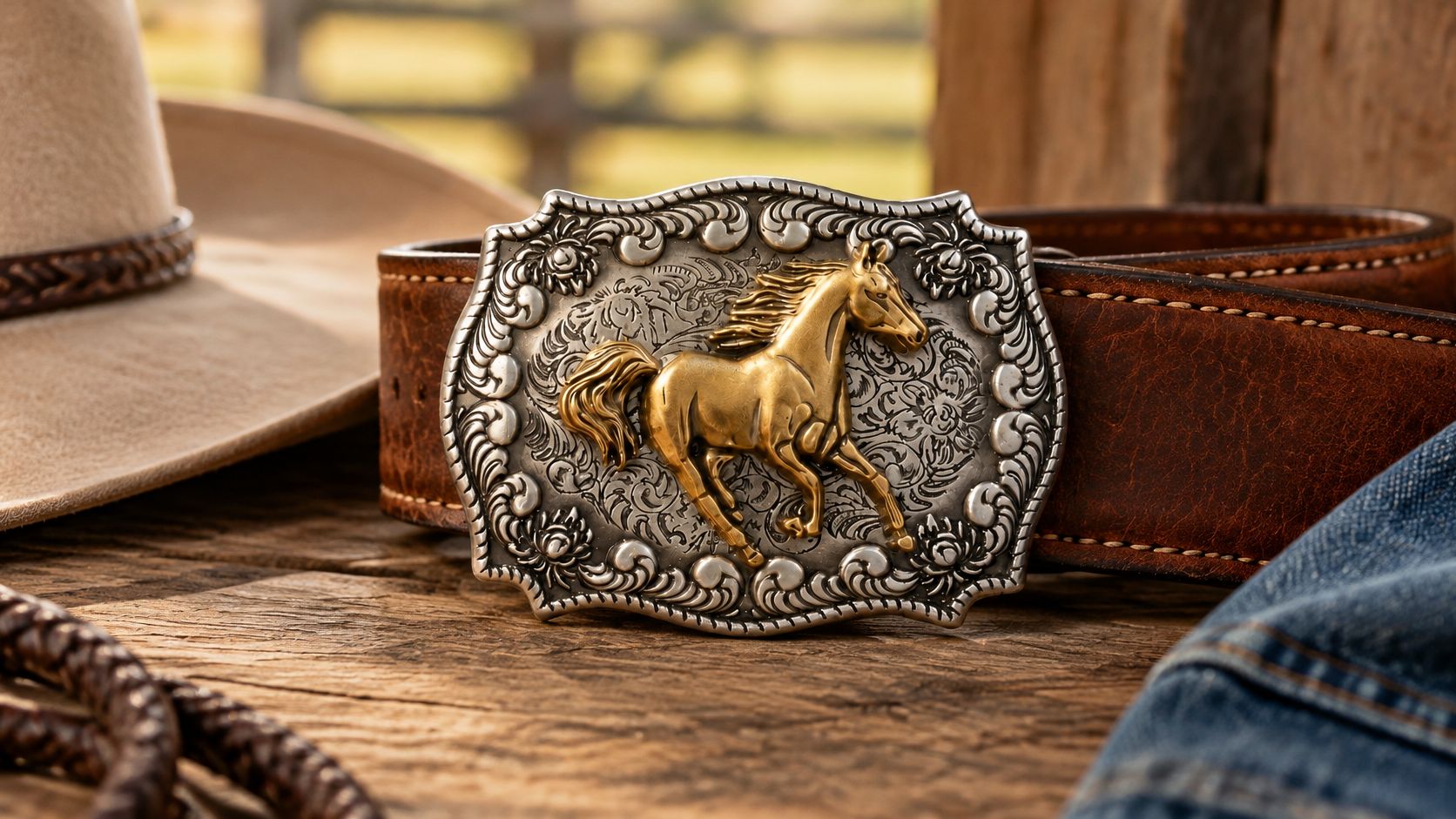
A decorative product photograph illustrates appearance, not nickel-release performance.
Reduce contact without ignoring symptoms
- Before buying: Request the material specification and applicable nickel-release documentation.
- While wearing: Keep the buckle over clothing or use a suitable fabric barrier to reduce direct contact.
- After irritation: Stop wearing the item if redness, itching, or a rash develops beneath it.
A barrier is a practical precaution, not proof that a buckle is suitable for someone with a known allergy. Seek medical advice for persistent or significant symptoms, since a waistband rash can have causes other than nickel.
The useful questions stay the same for a discreet English outline and an ornate Western plate: what touches your skin, what documentation supports it, and how will normal wear affect that surface?
Care, Wear Points and Lifespan
A buckle can lose its shine and still fasten securely. It can also look pristine while a loose pin makes it unreliable. Cosmetic wear and structural wear need different responses.
Inspect tongue flex, pin looseness, belt-hole stretch, oxidation, and coating loss separately. The tongue, hook, attachment bar, and connecting hardware carry the fastening forces; plating mainly changes the surface appearance.
A study published in the Journal of Environmental Science and Health found that wear testing can affect nickel-release compliance results. That's another reason not to judge a finish solely by how it looks when new.
A practical care routine
- After sweaty wear: Wipe the metal with a soft cloth and dry it fully. Don't put a damp belt straight into a closed pouch.
- After rain: Separate removable hardware from wet leather where practical, then let both dry away from direct heat.
- During cleaning: Start with a dry microfiber cloth. For stubborn grime on a suitable finish, use a barely damp cloth with mild soap, remove residue, and dry promptly.
- During inspection: Check for wobble, a bent tongue, rough edges, and loosening fasteners. Stop using hardware that won't hold the belt securely.
Avoid abrasive metal polish on plating or deliberate antiquing. What looks like discoloration may be the intended darkened detail, and polishing it away can change the design permanently.
Repair the right component
A detachable buckle can move to a fresh strap when the leather cracks or its holes stretch. Chicago screws, threaded posts used to join leather layers, can make strap changes practical where the belt was designed for them.
They aren't universal replacements for a buckle's pivot pin. Tighten only serviceable fasteners with the correct tool; ask a leatherworker or repairer to assess riveted, bent, or unfamiliar hardware.
Buckle symptoms, causes and fixes
| Symptom | Likely cause | Fix |
|---|---|---|
| Dark spots or dull finish | Sweat residue or oxidation | Wipe dry; polish only if the material and finish permit |
| Coating worn at the edges | Friction and scratches | Reduce rubbing; consider unplated hardware when replacing |
| Loose tongue or pin | Repeated flexing or loosened hardware | Tighten serviceable hardware or arrange repair |
| Belt hole stretched or buckle slips | Strap wear or fastening mismatch | Replace a worn strap and verify closure engagement |
There's no dependable lifespan you can infer from a glossy photograph. Repairable attachments, identifiable materials, and a replaceable strap give you more useful information than an unsupported promise of lasting quality.
Choosing a Gift Buckle and Checking the Shop
A thoughtful gift buckle should suit the recipient's clothes and be easy to fit. If you don't know their waist measurement, ask discreetly for the size and brand of a belt they already wear comfortably. For a buckle-only gift, a photograph of the existing belt's attachment end can prevent an incompatible purchase.
Don't describe a gift as allergy-safe unless you have documentation that supports that statement. If skin sensitivity is unknown, include the material information with the gift rather than making an assurance.
Check the purchase details
- Fit information: Confirm the belt's sizing method, accepted strap width, and buckle-face dimensions.
- Material evidence: Save the alloy description and relevant test documentation.
- Return arrangements: Check current eligibility, checkout options, and the process for returning a gift.
Our shop donates 100% of the profits from each purchase to help the girls, women, and horses at the Bridle Up Hope charity. The charity's mission is to inspire hope, confidence, and resilience in girls and women through horses and habits.
We offer 30-day free returns via Redo. Check the current Redo option and return terms at checkout rather than assuming every order has identical coverage.
Before ordering, resolve any missing fit or material detail. A short question before purchase is easier than asking the recipient to adapt an unsuitable buckle.
At Bridle Up Hope Shop, we offer equestrian gifts and accessories in English and Western designs. Visit to find a buckle or belt that suits your horse lover's style, and confirm its attachment, sizing, and material information before ordering.
Deje un comentario