


Are western style ankle boots a look you buy for the stitching, or a tool you pick for the job in front of you? Most shopping advice stops at a pointed toe and whether the leather looks western enough. That skips the part that decides whether you keep the pair: what you will do in them. A heel that feels secure in a stirrup can ache on a hard floor by midafternoon. A soft fashion last that looks right with a skirt can feel loose the first time you ride. I judge these boots by activity and total use. Heel shape, fit, the upper, and whether a cobbler can resole them matter more than decoration.
Table of Contents
- Key Features That Define Western Style Ankle Boots
- Heel and Toe Shape for Riding Versus Walking
- Fit and Sizing for Ankle-Height Western Boots
- Leather, Materials and Durability Compared
- How to Break In, Clean and Protect Your Boots
- Styling Western Ankle Boots for Everyday Wear
- Gift Picks by Age Group and Use
- Decide on Price, Longevity and Ethics Before You Buy
Key Features That Define Western Style Ankle Boots
A spec table sorts the options. Your intended activity sorts the boot. Read the rows as a filter, then decide whether the combination holds up for riding, walking, commuting or wet weather.
| Feature | Common options | What it means for wear |
|---|---|---|
| Toe shape | Pointed, almond, round, square | Pointed and almond need more front room; round and square feel roomier |
| Heel | Defined riding heel, lower roper heel | Defined heel suits riding; roper heel suits long walking days |
| Shaft height | Ankle, mid-calf | Ankle style sits under jeans and skirts; mid-calf gives more coverage |
| Upper leather | Full-grain, top-grain, suede, synthetic | Full-grain resists wear best; suede needs protection |
| Sole | Leather, rubber, stacked | Rubber gives better grip on wet floors and outdoor ground |
| Stitching | Decorative stitched, plain | Stitching changes appearance; fit is unaffected |
Western style ankle boots sit inside a longer cowboy-boot tradition. The cues that carry over are leather uppers, a high or slanted heel, an oval-to-pointed toe, and decorative stitching. A Fortune Business Insights market analysis citing U.S. Census Bureau data reports that approximately 6.4 million pairs of cowboy boots were sold in the United States in 2023. That volume is why the shorter boot is a mainstream product, not a ranch-only niche. The same analysis notes fashion-led interest in Europe, outside traditional Western culture.
Shorter shafts retained those visual cues while reducing the height and weight of a tall cowboy boot. The style works with jeans, skirts and everyday clothes, which is why riders and people who enjoy heritage fashion both choose it.
What decides the pair
The rows interact. A pointed toe with a defined heel and a leather sole points toward mounted use. A round toe with a roper heel and a rubber sole points toward pavement and long walks. Toe shape changes fit before leather grade enters the conversation: if the front box pinches, full-grain leather will not rescue the step. Sole choice follows the ground you stand on most, and sole construction belongs in the decision because it determines whether the pair can be repaired later. Leather choice follows exposure to weather and abrasion. Stitching changes the look and leaves the fit alone.
What to lock in first
- Riding or uneven ground: defined heel, snug heel seat, leather that can take dirt.
- Commuting and hard floors: lower heel, roomier toe, cushioned insole, rubber sole.
- Wet weather: sealed leather construction, treated suede only.
- Repairability: a sole a cobbler can replace, if you want more than one season of wear.
- Looks only: stitching and toe shape, after the rows above are right.
Heel and Toe Shape for Riding Versus Walking
A defined heel was built to catch a stirrup and stop the foot sliding through, and that same lift pushes weight toward the forefoot on hard, flat floors.
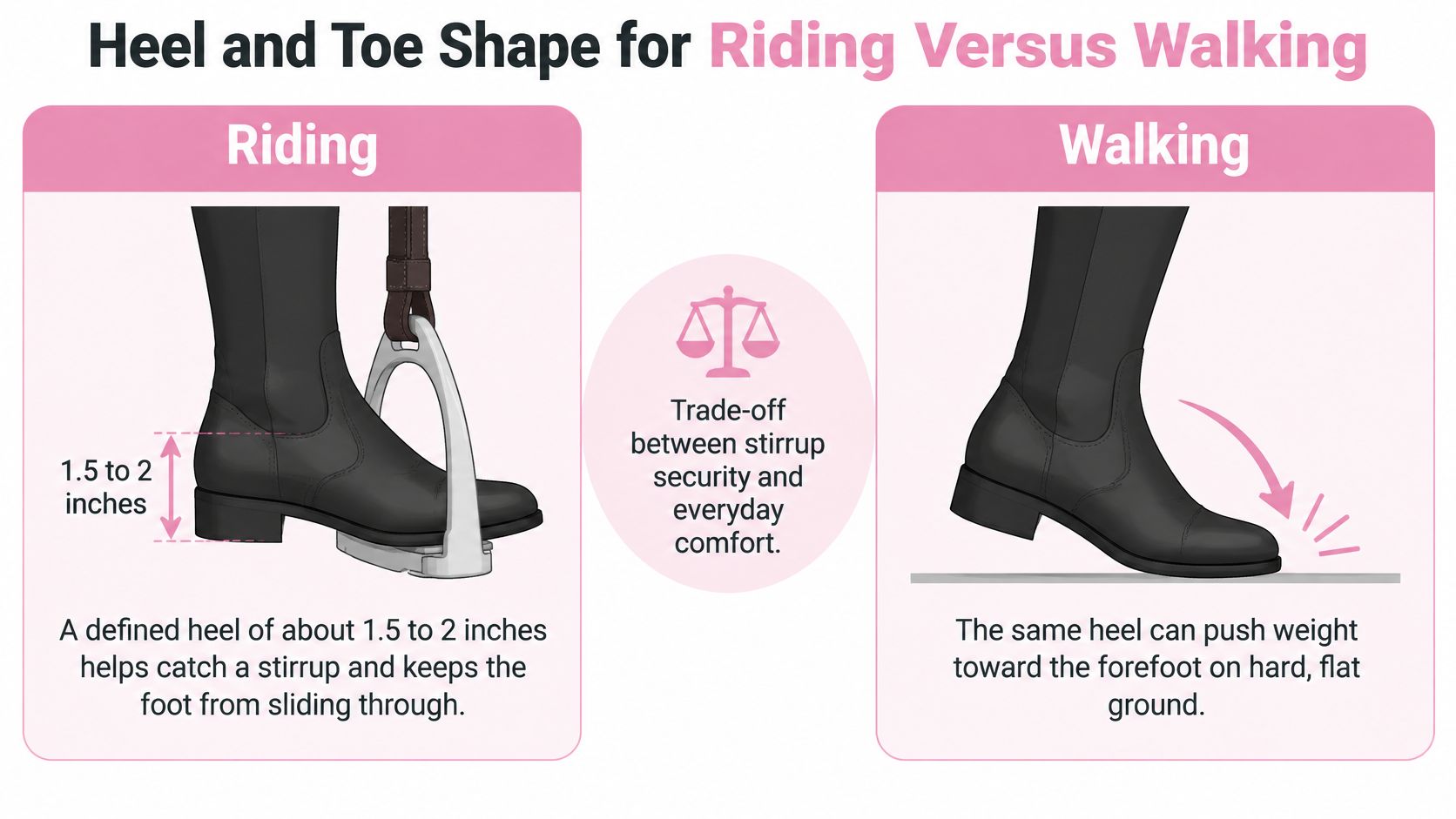
Boot guidance on cowboy work boots describes a defined heel of approximately 1.5–2 inches as the historical shape for stirrup security. The elevation shifts plantar loading toward the forefoot when you stand or walk on flat, hard surfaces. That load can increase forefoot fatigue and aggravate metatarsalgia or plantar-fascia irritation on long days. Think of the difference between standing on the ball of the foot in a heeled shoe and standing flat. The first hour is fine. Hour four is when the ball of the foot complains.
The same footwear discussion notes that restricting ankle motion and adding heel elevation redistributes plantar pressure and asks the knee and hip to compensate. You feel that as a tired forefoot, a tighter calf, or an ache higher up the leg, not only as "these boots are stiff."
Match the heel to the day
Practical rule: A traditional defined heel belongs with mounted use, uneven outdoor ground, and ladder or ranch chores. A lower roper heel, a broader heel base, a cushioned insole, and a flexible walking outsole belong with long urban or retail days.
Don't treat "western" as one performance category. If you ride on weekends and walk city blocks on weekdays, two pairs beat one compromise. For the riding pair, look at construction the way a guide to western riding boots frames the choice: heel, fit, and sole before ornament.
Toe shape changes space, not the job
Pointed toes narrow the usable box and suit a slim line. Almond toes sit in the middle. Round or square toes give the toes more room and usually feel easier once you are walking. Decorative stitching and a dramatic toe change comfort less than last shape and heel geometry. A plain roper with a good last will outwalk a heavily stitched fashion boot with a tall, narrow heel.
Before you decide, stand on a hard floor in the pair for about 20 minutes. Carpet hides the problem. Tile and concrete show it.
Fit and Sizing for Ankle-Height Western Boots
A western ankle boot has a structured upper and a fixed heel, so the fit has less give than a casual shoe. DataIntelo market research treats fit as critical in western boots and notes that specialty retail remains a leading channel partly because shoppers prefer to try boots on in person. Last shape, heel geometry, and cushioning decide comfort. Stitching changes the look.
| Check | Right fit | Wrong fit |
|---|---|---|
| Shaft opening | Closes around the calf without gaping | Gaps or pinches at the calf |
| Instep | Even pressure across the top of the foot | A hard ridge or pinch across the instep |
| Heel slip | Slight movement in a new boot that settles | Heel lifts with every step |
| Toe room | Toes move freely ahead of the longest toe | Numb toes or pressure at the front |
| Break-in | Stiffness eases with wear | Pressure that stays, or numbness |
| Socks | Fit checked with the socks you will wear | Boot feels tight in the socks you wear |
Walk the checks in order
Shaft. The opening should close around the ankle and lower calf without a gap you can slide a finger through, and without biting when you flex. On an ankle boot the opening is short, so a gap shows up as the heel pumping out.
Instep. Press along the top of the foot. Even pressure is right. A sharp ridge means the vamp is too low for your instep, and break-in will not raise the leather enough.
Heel. A small slip in a new pull-on is normal and should settle as the insole compresses. If the heel lifts on every step, the boot is too big or the last is wrong. A thin pad can quiet a mild slip. It will not rescue a boot that is a full size off.
Toes. Measure space from your longest toe to the front. Pointed toes look roomy and feel tight because the leather narrows before your toes do. Wiggle room without the toes touching the end is the test.
Socks. Wear the socks you plan to use. Thick boot socks can take the slack out of a slightly long boot. Size up only if the boot still fits comfortably in those socks, with the heel staying put.
Too narrow, or just new
Stiffness that eases with wear is break-in. Follow the break-in steps in the care section, then judge the fit. Pressure that remains after that, or toes that go numb, is a wrong fit. Stop at numbness.
Fit by activity, then buy online with a plan
Commuting and long standing want a little extra toe room and a cushioned insole. Riding wants a snug heel so the foot does not slide. One last rarely does both well.
For online orders, measure length and width in the evening, compare that with the brand size chart, and read the return window before you pay. If you fall between sizes, try both with your usual socks at the time of day you will wear them, and keep the size where the heel stays seated and the toes still have room. Keep the box and tags so an exchange stays simple.
Leather, Materials and Durability Compared
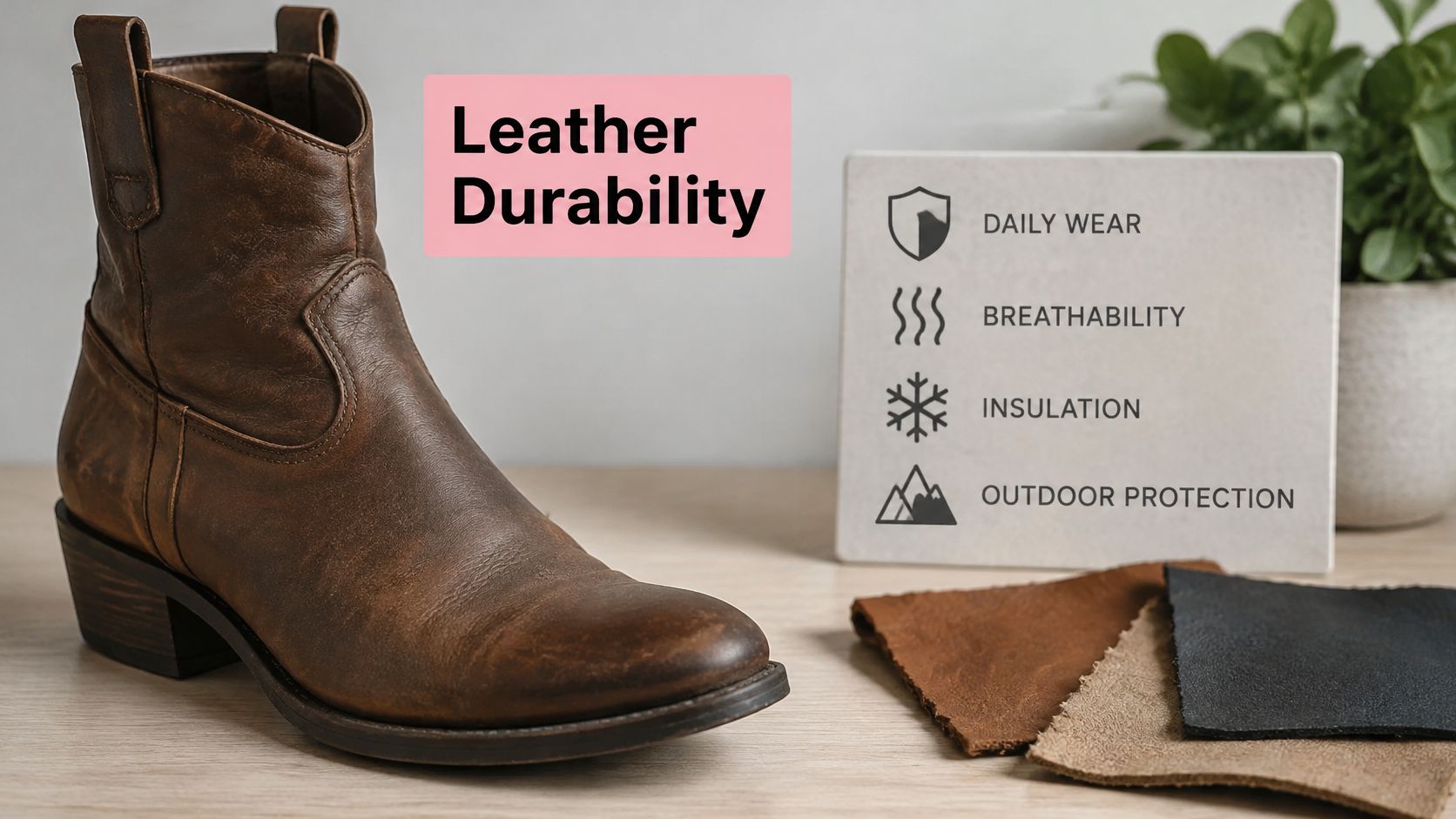
The upper decides how the boot ages through rain, abrasion and daily flex. Leather earns its place by balancing breathability, repairability and shape retention. Its limit is water: prolonged wet eventually pushes through.
| Material | Durability | Water handling | Care needed |
|---|---|---|---|
| Full-grain leather | High | Moderate; needs regular treatment | Condition every few months |
| Top-grain leather | Medium to high | Moderate; treat before wet use | Condition regularly |
| Chrome-tanned leather | High shape stability; firm hand | Moderate | Condition and dry naturally |
| Suede | Medium | Low unless protected | Brush and apply protector spray |
| Synthetic or faux leather | Medium; judge build quality | Good surface resistance | Wipe clean |
| Recycled-content upper | Often shorter life if seams and soles are thin | Wipes clean; seams can let water in | Check manufacturer care guidance |
A footwear materials study describes leather as durable, moderately water resistant, vapor-permeable, insulating and useful outdoors. Prolonged wet grass, rain or standing water can push moisture through even after treatment, and water that soaks in cuts thermal insulation. A heavy waterproofing coat blocks pores and kills breathability, so choose a leather-specific product and apply it lightly.
Tanning changes how well the hide holds its shape. Chrome-tanned leather tends to hold a firm shape, but that says little about seam sealing or sole attachment, which decide whether the boot survives a wet commute. When wet weather is likely, look for documented leather quality and sealed construction. A short shaft lets water in from above, so gaiters or a higher shaft help on rainy days.
Full-grain sits at the top of the table because the outer layer stays intact and takes conditioner and patching well. Top-grain lands close behind, though its treated surface shows scuffs differently. Suede is the weakest choice for wet ground. Brush it and use a protector spray, and expect puddles to mark it. Synthetics wipe clean and resist surface wetness, but stitching, lining and sole construction tell you more than the material label.
For a useful touch test, run a thumb across the grain: tight, fine grain and a firm but flexible hand signal a hide that will crease cleanly. Flex the vamp and check the cut edges for finish; stiff, papery leather cracks at the flex point. Darlene, writing in Bridle Up Hope Shop reviews, called one pair "Very cute with great leather quality."
Repairability separates materials over total use. A full-grain upper can be patched and resoled; a thin synthetic upper often cannot, so the lower upfront price can cost more per year. Match the material to the activity. Riding puts stirrup scuffs and sweat ahead of rain. Commuting puts wet pavement and road salt ahead of arena dust.
Watch a short explainer on boot materials and durability.
How to Break In, Clean and Protect Your Boots
Care is a sequence, not a product you spray once and forget. Do the steps in order, and skip the ones that fight the material.
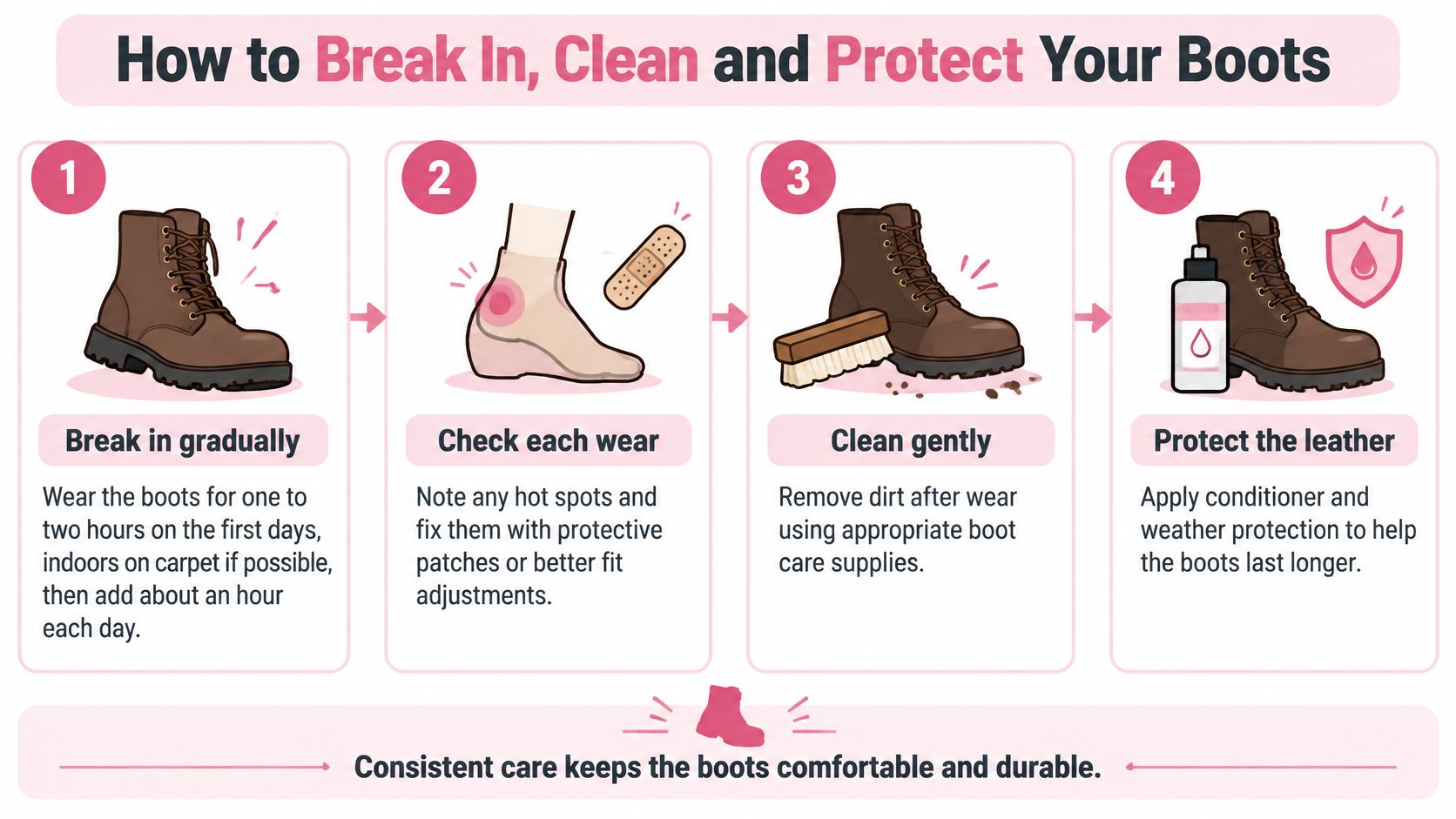
- Break in gradually. Wear the boots for one to two hours on the first days, indoors on carpet if you can, then add about an hour each day. Leather flexes where your foot bends. A full day on day one creases the vamp in the wrong place and raises blisters.
- Check each wear. Note hot spots at the heel, ankle bone, or instep, and quiet them with a heel pad or a thin insole instead of forcing the boot. A pad fixes a small rub. It does not fix a boot that is too narrow.
- Clean first. Brush dust off the upper and wipe with a barely damp cloth. Don't soak the leather. Dirt left under conditioner scratches the finish the next time you flex the shaft.
- Condition the right material. On full-grain leather, use a leather conditioner every few months. On suede, brush the nap and use a protector spray instead. Conditioner made for smooth leather will darken and flatten suede.
- Waterproof lightly. Use a product made for that material, and test a hidden spot inside the shaft first. Heavy wax can close the pores, so the foot sweats and the leather stays damp from the inside.
- Dry naturally. Stuff the boots with paper, keep them off radiators and heaters, and give them about 24 hours at room temperature. Concentrated heat shrinks leather, stiffens it, and cracks finishes. Cold soaking does similar damage by collapsing the fibers as they dry unevenly.
- Store upright. Use boot trees, keep the pair out of direct sun, and don't leave them crumpled in a bag. Sun fades dye. A collapsed shaft becomes the shape you walk in next season.
Older pairs with good bones are worth this routine. A look at vintage leather boots is a reminder that hide and construction outlast a season of fashion if you maintain them.
After a season of real wear, healthy boots still feel supple, hold their shape overnight, and have soles that aren't worn through at the ball or heel. When the upper is sound and the sole is thin, that is the moment to resole, not to replace the pair.
Styling Western Ankle Boots for Everyday Wear
A short western boot works in two wardrobes if you keep the boot quiet and change the pieces around it. Judge the pair by where you will wear it, not by how western it looks. Western styling comes from stitching, leather and a pointed or almond toe. English styling comes from a clean line, a sleek silhouette and quieter color.
Western formula. Slim or straight-leg jeans with the hem resting over the shaft, a suede or patterned western shirt, and a tooled or fringed belt. Let the shaft show. A guide to ankle cowboy boots with jeans walks through hem length so the boot isn't swallowed.
English formula. A fitted knit, trousers or a riding-inspired skirt in neutral tones, black or brown boots with light stitching, and a structured bag. Skip fringe and loud tooling if you want this read as polished rather than costume.
Everyday combinations and color
Jeans, a plain tee and a denim jacket is the lowest-effort outfit. A midi skirt with tights works in cooler months. Trousers tucked in, or cropped just above the shaft, give a cleaner line. The short shaft suits cropped or tapered trousers and most skirt lengths, which is why one pair covers more outfits than a tall cowgirl boot.
Brown and tan match the most clothes. Black reads closer to English polish. A bold color works best as the single accent, not paired with a printed shirt and a bright bag. If you walk a lot, a lower heel and a rounder toe keep the outfit practical. A pointed toe and a higher heel are for shorter wear and dressier looks. That choice matters more than the shirt. A stitched sole is easier to resole; a thin glued sole often means replacing the pair.
Say the boots are brown. First outfit: jeans, a western shirt, a tooled belt. Second outfit, same boots: well-cut trousers, a fitted knit, a structured bag. You didn't buy a second pair. You changed the top, the belt and the bag.
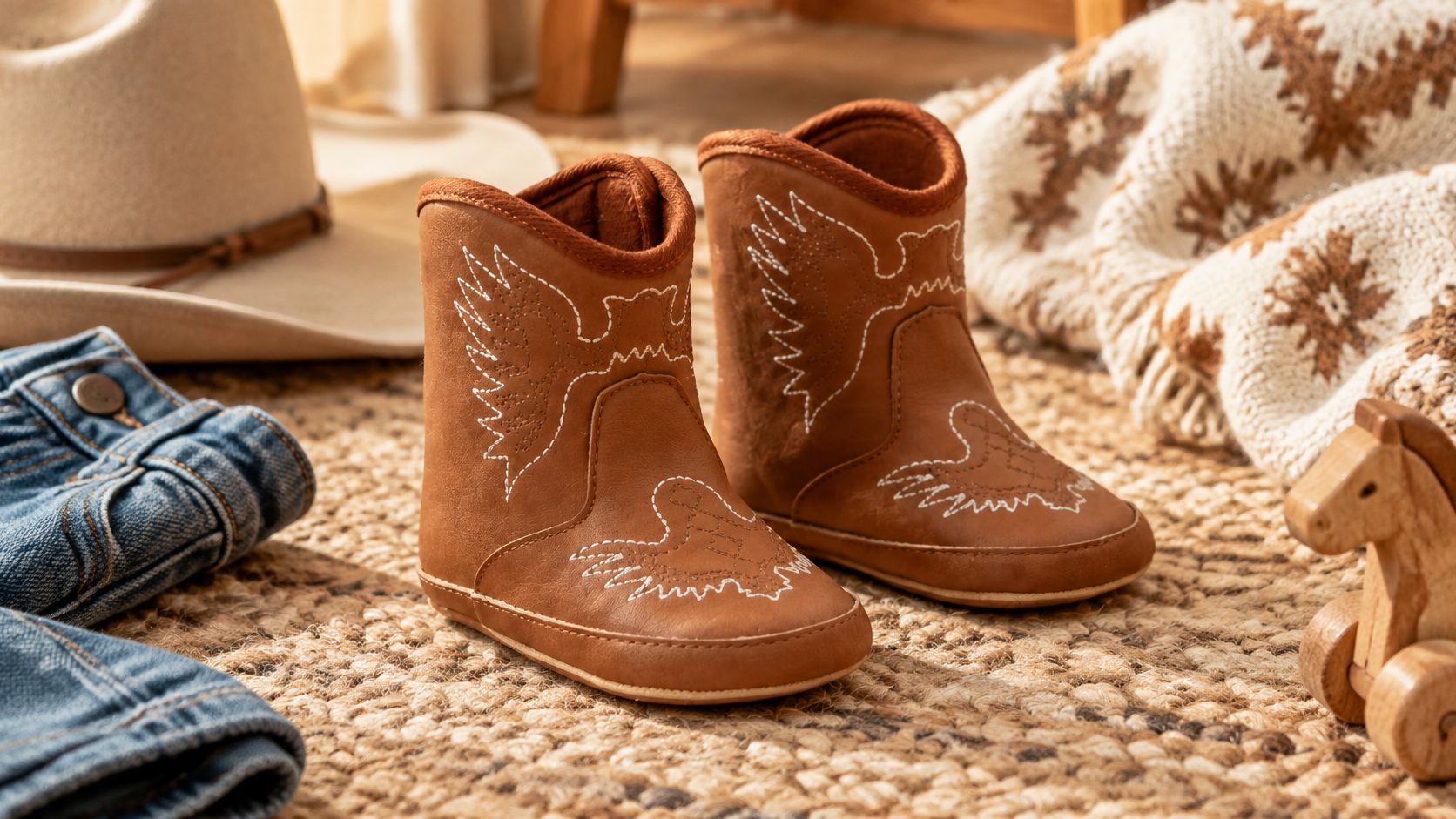
For the smallest riders, Lil' Buckaroo Baby Cowboy Boots are infant cowboy boots in soft faux leather with rubber soles and a velcro closure. They are for photos and first steps, not for the adult styling above.
Gift Picks by Age Group and Use
A gift works when its construction suits how the recipient will use it. Match heel and sole to the activity, then consider how often the boots are likely to be worn.
| Buyer | Style to choose | Use check | Notes |
|---|---|---|---|
| Baby, 6 to 12 months | Infant cowboy boot with rubber sole | Check the listing's available sizes | Soft faux leather, Velcro closure |
| Baby, 18 to 24 months | Infant cowboy boot with rubber sole | Check the listing's available sizes | Durable sole for toddlers on the move |
| Toddler or child | Flexible sole, easy closure | Allow room to grow without heel slippage | Check the size chart |
| Teen | Lower roper heel, flexible sole | Consider school and weekend wear | A practical choice for frequent walking |
| Adult gift recipient | Ankle boot, roper or low defined heel | Match the boot to the recipient's usual activities | Choose a style they can wear often |
| Experienced rider | Defined heel, firmer shank | Heel stays seated with little lift in the stirrup | Suited to mounted and outdoor use |
For young children, a flexible sole and closure they can manage make everyday wear easier. Leave some room to grow, but avoid a fit loose enough for the heel to slip. For teens, a lower roper heel is a sensible pick for school and weekends; a tall fashion heel may get less use.
For an adult, think about total wear. A low heel and flexible sole suit walking and everyday outfits, while a firmer shank and defined heel are better aligned with riding. A soft fashion ankle boot may look western without being suited to the stirrup.
Bridle Up Hope Shop is a gift shop for horse lovers, with English and western designs. For a baby shower, Howdy Partner Baby Boy Pajamas make a western-print gift alongside small boots. If the recipient already has footwear, find personalised leather clutches for a leather accessory that does not depend on boot fit.
Decide on Price, Longevity and Ethics Before You Buy
Pick the boot whose total use fits your life, not the lowest price and not the greenest label.
DataIntelo's 2025 western-boot market reporting claims that leather represented 61.5% of western-boot revenue, while sustainability and durable construction are both becoming purchase considerations. That split is the trap. A synthetic or recycled upper can cut reliance on new animal material, and a cheaply built boot that cannot be resoled can still die sooner than a repairable leather boot. Leather is not automatically the greener choice either. Its production can be resource-intensive, so "real leather" is not a free pass.
What to compare
- Expected lifespan: daily wear for years, or a season of outfits.
- Resoling: can a cobbler replace the sole and heel, or is the sole glued on for good.
- Waterproofing and cleaning: will you condition it, or will it live in the rain untreated.
- Material transparency: what the upper is, and what the brand will tell you.
- Repair and disposal: stitches you can fix, versus a boot that becomes trash when the heel wears down.
A fashion-led ankle boot needs solid construction for daily wear: a sole that grips, an upper that flexes without splitting. Riding or work footwear needs a stiff heel and reliable grip. Don't grade them on the same checklist.
Three questions before you pay: How often will I wear this? Can it be repaired? What care will I actually do?
If the honest answers are "twice a month," "no, it's glued," and "I won't condition it," a lower price is rational. If the answers are "most weeks," "yes, it can be resoled," and "I'll condition it a few times a year," pay for the pair you can keep.
Shortlist two or three pairs that match the activity, run the sizing checks, and buy the one you can repair and wear most. That is the boot that costs less per year, whatever the tag says today.
Bridle Up Hope Shop carries equestrian gifts and apparel in both English and Western styles, including boots and smaller pieces for riders, kids, and baby showers. If you are matching a pair of western style ankle boots to a real routine, or putting together a horse-themed gift, browse the full range at Bridle Up Hope Shop. Every purchase supports the foundation's work with girls, women, and horses.

Deje un comentario