


You're standing beside the trailer, pulling a hoodie over your barn shirt, and the shoulders catch before the hem settles. Or you're shopping for a young horse lover and have found the perfect horseshoe graphic, but the size chart tells you almost nothing about how it'll fit. A western print hoodie should work as clothing first and a statement piece second. The best choice starts with how someone will wear it, not just what's printed on the front.
Table of Contents
- What a Western Print Hoodie Is and Why It Sells
- Common Western Prints and What Each Motif Signals
- Fabric, Weight and Print Method Options Compared
- Fit and Layering Tips Before You Buy
- Outfit Ideas for Women and Kids
- Caring for a Printed Hoodie So the Graphic Lasts
- Choosing a Socially Conscious Western Hoodie Gift
What a Western Print Hoodie Is and Why It Sells
A western print hoodie is a hooded casual top, usually made from fleece or a similar sweatshirt fabric, decorated with imagery associated with western and equestrian life. Think horses, horseshoes, boots, spurs, rodeo lettering, cacti, and desert sunsets. The graphic supplies the western character; the underlying garment remains everyday casualwear.
That distinction matters. You don't need a complete cowboy outfit to wear one, and a horse graphic doesn't automatically make a hoodie suitable for riding. Our guide to what western attire includes helps separate these casual references from the wider clothing tradition.
Everyday clothing with a personal connection
Off-duty riders might choose a horse silhouette, while someone drawn to cowgirl style might prefer bold lettering. Parents and gift buyers often look for a motif that reflects a child's favorite animal or riding interest.
Western apparel belongs to a broader commercial category, but the Econ Market Research western-wear assessment shouldn't be read as evidence that a particular hoodie will sell or fit well. Market definitions can include categories beyond graphic sweatshirts. For an individual buyer, wearability matters more than market size.
A meaningful print gets someone's attention. A comfortable fit gives them a reason to keep wearing it.
The garment format matters, too. If you're choosing pullovers or zip-front styles for a club or gift range, Dirt Cheap Product, Inc.’s guide can help you compare hoodie styles for business before selecting decoration.
A useful purchase decision comes down to a recognizable motif, suitable fabric, workable layering room, and realistic care needs. For gifts, add one more requirement: confidence that the recipient would choose that style themselves.
Common Western Prints and What Each Motif Signals
| Motif | What It Signals | Pairs Well With | Print Check |
|---|---|---|---|
| Lucky horseshoe | Good fortune and classic western symbolism | Denim, boots, everyday wear | Small motif works on the chest or cuff |
| Horse portrait or silhouette | Equestrian identity and riding life | Riding leggings, barn boots | Large single print needs stable fleece |
| Cowgirl or rodeo lettering | Bold statement and confidence | Jeans, cowboy hat | Check letter edges and ask about wash durability |
| Boots, spurs and saddle | Ranch and working life | Flannel layers, jeans | Fine line work needs detailed screen printing |
| Desert, cactus and sunset | Open-range landscape | Earth-tone bottoms, light jacket | Wide back prints need a stable fabric surface |
| Cowboy hat and lasso | Rodeo heritage | Western shirts, bolo ties | Check the clarity of thin lasso lines |
Treat these associations as styling cues, not fixed meanings. A horseshoe can feel playful, traditional, or understated depending on its color and placement. A horse portrait may appeal equally to an English rider and a western enthusiast, whereas rodeo lettering makes a more specific visual statement.
Start with the recipient's actual interests. Someone who loves horses doesn't necessarily want cowgirl slogans, and someone who enjoys western fashion may prefer desert scenery over riding imagery.
Judge scale and placement together
A small chest emblem is easy to wear beneath an open jacket. A large front design becomes the outfit's focal point, but it can disappear behind a zipped vest. A back print offers room for a desert scene or running horses, although a hood can cover its upper edge.
Compare the graphic with the garment, not just the photograph. A tightly cropped product image can make a modest design look oversized. Look for a full-front and full-back view, ideally on a person, so you can judge where the image begins and ends.
Print placement also changes with fit. A graphic stretched across the chest won't read like the same design on a relaxed cut. Lettering should remain legible when the wearer moves, rather than only when the garment lies flat.
Look closely at line detail
Fine saddle tooling, spur straps, and lasso loops need clean separation. Zoom in on intersections and enclosed spaces: if the lines already look merged in a clear product photograph, don't assume they'll look sharper in person.
For deliberately weathered graphics, distinguish the intended distressed pattern from accidental damage. Ask for a close-up if the listing makes that unclear.
- Choose a focal point: Decide whether the horse, lettering, or background artwork should be noticed first.
- Check everyday visibility: Consider what a jacket, vest, or backpack will cover.
- Match the wearer's taste: Choose a subtle emblem for someone who avoids large graphics, even if you prefer a statement print.
Fabric, Weight and Print Method Options Compared
| Option | Typical Weight | Feel and Drying | Best Use |
|---|---|---|---|
| Cotton-rich fleece | Look for a stated midweight construction | Soft feel, generally slower drying | Everyday and indoor wear |
| Polyester-rich fleece blend | Available in lighter and midweight constructions | Generally dries faster and holds shape | Barn chores, travel, changeable weather |
| All-cotton fleece | Available in midweight and heavier constructions | Soft hand; needs attention to shrinkage | Indoor comfort |
| Heavyweight fleece, any blend | Dense construction; compare the seller's stated weight | Substantial and structured | Cold-weather wear over shirts |
| Lightweight jersey-style hoodie | Thin, T-shirt-like construction | Less insulating than substantial fleece | Mild weather, layering under a jacket |
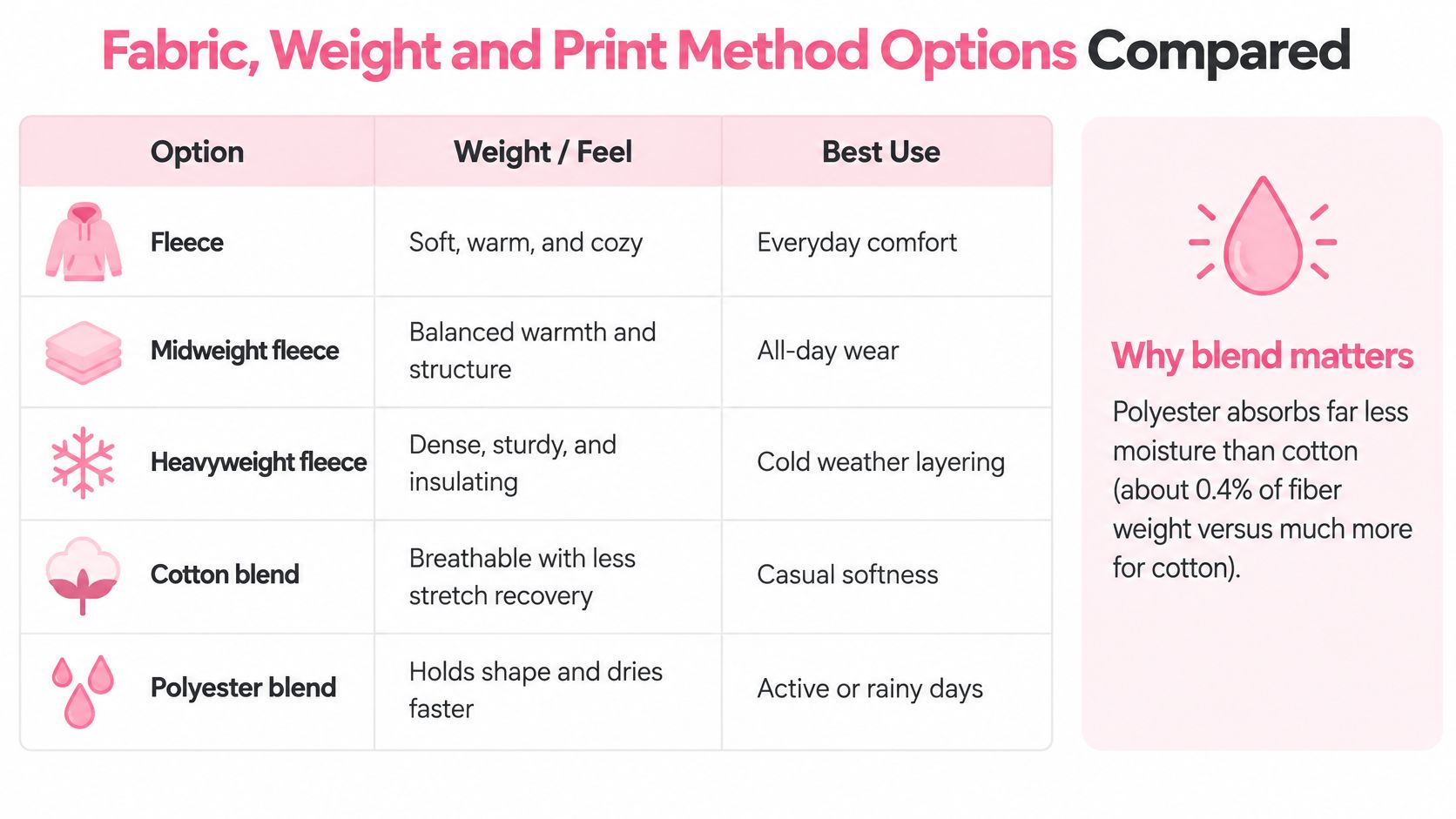
Fiber blend and fabric weight answer different questions. The blend describes what the fabric contains. Weight describes how much material occupies a given area, not whether it will automatically feel soft, breathe well, or resist wear.
The visual comparison below helps distinguish the main options.
Choose the blend for the job
Polyester absorbs about 0.4% of its fiber weight in moisture, compared with roughly 8% for cotton, according to Alibaba's cotton-polyester hoodie fabric guide. This helps explain why polyester-rich blends generally dry faster, while cotton-rich fleece often appeals to buyers who prioritize a softer everyday feel.
For sitting indoors or wearing on a cool evening, cotton-rich fleece is a sensible starting point. For travel or chores where damp fabric becomes uncomfortable, a polyester-rich blend may be more practical. Neither description guarantees comfort on its own, because knit structure, brushing, and finishing also matter.
Don't mistake faster drying for waterproofing. An ordinary polyester-blend hoodie isn't a substitute for a weatherproof outer layer.
Balance warmth against bulk
Midweight fleece is a useful everyday starting point. Heavyweight fleece can feel substantial over a shirt, but it may crowd the elbows and shoulders beneath a close-fitting jacket. Lightweight jersey-style hoodies provide coverage without the same insulation.
Check how the seller expresses weight. A fabric measurement and a finished garment's shipping weight aren't interchangeable. If a listing says heavyweight, ask for the fabric specification rather than treating the adjective as a standardized rating.
Ask what supports the print
Screen printing suits bold western graphics, particularly solid silhouettes and high-contrast lettering. It isn't an automatic quality guarantee: the fabric surface, ink choice, and production controls must work together.
Before buying, ask:
- Fabric specification: What are the fiber blend and fabric weight?
- Decoration method: Is the design screen printed, transferred, or produced another way?
- Performance evidence: Can the seller explain how the finished garment was evaluated for laundering resistance?
For technical supplier comparisons, ASTM D737 addresses air permeability, AATCC 195 addresses moisture management, and ISO 11092 addresses thermal resistance. Ask what was tested and what the result means, rather than accepting a list of test names as proof of superior performance.
Fit and Layering Tips Before You Buy
Should you size up? Only if the garment measurements and planned layers call for it. An oversized hoodie can still have restrictive armholes, while a properly designed relaxed cut may provide enough room without extra sleeve length.
Use a hoodie you already like as your measuring reference.
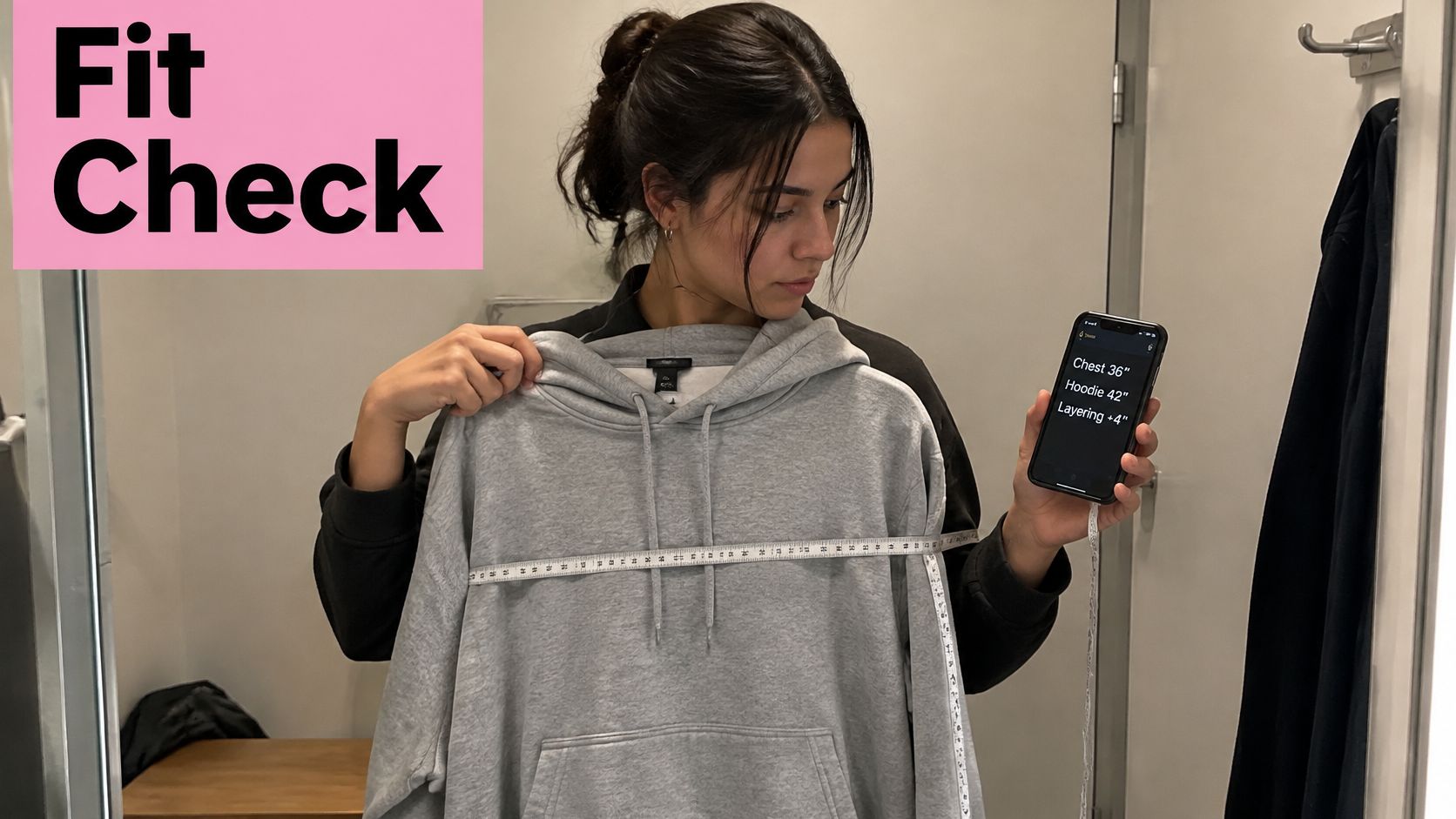
Separate body measurements from garment measurements
Your body chest measurement goes around your torso at its fullest point, with the tape level and comfortable. A garment chest measurement describes the clothing itself, often measured flat from underarm to underarm. Confirm which method the seller uses before comparing figures.
Lay your reference hoodie flat without stretching it. Measure chest width, shoulder width, sleeve length, and body length from a consistent starting point. Compare those measurements with the listing, then consider what you wore underneath your reference garment.
Fit deserves this attention: Coresight Research identified size and fit as the top return reason, cited by 53% of apparel brands and retailers, as summarized in Perfect Corp.’s apparel returns guide. That's a retailer finding, not a prediction that any particular shopper will return a hoodie.
| Use Case | Suggested Fit | Sleeve and Length Check |
|---|---|---|
| Worn alone over a T-shirt | Start with your usual size, then verify measurements | Cuff ends around the wrist bone |
| Layered over a Western snap shirt | Relaxed cut, or size up if measurements require it | Sleeves shouldn't bunch at the elbow |
| Worn with riding gloves | Standard fit with controlled sleeve volume | Check that the hoodie cuff works with your glove cuff |
| Cropped or women's cut | Use the relevant chart and stated garment length | Confirm where the hem sits on your torso |
| Kids growing into it | Allow modest room, not excessive length | Check chest width and sleeves; don't rely on rolled cuffs for active use |
Test movement, not just appearance
With the intended shirt underneath, reach forward, bend your elbows, and raise your arms. Shoulder seams shouldn't pull sharply, and the hem shouldn't rise beyond a comfortable position. Check that the front graphic isn't visibly stretched across the bust.
A cropped cut may feel roomy through the chest yet expose the waist during movement. Unisex cuts often provide a different shoulder and torso shape from women's cuts, but those labels aren't standardized. For a visual introduction to the terminology, Skup lets shoppers explore hoodie fits and designs.
Fit check: Extra width isn't useful if the sleeves cover your hands or the armholes still restrict movement.
The following video offers an additional visual reference while assessing hoodie proportions.
For riding, keep loose fabric and drawcords controlled and follow your instructor's or facility's clothing requirements. For children, don't buy so much growing room that cuffs and hems interfere with safe movement.
Outfit Ideas for Women and Kids
Let the hoodie's print set the mood, then keep most of the remaining outfit quieter. Boots can anchor a western look, but you don't need to repeat the motif on every accessory. A clear focal point makes the outfit easier to put together.
Women's looks for different days
Barn to town: Choose dark straight-leg jeans, practical boots, and a hoodie with a chest emblem or horse silhouette. Keep the jeans free of competing decoration. If the barn footwear is muddy, changing boots does more for the transition than adding jewelry.
For a layered outing, wear a Western snap shirt under the hoodie and a denim jacket over it. The jacket needs enough shoulder room to accommodate both layers without pulling across the back. Our guide to how to wear a Western shirt offers useful ideas for coordinating collars, denim, and accessories.
- Riding-day outfit: Pair the hoodie with fitted riding leggings and discipline-appropriate boots. Check the sleeves with your gloves before mounting, and choose clothing appropriate to the activity rather than the photograph.
- Casual evening outfit: Wear solid jeans and a cowgirl hat with a lettering hoodie. If you want a bolo tie, place it with a collared layer so it has a clear neckline rather than tangling with hood cords.
Kids' outfits that leave room to move
A school-day combination can be as simple as a horseshoe hoodie, plain joggers, and sneakers. Rain boots make sense for wet journeys, but choose footwear around the day's activities rather than the western theme alone.
For a sleepover, pair the hoodie with pajama pants for lounging. A relaxed fit is comfortable, but a larger daytime hoodie shouldn't automatically be treated as sleepwear; use appropriate nightwear for sleeping.
A ranch visit calls for a long-sleeve tee underneath and practical bottoms that can handle dirt. For colder outings, a puffer vest leaves the sleeves less crowded than a close-fitting coat. Remember that the vest will cover much of a front or back graphic.
Build the outfit around what the wearer will do, then use the print to express their style.
Keep the color choices simple
Off-white and pink hoodies pair easily with dark denim. Sea-foam green works with neutral khaki, while bold lettering usually looks clearest against solid-colored bottoms.
Pull a small accent color from the print if you want coordinated socks, a hair accessory, or a bag. You don't need an exact match. Keeping accessories restrained lets the graphic remain visible without making the outfit feel like a costume.
Caring for a Printed Hoodie So the Graphic Lasts
Print durability starts before you buy. The PRINTING United Alliance guide to textile washfastness explains why the entire ink film must reach the manufacturer's specified curing conditions; incomplete curing can lead to cracking, peeling, or color loss. Dense lettering and layered graphics require careful production control, not more cautious laundering afterward.
A buyer can't repair inadequate curing with a household dryer. Ask sellers about finished-garment wash testing, including laundering resistance under ISO 105-C06, if durability is a priority.
Use a consistent laundry routine
The illustration summarizes the main responsibilities of the printer and wearer.
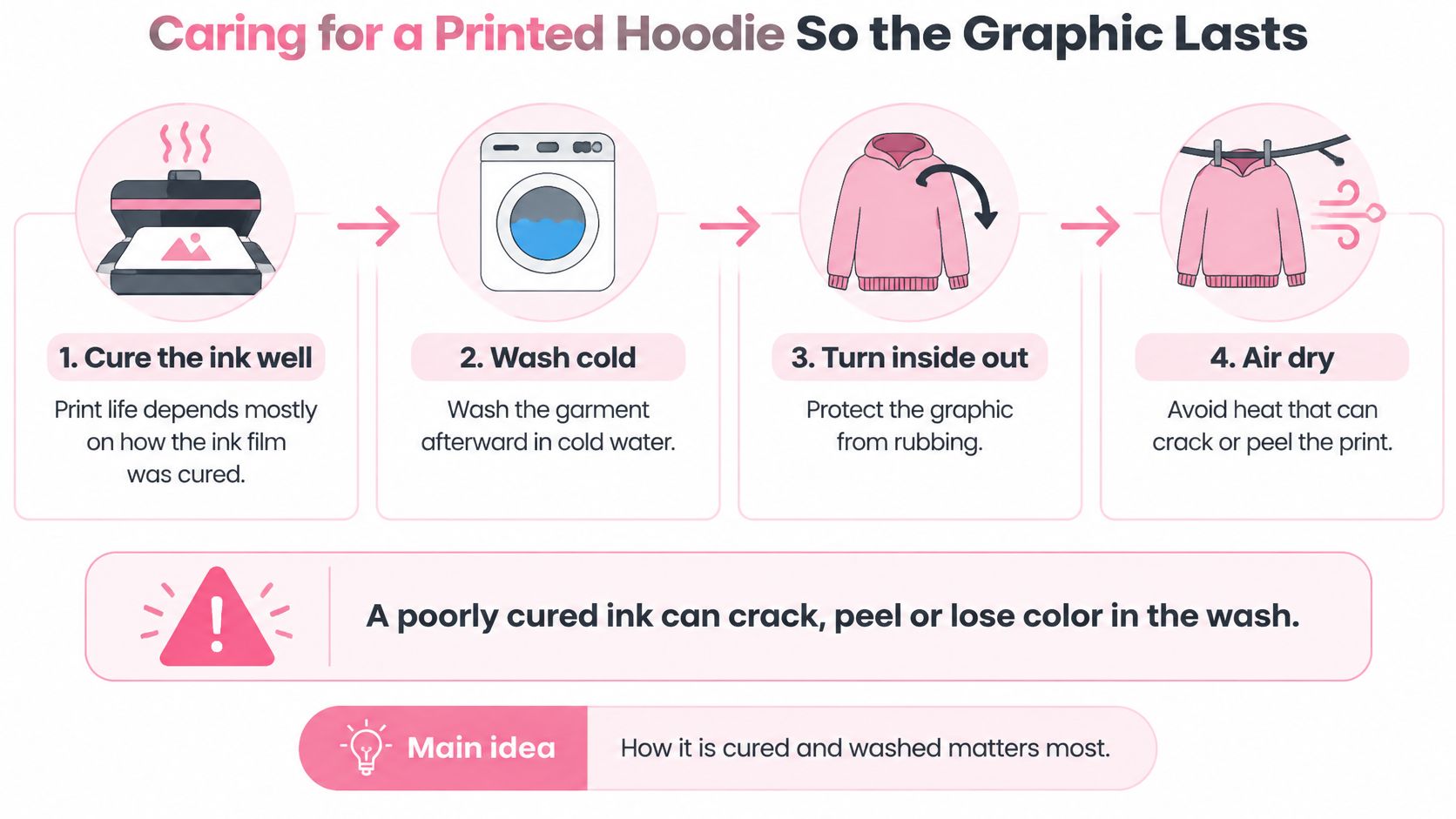
- Turn it inside out. Close zippers on other garments and avoid washing it against abrasive hardware.
- Choose a cool or warm gentle wash. Use the garment's care label to settle temperature and cycle choices.
- Avoid chlorine bleach. Don't apply concentrated stain remover directly to the graphic without checking compatibility.
- Line-dry or tumble-dry on low. Support the garment while drying, and avoid unnecessary time in the dryer.
- Keep the iron off the print. Follow the label's ironing instructions for unprinted areas.
- Wash according to actual wear. Air a lightly worn, clean hoodie between uses rather than laundering it automatically.
For another explanation of reducing friction and heat exposure, Cobra DTF's guide to prevent cracking on printed shirts is useful alongside the hoodie's own instructions. The garment care label takes precedence when general advice differs.
Know when airing isn't enough
Sweat, mud, and barn dirt need cleaning, not just fresh air. Lift off loose dry soil gently, then treat remaining marks using a fabric-compatible method. For stable chemicals or other potentially hazardous contamination, follow the substance's handling instructions rather than a routine clothing-care shortcut.
Check stains before drying, because dryer heat can make some marks harder to remove. Don't scrub a printed area aggressively or try to stretch cracked ink back into place.
During laundry, inspect:
- Edges: Look for fine cracks or lifting around letters and outlines.
- Color: Notice dull patches or uneven fading.
- Texture: Check for unexpected stiffness or changes in the print surface.
Durability is a practical environmental concern, not just an aesthetic one. The German Environment Agency's clothing eco-design assessment identifies durability as a key criterion, including dimensional stability and colorfastness. Good care helps preserve those qualities; a recycled-material claim alone doesn't tell you how long a hoodie will remain wearable.
Choosing a Socially Conscious Western Hoodie Gift
A socially conscious gift should suit the recipient and have a clearly explained giving model. A charitable connection doesn't compensate for an uncomfortable garment or a slogan the wearer wouldn't choose. Start with the person, then verify the seller's commitments.
Check the gift before checkout
- Confirm the giving model. Read what the seller says is donated, who receives it, and how the arrangement is reported. Don't treat profits, revenue, and purchase price as interchangeable terms.
- Check the recipient's size. Use a well-fitting garment and account for their preferred layers.
- Match fabric to use. Consider whether they'll wear it indoors, at the barn, or while traveling.
- Choose a relevant print. English riding, western riding, and general horse enthusiasm can overlap without being identical.
- Read return terms. Keep the order information and understand any restrictions before gifting.
At our shop, online-exclusive products with limited quantities can be returned or exchanged only according to our Refund Policy. Don't assume a gift purchase creates an exception.
A worked example for a horse lover
The Equestrian Athletic Club Hoodie (Charcoal) has a front screen-printed equestrian design, French terry fabric, and a regular comfortable fit. Its horse-themed styling is intended for both Western and English attire, making it an example of why equestrian identity and specifically western imagery aren't always the same thing.
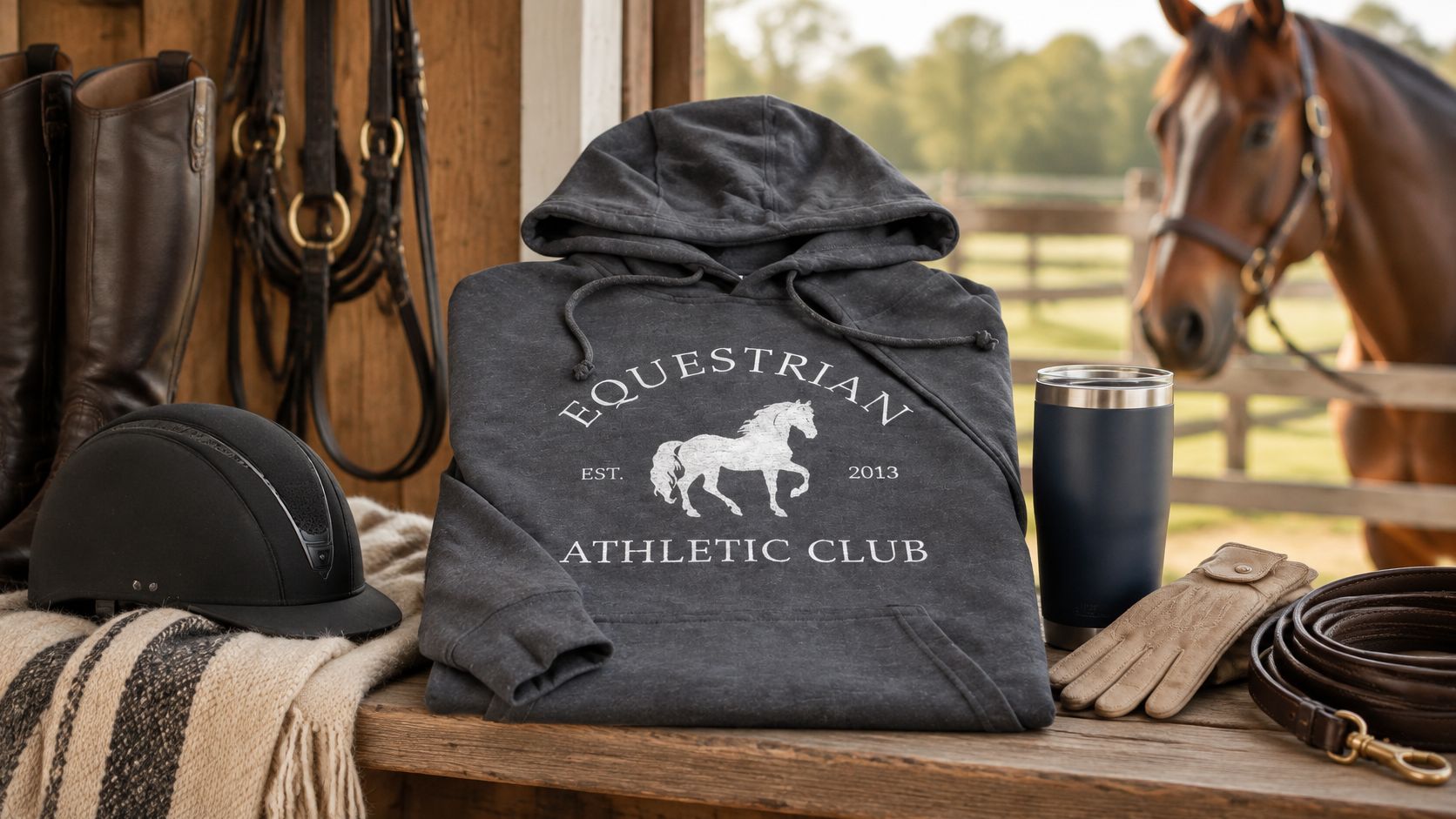
Read the store's stated giving model directly rather than relying on a general charitable label. If a hoodie doesn't match the recipient's wardrobe, our western gift ideas can help you consider a different format.
A western print hoodie makes a thoughtful socially conscious gift when fit, fabric, and imagery match the recipient, and the giving arrangement is clear.
Bridle Up Hope Shop offers equestrian clothing and horse-themed gifts in English and Western styles. Visit Bridle Up Hope Shop to compare designs, check garment details, and choose a hoodie or gift that fits your horse lover's everyday life.
Deje un comentario