


You're standing in front of an open closet before your first guided trail ride, holding a pair of everyday jeans in one hand and sneakers in the other. The photos of western riders make the outfit look simple, but you're wondering whether those clothes will actually work once you're in the saddle.
That's the useful distinction to make. Western horse riding clothing isn't costume clothing. The best pieces protect your legs, keep your feet positioned safely, move with your body, and stay out of the way of the saddle and reins. Some western-inspired items look right on the street but become uncomfortable or unsafe on horseback. This guide will help you tell the difference.
Table of Contents
- What to Wear on Your First Western Trail Ride
- The Core Pieces of a Western Riding Wardrobe
- Western vs English Riding Apparel at a Glance
- Fabrics, Fit, and Layering for Every Season
- Safety Details That Matter in the Saddle
- Caring for Your Western Riding Clothes and Buying Smart
- Your Western Riding Clothing Checklist and Common Questions
What to Wear on Your First Western Trail Ride
On the morning of a trail ride, start with the parts of your outfit that affect safety. Choose full-length denim or stretch western jeans with a comfortable rise and a full seat. The fabric should feel broken in, not stiff, and the jeans shouldn't have large pockets, bulky decorations, or hardware that presses into you or catches on equipment. Field guidance from Utah State University Extension recommends full-length pants made from abrasion-resistant materials such as denim, canvas, or heavy cotton.
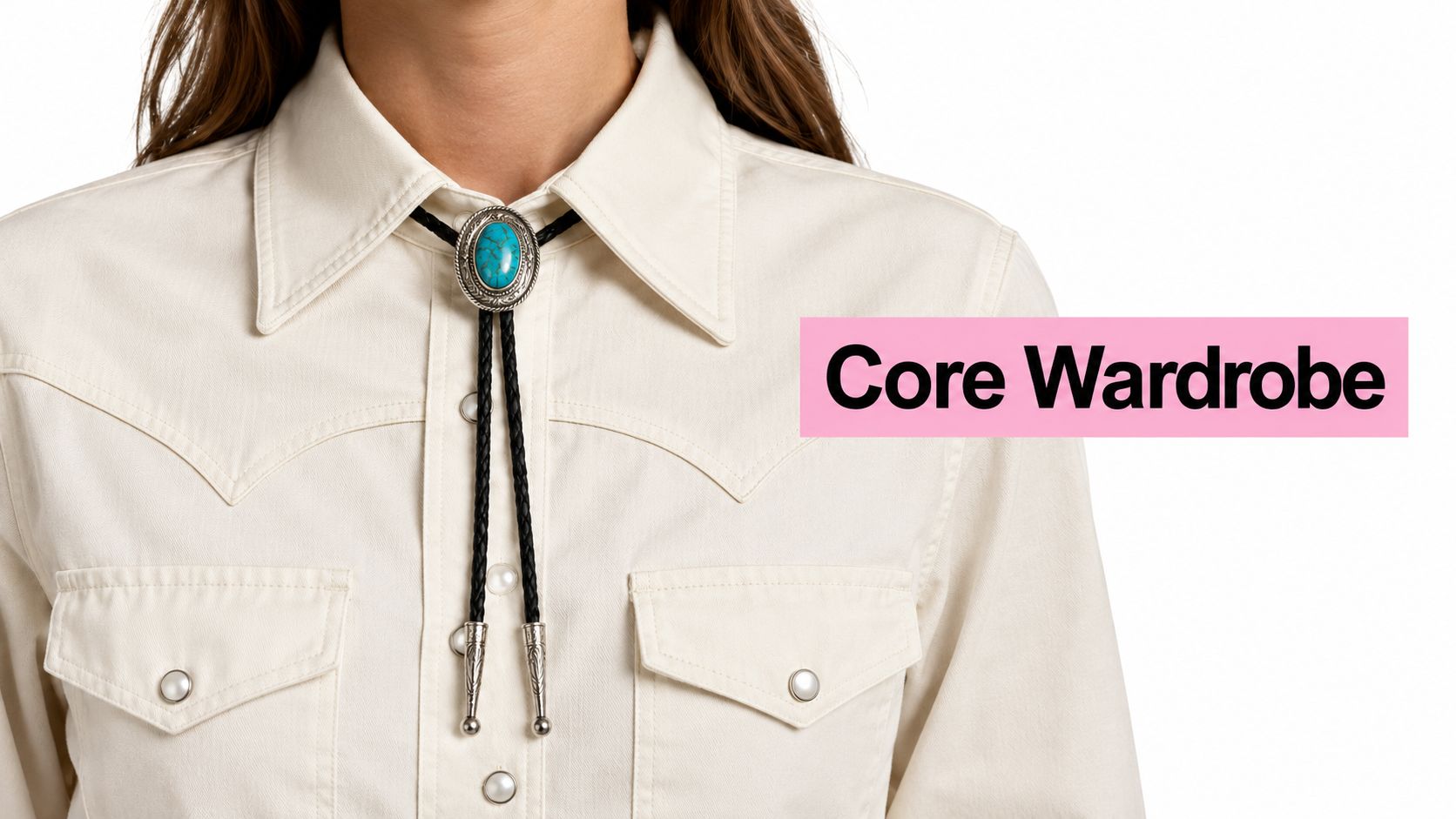
Wear a tucked button-down shirt or fitted tee. A long-sleeved shirt gives your arms useful coverage from sun and brush, while a close fit keeps fabric from catching on the saddle horn. A western snap shirt works particularly well because snaps can release more easily than a stiff button placket if the front catches. For a polished ranch-to-town option, you can browse these California Cowboy button up shirts, then select a cut that allows unrestricted arm movement.
Your footwear is the essential piece. Choose leather boots with a defined heel, rather than sneakers, sandals, or flat-soled fashion boots. The heel helps reduce the chance of your foot sliding too far through the stirrup. Make sure the boots are comfortable enough for walking before ride day, since a new, rigid pair can create painful pressure points.
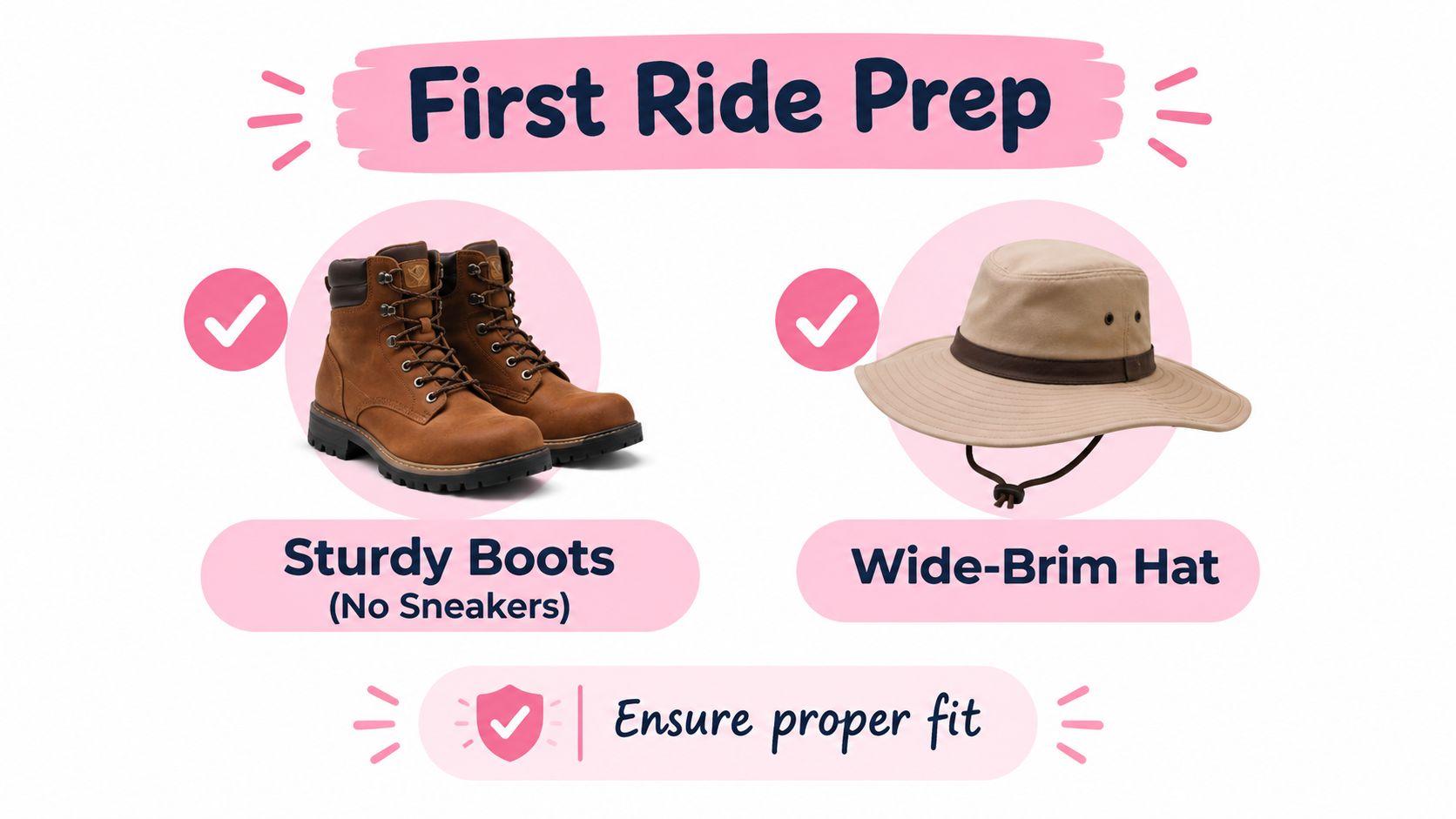
Finish with a wide-brim felt or straw hat suited to the season. A hat can provide useful shade, but ask the riding operation whether it requires a helmet. Add lightweight riding gloves to reduce rein friction and blisters, and apply sunscreen to your face, ears, neck, and hands. Those two small items are easy to forget and can make a long ride much more comfortable.
Morning check: Sit in a chair wearing the complete outfit. If the waistband digs in, the shirt pulls across your shoulders, or the jeans bunch behind your knees, change before you reach the barn.
The Core Pieces of a Western Riding Wardrobe
Build your wardrobe as a set of tools. Start with the shirt, then check how the shirt works with your jeans, boots, and saddle position.
Choose the shirt for movement
A snap-front western shirt, pearl-snap shirt, or fitted performance henley gives you arm mobility without excess fabric. Snaps also offer a practical advantage if a buckle, breast collar, or saddle horn catches the front of the garment. A shirt should sit close enough to the body to stay clear of tack, but not so tightly that you can't reach forward or lift your arms.
Look for breathable weaves in warm weather and longer sleeves when you'll spend hours outdoors. Decorative yokes are fine if they're flat and secure. Fringe, dangling ties, and oversized cuffs belong in lifestyle styling unless you've confirmed that they won't interfere with your equipment.
Let the jeans support your position
Riding denim differs from jeans chosen only for appearance. A mid- or high-rise waist helps keep the back covered when you sit deep in the saddle. A bootcut leg falls neatly over a western boot, while a reinforced seat or durable stitching can better tolerate saddle contact.
Try jeans in a seated position before buying. Walk, bend, and lift one knee. The waistband shouldn't pinch, and the fabric shouldn't pull sharply across the front of your thighs. The guidance in this overview of western riding boots is also useful when checking the relationship between your boot shaft, jean opening, and stirrup.
Treat boots as equipment
Western boots generally use leather construction and a defined heel. Heel shape and height vary by profile, from practical roper designs to taller stockman or buckaroo silhouettes. You don't need the most dramatic shaft for ordinary trail riding. You need a secure fit around the heel and instep, enough room for your toes, and a sole that offers reliable contact without becoming difficult to place in the stirrup.
A belt completes the working outfit. Choose quality leather with a buckle that clears the saddle horn and doesn't create a hard lump beneath a jacket. Hats should fit securely without squeezing your temples, and any chin strap should be adjusted so it won't flap or tangle.
Western vs English Riding Apparel at a Glance
Western and English clothing developed around different saddles, riding positions, and traditions. Western garments often allow a little more room for ventilation and ranch movement. English garments usually follow the body closely so fabric stays clear of a more compact saddle and closer leg contact.
| Category | Western | English |
|---|---|---|
| Shirt | Snap-front western shirt, fitted henley, or practical button-down | Close-fitting collared shirt, polo, or show shirt |
| Bottoms | Full-seat jeans, durable riding pants, and chaps for some work | Breeches, jodhpurs, knee-patch tights, or full-seat tights |
| Footwear | Leather western boots with a defined heel and a practical sole | Tall riding boots, or paddock boots paired with half chaps |
| Head protection | Cowboy hat may be worn on a trail, subject to facility rules | ASTM/SEI-certified equestrian helmet is standard in many settings |
| Silhouette | Functional room through the torso and thigh, with a bootcut leg | Close-fitting through the leg and waist |
| Closures | Snaps and durable hardware suited to ranch work | Zippers, buttons, and clean closures designed for a streamlined fit |
You can find useful background on the differences between western and English riding, but clothing decisions become clearer when you consider the tack. A western saddle has a prominent horn and broad fenders, so a shirt that catches at the front or jeans that bunch inside the fender can become distracting. English riders use a narrower saddle and closer leg position, which explains the popularity of breeches and fitted layers.
The crossover is real, but it has limits. A fitted technical shirt can work in either discipline, and paddock boots may be accepted for an informal western lesson if the heel and sole are appropriate. A loose fringe jacket, oversized belt buckle, or decorative chaps may express western style without being suitable for an English flat or jumping class.
Helmet policy deserves separate attention. A cowboy hat may be traditional for western trail riding, but it doesn't provide the same protection as a certified riding helmet. Ask the instructor or facility what it requires, especially if you're new, riding unfamiliar horses, or working at faster speeds.
Fabrics, Fit, and Layering for Every Season
The right fabric depends on more than the temperature. Consider how long you'll be mounted, whether you're brushing through branches, how much you'll sweat, and whether the ride includes ranch work or a relaxed arena lesson.
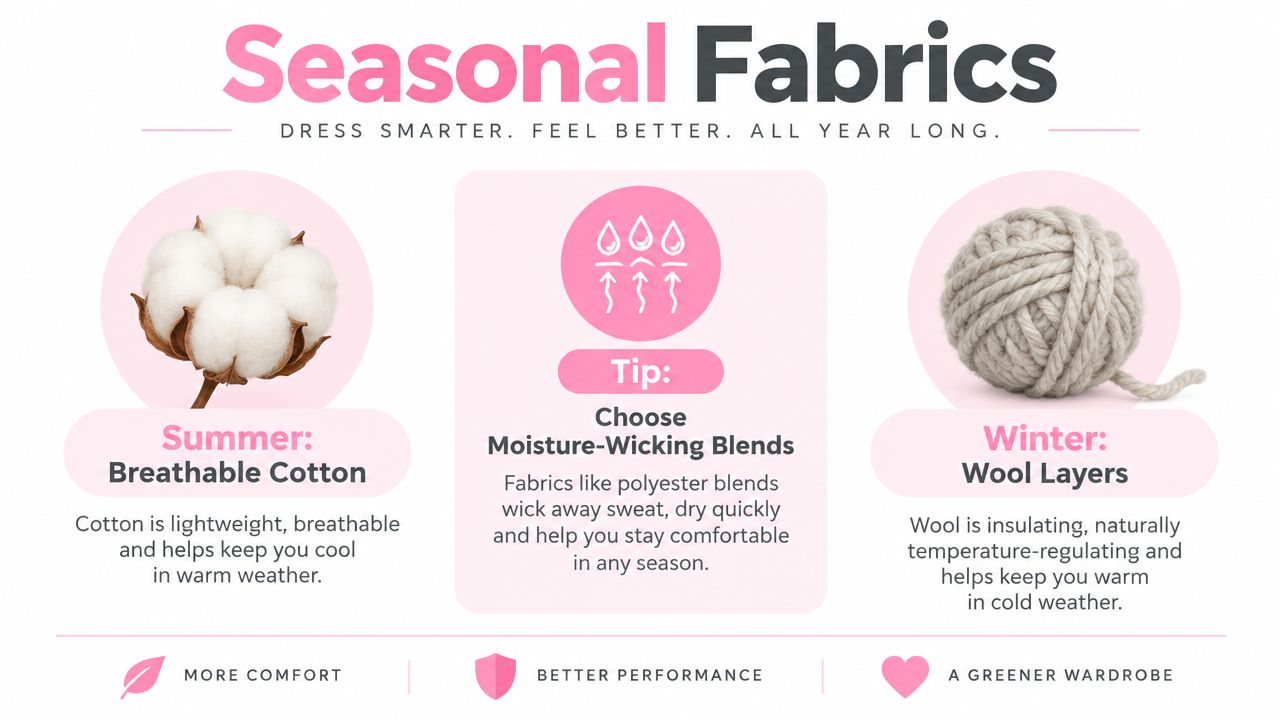
In hot weather, breathable cotton and cotton blends can feel comfortable, especially in a loose but controlled shirt weave. Moisture-wicking technical fabrics dry faster when a trail ride becomes strenuous. A lightweight long-sleeved sun shirt can keep coverage on your arms without adding the weight of a heavy overshirt. This guide to equestrian sun shirts can help you compare riding-oriented options.
Denim needs a balance between protection and flexibility. Thin, silky fabric may rub quickly against the saddle, while heavy, rigid denim can restrict your hips and create pressure at the seams. Choose jeans that flex when you sit and that don't twist around your knees. Canvas and heavy cotton can work well for ranch tasks when the cut allows a full range of motion.
Build layers you can remove
For a cool spring morning that becomes warm later, begin with a fitted base shirt, add a light overshirt or vest, and carry a compact weather shell. The outer layer should close fully and stay short or fitted enough not to catch on the horn. A long, loose coat can interfere with your seat even if it feels comfortable while standing.
Cold-weather ranch work calls for a moisture-managing base, a wool or technical mid-layer, and wind protection over the top. Wool can retain warmth in changing conditions, while technical fleece offers a lighter, quick-drying alternative. Keep the arms mobile and avoid so much bulk that you can't close your hands around the reins.
Rain changes the priorities. A waterproof shell should cover your seated position and remain secure in the wind. Test it while sitting before the ride. A jacket that reaches your hips when standing may ride up and expose your back once you're mounted.
Fit is saddle-specific. Sleeves should clear the horn when you reach forward, the hem should stay tucked or sit securely at your waist, and the jean leg should break over the boot rather than gather tightly behind the knee. Clothing that fits well in front of a mirror can behave very differently once you're seated.
Safety Details That Matter in the Saddle
Use three reference points when checking an outfit: the heel, the stirrup, and the saddle horn. Your boot must stay positioned safely in the stirrup, your trouser fabric must move without binding, and your upper layers must remain clear of the horn and other tack.
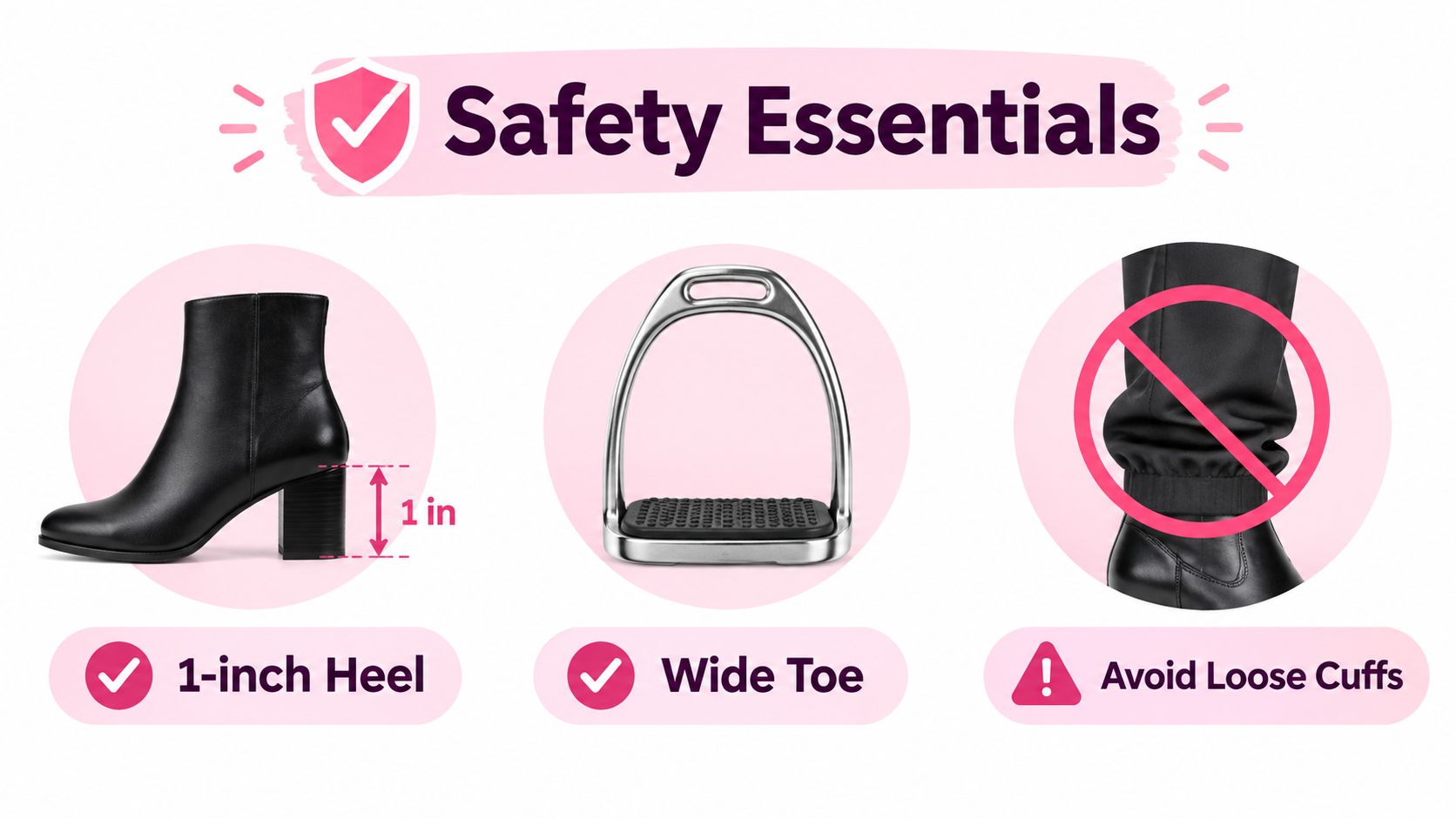
A defined boot heel helps reduce the chance of the foot sliding through the stirrup. Practical riding guidance commonly places the useful heel range around one to one and a half inches, as described by BayEquest's horseback riding clothing guidance. The exact shape matters as much as the measurement. A smooth, clearly raised heel is easier to evaluate than a sole that is nearly flat with deep outdoor tread.
Check trouser length while seated and wearing the boots you'll ride in. Too short, and the cuff can expose your ankle to rubbing. Too long or too loose, and the fabric can bunch around the stirrup or catch on nearby hardware. Avoid loose cuffs, wide decorative openings, and dangling straps.
Your shirt closure should sit flat. Tucked shirts should remain tucked without pulling across the waist, and fitted jackets should be fully closed before you mount. Safety guidance also cautions against scarves, loose outerwear, and open jackets because they can become entangled.
Remove before mounting: Long necklaces, hoop earrings, dangling bracelets, unsecured scarves, and loose jacket belts all deserve a quick check before you approach the horse.
A certified equestrian helmet is a sensible choice in western riding, even when a cowboy hat is the expected visual tradition. Follow the stable's policy rather than assuming that a hat is enough. For group trail rides, choose clothing that helps others see you clearly, especially in low light or wooded terrain, and use sun-protective layers instead of relying only on sunscreen.
Caring for Your Western Riding Clothes and Buying Smart
A durable wardrobe still needs routine care. Turn denim inside out, wash it in cold water, and line-dry it when practical. This reduces unnecessary wear and helps preserve the fit and surface of the fabric. If the jeans carry sweat, dust, and saddle grime, wash them according to the care label rather than leaving them damp in a closed bag.
Leather boots and belts need occasional conditioning, particularly after wet rides or dusty barn work. Wipe away dirt before applying a product intended for that leather. Store hats on a rack or crown-supporting surface so the brim and crown don't collapse under their own weight.
| Garment | Care Routine | Expected Lifespan | Buying Priority |
|---|---|---|---|
| Riding jeans | Cold wash inside out, line-dry when possible, inspect seams | Depends on fabric, use, and construction | High, because poor fit causes saddle discomfort |
| Western shirt | Follow the care label, close snaps before washing, hang promptly | Depends on fabric and laundering | Medium to high, with fit and closure taking priority |
| Leather boots | Brush clean, condition when dry, air out between rides | Depends on leather, care, and riding conditions | High, because heel and fit affect safety |
| Leather belt | Wipe clean, condition lightly, store flat or coiled loosely | Depends on leather and buckle weight | Medium, with sturdy loops and comfortable width |
| Felt or straw hat | Brush gently, keep dry, store on a rack | Depends on material and exposure | Medium, with secure fit taking priority |
Inspect construction before you buy. Reinforced belt loops, double-stitched seams, secure snaps, and a stable boot heel matter more than a decorative label. Premium spending makes the most sense on items that directly affect comfort and safety, especially boots and jeans. You can economize on a seasonal shirt if the fabric, closure, and fit still perform properly.
If laundry is difficult after barn days, a service such as a wash and fold subscription can help keep frequently worn riding clothes in rotation. Check the service's fabric handling terms first, especially for denim, technical layers, and garments with leather or metal details.
Purpose also belongs in your buying decision. Some shoppers prefer makers connected to ranching communities, sustainable materials, or equestrian education. Verify the brand's stated charitable or environmental commitments, and judge the garment by its construction before treating its story as a substitute for safe design.
Your Western Riding Clothing Checklist and Common Questions
Use this list before leaving for the barn:
- Fitted shirt: Long-sleeved button-down, snap shirt, henley, or fitted tee
- Riding pants: Full-length denim, canvas, or riding pants with a comfortable seated fit
- Boots: Closed-toe leather footwear with a defined heel
- Hat: Secure wide-brim western hat, if permitted by the facility
- Belt: Comfortable leather belt that doesn't press beneath the jacket
- Layers: Weather shell, warm mid-layer, or breathable overshirt as conditions require
- Small essentials: Riding gloves, sunscreen, sunglasses, and a hair tie
- Safety check: Remove dangling jewelry, scarves, loose cuffs, and open outerwear
Can English breeches and half chaps work with a western saddle
They can work for an informal lesson if the fit is comfortable and the facility allows them. However, the western saddle's broad fenders and stirrup leather can make some English breeches feel tight or cause silicone full-seat panels to grip in an unfamiliar way. Half chaps may also bunch beneath the fender or feel restrictive around the calf. Test the complete outfit while mounted, not just while standing.
Can a western outfit work at an English event
A fitted button-down shirt and clean paddock boots may cross over for schooling, depending on the discipline and venue. Western jeans, a cowboy hat, large belt buckle, and decorative chaps generally won't match the expected silhouette for formal flatwork or jumping. Check the event rules, then choose clothing that keeps the leg clear and presents a tidy, close-fitting outline.
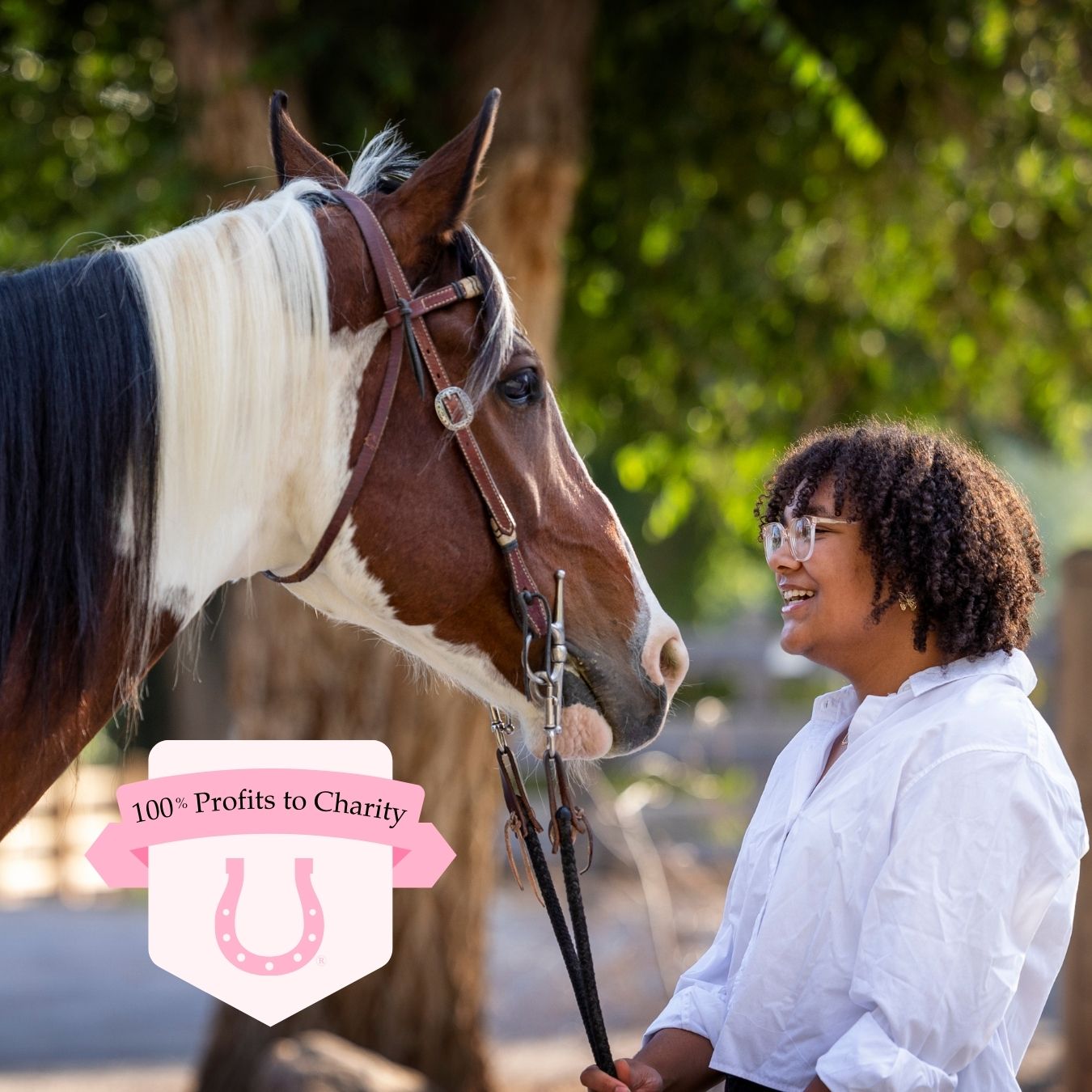
For practical riding layers, boots, belts, and equestrian gifts across English and Western styles, visit Bridle Up Hope Shop. You'll find apparel and accessories for riders and horse-loving families, with the shop's annual net profits donated to the Bridle Up Hope foundation.
Leave a comment