


You've found a horse brooch that looks right for a riding friend, a favorite blazer, or your own collection. The front is convincing, but the description says only silver, and the photograph doesn't show the back. Before you buy, you need to know whether you're paying for sterling silver, silver plate, or a silver-colored finish.
A good silver horse brooch should satisfy more than your eye. Start with the style, then check the mark, maker, and plating disclosure. Those details help you choose something you can wear, care for, and describe accurately if you eventually pass it on.
Table of Contents
- Silver Horse Brooch Styles and Where They Come From
- Hallmarks and Metal Content to Check Before Buying
- Care, Tarnish and Daily Routine
- How to Choose a Silver Horse Brooch for Gifts and Collections
- Gift Wrapping and Presentation Ideas
- Pick a Silver Horse Brooch You Can Verify
Silver Horse Brooch Styles and Where They Come From
Documented silver horse brooch styles by maker, mark and date
The examples below are cataloged by Austin Auction Gallery's Navajo/Diné horse brooch record and its Southwestern and Mexican horse-motif jewelry record.
| Style | Maker or mark | Documented date | Approximate size |
|---|---|---|---|
| Mounted Native American rider | Navajo/Diné sterling grouping attributed to Frank Salcido, Robert Vandover, and Ted Young | 1993 for one example in the grouping | Largest in grouping about 2.5 × 1.5 in |
| Galloping paint horse or trotting pony | Navajo/Diné sterling, 20th-century makers | Individual dates not specified | Individual dimensions not specified |
| Articulated horse brooch | Signed Hood, in a silver horse-motif grouping | 1999 | Individual dimensions not specified |
| Stylized horse with BW 925 mark | Belinda Woody | Individual date not specified | Individual dimensions not specified |
| Horse brooch marked GS sterling | Glen and Irene Sandoval, Navajo/Diné | Individual date not specified | About 2 × 1 in |
| Sterling horse brooch | Monaco Design | Individual date not specified | Individual dimensions not specified |
Sizes, dates and attributions in this table are stated as cataloged in the linked auction records. Read group descriptions carefully: a date or measurement attached to a mixed lot doesn't necessarily identify every object within it, and a list of attributed makers names the artist behind an individual rider only when the catalog or a reverse photograph makes that connection.
Realistic Southwestern and Native American subjects
Mounted riders, a galloping paint horse, and a trotting pony show how much variety exists within this category. Study the modeling of the legs, mane, saddle, and rider. Western-looking horses do not all come from the same design tradition.
For a substantial sculptural brooch, ask for a photograph against a ruler and another showing the pin assembly, plus the reverse, where signatures, sterling stamps and construction details live. A broad silhouette suits a structured jacket. A narrow horse with projecting legs needs placement where it won't snag. Native American attribution needs documentation. Appearance alone isn't enough.
Articulated pins and mixed regional groupings
Hood's articulated horses raise a different buying question: do the moving parts work smoothly without pulling against the fastening? Belinda Woody's signed work and the sterling Monaco Design brooches show why a named maker is more useful than a generic vintage-style description.
Horse-motif bolo ornaments may appear beside brooches in Southwestern and Mexican silver groupings, so confirm the actual fastening before buying an ornament to wear as a pin. The Southwestern and Mexican record linked above groups 13 pieces weighing 100 grams including all materials. That figure describes the whole lot, so no single brooch accounts for the full weight.
The dated examples belong in modern collectible territory. An automatic antique label would overstate what these records show, and they don't establish the age of every horse brooch you'll encounter.
For broader styling comparisons, our horse jewelry for women guide can help you decide whether a pin suits the recipient better than another jewelry format. Browsing accessories from a New Orleans artist also gives a useful contrast between choosing an artist-led accessory and buying a specifically attributed collectible.
Buy the horse you like, but identify it from the reverse. The maker's name, date, and metal mark are stronger evidence than the silhouette.
Hallmarks and Metal Content to Check Before Buying
A brooch listed as "silver" can mean three very different things: solid sterling, a plated base-metal casting, or a silver-colored alloy with no precious metal in it at all. Listing photographs rarely settle that question. The marks and hardware on the reverse usually do, so that is where the buying decision should happen.
The Hallmark Society's guide to reading hallmarks distinguishes a claimed silver standard from an assay-office mark applied after testing: 925 means 925 parts silver per 1,000, or 92.5 percent silver. Each marking you find carries a different level of proof.
| Mark or claim | What it establishes | What to check before buying |
|---|---|---|
| Sterling or 925 stamp | A claim of 92.5 percent silver, or 925 parts per 1,000 | Legible stamp on the body; check the pin and clasp too |
| Assay office hallmark | Fineness tested before marking | Identify the assay office mark and compare it with reference guides |
| Standalone 925 stamp only | Claims the metal standard without establishing maker, age, or value | Confirm the responsible maker or trademark |
| Silver plate | Thin silver layer over a base-metal core | Ask the seller to disclose plating and base metal |
| Silver-colored finish with no mark | No evidence of sterling content | Don't accept the finish as proof |
| Maker signature and date on reverse | Supports attribution and era when authenticated | Compare with documented makers and dated examples |
Use this visual checklist while examining the reverse and the seller's description.
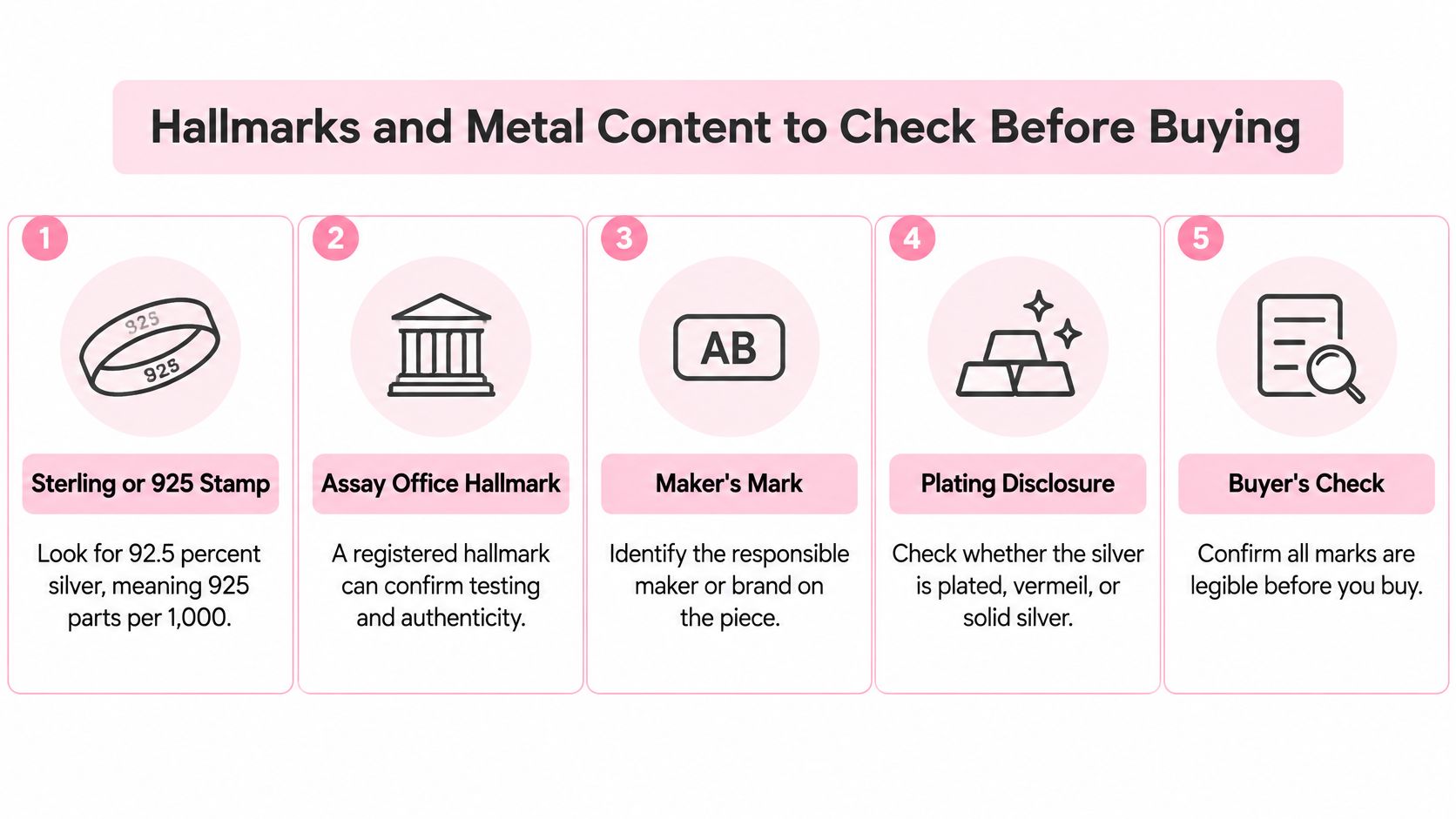
Read the body and the fastening separately
Start with a magnifier or a sharply focused photograph taken under angled light. Look for a stamp on the horse's underside, a backing plate, or another flat area. Don't scrape away dark material to expose a mark.
The Federal Trade Commission's jewelry buying guidance describes silver, sterling, and sterling silver as generally containing 92.5 percent pure silver and says the company or person responsible for the quality mark should be identifiable. A seller should therefore be able to explain both the composition claim and who stands behind it.
Separate the decorative body from the working hardware. The pin stem may be a different metal from the horse, and a stamp on the body doesn't settle the composition of the hinge, clasp, solder, or backing. Ask the seller for a component-level description; a blanket claim that everything is sterling deserves scrutiny.
For an additional screening technique, Idaho Pawn & Gold Exchange explains how to test silver with a magnet. Treat that as a preliminary screen. It is not a certification: a nonmagnetic response doesn't establish sterling content, and magnetic hardware doesn't identify the decorative body's alloy.
This video offers another visual reference while you examine jewelry markings.
A three-part buying test
Run every candidate brooch through the same three questions before money changes hands.
- Mark: Obtain a readable photograph of the metal-content claim.
- Maker: Identify the responsible person, workshop, or brand.
- Plating: Get a written statement distinguishing solid alloy, plated surfaces, and other components.
A plated brooch can be a sensible decorative purchase at a plated price. The expensive mistake is paying for solid sterling on the strength of silver-colored photography. The same distinction matters when comparing a brooch with a sterling silver horse necklace: the material description must apply to the exact item you're buying.
Care, Tarnish and Daily Routine
Silver horse brooch symptoms, causes and fixes
| Symptom | Likely cause | Fix |
|---|---|---|
| Uniform brown to black film | Silver sulfide tarnish from sulfur gases | Start with a soft dry cloth; avoid abrasive polishing |
| Gold, blue, or purple sheen that darkens | Early tarnish layers | Wipe gently; improve sulfur-free storage |
| Green deposits near clasp or underside | Possible copper corrosion in the alloy | Stop cleaning; get a specialist assessment |
| Worn plating or bright spots on horse relief | Abrasive polishing or wear | Stop polishing; ask a jeweler about replating |
| Stiff pin or clasp that won't close | Possible bent catch, worn hinge, or obstruction | Have a jeweler inspect it before wearing |
Silver darkens because sulfur-containing gases react with its surface to form silver sulfide. The Canadian Conservation Institute's silver tarnish guidance describes the progression from gold, blue, or purple interference colors to brown and eventually black, and recommends storage below 50 percent relative humidity.
Polluted air, poor ventilation, and nearby sulfur-emitting materials can make discoloration develop faster. Wool, silk, leather, and rubber are poor choices for prolonged direct-contact storage. A soft lining isn't automatically a silver-safe lining.
Clean less aggressively than you think
Normal tarnish doesn't prove a brooch is fake. Nor should every dark recess be polished bright: a maker may have deliberately darkened the mane, saddle, or background to make the modeling readable.
Photograph the front, reverse, marks, and fastening before cleaning. Start with a clean, soft, dry cloth and light pressure. That removes handling residue, but it may not remove established tarnish, and that's not a reason to scrub harder.
Repeated abrasive polishing removes surface material. On a horse brooch, the first losses may occur at raised ears, legs, engraved lines, and other projecting details. Plating gives you even less material to work with.
Icon's guidance on silver and plate explains why alloy composition, copper corrosion, and differences between solid silver and plate affect care. Green deposits deserve particular caution, especially around soldered joints and mixed-metal hardware.
Practical rule: A darker surface and a failing fastening are different problems. Cleaning won't straighten a catch or restore a worn hinge.
Build a routine around wearing and storage
- Apply personal-care products first. Fasten the brooch after perfume, hairspray, and lotion have dried, so you reduce direct contact with residues that can accelerate discoloration.
- Choose the contact fabric deliberately. Cotton, linen, or a suitable synthetic gives you a practical mounting surface without prolonged contact with wool, silk, or leather. If you wear it on those materials, remove it before storing the garment.
- Wipe after wearing. Use a dry soft cloth, then let the brooch air out in a clean room away from damp bathroom air. Don't seal it away while moisture remains around the clasp.
- Store it separately. Use sulfur-free packaging in a dry drawer, with a purpose-made silver-protection material if appropriate. Keep other jewelry from rubbing against the horse's relief.
- Inspect the mechanism monthly and after shipping. Check pin tension, hinge alignment, and clasp security. Stop wearing it if the pin slips free or requires force to close.
Don't promise yourself a permanently bright finish. Successful care means a fastening that holds, no developing corrosion, and a surface that changes gradually rather than requiring repeated aggressive cleaning. If darkening returns quickly, improve the storage environment before buying stronger polish.
How to Choose a Silver Horse Brooch for Gifts and Collections
Choose the documented material and usable construction before choosing the brightest finish. The FTC's jewelry guides statement notes that lower-content silver is generally less tarnish-resistant than traditional sterling, so a cheaper alloy may demand more frequent cleaning than you expect. Sterling still requires sensible handling.
For a gift, start with readable identification
A recipient shouldn't have to investigate what you've given them. Choose a brooch with a clear material description, then match its dimensions and weight to the intended garment. A structured blazer supports a substantial piece more comfortably than a delicate scarf.
Make a paper silhouette from the listing's measurements and hold it against a similar garment. Judging scale from a tightly cropped product photograph misleads more often than it helps.
For presentation comparisons beyond equestrian jewelry, ECI Jewelers' selection of luxury jewelry gifts for her can help you gauge the recipient's broader taste. Base your own purchase decision on the individual item's documentation.
The catalog image below shows a horse-shaped fashion brooch.
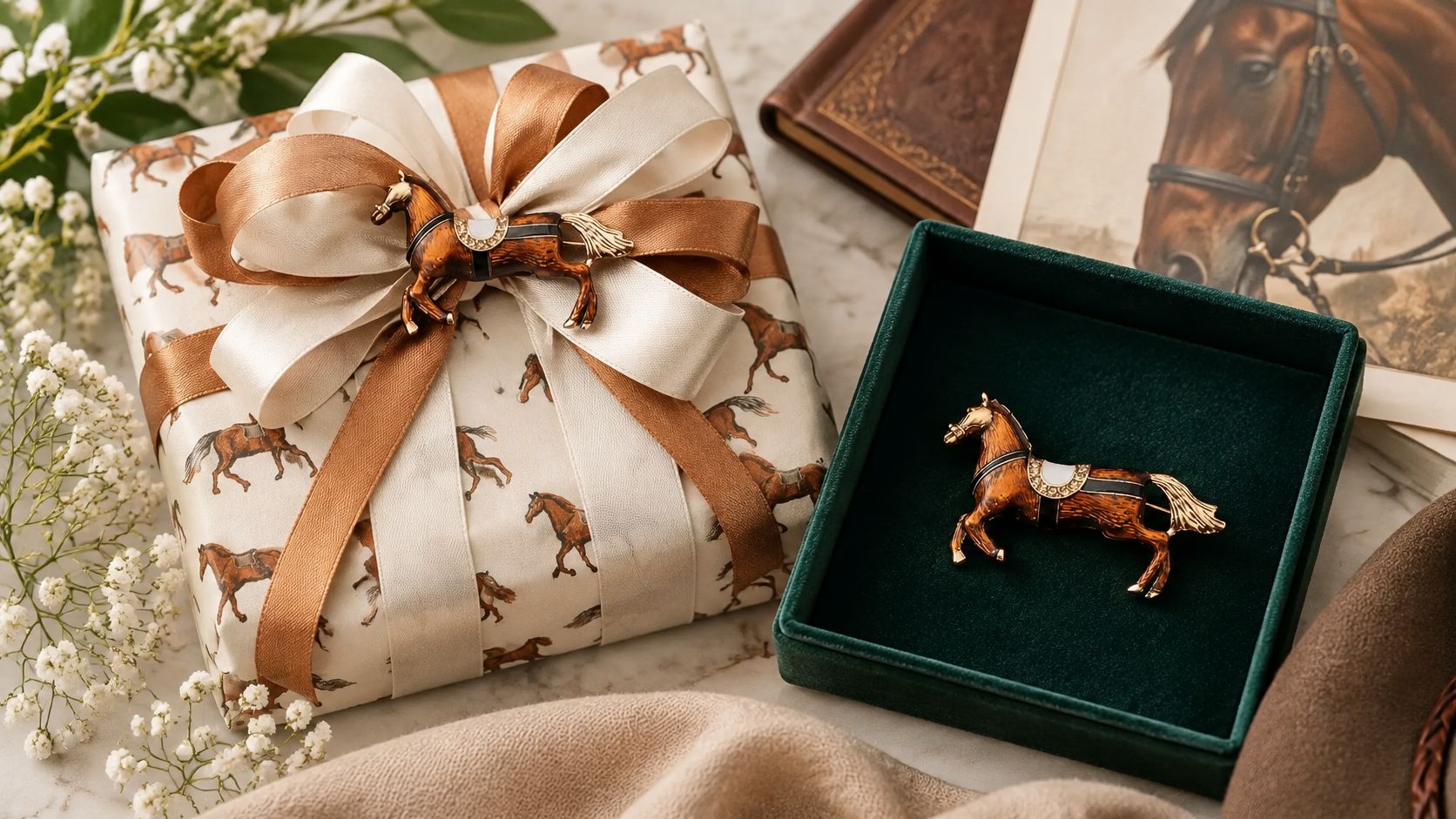
For collecting, prioritize condition and paperwork
Work through the mark, signature, and date checks from the hallmark section first. Then assemble what supports them: provenance, dimensions, total weight, and photographs that tie the paperwork to the actual brooch.
Record total weight as total weight. Stones, enamel, backing materials, and working hardware all contribute to the measurement, so it can never substitute for silver weight.
For an heirloom, prioritize a secure pin, sound joints, and intact surfaces over cosmetic brightness. A repairable fastening may be acceptable, but have the repair assessed before assigning sentimental value to a piece that can't safely be worn.
For resale, assemble evidence rather than adjectives:
- Reverse photograph: Show the marks and complete fastening clearly.
- Condition record: Identify repairs, bent parts, worn plating, and missing decorative material.
- Material disclosure: Keep the seller's exact wording and separate confirmed facts from attribution.
An uncertain age claim calls for a jeweler's valuation before you set a price.
Professional assessment is also worthwhile when the maker is collectible or the seller claims sterling throughout the metal assembly. Photographs and catalog images show design and proportions; the metal's identity comes from the marks themselves.
Gift Wrapping and Presentation Ideas
Follow the care and wearing routine from the care section before packing, then choose packaging that protects the finish during the gift itself. Cushion the brooch in acid-free tissue inside a jewelry-safe box or pouch, and confirm the materials are rated for silver storage. Packaging described as "acid-free" may still permit tarnish, so read the full specification for the tissue and the pouch.
Keep wool or felt of unknown composition away from direct contact with the metal. Fasten the brooch to a removable card or insert before it goes into the pouch, keeping the pin on the insert and the pouch intact. Leave space around projecting legs, ears, and the pin mechanism so nothing presses against them in transit.
Match the presentation to the recipient
For a rider or horse owner, include a card explaining the motif and the documented maker or mark. A connection to a favorite horse's movement, character, or coloring makes the choice personal without inventing symbolism for the maker.
For a memorial gift, use a plain box and a handwritten message. Keep the care information on a separate card so practical instructions don't interrupt the sentiment.
For a partner or friend, display the brooch on a ribbon around the box, then move it into its protective packaging for storage. Choose a ribbon that won't pull against the catch. Our horse gift wrap ideas offer more ways to carry the equestrian theme through the presentation.
Put useful information inside
Include a small documentation card with:
- Recorded mark: Copy the listing's mark accurately, without upgrading an uncertain claim.
- Material details: State the metal, plating, enamel, and other disclosed finishes.
If the item has enamel and gold-colored accents rather than verified silver, say so on the card. Accurate labeling is part of a thoughtful gift, and it gives the recipient a clear record if they later resell or insure the piece.
You could write: I chose this horse because its forward movement reminded me of your courage and everything you're working toward. Make the meaning yours, and keep the material description factual.
Pick a Silver Horse Brooch You Can Verify
Buy a silver horse brooch only when the material claim is supported. A beautiful front doesn't compensate for an unreadable reverse or an evasive answer about plating. If your priority is a horse-themed accessory, you have more options, but describe that purchase accurately.
Run the three-part check from the hallmark section on every candidate. If a seller shows only the front of the brooch, request a photo of the reverse before you treat the piece as sterling, and treat silence on plating as an answer in itself.
Apply the checks to a real listing
The Bridle Up Horse Brooch is finished in warm chestnut enamel with golden accents and a sparkling saddle detail. The listing suggests wearing it on a blazer, dress, scarf, cowboy hat, backpack, or handbag, or attaching it to a ribbon for gift presentation.
Examine the listing as a contrast case rather than assuming every equestrian brooch is silver.
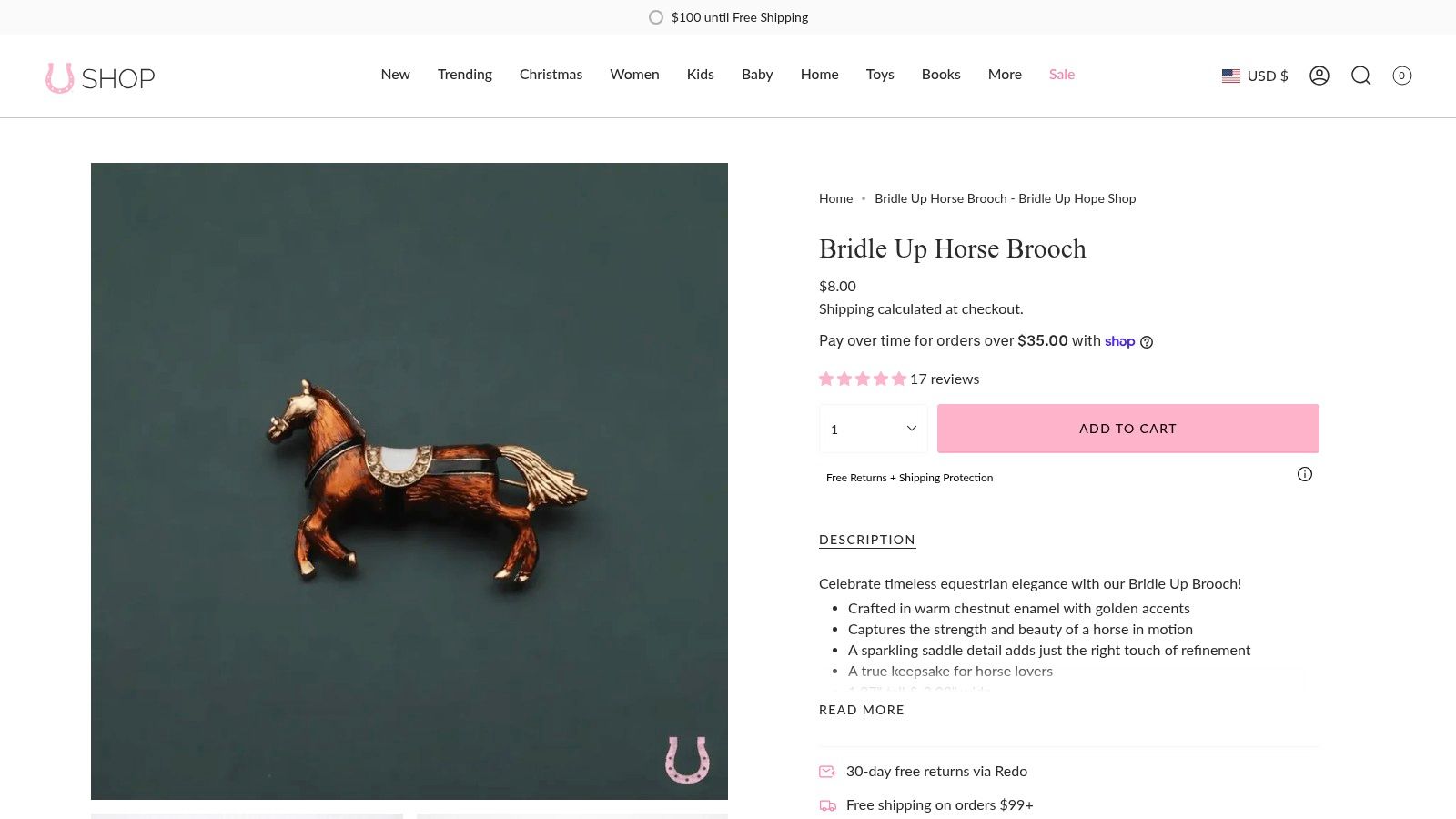
Its stated decorative finish is enamel with golden accents, not verified silver. The description doesn't establish a sterling body, identify a silver quality mark, or confirm sterling hardware. It belongs in your comparison as an equestrian fashion accessory rather than a verified silver horse brooch.
The design is fine. The listing doesn't support a silver claim.
A buyer after the motif can take it on those terms. A buyer after sterling should keep looking.
Keep the charitable claim equally precise
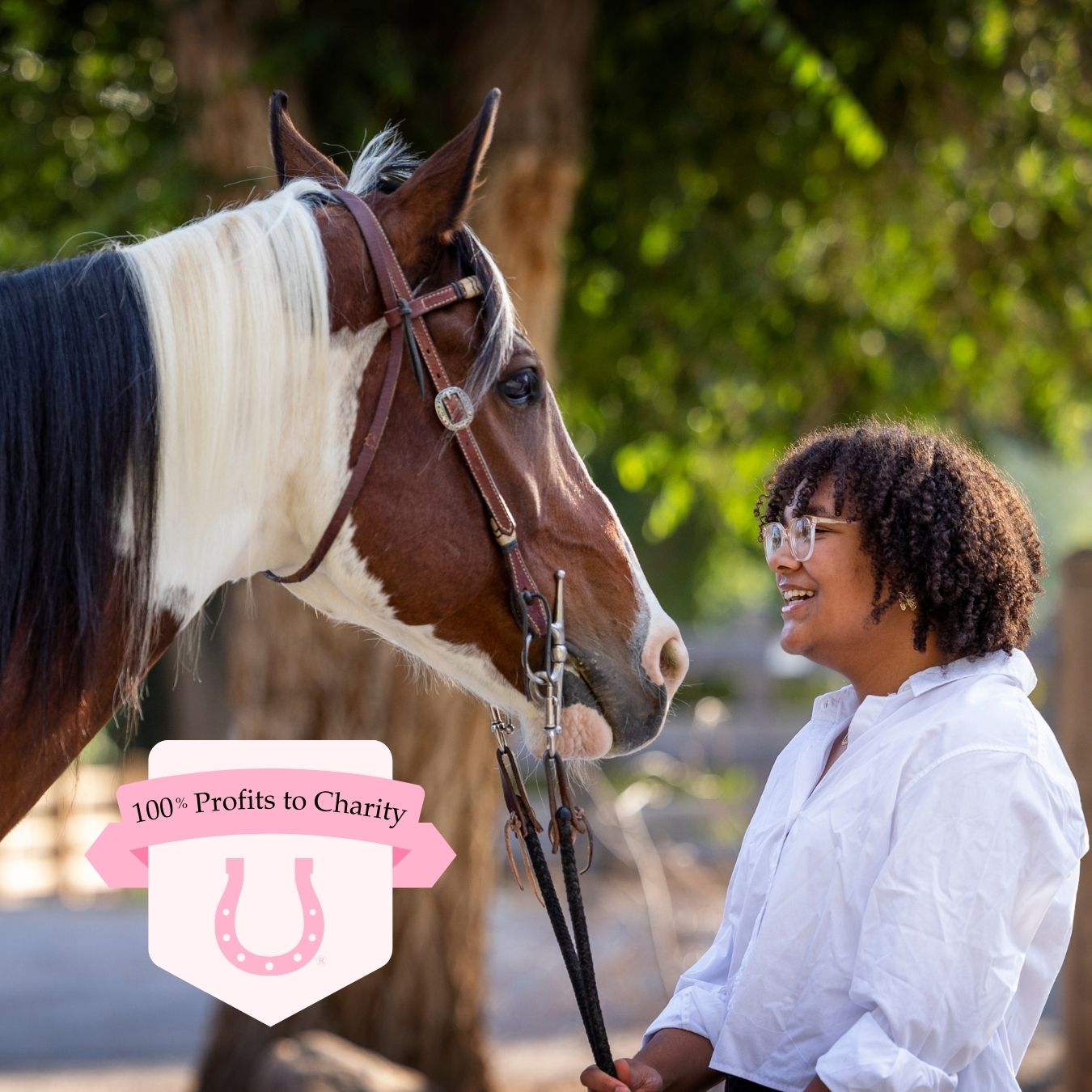
Our charitable model donates 100 percent of annual net profits to the Bridle Up Hope foundation. Net profits means what remains after business costs, not the entire sale price of an individual purchase.
Consumer Reports' guidance on donation-with-purchase campaigns emphasizes clear disclosure of the donation terms. A charitable purpose shouldn't replace an accurate product description, and an attractive accessory shouldn't require an inflated material claim.
Decide which purchase you are really making. If sterling is the point, the evidence decides for you. If the motif and the cause are the point, an accurately described accessory is already the right buy, and the donation behind it stays honest because the listing does.
Bridle Up Hope Shop offers horse-themed jewelry, accessories, and gifts in English and Western styles. Visit Bridle Up Hope Shop to compare equestrian designs, and check each item's stated materials before choosing a brooch for yourself or someone who loves horses.
Leave a comment