


You're standing by the tack room, brushing dust from your boots, when a small silver horseshoe catches your eye on a friend's wrist. It isn't loud or overly themed. It looks polished, personal, and connected to the life you already love. A gift-giver may have the same reaction while scrolling for something more meaningful than another generic charm, or a barn friend may be wondering whether a horseshoe bracelet will work with the watch and bracelets she already wears.
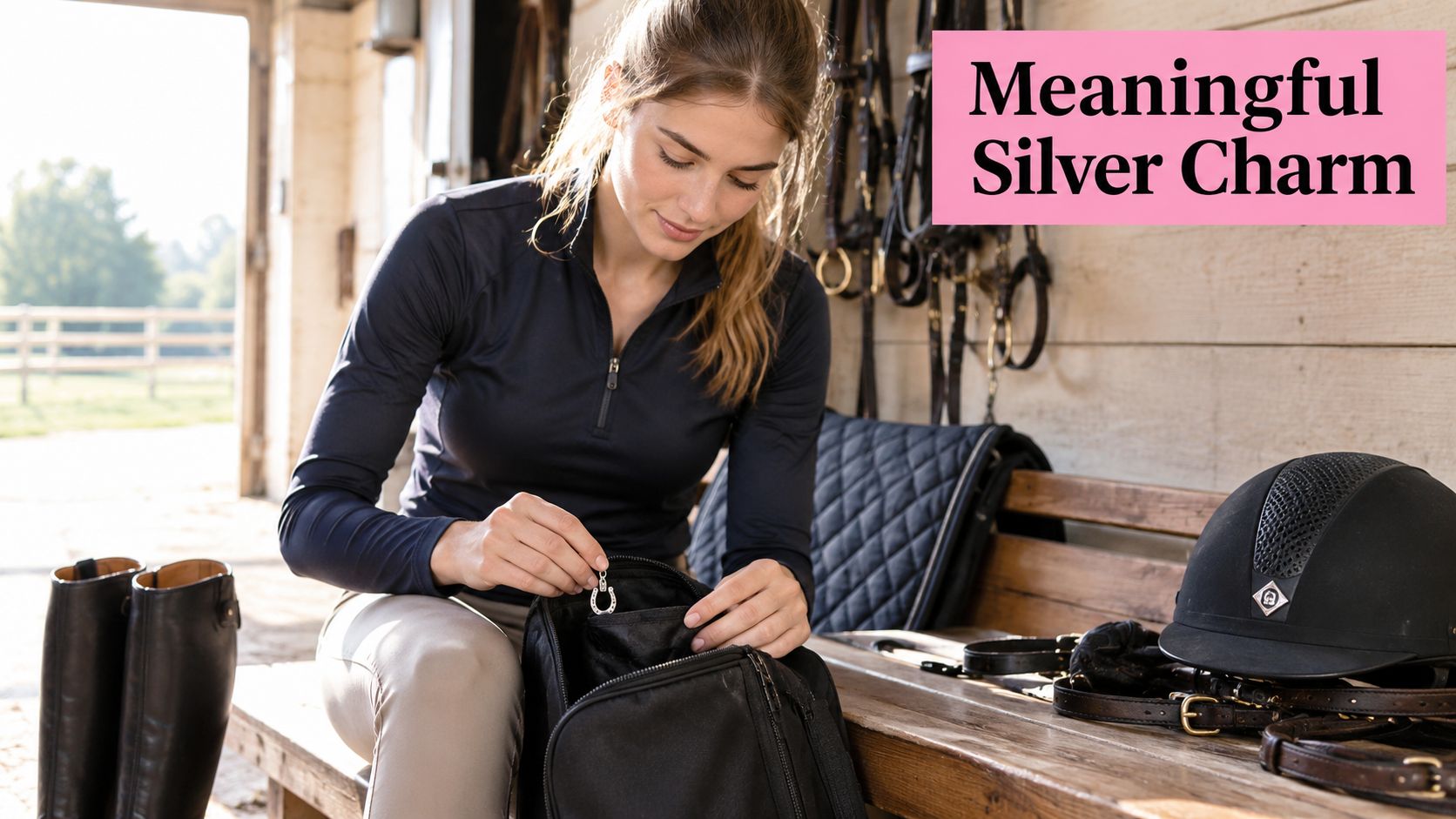
A horseshoe bracelet in silver sits in a useful middle ground. It carries good-luck symbolism, nods to equestrian heritage, and fits the renewed interest in cool-toned metal without looking like a souvenir. The practical questions matter just as much as the sentiment: Is the piece sterling silver or merely silver-colored? Will it fit comfortably? Can you stack it without creating visual clutter? How much care will it need?
This guide gives you a direct buying framework for material, construction, sizing, styling, gifting, and maintenance. My recommendation is simple: choose sterling silver when you want a bracelet you'll wear repeatedly, prioritize a secure and adjustable fit, and let the horseshoe remain the focal point rather than burying it in a crowded stack. For a gift, choose a piece whose symbolism matches the recipient, then consider whether the purchase can support a cause she already cares about.
Table of Contents
- Why a Silver Horseshoe Bracelet Catches Your Eye
- What Makes a Bracelet a True Silver Horseshoe Bracelet
- Sterling, Plated, or Mixed Metal
- Sizing and Fit for Real Wrists
- The Symbol and Its Place in 2026 Silver Trends
- Styling and Gifting with a Mission
- Care and Cleaning That Actually Work
- Your Buyer's Checklist and Final Thought
Why a Silver Horseshoe Bracelet Catches Your Eye
The horseshoe works because it tells a story before the wearer says a word. Horseshoes began as practical protection for horses' hooves against wear and tear. Over time, people across Europe and the United States connected the shape with protection and good fortune, turning a piece of working tack into a portable amulet. The horseshoe's history as a protective symbol explains why the motif still feels relevant on a bracelet rather than merely decorative.
That meaning gives the piece emotional range. For a rider, it can represent the bond between horse and rider. For someone starting a new job, moving home, or recovering from a difficult season, it can stand for protection and a fortunate beginning. For a friend who doesn't ride, the design still reads as a clean crescent-shaped charm with a familiar good-luck association.
The real questions shoppers ask
Most buyers aren't struggling to identify a horseshoe. They're trying to decide whether the bracelet will look grown-up, wearable, and worth keeping. My answers are clear:
- For daily wear: Choose a slim chain or restrained bangle with a smooth finish.
- For a statement look: Choose a wider cuff or a larger horseshoe, but keep the rest of the wrist quiet.
- For gifting: Choose an adjustable style unless you know the recipient's wrist measurement.
- For a lasting purchase: Look for sterling silver and inspect the clasp, links, and finish rather than judging the charm alone.
Silver also makes the motif feel less literal than yellow gold can. It looks natural with denim, riding boots, navy, black, white shirts, and the cool neutrals common in equestrian wardrobes. That versatility is why I'd choose silver over a novelty finish for someone who wants a talisman she can wear beyond the barn.
My buying rule: If the horseshoe looks like an afterthought attached to a flimsy chain, skip it. The symbol deserves construction that makes it feel intentional.
What Makes a Bracelet a True Silver Horseshoe Bracelet
Start with the product description, not the photograph. A polished image can make plated metal look substantial, while a vague label such as “silver tone” tells you almost nothing about the bracelet's composition. A genuine silver horseshoe bracelet should identify the metal clearly and explain how the bracelet is assembled.
Read the material language
Sterling silver is the practical standard for most wearable silver jewelry. Product pages may identify it as sterling silver or use a fineness mark such as 925, but you should still check the complete description. Silver-plated jewelry has a thin silver surface over a different base metal. Silver-tone usually describes color rather than silver content, so treat it as a finish unless the seller provides more detail.
Fine silver is a separate material with a higher silver content, but it can be softer and isn't the automatic choice for a bracelet that will move against sleeves, bags, reins, and other jewelry. For most shoppers, clearly identified sterling silver offers the sensible balance of appearance, wearability, and maintenance.
Inspect the construction
A bracelet can have a beautiful horseshoe charm and still fail as a bracelet. Look for:
- A secure clasp: Lobster clasps are practical on chain bracelets, while a well-made hinge or open cuff should close cleanly without feeling loose.
- Sound connections: Links and jump rings should sit flush. Gaps around the charm invite snagging and make the piece feel unfinished.
- A balanced charm: The horseshoe should sit flat rather than tipping constantly toward the side of the wrist.
- A deliberate finish: High polish reflects light, brushed silver looks quieter, and mixed finishes can make a simple shape more interesting.
- Comfortable edges: Avoid sharp interior corners on cuffs and rough edges around drilled settings.
The open end of the horseshoe also deserves attention. Some traditions interpret it as catching luck, while others see it as allowing luck to pour out. Choose the orientation that feels meaningful to you, but don't let the debate distract from fit and finish. A bracelet you can't comfortably wear won't carry much symbolism anywhere.
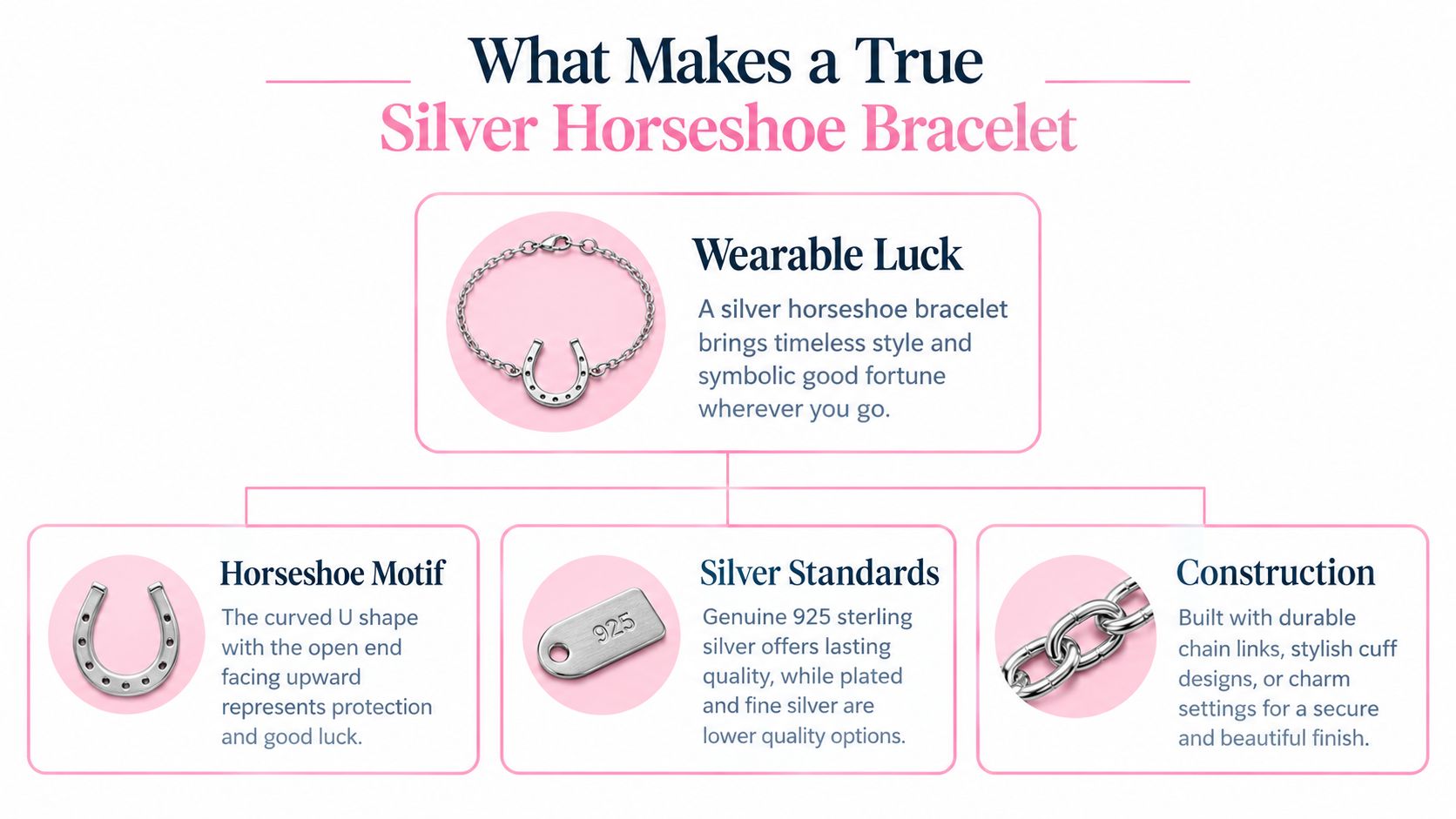
My strongest recommendation is to buy the construction you'll actually use. An adjustable chain is forgiving for gifting, a cuff makes a confident style statement, and a charm bracelet creates room for personal additions. None is inherently superior. The right choice depends on whether you want the horseshoe to whisper, anchor a stack, or command the wrist.
Sterling, Plated, or Mixed Metal
The material choice changes how the bracelet behaves over time, how often you'll clean it, and whether the finish still looks intentional after regular use. Don't choose by color alone. Choose according to how often the bracelet will be worn and how much maintenance you're willing to accept.
| Material | Tarnish Risk | Typical Price | Best For |
|---|---|---|---|
| Sterling silver | Can tarnish with exposure to air, chemicals, sweat, and moisture | Mid-range to premium | Frequent wear, meaningful gifts, and buyers who want genuine silver |
| Silver-plated metal | The surface can dull or wear through with repeated friction | Entry-level to mid-range | Occasional wear, trend-led styling, and tight budgets |
| Mixed metal | Varies by the metals and finishes used | Broad range | Layering, contrast, and shoppers who want a combination of textures or tones |
Sterling silver
Sterling is my default recommendation for a horseshoe bracelet you'll wear often. It has the visual depth of real silver and can be cleaned when it dulls. It still needs care, so don't confuse genuine metal with maintenance-free metal. Sterling is especially sensible for a symbolic gift because the recipient can keep wearing and refreshing it rather than treating it as a one-season accessory.
For a piece you'll wear beside a watch or other bracelets, inspect the surface finish and edges. Repeated rubbing can make delicate plating look tired quickly, while sterling generally gives you more room for gentle cleaning and long-term use.
Silver-plated pieces
Plated jewelry can be the right choice for someone who likes changing styles frequently or wants a low-commitment way to test the horseshoe motif. I'd use it for occasional outfits, not as an everyday barn bracelet. Sweat, friction, lotions, and moisture can all make a thin surface finish harder to preserve.
A low price doesn't make plated jewelry a bad purchase. It becomes a bad purchase when the product page implies solid or sterling silver without saying so clearly. If the description only says “silver color,” assume you're buying the appearance, not the material.
Mixed metal
Mixed-metal bracelets can look refined when the contrast is deliberate. Silver with a warm accent works especially well when your watch, belt hardware, or other jewelry already connects the two tones. It's also a useful option if you want the horseshoe to feel more like a fashion piece than a traditional talisman.
For a closer look at how sterling silver can work in an equestrian bracelet, see this guide to the sterling silver horsebit bracelet. The design language is different from a horseshoe, but the same material questions apply: identify the metal, assess the construction, and decide whether the piece suits regular wear.
Sizing and Fit for Real Wrists
A horseshoe bracelet can look charming in a product photo and awkward on your wrist if the proportions are wrong. Measure before you buy, especially when the bracelet has a fixed bangle shape or a large charm that needs to sit flat.
Start with the wrist, then choose the style
Wrap a soft measuring tape around the wrist just past the wrist bone. If you don't have a tape, use a strip of paper, mark the overlap, and measure it against a ruler. Add 1 to 2 cm to the circumference when you want comfortable movement, as shown in the sizing guide above. A snug fit is appropriate for a delicate chain, while a bangle needs enough room to move over the hand without feeling loose.
Choose the structure based on your habits:
- Adjustable chain: The safest choice for gifting and the easiest style for everyday wear.
- Bangle: Clean and polished, but less forgiving if you're between sizes.
- Open cuff: Visually stronger and easy to put on, though it can catch on sleeves if the edges are poorly finished.
- Charm bracelet: Best when you want to add personal symbols over time, but make sure the horseshoe doesn't swing into your hand while you work.
A smaller wrist usually benefits from a horseshoe with enough presence to remain visible, not a charm so tiny that it disappears beside a watch. A wider wrist can carry a larger horseshoe or chunkier cuff without looking overwhelmed. The goal is proportion, not concealment.
Fashion coverage describes silver's projected 2026 direction as especially strong in oversized, sculptural, and cuff-style jewelry, with chunky bracelets receiving particular attention. The 2026 silver jewelry trend report makes proportion even more important. A large cuff can look current, but it should be balanced with a simple outfit and enough space around the wrist.
Fit check: Put the bracelet on, bend your wrist, and slide your hand into a jacket or riding glove. If the horseshoe digs in, snags, or flips repeatedly, the style isn't right for daily wear.
For a watch-heavy wardrobe, leave visual room between the watch case and the horseshoe. A leather strap can soften a silver stack, and this practical leather watch bands guide is useful if you're deciding how to balance polished metal with a more grounded strap. Keep the bracelet on the opposite wrist when the watch already has a large case, or use one slim silver chain beside it instead of adding several rigid pieces.
Here's the verdict on the common style worries. A small, clean horseshoe doesn't look juvenile when the chain and finish are refined. A bold cuff won't look too western if the rest of the outfit is simple. The piece looks trendy rather than timeless only when the charm, chain, and surrounding stack all compete at once.
The Symbol and Its Place in 2026 Silver Trends
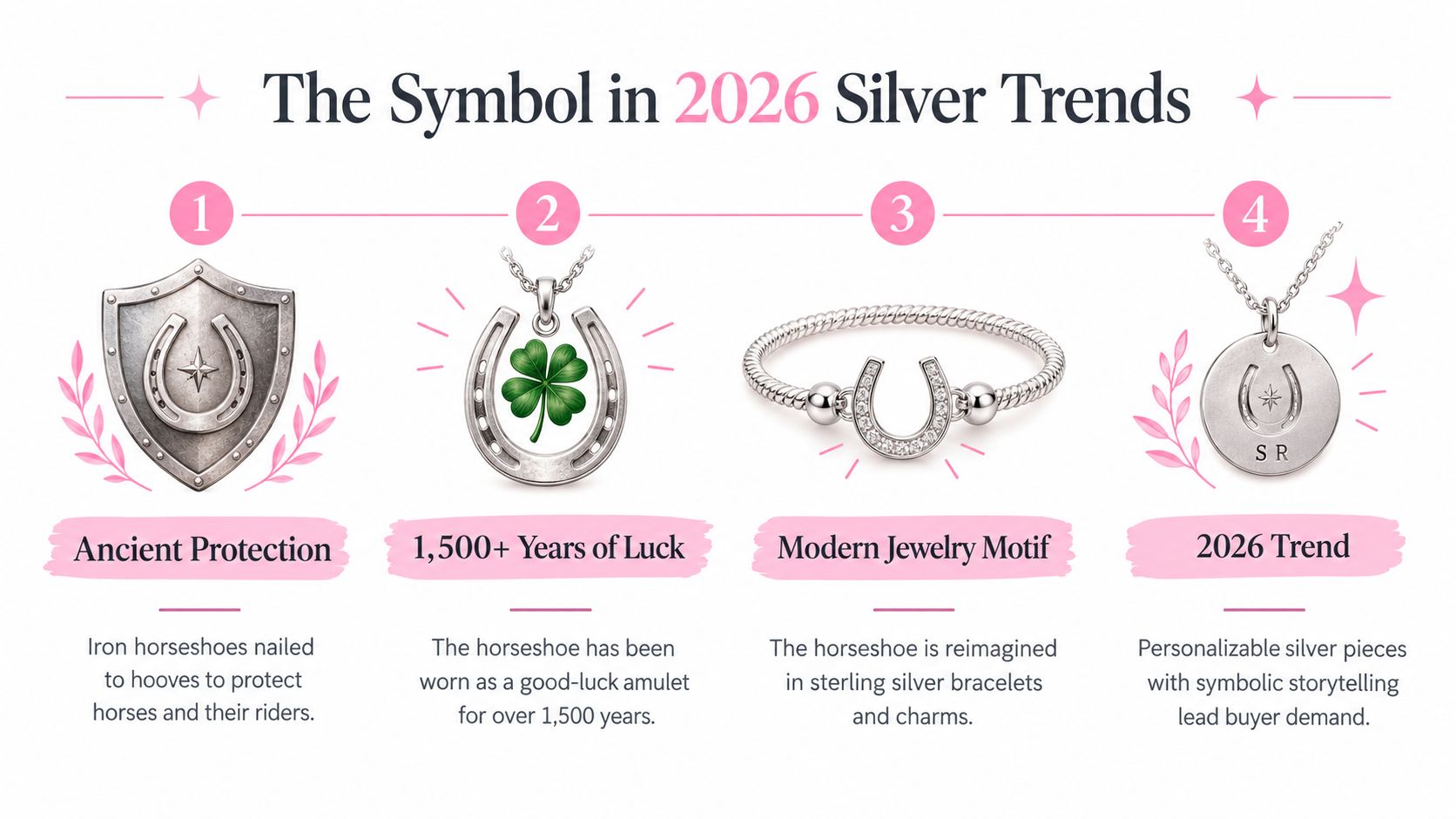
The horseshoe's appeal comes from its ability to carry several meanings without becoming obscure. It began as functional protection for the hoof, then became associated with luck and protection, and later entered fashionable equestrian dress. That progression gives a silver bracelet more depth than a shape chosen only because it photographs well.
A historical jewelry account places the wider luck tradition at more than 1,500 years, while describing silver horseshoes worn by equestriennes on riding habits during the 1880s and the popularity of sporting jewelry by the 1890s. The history of the horseshoe bracelet motif shows how the design moved from folk belief into recognizable fashion without losing its connection to horses.
Why the heritage still feels wearable
Victorian sporting jewelry made the horse-connected motif legible beyond the stable. Today, the same design can suit a rider, a horse show supporter, or someone who wants a reminder of resilience and good fortune. That flexibility is valuable when you're giving the bracelet to someone whose relationship with horses may be emotional rather than strictly practical.
The horseshoe also gives a gift-giver an easy message without forcing a lengthy explanation:
- Protection: A wish for safety during a new chapter.
- Luck: A small reminder to carry into an exam, competition, move, or job change.
- Resilience: A nod to the strength required in riding and in life.
- Connection: A symbol of the relationship between horse and rider.
Silver's current fashion position strengthens that story. Coverage of the 2026 jewelry outlook describes silver moving into sculptural, larger-scale, and cuff-led designs, while mixed-metal styling gives cool-toned jewelry more room in everyday wardrobes. The horseshoe therefore sits at the intersection of heritage symbolism and current proportion. You can buy a delicate token, or you can choose a sculptural cuff that feels unmistakably modern.
I'd avoid treating the trend as a reason to buy an oversized piece that doesn't suit the recipient. Trends should influence the silhouette, not erase the wearer's habits. A small chain can be the better choice for someone who lives in knitwear and riding layers, while a substantial cuff belongs with someone who already wears strong watches, rings, or structured accessories.
Styling and Gifting with a Mission
The easiest way to style a silver horseshoe bracelet is to give it a job. Let it be the quiet personal detail with a white shirt and jeans, the polished accent beside a riding watch, or the symbolic center of a restrained stack. Don't add several horse motifs at once unless you want a deliberately themed look.
Build the wrist around one anchor
For everyday wear, pair a slim horseshoe chain with one smooth bangle or a simple watch. The chain supplies movement while the bangle adds structure. If you choose a cuff, wear it alone or with one narrow chain on the other side of the wrist. A chunky horseshoe already has enough visual weight to carry the outfit.
At the barn, keep the bracelet away from activities where it can snag, catch, or become coated with dust and sweat. Wear it for arriving, socializing, or after the ride rather than treating fine jewelry as equipment. Date-night styling can be as easy as a silver horseshoe bracelet with small silver earrings and a plain neckline. The motif looks more polished when the rest of the jewelry stays edited.
For a broader perspective on combining leather, metal, and personalization, this custom leather bracelet guide offers useful inspiration. A leather accent can make a silver horseshoe feel more relaxed, especially with boots, denim, or a Western-influenced outfit.
Match the gift to the person
A delicate adjustable bracelet suits a new rider, a graduate, or a friend who prefers understated jewelry. A charm bracelet works for someone who enjoys collecting meaningful pieces. A cuff makes sense for the confident dresser who already wears sculptural accessories and won't be bothered by a more noticeable silhouette.
You can also build a coherent equestrian gift set without repeating the same shape. Pair the bracelet with a horse-inspired ring, or use a silver horseshoe necklace when you want the symbolism closer to the heart. A snaffle bit necklace adds a more direct tack reference, while a horse Claddagh ring can bring in loyalty and connection without making the set look copied and pasted.
The charitable angle matters when the recipient values purposeful shopping. The shop's model directs its annual net profits to a foundation supporting girls and women through horses and habits. That gives the gift a second layer of meaning, but present it accurately: the bracelet is still a personal accessory, and the charitable connection strengthens the purchase rather than replacing quality, fit, or design.
A customer rating of 4.9 out of 5 across 3,546 reviews is listed by the shop itself, but the more important test remains whether the specific bracelet meets your material and sizing requirements. Reviews can help you spot clasp, scale, and packaging details. They can't substitute for reading the product description carefully.
Care and Cleaning That Actually Work
Sterling silver tarnishes because it reacts with sulfur-containing compounds and can also be affected by salt air, chlorine, and bleach. Expert care guidance recommends keeping silver dry, avoiding household chemicals and rubber contact, and cleaning with silver polish or a soft cloth before rinsing and drying thoroughly. This sterling silver care guidance is the sensible baseline for a horseshoe bracelet.
Tight curves and small decorative edges collect dullness faster than broad, flat surfaces. That's why a horseshoe can look cloudy in its inner curve even when the outer surface still shines.
Use a short routine
- Remove it before exposure. Take the bracelet off before swimming, bathing, cleaning, applying lotion, or handling bleach and chlorine.
- Dry it after wear. Wipe away moisture with a soft, lint-free cloth, especially around the clasp and inside the horseshoe.
- Polish gently. Use a silver polish or soft polishing cloth with light pressure. Don't scrub aggressively into the curve or around a delicate setting.
- Rinse when the product requires it. Follow the polish instructions, then rinse away residue and dry the bracelet completely.
- Store it separately. Keep it in a dry jewelry pouch or box, away from rubber bands, damp counters, and loose pieces that can scratch the surface.
Don't use abrasive household cleaners, rough paper towels, or a stiff brush on a fine bracelet. If the horseshoe has stones, a fragile finish, loose links, or deep discoloration around a setting, stop polishing and ask a professional jeweler to inspect it. Home care should restore surface brightness, not force a damaged piece back into service.
For a coordinated horse-themed jewelry gift, the shop's sterling silver horseshoe earrings provide another way to carry the motif without putting every piece on the same wrist.
Your Buyer's Checklist and Final Thought
Before buying, check five things:
- Material: Choose clearly identified sterling silver when you want regular wear.
- Construction: Inspect the clasp, links, edges, finish, and how the horseshoe sits.
- Fit: Measure the wrist and allow room for comfortable movement.
- Proportion: Pick a delicate chain, stackable charm, or bold cuff according to the wearer's wardrobe.
- Care: Keep sterling silver dry, away from chemicals, and stored separately.
The horseshoe works because it's more than a trend. It connects practical horsemanship, long-standing luck symbolism, modern silver styling, and thoughtful gifting. Choose a bracelet that feels wearable first, then let its meaning make the purchase personal.
The Bridle Up Hope Shop offers equestrian jewelry and gifts, including horseshoe-themed bracelets, necklaces, rings, and goods for riders and horse lovers. Its annual net profits are donated in full to the Bridle Up Hope foundation, so choose the silver horseshoe piece that fits your recipient, then make the purchase part of a gift that gives back.
Leave a comment