


You're choosing a gift for someone who can spot a horse at a distance, or you're standing in front of the mirror wondering whether a tiny sparkling U-shape feels like your style. Diamond horseshoe earrings create that lovely pause because they're more personal than ordinary studs, yet easier to wear than many statement pieces. The shape can suggest luck, protection, a love of horses, or all three at once.
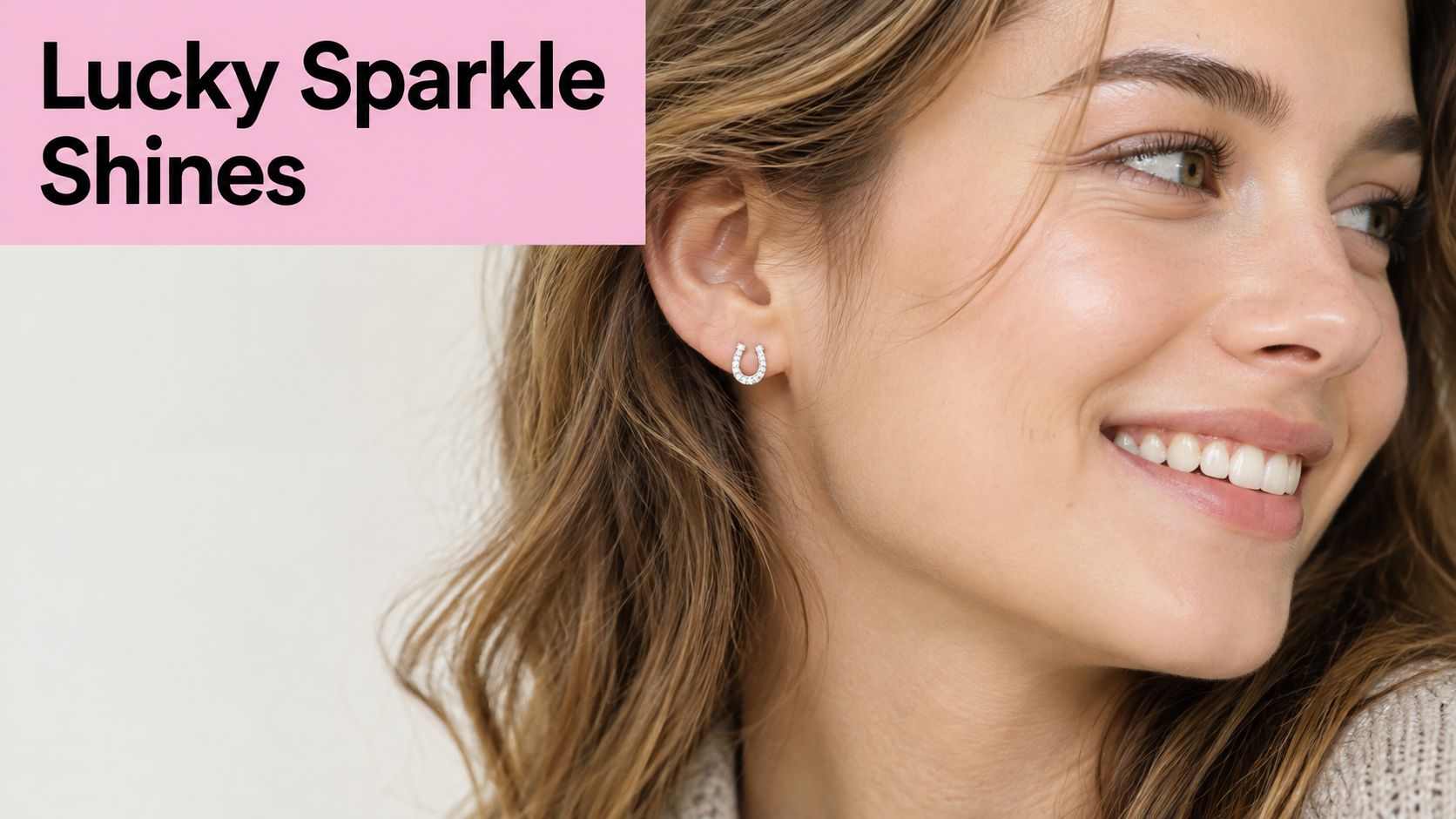
This guide separates the emotional meaning from the practical details. You'll learn how the motif developed, when a horseshoe reads as a lucky charm rather than a clear rider signature, which silhouettes suit daily wear, how settings and metals affect comfort, and how to think about value through cost per wear. The equestrian perspective matters here because a horseshoe can be both a beautiful symbol and a quiet way to carry horse culture into ordinary outfits.
Table of Contents
- Introduction to Diamond Horseshoe Earrings and Their Appeal
- What Makes the Horseshoe Shape So Meaningful
- Popular Styles and Settings You Will Love
- Real Diamonds Versus Sparkling Alternatives
- How to Evaluate Quality Value and Metals
- Finding Your Perfect Fit and Keeping Them Sparkling
- Styling Inspiration and Thoughtful Gift Giving
Introduction to Diamond Horseshoe Earrings and Their Appeal
You are dressing for work, then heading to the barn, and want one pair of earrings to make sense in both places. Diamond horseshoe earrings can do that. Their curved outline brings a quiet equestrian note, while the diamonds keep the look polished rather than costume-like.
A small horseshoe stud close to the lobe usually reads as a lucky charm. It can suit someone who enjoys the symbol without riding. A larger open horseshoe, especially with visible nail details, points more clearly toward the stable, show ring, or Western style. The same motif can therefore carry personal meaning at different volumes.
For a rider, the silhouette may become a rider signature, much like a familiar boot or watch that identifies a favorite part of life without announcing it. Worn with a riding jacket or other equestrian jewelry, it speaks directly to that identity. With a simple blouse or workwear, the curve becomes a subtler token of encouragement, luck, or affection.
That range makes the earrings useful beyond special occasions. A light pair can travel from a barn morning to a workday and then to dinner. Cost per wear matters here: a secure, comfortable design worn often may offer more value than a larger pair reserved for rare events.
Photographs cannot show every practical detail. Delicate pavé settings can return plenty of light but may need gentler handling. A bezel setting surrounds the stones, like a slim protective rim, and gives the earring a smooth profile. Metal choice also affects daily comfort. Platinum, titanium, or nickel-free gold may suit sensitive ears better than alloys that cause reactions. General jewelry-allergy guidance recommends checking the metal content and observing how your skin responds.
The right pair balances shape, symbolism, sparkle, security, metal, fit, and long-term usefulness. Size and price tell only part of the story. Choose the construction that supports your routine and the meaning you will still enjoy wearing.
What Makes the Horseshoe Shape So Meaningful
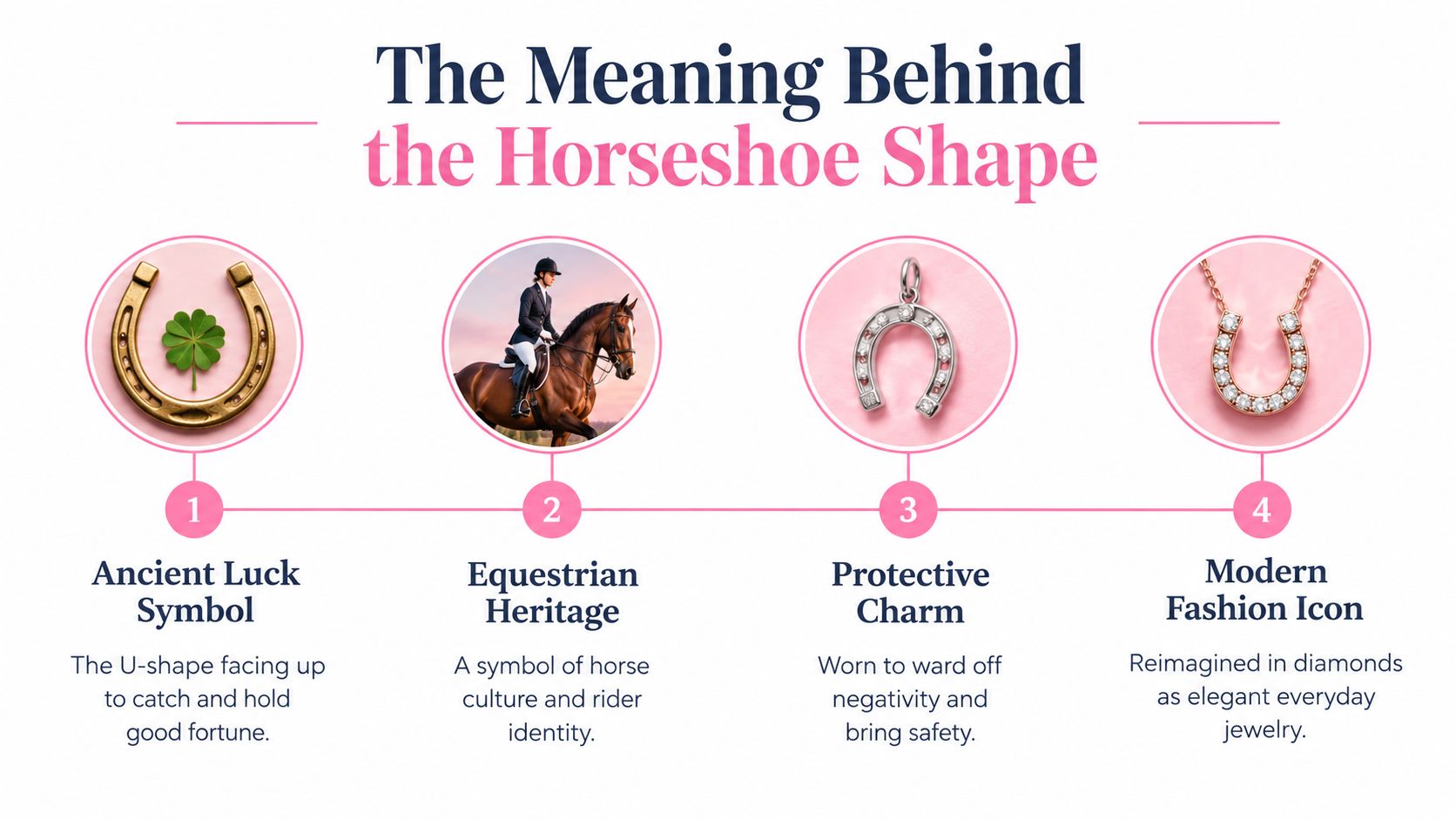
The horseshoe carries several meanings at once, and understanding them starts with the familiar U-shape.
From protective object to jewelry motif
Horseshoes had already appeared as lucky and protective motifs in jewelry by the 9th century AD, while later medieval European use strengthened their association with protection from evil, according to the history of the horseshoe jewelry design. By the late 1470s, records from Bruges described finding a horseshoe as lucky, and miniature horseshoes were worn as good-luck badges in Holland around the same period.
The Victorian era moved the symbol further into fashion. One jewelry history account notes that horseshoes were popular by the mid-1870s, silver horseshoe ornaments were widely worn by the 1880s, and sporting jewelry became broadly popular in the 1890s. Diamond-set earrings belong to that longer lineage. They transform a practical piece of horse equipment into a polished object that can sit close to the face.
Orientation adds another layer. Many people interpret an upward-facing horseshoe as a vessel that catches and holds good fortune. Others prefer the downward-facing version because it suggests luck flowing outward or being shared. Jewelry design doesn't impose one universal meaning, so the most important question is which orientation feels natural to you.
Lucky charm or rider signature
Look at the visual vocabulary around the horseshoe. A smooth, minimal U-shape set with tiny diamonds usually reads as a lucky charm. It's subtle, symbolic, and easy to wear with almost anything. Add nail-inspired details, heavier metal, or a distinctly Western proportion, and the same motif begins to read as equestrian jewelry.
That distinction can guide gifting. Choose a simple diamond horseshoe for a friend starting a new chapter, a graduate, or someone who appreciates quiet symbolism. Choose a more defined horseshoe design for a rider, trainer, horse owner, or anyone whose identity is shaped by time in the saddle.
The royal record shows that this motif can carry family meaning as well as personal style. The Queen Mother was first photographed wearing a diamond horseshoe brooch in 1929. The jewel later passed through Queen Elizabeth II to Princess Charlotte, who wore it publicly in 2022, creating a documented chain of ownership spanning at least 93 years from the first known royal photograph to Charlotte's appearance, as People's account of Princess Charlotte's horseshoe brooch records.
That history helps explain why horseshoe earrings can feel more intimate than generic hoops. The curve is recognizable, but its message remains open. It can say, “Good luck,” “I know how much horses mean to you,” or “Carry this reminder with you.”
For a deeper look at how the same motif works in another format, explore this guide to horseshoe necklace meaning.
Popular Styles and Settings You Will Love
The shape gives horseshoe earrings their identity, but the silhouette determines how they behave on the ear. Think of the setting as a picture frame. A slim frame keeps attention on the artwork, while a heavier frame adds drama and protection. In earrings, the “artwork” is the curve and the light returned by the diamonds.
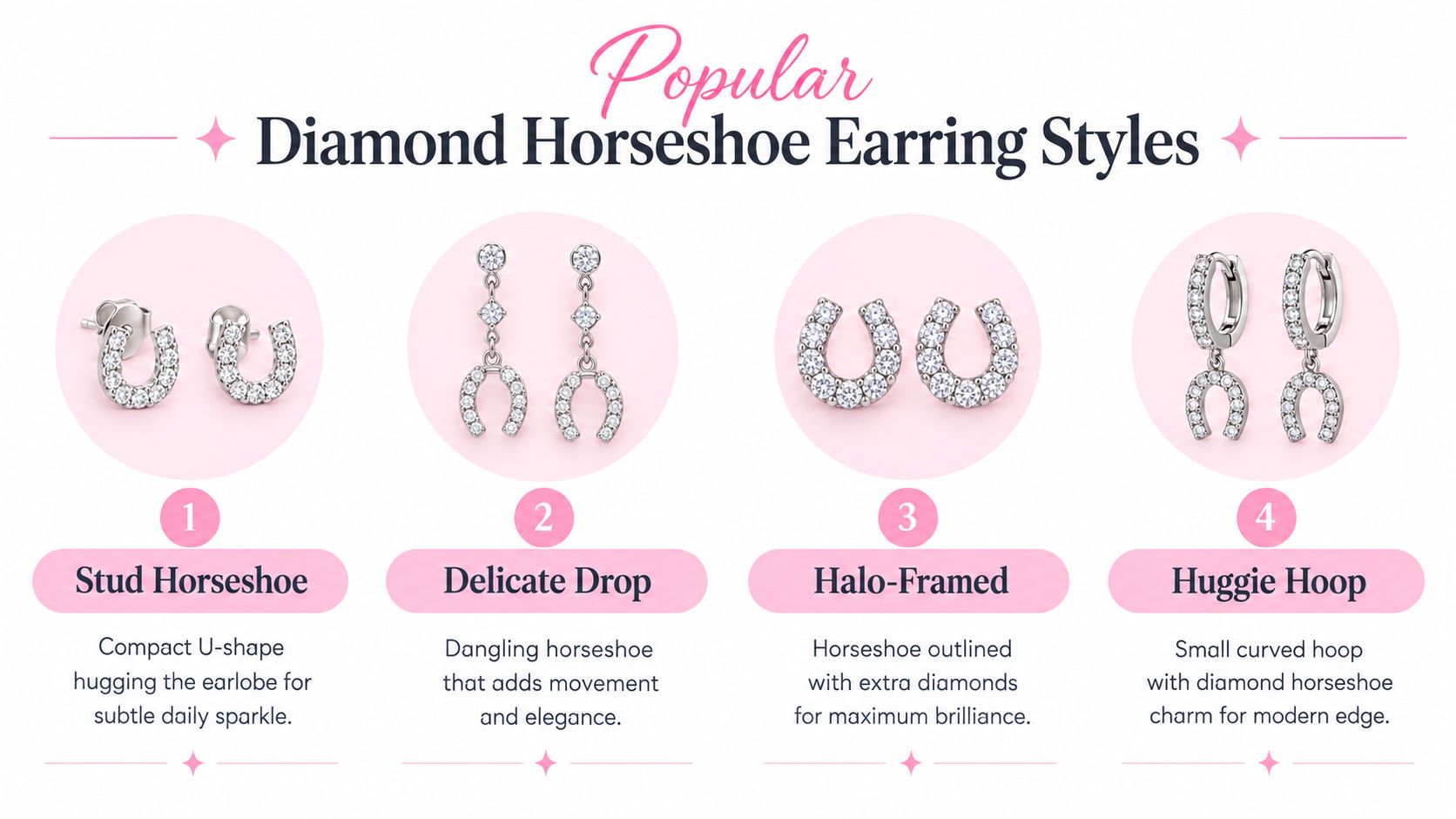
Four silhouettes, four moods
Stud horseshoes sit close to the lobe and usually offer the quietest interpretation. They suit short hair, tucked-back hair, office dressing, and active days because there's less movement to catch on clothing. On a smaller lobe, a compact U-shape can look especially balanced. On a larger lobe, a broader outline may provide more visual presence without becoming a statement earring.
Delicate drops suspend the horseshoe below the lobe. Their movement adds softness and makes the motif easier to notice, which works well with open necklines, evening clothes, or long hair worn back. Drops can also lengthen the appearance of the face, so they're appealing when you want vertical movement rather than a shape that sits entirely across the lobe.
Halo-framed horseshoes place additional diamonds around the main outline. This creates more brilliance and a fuller look, but it can shift the design away from understated rider jewelry toward formal glamour. The extra outline may suit a celebration or a dressy gift, while a minimalist wearer might find it visually busy.
Huggie hoops use a small curved hoop with a horseshoe charm or horseshoe element. They feel modern and lightly sporty, especially in a mixed ear stack. Their close fit can be practical, but check the closure carefully. A hinge should close cleanly, and the hoop shouldn't pinch the lobe.
Design balance: If the horseshoe is already detailed, a simple hoop or plain second stud usually lets it breathe.
Face shape can help, but it shouldn't dictate the decision. Studs emphasize the lobe horizontally, drops add length, and huggies create a compact frame around the ear. Hair length matters too. A drop may disappear under loose curls, while a bright stud can remain visible through shorter layers.
If you're comparing motif-based jewelry more broadly, a guide to flower diamond rings can help you think about how repeated outlines and surrounding stones change the overall impression.
A short visual reference can make the differences easier to see:
Real Diamonds Versus Sparkling Alternatives
The phrase “real diamond” can confuse shoppers because several different materials may appear in the same product category. Natural diamonds are mined gemstones. Lab-grown diamonds have the same essential crystal composition as mined diamonds, but they're created in a laboratory. Moissanite and cubic zirconia are diamond alternatives, often called simulants, because they imitate the appearance rather than being diamond.
For horseshoe earrings, the best choice depends on what you want the jewelry to do. If the pair marks a family milestone and you hope it will become an heirloom, natural or lab-grown diamonds may feel appropriate. If you mainly want the horseshoe symbolism and bright everyday sparkle, moissanite or cubic zirconia can make the design more accessible.
| Option | Sparkle and Durability | Best For |
|---|---|---|
| Natural diamonds | Durable, classic diamond appearance, and suited to heirloom intentions | Family gifts, major milestones, and buyers who value mined diamond provenance |
| Lab-grown diamonds | Diamond material with a similar visual character to natural diamonds | Buyers who want diamond jewelry while considering an alternative production route |
| Moissanite | Bright sparkle with a distinct fire and strong everyday practicality | Shoppers who prioritize noticeable brilliance and design value |
| Cubic zirconia | Crisp initial sparkle with a more budget-focused position | Occasional wear, trend-led styles, or first symbolic jewelry |
Price should be discussed without reducing the decision to a bargain hunt. Two pairs can have similar outlines but differ greatly in stone material, total carat weight, metal, setting labor, and finishing. The lower-priced pair may be exactly right if you're buying a playful charm. The higher-priced pair may make more sense if you expect years of frequent wear and emotional significance.
For readers weighing laboratory-created stones specifically, this overview of the growing popularity of lab diamonds offers useful background for comparing production choices.
Value question: Don't ask only, “Which stone sparkles most?” Ask, “Which material supports the meaning, wear schedule, and budget I've chosen?”
Moissanite can have a lively, colorful flash that differs from diamond's familiar sparkle. Cubic zirconia can deliver an attractive look at a lower cost, though daily wear calls for more care and realistic expectations about long-term appearance. A thoughtful purchase matches the stone to the story rather than treating one option as automatically superior.
How to Evaluate Quality Value and Metals
A small horseshoe can require careful evaluation. Tiny diamonds, a curved frame, a hinge or post, and the metal must function as one piece. Begin with the 4Cs, then judge them against the stones' size and the design's purpose. Piercing-focused horseshoes often use melee diamonds, commonly understood as stones under 0.15 carat, with practical diameters around 1.5 to 3.5 millimeters, as described in this diamond horseshoe earring anatomy and fit guide.
Judge the stones as a group
With melee, individual clarity marks can be difficult to see without magnification. Cut still affects brightness. Poorly proportioned small stones may look flat, while a matched group can create a lively ribbon of light. Color becomes more noticeable when the setting exposes the stone's body color, especially in bright white metal.
Total carat weight shows how much diamond the pair contains, not how wide the horseshoe appears from the front. Compare the earrings' actual height and width, stone count, and layout. A carefully planned outline can look well covered with modest stones, much like a neatly spaced row of fence posts can define a field without using a large amount of material.
Inspect the frame and the metal
Prongs reveal more of each stone and can support stronger sparkle, but they should be even, secure, and free of sharp edges. Bezel settings surround the stone with metal, creating a smooth surface that protects edges and reduces snagging. Pavé settings can make the horseshoe look densely bright, so inspect the tiny stones, beads, and surrounding finish closely.
Metal evaluation should go beyond choosing a color. Look for the alloy disclosure, confirm whether nickel release is addressed when relevant, and inspect the closure where it meets the ear. Platinum, titanium meeting ASTM F136, or nickel-free 18K gold may suit sensitive ears, while clear metal information makes the purchase easier to assess. A hoop-like horseshoe can touch more skin than a simple post, so the back and hinge deserve the same attention as the front.
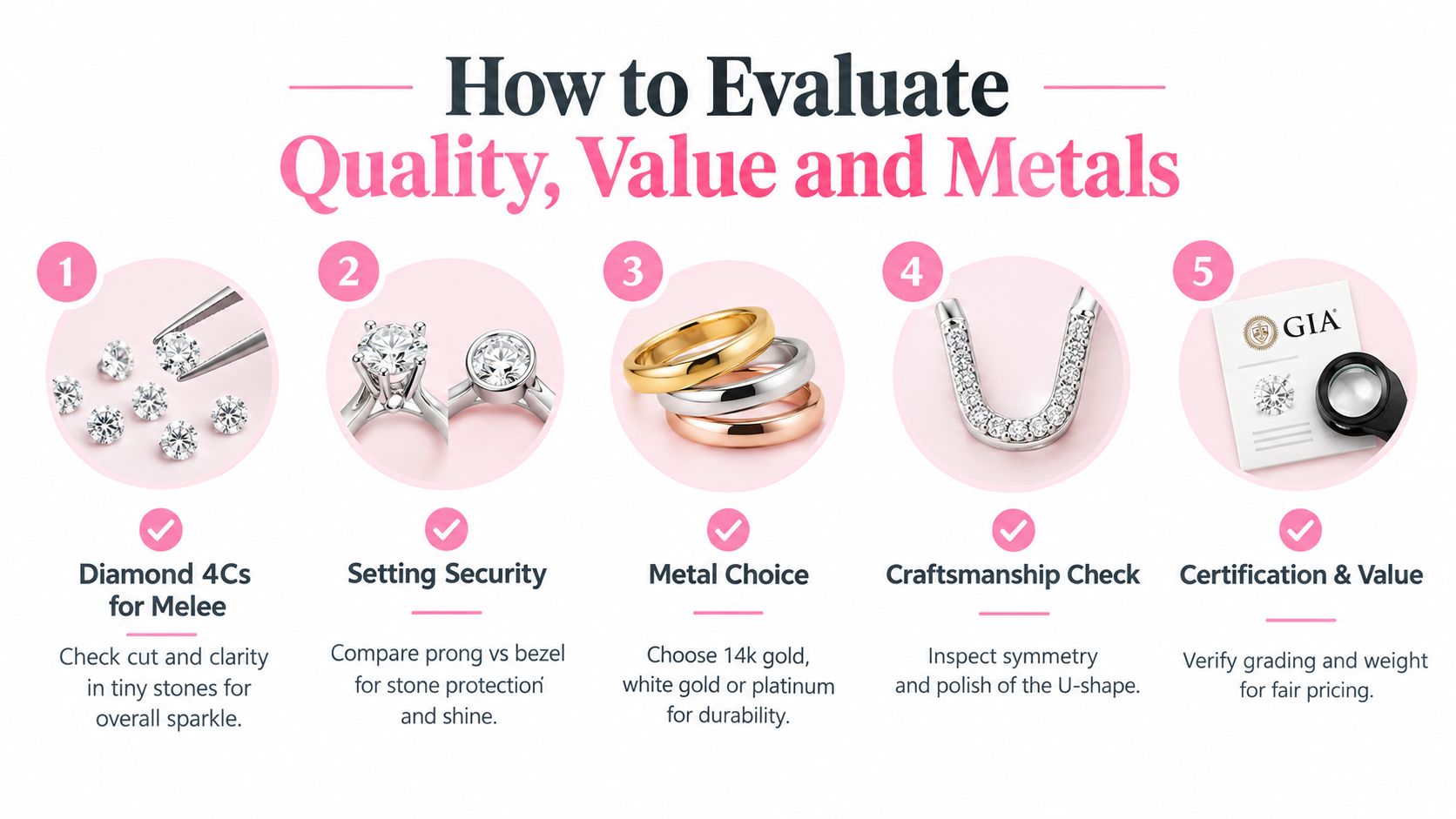
Use this checklist before paying:
- Confirm the metal: Look for a clear alloy description, not only a color label such as “white.”
- Inspect symmetry: The two sides of the U should look intentional and evenly finished.
- Check the back: Posts, hinges, and closures should feel smooth and operate without resistance.
- Compare coverage: Review dimensions and stone layout alongside total carat weight.
- Ask about grading: For larger stones or a substantial purchase, request relevant documentation and a clear description of what is included.
Cost per wear gives the horseshoe's meaning practical context. A secure pair worn often can serve as a daily rider signature, while a more elaborate pair reserved for celebrations may read primarily as a lucky charm. If you are comparing a non-diamond design in another metal, this guide to horseshoe earrings in sterling silver offers useful material and styling context.
Finding Your Perfect Fit and Keeping Them Sparkling
A comfortable fit starts where the earring meets your ear. A horseshoe stud should sit on the lobe without pressing against its lower edge. A huggie should close firmly while leaving the lobe relaxed rather than squeezed. For a dangling horseshoe, check how far it extends from the ear. More projection means more movement, more chances to catch, and a different frame around your face.
Weight and torque deserve attention because a curved design can pull differently from a straight stud. The farther the center of mass sits from the piercing, the more the earring has, much like a long stirrup puts more pressure away from the point where it attaches. Smaller melee stones can keep a piercing-focused style lighter while retaining visible sparkle. Choose a pair that matches your routine, not only the front view.
A practical wear routine
- Choose the backing for your day. Push backs are familiar and quick to use. Screw backs add security, while hinged huggies should close with a clear click.
- Test movement indoors. Turn your head, brush your hair, and pull on a sweater before committing to a full day. A sharp edge or catching point needs attention.
- Remove them around water and chemicals. Take earrings off before swimming, bathing, applying perfume, or using hair products. Residue can cloud the stones and irritate skin.
- Clean gently. Use a soft brush, mild soap, and lukewarm water. Rinse over a secure surface, then dry with a lint-free cloth.
- Store each pair separately. A fabric pouch or divided jewelry box helps prevent scratches, tangles, and missing backs.
Sensitive ears call for caution. Stop wearing the pair if redness, itching, swelling, or discomfort appears, and ask the seller about the alloy instead of judging suitability by gold color alone.
Active riders should remove dangling styles around helmets, hairnets, reins, and other equipment. Studs and close huggies usually offer fewer snag points, though every closure still needs a check before a busy day. That habit protects the jewelry and lets the horseshoe read as a dependable rider signature. Worn often, it earns its place through cost per wear. Reserved for celebrations, a more elaborate pair may feel more like a lucky charm.
Styling Inspiration and Thoughtful Gift Giving
Diamond horseshoe earrings can support both English and Western wardrobes because the motif carries the horse without requiring a full equestrian outfit. With a blazer, pale shirt, and low-profile studs, the effect is polished and connected to riding culture. With denim, boots, a felt hat, or a tooled-leather accessory, a stronger horseshoe outline can feel distinctly Western.
For everyday styling, let the earrings be the small point of recognition. Pair huggies with a plain second stud, or place a delicate drop beside minimal jewelry so the movement remains intentional. Warm metal can complement earthy riding colors, while white metal gives a crisp finish with competition-inspired tailoring. If you're building a wider collection, the horse jewelry for women guide can help connect earrings with necklaces, bracelets, and rings without making every piece compete.
Gifts with a message
The horseshoe makes a natural gift for a birthday, graduation, new job, Mother's Day, or equestrian milestone. The best choice reflects the recipient's habits. Pick compact studs for someone who rarely removes jewelry, drops for a person who enjoys movement, and huggies for someone who likes a modern ear stack.
A card message can make the symbolism personal without sounding formal:
- “May this horseshoe hold a little luck close to you.”
- “For every ride ahead, carry a reminder of how much you're loved.”
- “A small horseshoe for steady courage, bright moments, and good fortune.”
For wedding-related gifting, you may also find broader inspiration in this collection of ideas for a perfect wedding gift from Wedding Studio. A diamond horseshoe pair can work especially well as a practical pre-wedding present or a keepsake for someone beginning a new family chapter.
Bridle Up Hope Shop offers horse-themed jewelry alongside apparel, accessories, books, toys, and home goods, with 100% of annual net profits donated to the Bridle Up Hope foundation, according to the publisher information. That charitable model can add another layer of purpose when the gift is intended for a horse lover or someone who wants purchases to support girls and women through horses and habits.
The most satisfying pair will balance three things: a silhouette you'll wear, a material suited to your priorities, and a meaning that feels genuine. Choose the horseshoe as a lucky charm when you want quiet encouragement. Choose it as a rider signature when the horse is part of your identity. In either case, the diamonds turn a familiar symbol into something personal enough to keep close.
Explore the Bridle Up Hope Shop for horseshoe earrings and other equestrian gifts in English and Western styles. Choose a piece that matches your everyday wardrobe or gifting moment, and let your purchase connect a love of horses with support for the Bridle Up Hope foundation.
Leave a comment