


You've received the invitation, checked your wardrobe, and discovered that your closet contains plenty of clothes but nothing labeled “cowboy.” Don't panic. A Western-themed party doesn't require a rented costume, a giant novelty hat, or boots that leave you limping before dessert.
The smartest answer to what to wear to a western themed party depends on the venue, the weather, and how strongly the host wants guests to commit. Use one Western anchor, add two supporting details, and let the rest of your outfit look like you. That formula works for ranch parties, indoor birthdays, dressier celebrations, children, modest dressers, and anyone who doesn't already own Western clothing.
Table of Contents
- Reading the Invite Before You Build the Outfit
- The 1-2-3 Method for a Western Party Outfit
- Choosing a Cowboy Hat That Looks Real Not Costume
- Building on Denim and Plaid Foundations
- Cowboy Boots and Footwear That Survive the Night
- Western Looks for Kids Modest Dressers and Minimalists
- Your Pre-Party Mirror Check
Reading the Invite Before You Build the Outfit
The biggest mistake is dressing for the Western party you imagined instead of the one you were invited to. A backyard gathering with hay bales and a food truck calls for a different outfit than an evening party at a hotel, even if both invitations use the same phrase.
Start with four questions:
- Where is it happening? An indoor venue usually allows cleaner fabrics and dressier accessories. Grass, gravel, mud, dust, and uneven ground demand practical shoes and washable layers.
- What does the invitation say? “Western-inspired” gives you room for one distinctive detail. “Wild West costume” signals a more theatrical approach.
- When does it start? Daytime events invite straw, cotton, chambray, and lighter colors. Evening parties suit felt, dark denim, polished leather, and richer textures.
- What will you do there? Dancing, standing, sitting outdoors, or walking between buildings should influence your shoes and hemline before aesthetics take over.
Dress-code guidance treats clothing as a signal of formality, so the invitation and venue should set the dial, not a generic outfit gallery. You can also use Dirt Cheap Headwear event outfit tips for a useful second opinion when the wording feels vague.
A quick classification
If you're still unsure, sort the party into one of these three buckets:
- Relaxed Western: jeans, a plaid or snap-front shirt, comfortable boots, and one accessory.
- Polished Western: dark denim, a structured blouse or shirt, a refined belt, and restrained jewelry.
- Costume-led Western: more obvious styling, such as a hat, bandana, vest, or themed accessories, but still chosen with intention.
For a clearer explanation of how Western clothing differs from general ranch or riding attire, see this guide to what Western attire means. Once you know the venue and dress code, stop shopping and choose the outfit category first.
The 1-2-3 Method for a Western Party Outfit
Use this rule every time: one primary Western item, two coordinated accents, and neutral supporting garments. It prevents the familiar problem of wearing every Western reference at once.
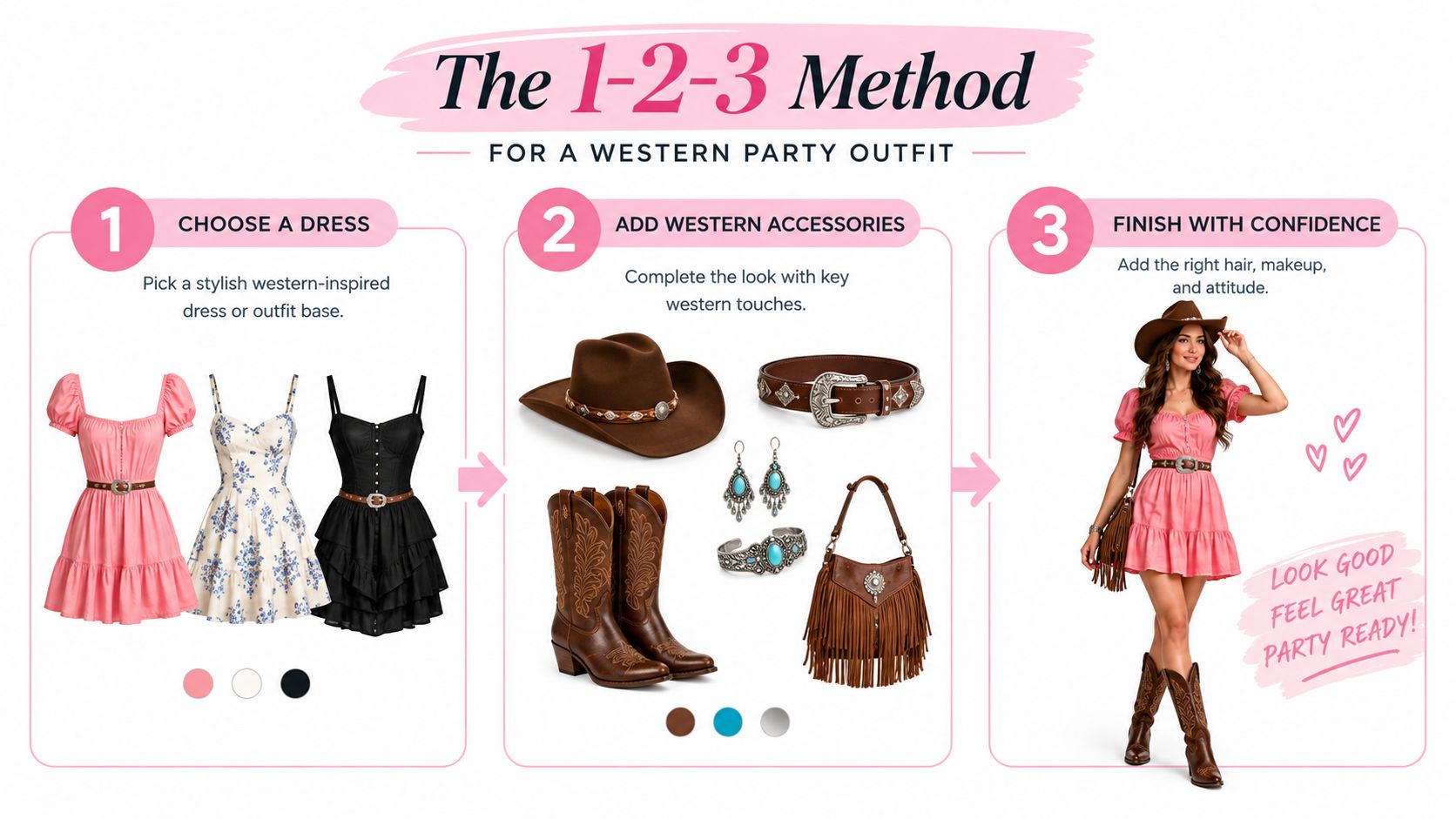
First, identify the setting
You've already read the invitation. Now translate it into clothing. For a casual indoor party, start with denim or chambray and choose a Western-cut shirt, denim skirt, or straight-leg jeans. For a dressier event, choose a structured blouse, midi dress, dark denim, or a clean jumpsuit, then introduce Western character through accessories.
Your first decision should answer a practical question: Will this outfit look natural in the room? A formal dress with beat-up work boots may feel forced, while a simple dark-denim outfit can look sharp with a good belt and polished shoes.
Second, choose one anchor
The anchor carries the theme. It might be a pearl-snap shirt, a denim skirt, a felt hat, a tooled leather belt, a pair of Western boots, or a dress with a restrained Western print.
Pick only one dominant item. If you choose a dramatic hat, keep the rest clean. If your boots have elaborate stitching, skip the fringe jacket and statement belt. The outfit should have a focal point, not a committee meeting.
Third, add two accents
Choose details that support the anchor rather than compete with it. A bolo tie and polished boots sharpen a dark-denim look. A bandana and worn-in belt make jeans and a cotton shirt feel more relaxed. Turquoise-style jewelry, subtle embroidery, or a leather bag can also work, provided the rest of the outfit stays quiet.
For events involving movement, you can borrow the practical thinking used in outfits for Ballroom and Latin. Test whether your clothes allow you to sit, turn, and dance before you add another accessory.
Practical rule: If you can count more than three obvious Western signals, remove one before leaving the house.
Finish with a full-length lighting check. Look for competing patterns, exposed waistlines when seated, uncomfortable hems, and accessories that catch on chairs or other guests. The polished result usually comes from subtraction.
Choosing a Cowboy Hat That Looks Real Not Costume
A cowboy hat can make a simple outfit look intentional, but the wrong one can turn the same outfit into party-store dress-up. Choose a well-shaped felt or straw hat with a moderate brim instead of an exaggerated novelty version.
The reason is practical as well as visual. John B. Stetson is credited with creating the modern American Western hat, and his company produced the original “Boss of the Plains” model in 1865. That early hat had a flat brim, a straight-sided crown, and rounded corners. Western headwear also drew from Mexican sombreros, American farm and stockmen's hats, and U.S. cavalry styles. You can read more of that history in this overview of the cowboy hat's development.
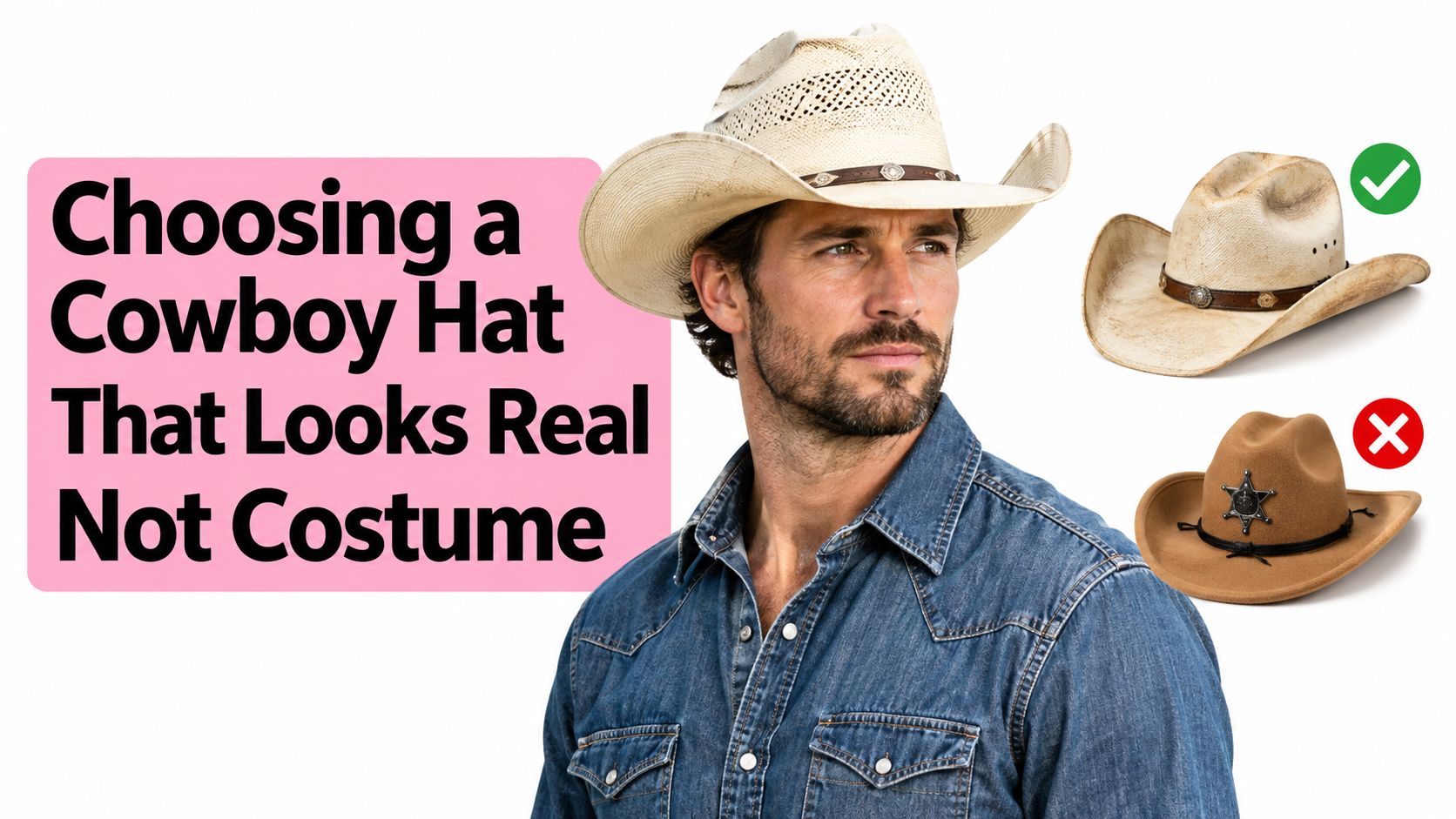
Shape does most of the work
A higher crown adds visual height and structure. A broader brim creates the unmistakable Western silhouette and gives the hat presence without requiring decorative extras. Straw suits daytime, warm weather, and casual settings. Felt feels more substantial for evening events or a dressier venue.
Don't buy the biggest hat in the shop just because the party has a theme. A moderate shape will look better in photographs, fit more easily indoors, and avoid blocking the view of people behind you.
A convincing hat should look like part of your wardrobe, not evidence that you lost a bet.
Pair the hat with one or two other signals, such as denim, a plaid shirt, a bolo tie, or leather boots. Film star Tom Mix helped move Western clothing into popular fashion before 1930, and the Smithsonian identifies a Stetson “Tom Mix” hat dating from 1910 to 1930. That history explains why a classic silhouette still reads as Western without exaggerated decoration.
For more context on coordinating clothing with riding-inspired pieces, explore this guide to Western riding apparel. Then take the hat off when it's appropriate, especially during a meal, in a crowded indoor space, or anywhere the brim obstructs someone else's view.
Building on Denim and Plaid Foundations
When the dress code is informal or unclear, denim is the safest foundation. Industry estimates place denim at roughly 40% of U.S. Western-wear sales, while another market summary identifies casual Western wear as 74.8% of the category by type. Those figures support a simple conclusion: jeans, a denim jacket, or a denim skirt can establish the theme without turning you into a rodeo character. See the Western-wear market summary for that context.
For women, try fitted jeans with a tucked-in plaid shirt, or a denim skirt with an embroidered blouse and a strong belt. A fringe layer can work as the single anchor, but then keep the shirt and accessories restrained. A denim dress with Western boots is another easy route, especially when you want one complete piece rather than several separate decisions.
For men, straight-leg jeans, a snap-front shirt, a leather belt, and boots create a recognizable outfit with very little fuss. Choose contrast instead of matching every piece. Dark denim with a light shirt looks sharper, while blue denim with brown leather feels relaxed and grounded.
Adjust the formality with accessories
A bolo tie, clean belt, and polished boots make the outfit sharper. A bandana, faded denim, and worn-in leather push it toward a casual ranch-inspired look. The base can stay nearly identical while the accessories change the mood.
| Element | Casual Party | Dressier Event |
|---|---|---|
| Base | Blue jeans, denim skirt, or chambray | Dark denim, midi dress, or structured blouse |
| Western anchor | Plaid shirt or denim layer | Felt hat, refined belt, or bolo tie |
| Footwear | Comfortable boots or ankle boots | Polished Western boots or smart neutral shoes |
| Finishing detail | Bandana or relaxed leather | Restrained jewelry or a clean leather bag |
The strongest combinations usually contain one textured piece and one smooth piece. Pair embroidery with plain denim, or polished leather with a simple cotton shirt. Too many motifs make the outfit look assembled from a theme box rather than styled by a person.
Cowboy Boots and Footwear That Survive the Night
Treat cowboy boots as a fit-and-function decision, not merely a visual accessory. The boots need to survive standing, walking, dancing, and possibly hard flooring. Authenticity isn't useful if you spend the evening looking for a chair.
Try boots on late in the day, when feet are typically more swollen, and wear the socks you'll use at the party. Measure length and width instead of trusting the size printed on the box. Then walk at least 20 steps, turn repeatedly, and check three things: your heel should remain secure, your toes should move freely, and the ball of your foot shouldn't feel compressed. These fit checks are consistent with specialist guidance on comfortable cowboy boots.
A small amount of heel movement can happen during break-in. Pinching, numbness, persistent sliding, or pressure across the ball of the foot means the boot is the wrong size or shape. Don't hope a painful boot will become comfortable by midnight.
Match the boot to the venue
A riding boot isn't automatically the best party boot. Its heel and shaft are designed for stirrup interaction, not necessarily for prolonged social walking. For dancing or uneven ground, choose a lower, broader heel, a cushioned insole, and a breathable sock. A cushioned ankle boot with a non-slip sole can give you the Western effect without the stiffness of a tall shaft.
If the event is on grass or gravel, test the boots indoors first and pack blister protection. If the forecast suggests mud, dust, heat, insects, or a sharp evening temperature drop, choose footwear and layers that you can manage. For a non-ranch venue, ordinary formal shoes with a Western belt or bolo tie may be the smarter answer.
If you're planning the food as carefully as the footwear, a smoky side or dip with a family-smoked chipotle flavour pot can suit the Western theme without adding another costume detail. For riding-specific boot guidance, compare construction and fit in this guide to the best Western riding boots.
Western Looks for Kids Modest Dressers and Minimalists
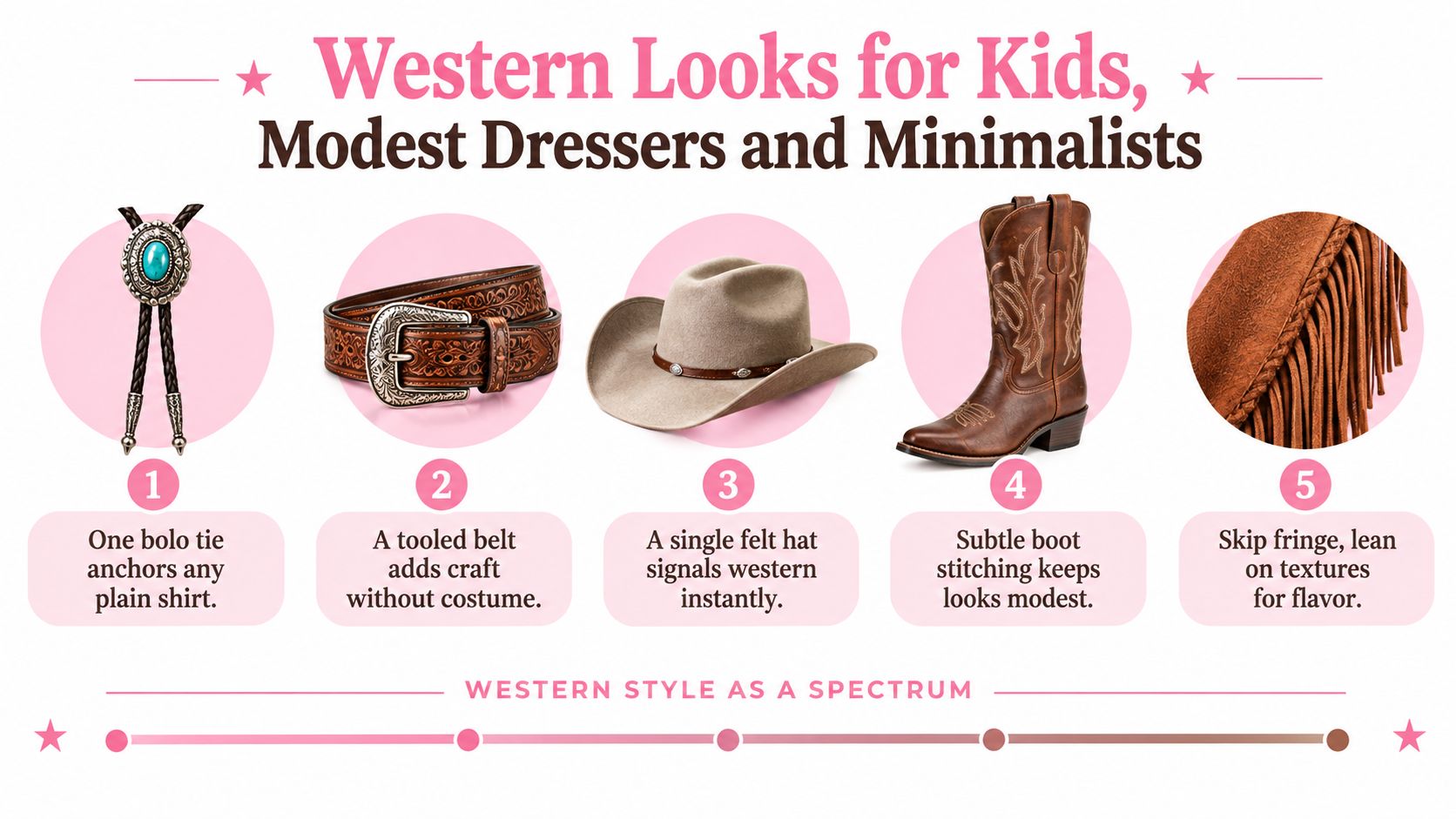
Western style doesn't need to fit a narrow cowgirl or cowboy template. A guest can wear a formal wardrobe, a modest silhouette, gender-neutral clothing, or an understated outfit and still make the theme clear with one recognizable element.
For a minimalist, start with a plain shirt and add a bolo tie, tooled belt, bandana, boot-shaped jewelry, or a small Western print. Wide-leg trousers can replace restrictive denim. A long-sleeved midi dress can take the place of a fitted shirt, while a cushioned ankle boot offers a practical alternative to a tall shaft. These choices preserve personal style instead of asking the wearer to perform a stereotype.
Modest dressers can use texture instead of exposure. Look for denim, corduroy, suede-like fabric, subtle embroidery, or a Western belt over a fully covered outfit. A simple felt hat can signal the theme instantly, but it's optional unless the host specifically requests one.
Make children comfortable first
Children rarely care about maintaining a perfect outfit once they start running around. Choose soft denim, a plaid overshirt over a familiar T-shirt, or a simple dress with a small bandana. Skip anything scratchy, overly tight, difficult to remove, or likely to fall over the eyes.
A child can wear:
- A denim base: Jeans, overalls, or a denim skirt with a comfortable top.
- One small accessory: A bandana, boot-stitch detail, or child-sized belt.
- Familiar shoes: Comfortable sneakers or soft ankle boots if the venue allows them.
Contemporary coverage describes Western style moving across regions and social settings, including nightlife outside the American ranch context, and reports a 240% increase in newly introduced cowboy-boot and denim-shirt styles in that coverage here. The useful takeaway isn't to chase every trend. It's to recognize that Western-inspired clothing can be adapted rather than copied wholesale.
Appreciation means choosing recognizable design elements without turning people, history, or regional identity into caricature. Ask about hat etiquette when the host has cultural or formal expectations, and remove the hat for meals, ceremonies, or crowded rooms when it's considerate to do so.
Your Pre-Party Mirror Check
Run the final check before you leave, not after you arrive. Put on every layer, accessory, and shoe, then stand in full-length lighting. A Western outfit succeeds when it works in motion as well as in a photograph.
Use this checklist:
- Walk: Can you cross the venue without rubbing, slipping, or catching a heel?
- Sit: Does the waistband stay comfortable, and does the hem remain appropriate?
- Dance: Can you turn, bend, and move your arms without pulling the shirt or jacket?
- See: Does the hat stay secure without blocking another guest's sightline?
- Layer: If the event is outdoors, do you have a breathable layer for heat and a light jacket for a temperature drop?
- Weather: Will the shoes cope with grass, gravel, mud, dust, or wet ground?
- Balance: Can you name one anchor and no more than two supporting Western details?
Event-planning guidance for outdoor ranch settings emphasizes stable footwear, breathable layers, sun protection, and a light jacket because weather and terrain affect the guest experience in this venue-specific dress-code guide. Pack what the venue requires, not what a styled photograph suggests.
If the boots hurt, change them. If the hat blocks the room, leave it at home. If the outfit feels like a costume, remove the loudest accessory and keep the best one. One strong anchor worn naturally beats an over-stacked Western costume every time.
Bridle Up Hope Shop offers Western-style clothing, hats, belts, bolo ties, jewelry, boots, and children's pieces for building a themed outfit without starting from scratch. Visit Bridle Up Hope Shop to choose one practical anchor or finishing detail for your next Western party.
Deje un comentario