


You walk into the barn after a hard week, still carrying the unfinished work, the difficult conversation, and the errands you didn't get to. Then a horse lifts its head. A dark, trusting pair of eyes meets yours, and for a moment, your next job is simple: put down your bag, pick up a brush, and be present.
That's why horseback riding quotes stick with us. A few words can describe what's hard to explain to someone who's never swept an aisle after a lesson or felt a horse soften beneath them. Patience. Balance. Gratitude. Partnership. Sometimes, a much-needed laugh.
The eight sayings below span inspiration, wisdom and humor, and the love between horses and people. They're useful beyond a caption: you can take one into a lesson, write it beside a training goal, or give it to a barn friend who needs encouragement.
Their histories deserve care, too. Several famous lines are commonly attributed to familiar names rather than firmly documented. Where an author's connection is uncertain, that uncertainty belongs on the gift tag just as much as it belongs beside the quote.
Table of Contents
- 1. "There is something about the outside of a horse that is good for the inside of a man."
- 2. "Horses don't care how much you know until they know how much you care."
- 3. "Horse sense is the thing a horse has which keeps it from betting on people."
- 4. "Never look a gift horse in the mouth."
- 5. "Life is like riding a horse; to keep your balance you must keep moving."
- 6. "Don't change horses in midstream."
- 7. "The horse is the projection of people's dreams about themselves."
- 8. "There are no bad horses, only bad riders."
- 8 Horseback Riding Quotes at a Glance
- Let These Quotes Inspire More Than Words
1. "There is something about the outside of a horse that is good for the inside of a man."
The curry comb moves through a dusty coat, and you realize you've stopped rehearsing tomorrow's meeting. You haven't even saddled up. You're doing something steady and useful for an animal that needs your attention.
Commonly attributed to Winston Churchill, this saying captures the perspective people find around horses. Its original source isn't firmly documented, so don't print Churchill's name beneath it as though the authorship were settled.
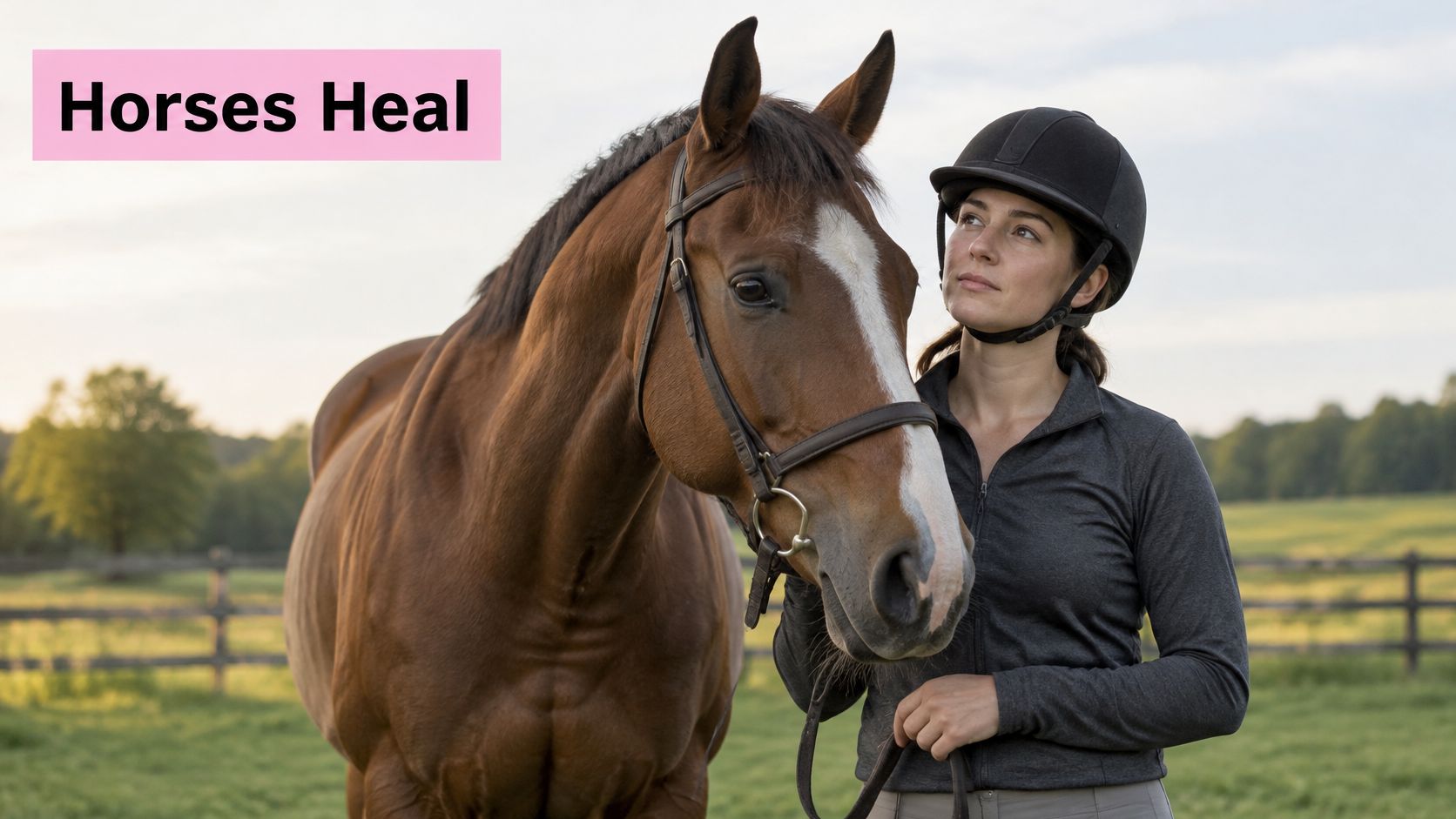
The useful meaning isn't that horses fix everything. It's that care, routine, and attention can offer a welcome change of focus. Keep that distinction when discussing wellbeing: a systematic review of equine-assisted services for veterans included 13 studies involving 344 participants, a relatively small evidence base that doesn't justify promising universal results.
Make It a Reminder to Be Present
Use the saying before a quiet grooming session. Put your phone away, follow the horse's responses, and notice whether you're rushing through the work.
For a reflective gift, handwrite the line inside a journal, with commonly attributed to Winston Churchill beneath it. Add a personal note about the recipient's horse rather than a promise about healing. The older wording says man, but the connection it describes needn't exclude anyone, including people whose time with horses happens entirely on the ground.
2. "Horses don't care how much you know until they know how much you care."
The mare's ears flick back as the brush moves over her shoulder, and the instructor asks you to pause and watch her. That small moment brings the quote into focus: horsemanship begins with noticing the horse in front of you.
This line is commonly associated with Pat Parelli, a trainer and clinician known for relationship-based horsemanship. Without a confirmed original publication for the wording, commonly associated with is the fairest way to credit it.
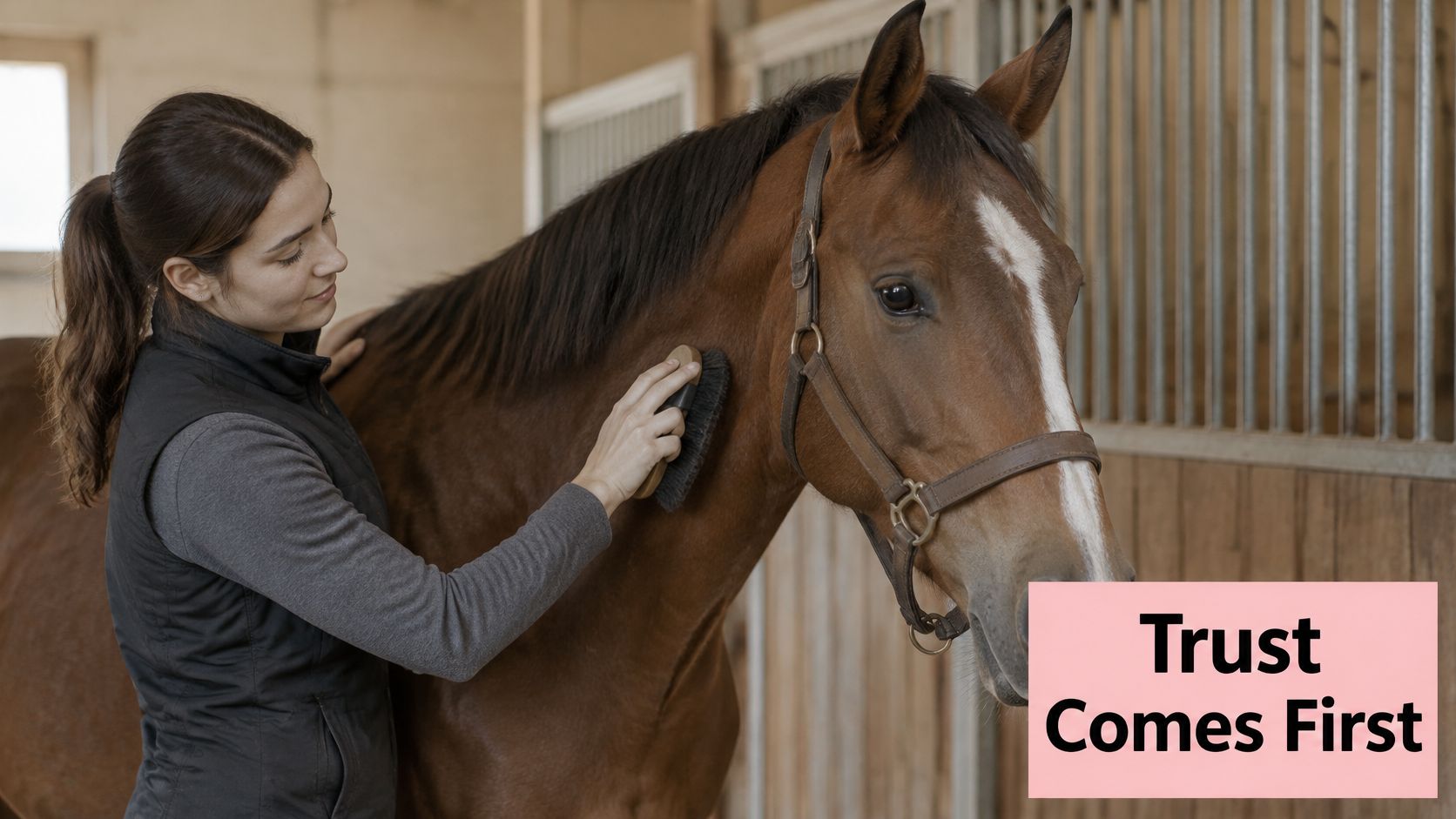
Caring should shape how you use your skills: check comfort, give understandable cues, and notice when your horse needs a different approach. A review published through Italy's National Institute of Health explains that correctly timed pressure release clarifies the desired response, while late or incorrect release can contribute to conflict and defensive behavior.
Practical rule: Watch for the response, then release at the right moment.
During a familiar leading exercise, for example, notice when the horse responds instead of continuing to pull. That pause gives the horse a clear answer to the cue and gives you a chance to adjust your timing.
The line also makes a thoughtful gift for a rider who values patient work. Pair a handwritten card with a grooming brush, or frame it near the tack-cleaning supplies as a reminder to bring attentiveness to everyday care.
3. "Horse sense is the thing a horse has which keeps it from betting on people."
“Horse sense is the thing a horse has which keeps it from betting on people.” The joke turns practical judgment into a playful jab at human confidence. It is commonly attributed to comedian W.C. Fields, though the attribution is not firmly established, so treat his name as an association rather than a confirmed source.
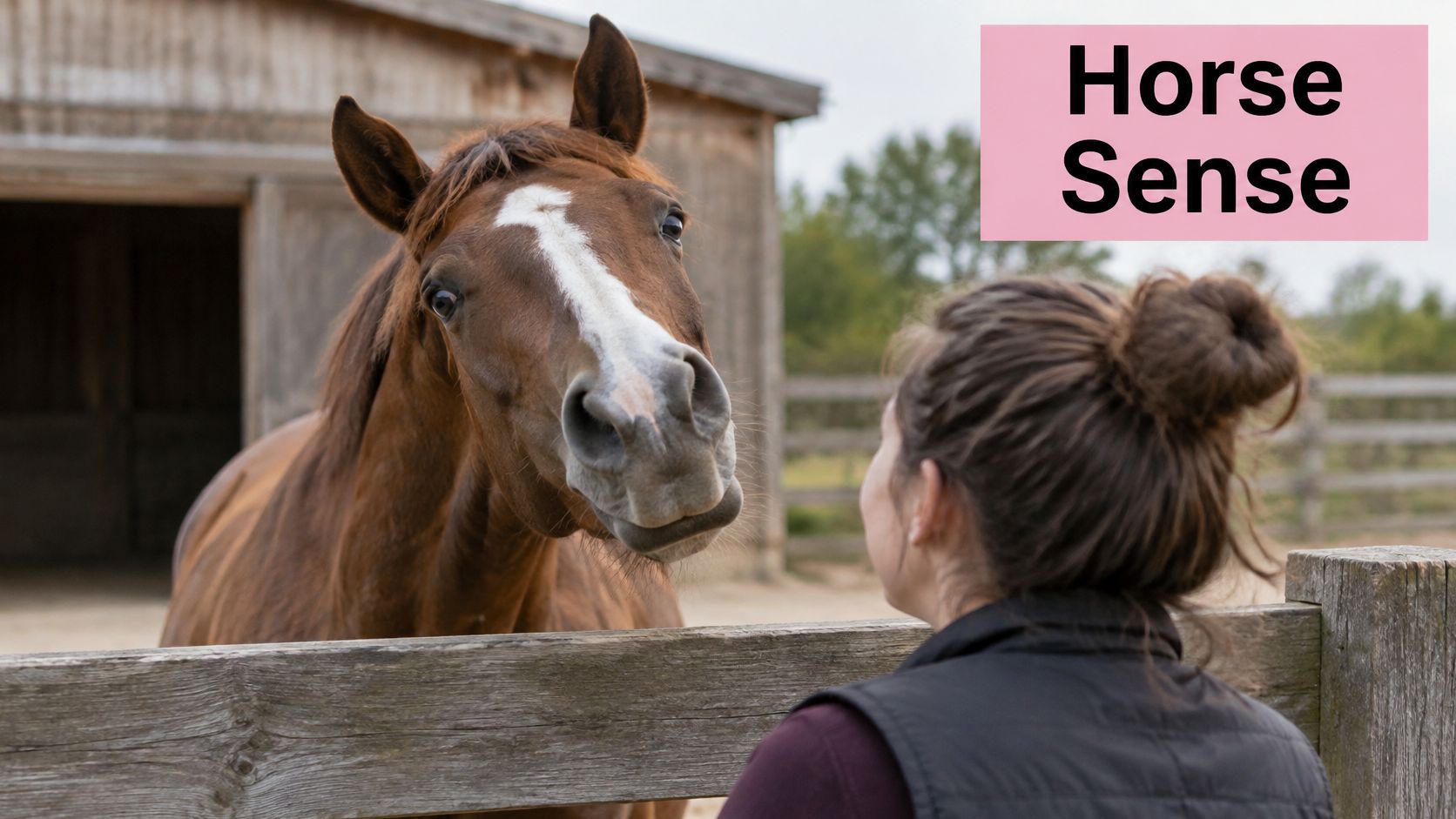
A crooked halt after a focused practice session can be a good moment for this line. It reminds riders that learning matters, while a sense of humor can keep one imperfect attempt from feeling like a personal failure.
Keep the Joke Kind
Save it for a harmless barn-life mishap, not a moment when someone is frightened or hurt. At the end of a grooming session, perhaps you notice the hoof pick is still in your other bag. Laugh at your own oversight, and leave a beginner's learning curve out of the punchline.
- For a display: Print the quote on a removable card beside a candid horse photograph.
- For a gift: Tuck the card into a mug or pair it with a playful accessory.
- For a caption: Tell on your own questionable decision rather than mocking another rider.
The line works best when everyone can share the laugh. If it's for a child or a new barn member, explain the wordplay so the gift feels welcoming, not like an inside joke.
4. "Never look a gift horse in the mouth."
A barn friend hands you a carefully wrapped horse-themed mug. It isn't the color you'd have chosen, but they remembered your horse obsession and thought of you. This proverb is your cue to notice the kindness first.
Its origin is commonly traced to Saint Jerome's writings, although the exact English wording shouldn't be presented as his verbatim language. The horse connection comes from examining teeth to help assess age and condition, a practical inspection turned into a lesson about gratitude.
The everyday meaning is straightforward: don't answer generosity by hunting for faults. That makes it a natural choice for greeting cards, gift tags, and thank-you notes.
Gratitude Still Leaves Room for Judgment
The saying isn't advice to skip sensible checks when someone offers you an actual horse, used tack, or protective equipment. An appreciative response and a careful decision can coexist.
Say someone offers you a saddle they no longer use. Thank them, then arrange an appropriate condition and fit assessment before riding in it. You haven't failed at gratitude by taking your horse's comfort seriously.
For a lighthearted present, put the proverb on a card with a horse sticker or an approved treat for the recipient's horse. Add the origin story in plain language inside the card, making the thought behind the gift part of the pleasure.
Our gift ideas for horse people can help you choose something suited to the person, whether their favorite place is the arena rail, the trail, or a horse-filled bookshelf.
5. "Life is like riding a horse; to keep your balance you must keep moving."
A rider leaves a lesson unsure what to work on next. This saying offers a simple reminder: steady progress comes from staying curious, learning, and choosing a manageable next step.
The words are commonly attributed to Albert Einstein, though the attribution is not established by verified primary sources. If you put the quote on a card or display, credit it as author unverified.
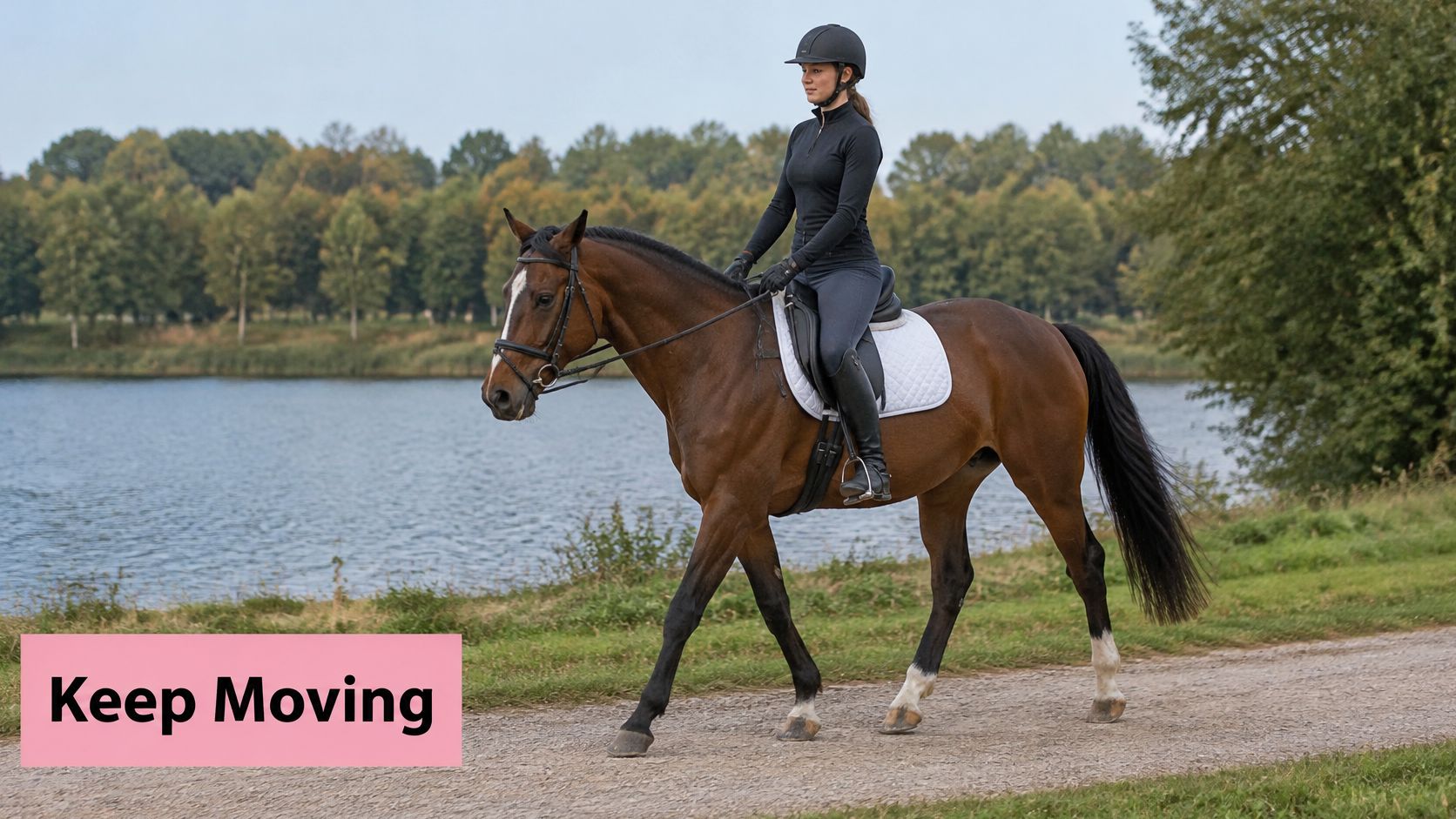
Here, “keep moving” means continued learning. In the saddle, that can mean pausing, resting, reassessing, or ending a ride early. Progress is not measured by speed. It may look like asking for help, returning to groundwork, or practicing a simpler skill.
For a nervous beginner, preparation helps make courage practical. The University of Kentucky's Saddle Up Safely guidance identifies beginners as particularly vulnerable to serious injury, so a thoughtful plan belongs alongside determination.
Turn Inspiration Into a Manageable Goal
Write the quote in a riding journal beside one clear goal: ask your instructor for help keeping your hands steady through a familiar transition. After the ride, note what helped and what you want to ask about next time.
As a gift, print the saying on a card and pair it with a blank goal-setting page. The rider can decide what progress means to them. A small tack-room display can serve as a gentle reminder to keep learning at a safe, comfortable pace.
6. "Don't change horses in midstream."
Abraham Lincoln used this expression during his reelection campaign, applying the familiar image of changing horses in the middle of a river to a question about changing leaders at a critical time. This supports a connection to his public use, not a claim that he invented the saying.
In a riding lesson, the proverb can remind you to give an agreed plan time to work. If you and your instructor are practicing a transition, keep the cues consistent so your horse can understand what you're asking. Jot down your timing and your horse's response, then discuss the exercise at your next lesson.
Stay Steady, Not Stubborn
Consistency works best with regular review. Use the agreed cues rather than combining conflicting advice, and note confusion or tension as well as successful attempts. If pain, fear, or unsafe behavior appears, stop and reassess. Your responsibility is to the horse and rider, and an unsuitable method should change.
A planner bookmark can make the proverb a useful reminder for someone working toward a long-term goal. Pair it with a note about steady effort, or choose a design inspired by the rider's taste. For ranch imagery and traditional sayings, explore these Western horse quotes.
7. "The horse is the projection of people's dreams about themselves."
What does your horse bring out in the rider you hope to become? The question behind this saying is useful when an image of an ideal partnership starts to shape your expectations more than the horse in front of you.
The quote is commonly attributed to Ray Hunt; the original source isn't firmly documented. Its meaning is less about horses reflecting our private thoughts and more about the hopes and qualities people see in them.
Separate Observation From Interpretation
After a difficult ride, note what you observed before deciding what it means. Tight fingers, a rushed mounting routine, or conflicting aids give you specific details to discuss with an instructor. The horse's behavior isn't a verdict on your character.
Say you hoped for a confident trail outing, but felt unsettled at the gate. Write down what happened and ask for help planning a suitable next session. That turns an imagined version of confidence into a practical training goal, one you and your horse can approach at your own pace.
The quote can also help riders check their expectations. Dreams may motivate practice, but they should leave room for the horse's needs and the rider's current abilities. A horse is a partner in the work, not a prop for an ideal image.
For a gift, pair the line with a photograph of the recipient riding their own horse. Leave space beneath it for a personal goal, such as staying relaxed through a familiar exercise or building confidence one ride at a time. The display then celebrates the partnership they have, while keeping their hopes in view.
8. "There are no bad horses, only bad riders."
“There are no bad horses, only bad riders” puts responsibility squarely on the rider. It's a traditional proverb with no firmly established individual author, and its absolute wording can oversimplify what a horse's behavior means.
A more useful takeaway is to examine what you can change while staying curious about what the horse may be experiencing. Pain, fear, confusion, unsuitable demands, or environmental stress can all affect behavior. Accountability means investigating the situation, not deciding that either horse or rider is bad.
A kinder interpretation: Before blaming the horse, investigate what the horse is experiencing.
Say a horse that usually stands for mounting suddenly steps away. Pause and seek appropriate help rather than assuming disobedience. Check comfort and tack fit, consult a veterinarian when warranted, and ask a qualified instructor to assess the situation.
Use Accountability Without Shame
A rider refining their position can explore riding English style for related reading. Technique is one part of responsible riding; choosing protective equipment matters too. The University of Connecticut's helmet-safety guidance reports that ASTM/SEI-approved helmets are associated with a 50% reduction in severe riding-related head injuries.
This proverb may not suit a nervous child or someone recovering from a fall as a standalone gift. If it appears in a journal, pair it with a compassionate note about learning and asking for help.
A barn display should invite questions, giving riders room to admit when something feels wrong.
8 Horseback Riding Quotes at a Glance
Choosing a quote gets easier when you start with the rider, not the wall space. Use this guide to find words that fit a particular moment, from a first lesson to a stubborn training day.
| Quote | Best for |
|---|---|
| “There is something about the outside of a horse that is good for the inside of a man.” | A rider who finds comfort in time with horses, while remembering that horses don't fix everything |
| “Horses don't care how much you know until they know how much you care.” | Someone learning to build trust through patient, attentive handling |
| “Horse sense is the thing a horse has which keeps it from betting on people.” | A friend who appreciates a wry laugh about life around horses |
| “Never look a gift horse in the mouth.” | A thank-you card for someone who has offered help or a thoughtful gift |
| “Life is like riding a horse; to keep your balance you must keep moving.” | A rider working through a setback or setting a steady training goal |
| “Don't change horses in midstream.” | Someone who needs a reminder to stick with a considered plan |
| “The horse is the projection of people's dreams about themselves.” | A reflective rider thinking about what their relationship with horses means to them |
| “There are no bad horses, only bad riders.” | A rider practicing accountability, with room to consider the horse's comfort and needs |
A short quote can work as a journal prompt, a card tucked into a gift, or a small display near a rider's desk. Match the words to the recipient: choose humor for the barn friend who enjoys a joke, or a thoughtful line for someone building trust with a horse. For quotes with uncertain or traditional attributions, keep the wording and attribution cautious when you share them.
Let These Quotes Inspire More Than Words
After a long schooling session, a rider might choose a line about patience and bring it to the barn the next day. Before you visit your horse, pick one quote that fits what you need right now. It might remind you to slow down and groom without a training plan, find humor in a muddy chore, thank someone, or ask your instructor a question.
Give the words a practical place. Write them above a journal entry, display them near your tack, or tuck them into a card. Then connect the quote to an action: listen more closely, record what happened without blame, or notice a small improvement. A few words can become a prompt for how you handle the next ride.
Make the Gift Personal
For a friend who is starting lessons, choose a quote that celebrates curiosity and preparation. For someone taking time away from riding, honor their bond with horses without assuming they plan to return to the saddle. And for the friend who keeps everyone laughing during tack cleaning, a humorous saying can suit the moment.
A quote card can make that choice easy to share. Use the free quote card generator to arrange the words, then add a handwritten note explaining why the saying made you think of that person. Keep the attribution honest, especially when a quote is commonly attributed or its origin is uncertain.
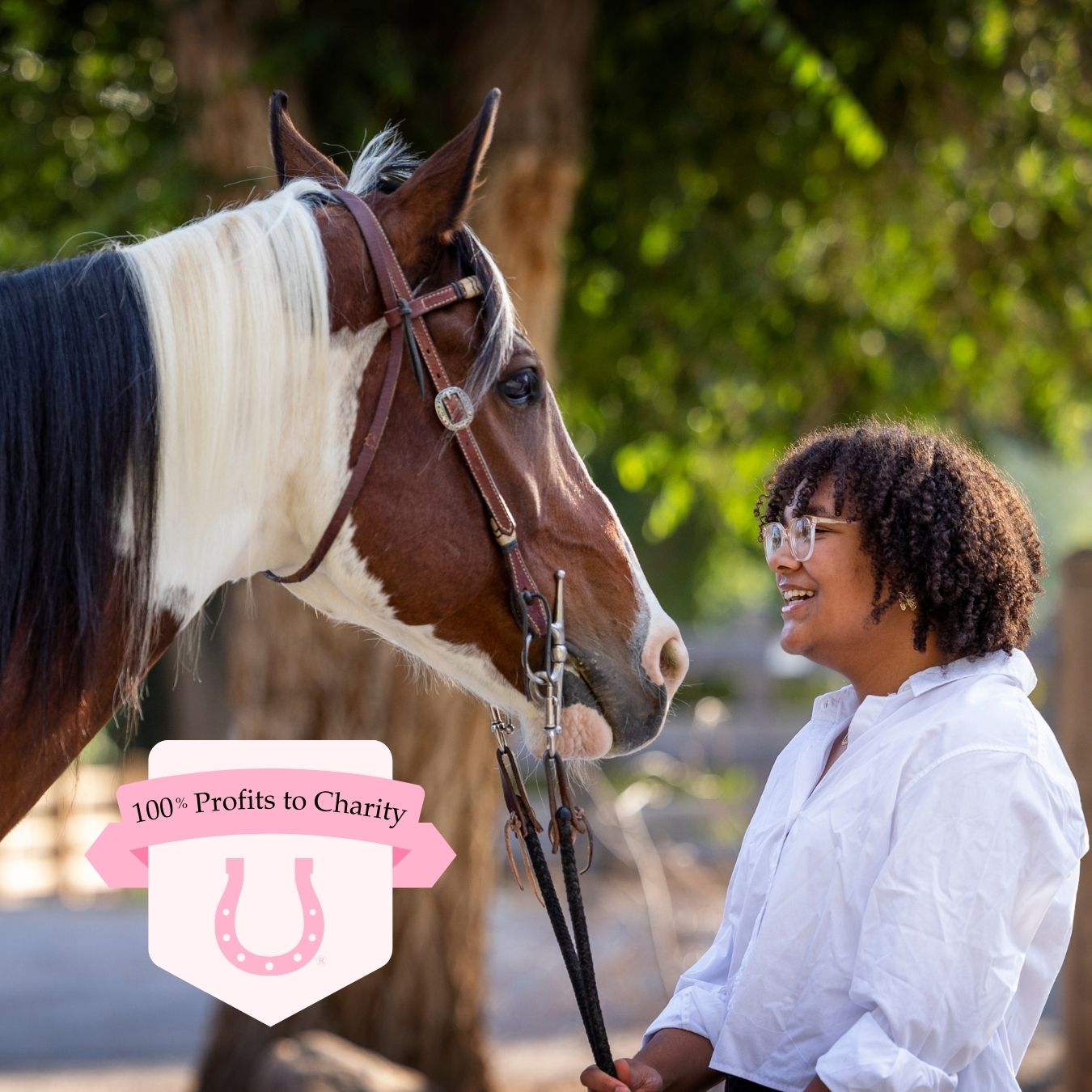
Bridle Up Hope Shop offers equestrian apparel, journals, quote art, and gifts in English and Western styles. Pair a humorous saying with the My Horse Riding Socks, or choose the Cowboy Take Me Away Long-Crop Tee for someone drawn to an inspirational message. The shop donates 100% of annual net profits to the Bridle Up Hope charity. Founded in 2012 in memory of Rachel, who loved horses, the charity works to inspire hope, confidence, and resilience in girls and women through horses and habits.
Horseback riding quotes cannot replace instruction, good care, or the time it takes to listen to a horse. They can help a rider carry a useful reminder into everyday choices, from grooming and groundwork to the next lesson.
Deje un comentario