


You're probably standing in one of two places right now. Maybe you're by your closet, holding up leggings in one hand and jeans in the other, wondering what counts as safe enough for a first lesson. Or maybe you're scrolling a shop late at night, realizing that horse riding has its own language of breeches, paddock boots, half chaps, body protectors, and show coats.
That uncertainty is normal. I've had many new students arrive at the barn apologizing for “wearing the wrong thing,” and almost every time, we could sort it out with a few simple adjustments. Riding clothes aren't about looking like a professional. They're tools. Good clothes for riding help you stay comfortable, move with the horse, and avoid preventable problems like rubbing, slipping, or gear getting caught.
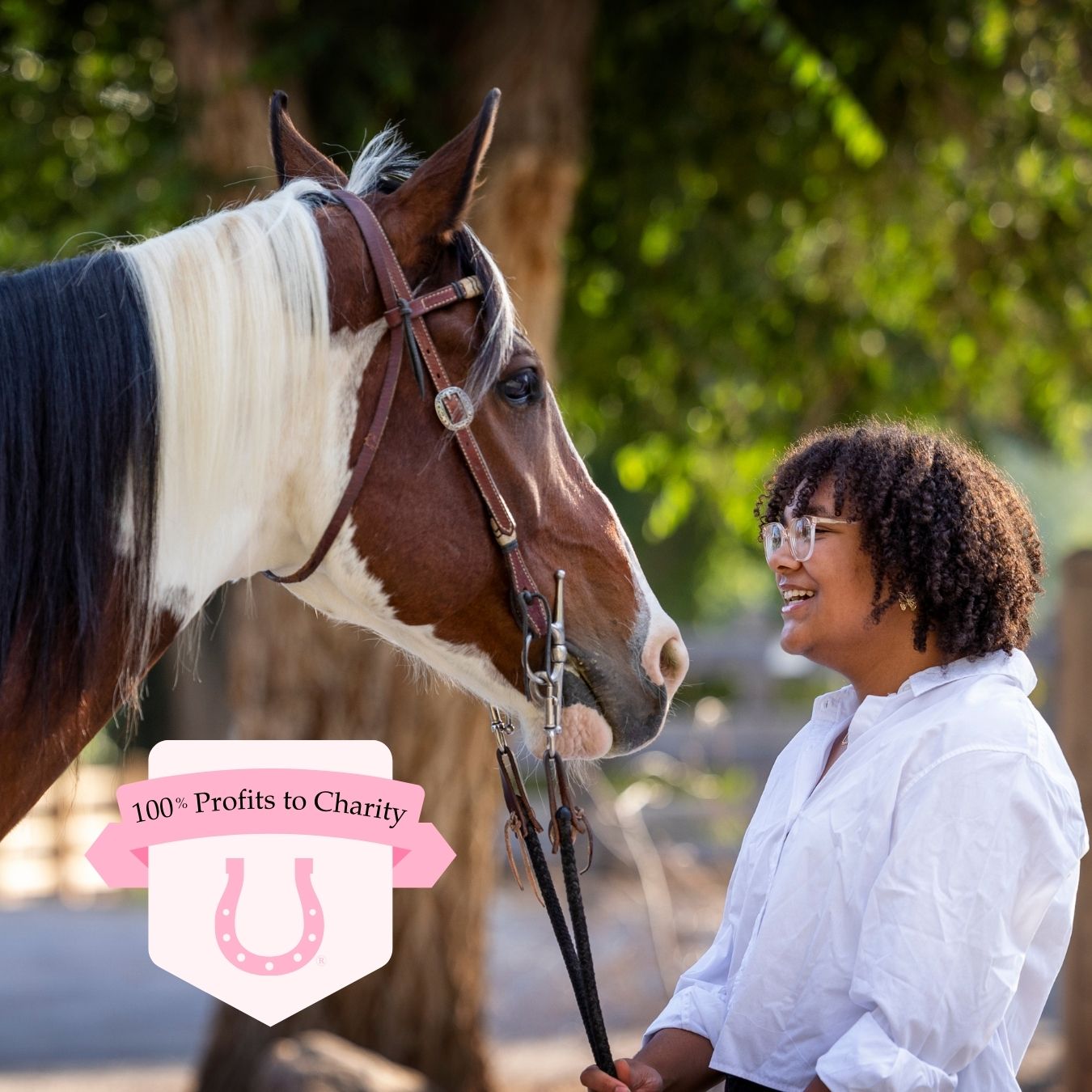
There's another reason this choice can feel meaningful. When you shop through a mission-driven equestrian store, a practical purchase can also support people and horses. That matters. Riding has always been about more than clothing. It's about confidence, care, and showing up prepared.
Table of Contents
- Your First Ride What to Wear
- The Foundations of Riding Apparel
- Safety First Your Non-Negotiable Gear
- English Versus Western Riding Attire
- Dressing for the Seasons Fabrics and Layering
- Finding the Perfect Fit and Sizing Tips
- Outfitting the Family and Gifting with Purpose
Your First Ride What to Wear
For a first ride, think simple. You need long pants, a comfortable fitted top, and closed-toe shoes or boots with a small heel. You do not need a polished show outfit, expensive accessories, or a wardrobe overhaul before you've even learned how to hold the reins.
One of my beginner students arrived for her lesson in soft fashion leggings and running shoes. She looked athletic and ready, but the slick fabric made her slide in the saddle, and the shoes had no heel. We swapped to sturdier pants and proper footwear, and suddenly she felt more secure. That's the pattern I see most often. Tiny clothing changes can make a beginner feel calmer within minutes.
A good first-ride test is this: can you bend, sit, and swing your leg over a saddle without your clothes pinching, riding up, or flapping around?
Practical rule: If an item is slippery, open-toed, bulky, or so loose that it could catch on tack, leave it home.
Before you head to the barn, run through this quick checklist:
- Choose long pants: They protect your legs from rubbing on the saddle.
- Pick a close-fitting top: You want freedom of movement without extra fabric shifting around.
- Wear proper footwear: A boot or shoe with a defined heel is the safer choice around stirrups.
- Tie back long hair: Keep your vision clear and your helmet fit tidy.
- Skip dangling jewelry: Less to catch, distract, or annoy you.
If you're shopping in person, treat your first tack shop visit like trying on sports equipment, not street clothes. Move in everything. Squat. Sit on the bench. Lift your knee. Riding asks your body to stay balanced while the horse moves underneath you. Your clothes need to help, not argue.
The Foundations of Riding Apparel
Riding clothes have been practical for a very long time. The oldest known pants designed specifically for horseback riding were found in western China and date back over 3,000 years, according to Science News' report on the earliest known riding trousers. Those wool trousers had straight legs and a wide crotch, and they were made by nomadic herders for protection and freedom of movement.
That little history lesson matters because it answers a beginner's question right away. Why do riders wear specialized pants at all? Because the basic problem hasn't changed. A rider needs to bend the hip and knee, sit securely, and stay comfortable against leather and seams.
Start with the legs
Pants are the foundation of clothes for riding. The best pair feels smooth against your skin and doesn't bunch behind your knee or twist at the inner thigh.
Here's what riding pants are trying to do:
- Reduce rubbing: Seams in the wrong place can chafe quickly.
- Allow movement: You need room through the hip and knee.
- Stay put: Pants that slide around make you less steady.
- Work with boots: Extra fabric around the calf can feel bulky and distracting.
That's why many riders prefer breeches or jodhpurs. They're shaped for the saddle. If you're starting in jeans for Western lessons, choose a pair that isn't overly stiff and doesn't have thick inner seams.
Boots and tops have jobs too
Boots aren't just part of the look. They change how your lower leg works. A riding boot should support your foot, feel secure on the sole, and have a heel that helps prevent the foot from slipping too far into the stirrup. I tell students to pay attention to the ankle and calf. If a boot pinches so much that you alter your leg position, it isn't helping.
Tops matter more than beginners expect. A shirt that fits close to the body lets your instructor see your posture and lets you feel your own alignment. Loose sleeves, dangling hoods, or bulky layers can get in the way when you're learning rein contact and balance.
Riding attire should help your instructor see your position and help you feel your own body clearly.
Women's riding wear changed dramatically when riders moved away from side-saddle skirts and toward breeches in the 1880s, with jodhpurs later becoming widely adopted and safety helmets replacing top hats in formal dressage competition in the early 2000s, as described in this history of rider wear. That shift tells the same story as those ancient trousers. Practical movement wins in the saddle.
Safety First Your Non-Negotiable Gear
Your first lesson might begin with something simple. You zip up your boots, borrow a helmet, and reach for the reins. Before any of that matters, your gear has one job. It must protect you well enough that you can focus on learning.
I'm gentle about many beginner mistakes. I am firm about safety equipment. Horses are generous teachers, but they are still large animals with quick feet, strong bodies, and their own reactions. Good gear lowers risk in the same way a seat belt lowers risk in a car. It cannot prevent every problem, but it gives your body better odds if something goes wrong.
Start with the helmet.

The helmet check
A riding helmet should carry current ASTM F1163 and SEI certification stickers, and fit your head shape correctly. The helmet should sit level on your forehead, feel evenly snug, and stay steady when you move. Standards guidance also notes that protective materials age over time, and body protectors sold for higher-impact riding are commonly identified by EN 13158 Level 3 ratings, so labels matter just as much as appearance. You can review that standards reference here: EN 13158:2018 standards reference.
New riders often get confused here because a helmet can feel tight and still be wrong. A correct fit feels like a firm handshake around your head, not a pinch at one temple and a gap at the back. Different brands suit different head shapes, which is why one helmet can feel wonderful and the next can feel impossible even in the same size.
I teach students a quick fit test in the tack shop. Put the helmet on, fasten it, then open and close your jaw and gently shake your head. If the helmet slides, tips, or wobbles, keep trying.
Look for these signs:
- Level position: It covers the forehead instead of tipping back.
- Even pressure: It feels secure all around, without one sore spot.
- Stable chin strap: The strap is adjusted correctly and holds the helmet in place.
- No shifting: Your head moves. The helmet moves with it.
A pretty helmet that drifts out of place is just expensive decoration.
Body protection and confidence
Some beginners ride happily in a helmet and boots alone. Others feel better with torso protection too, especially for jumping, cross-country, riding younger horses, or returning after a fall. That choice is often practical, not dramatic. If extra protection helps you breathe more easily and ride without bracing, it can improve your learning as well as your confidence.
I often explain body protectors to new students this way. Your helmet protects one very important area from impact. A body protector adds a layer between your torso and the hard parts of a fall, much like a well-fitted winter coat adds warmth without changing the weather itself. You still ride thoughtfully. You just give your body more help.
This is also where inclusive sizing matters more than many guides admit. Safety gear only works well when it fits the body inside it. Riders with fuller busts, broader shoulders, shorter torsos, long rises, plus sizes, or in-between youth and adult proportions may need to try several cuts before finding one that sits correctly without digging, riding up, or leaving gaps. Please do not assume discomfort is normal. It usually means the fit is wrong.
That is one reason I like seeing beginners shop through places with a clear mission. A purchase from Bridle Up Hope Shop supports programs that use horses to help girls build confidence and hope, so your gear can do two jobs at once. It can protect the rider in your family and support a wider community of riders. If your household also rides Western, their guide to Western riding apparel basics can help you compare what changes by discipline and what safety habits stay the same.
If you're helping a child understand why riders wear specific gear, the Olivia and Seren Horse Play Set ($44) gives you an easy visual example. The doll comes dressed in jodhpurs, boots, and a riding helmet, with pony tack pieces such as a saddle, bridle, stirrups, and saddle pad. I've seen young students relax once they can point to each item and say what it does.
Boots belong in this conversation too. They are part of safe riding equipment, not costume. A proper heel helps prevent the foot from sliding too far through the stirrup, and a secure upper protects your foot while you walk, groom, and tack up around the horse.
English Versus Western Riding Attire
Beginners often think English and Western riding clothes are mostly about appearance. They aren't. The differences come from what riders need to do in each style, how the saddle works, and what traditions grew from those jobs.
The quickest way to make sense of clothes for riding is to ask one question. Are you dressing for close-contact precision in an English saddle, or for the longer, sturdier working tradition of Western riding?

Why the styles look different
In English riding, the rider usually wants a close feel of the horse's sides. That's why breeches are snug, and why tall boots or paddock boots with half chaps are common. The whole system is built around refined leg contact and minimal bulk.
Western clothing grew out of ranch work and long hours in the saddle. Riders often choose durable jeans, Western boots, and practical shirts that hold up well and layer easily. Chaps can add protection for brush, weather, and friction. If you want a fuller introduction to that side of the wardrobe, Bridle Up Hope has a helpful article on Western riding apparel basics.
Here's the comparison I give students:
| Garment | English Style | Western Style |
|---|---|---|
| Helmet or hat | Helmet for safety headwear | Often associated with a Western hat look, though riders should still prioritize protective headwear |
| Pants | Breeches or jodhpurs with a close fit | Jeans designed for durability and comfort |
| Boots | Tall boots or paddock boots | Western boots with a defined heel |
| Leg protection | Half chaps or tall boots | Chaps for added protection |
| Top layer | Fitted schooling shirt or show coat | Button-up shirt or work shirt |
English vs. Western Riding Apparel at a Glance
A new rider doesn't need to pick a tribe. You only need to dress for the lesson in front of you. If your barn teaches English, wear the closer-fitting option. If your barn teaches Western, durable jeans and Western-style boots may be the better fit.
A small caution from experience: don't mix items in ways that interfere with function. Fashion jeans that are too slippery for an English saddle can feel awkward. Tall English boots paired with bulky Western-cut jeans can bunch uncomfortably. The style names matter less than the practical result.
Dressing for the Seasons Fabrics and Layering
Weather changes everything. A rider who is too hot, too cold, or damp from trapped sweat has a much harder time focusing on balance, timing, and the horse beneath them.
The best approach is a simple layer system that you can adjust before, during, and after the ride.

A simple riding layer system
Your base layer sits against the skin, so fabric choice matters most here. Riding apparel should use moisture-wicking synthetics rather than cotton because cotton holds sweat, which can raise thermal load by 20 to 30% and contribute to skin irritation. Guidance for riding wear also says cotton content in base layers should stay below 20% to avoid the sweat-trap effect, according to this horse riding wear fabric guide.
That's one of the few clothing rules I repeat often. Cotton feels harmless in the store, but in the saddle it can become clingy, damp, and cold later.
Build your layers like this:
- Base layer: Choose synthetic moisture-wicking fabric or a merino blend.
- Mid layer: Add light warmth with something stretchy and not too bulky.
- Outer layer: Use a weather layer that blocks wind or rain without restricting your arms and shoulders.
A rider should be able to shorten reins, reach forward, and mount comfortably in every layer they're wearing.
What to wear in real weather
In summer, choose a lightweight top that manages sweat and allows airflow. Keep your arms and shoulders mobile. A ventilated helmet helps with comfort, but your clothing still does much of the work.
In winter, riders often make the mistake of wearing a heavy coat that turns the upper body stiff. I'd rather see a smart stack of thinner layers than one puffy jacket that changes the rider's whole position. Your elbows need to bend, your shoulders need to soften, and your back needs to stay supple.
For spring and fall, think adaptability. Start slightly cool on the ground. Once you're grooming, tacking up, and riding, you'll warm quickly.
A few fabric notes are worth remembering:
- Avoid all-cotton base layers: They trap moisture when you start working.
- Choose stretch in outerwear: Riding involves bending and reaching.
- Check high-friction areas: Inner knee, seat, and waistband should feel smooth.
- Keep bulk away from the calf: Thick folds under boots become annoying fast.
Finding the Perfect Fit and Sizing Tips
A poor fit can distract you every stride. It can also create safety issues. A helmet that shifts, a boot that changes your leg position, or breeches that bind through the hip can all make riding harder than it needs to be.
This is also where many riders get frustrated, especially riders whose proportions don't match a standard size chart.
What fit should feel like
For helmets, the right fit feels secure and even. You should not feel loose movement or pressure only at one temple or the back of the skull.
For breeches, aim for a close fit without strain lines that suggest the fabric is being pulled beyond its shape. The waistband should stay in place when you sit and bend. Through the leg, the fabric should lie flat enough to work under boots without thick folds.
For boots, focus on three things. Heel security, ankle comfort, and calf fit. New riders often buy boots based only on foot size, then wonder why the shaft rubs or won't zip.
If you need a general measuring refresher before comparing apparel charts, Dandylion Style's suit fitting guide is a useful plain-language resource for taking body measurements carefully. It isn't an equestrian guide, but the basic measuring habits carry over well when you're checking waist, inseam, hip, and calf dimensions.
When your body type doesn't match the chart
This issue deserves more attention than it gets. High-performance breeches often rely on 10 to 15 key measurements, and a major market gap remains inclusive sizing for diverse body types, as outlined in this equestrian clothing fit guide. In practice, that means riders with longer inseams, broader hips, stronger thighs, athletic calves, or shorter torsos may need to shop more strategically.
I've taught riders who assumed the problem was their body when the difficulty lay in the garment pattern. That's an important distinction. If breeches fit your waist but cut into your thigh, or if boots fit your foot but not your calf, your body is not “wrong.” The product was not designed for your proportions.
Try this when sizing gets tricky:
- Start with your hardest fit point: For some riders that's calf, for others inseam or hip.
- Read the chart, don't guess: Compare actual measurements instead of your usual street size.
- Ask what can flex and what cannot: Stretch fabric may forgive one area. Helmet shells and boot shafts will not.
- Look for inclusive fit guidance: Brands that explain proportions are usually easier to shop.
For riders who want more ideas suited for non-standard proportions, Bridle Up Hope also has a practical resource on plus-size horse riding clothes.
Outfitting the Family and Gifting with Purpose
Riding often becomes a family language. One child starts lessons, then a sibling wants pony books, a parent needs barn layers, and suddenly birthdays and holidays all seem to circle back to horses.
That's why equestrian shopping isn't only about technical gear. Sometimes it's about choosing thoughtful, horse-centered items that help children feel included in the riding world while adults handle the true safety equipment with care.

For children, keep the same priorities you'd use for yourself. Clothing should allow movement, shoes should protect feet, and anything used for actual riding should be chosen with safety in mind. If you're building out a child's equestrian wardrobe or looking for age-appropriate ideas, this guide to horse riding gear for kids is a helpful starting point.
For gifts, I like items that support the habit side of horsemanship too. Horse-themed books, toys, and simple apparel can encourage a child's interest without pretending that costume pieces replace real riding safety gear. That balance matters.
The meaningful part is where purpose comes in. A gift can celebrate a love of horses and also support a charity that works with girls, women, and horses. That makes the purchase feel connected to the bigger good that many of us love about the horse world in the first place.
If you're ready to shop thoughtfully, Bridle Up Hope Shop offers equestrian and horse-themed items for women, children, babies, and the home, and its charitable model supports the Bridle Up Hope foundation through donated annual net profits.
Deje un comentario