


You're standing in front of a mirror with a denim skirt that looked perfect on the hanger. Standing up, it's fine. When you sit, climb into a car, or step up to a mounting block, it pulls, rides up, or catches on your boot. That's the hidden test most style guides skip, and it's the test a good Western style skirt has to pass.
Table of Contents
- What Makes a Western Style Skirt Recognizable
- Fabrics and Weights That Shape the Look
- Lengths and Silhouettes Ranked by Movement
- How to Measure for a Western Skirt That Fits
- Outfit Ideas for English and Western Looks
- Caring for Denim and Western Skirts
- Choosing Your Skirt by Task
What Makes a Western Style Skirt Recognizable
A yoke tells you faster than a logo. On a Western style skirt, that shaped panel should sit flat when you mount and should not saw into the waist when the saddle pushes you back.
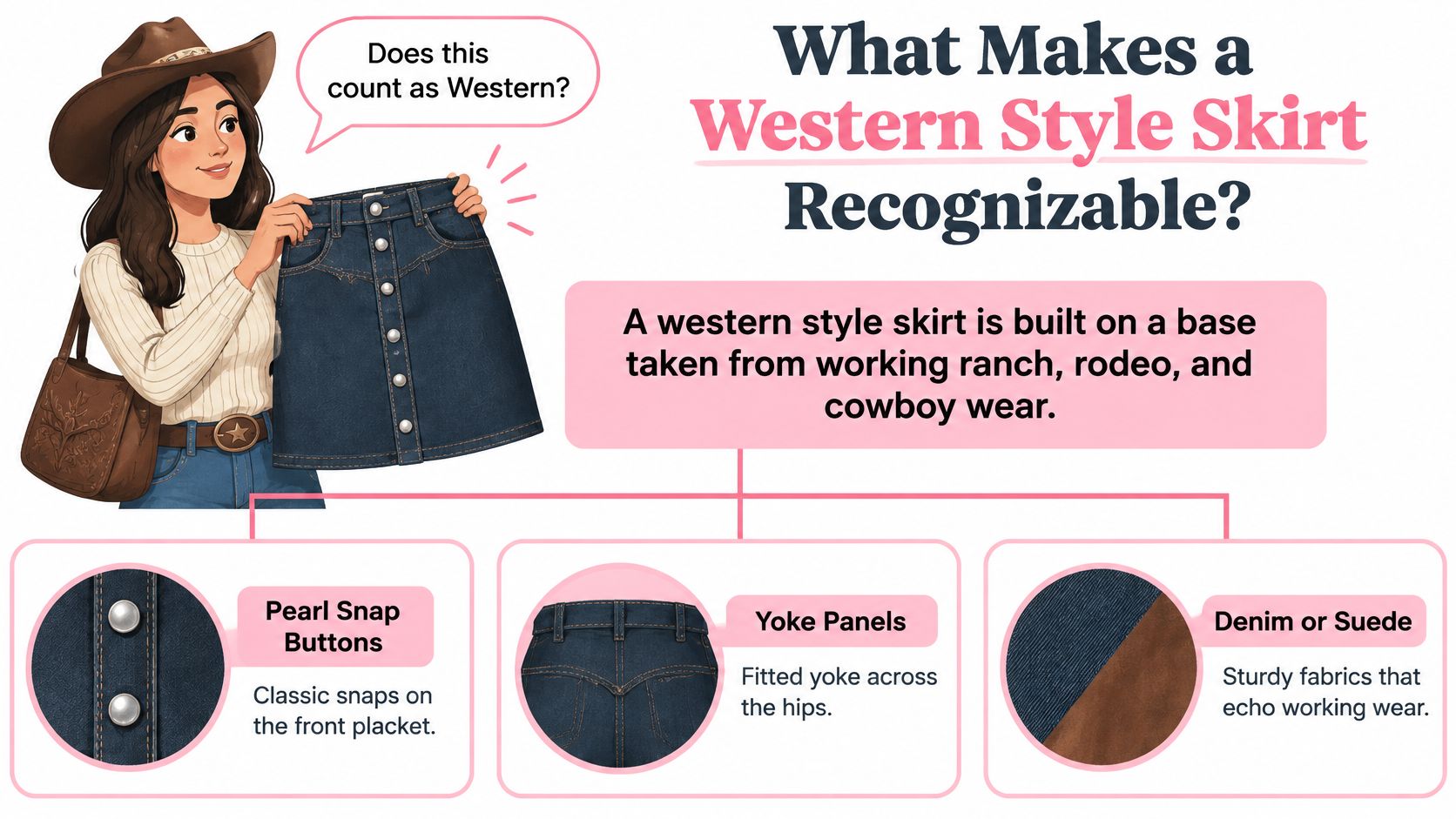
Start with the base: sturdy denim, twill, canvas, or a prairie cloth with enough body to keep its line after an hour seated. Then read the signals like tack hardware. One clear cue reads Western; a whole shelf of cues reads costume.
Details to look for first
- Yoke: a separate panel across the waist or hip, often with contrast topstitching
- Closures: pearl-snap or metal-snap fronts instead of plain buttons
- Pocket stitching: arched back-pocket stitching borrowed from jeans
- Decoration: floral or geometric embroidery, fringe at hem or yoke
- Hardware: conchos or a Western belt buckle at the waist
- Prairie construction: tiers, gathers, or a flowing gathered skirt
Base-plus-details rule: a sturdy base plus one or two signature details reads as Western. Stacking snaps, fringe, embroidery, conchos, and tiers at once reads as costume.
That vocabulary grew from work to arena to screen. A National Cowboy and Western Heritage Museum exhibition on Western wear history traced the move from practical clothing toward mainstream fashion over more than 200 years, through Spanish, Mexican, American Indian, ranching, rodeo, film, and country-music dress. Later revivals, including Ralph Lauren's prairie look, carried ruffles and gathers into everyday wear. If you are sorting the wider dress code, this guide to what counts as Western attire places the skirt in context. Demand now reaches far beyond ranch shops: the global Western-wear market was valued at $106.89 billion in 2024.
Do the use test before you buy. Sit, step up two stairs, then swing a leg as if mounting; the hem should clear your boot and the yoke should stay put.
Fabrics and Weights That Shape the Look
Why does the same cut feel like a different skirt in two fabrics? Because weight decides drape, stiffness, and how you'll feel after an hour seated. Heavy rigid denim holds a fitted line but can bind at the hip. Medium denim moves and drapes better, but it needs reinforcement where stress concentrates.
Most denim is a warp-faced cotton twill in a 3/1 structure, where the weft passes under one warp yarn and over three, creating the diagonal rib and concentrating visible wear on the warp surface, as explained in this overview of denim construction and weight trade-offs. Treat it as a performance textile, not just a color. A heavier cloth resists deformation. A lighter one improves mobility.
Common Western skirt fabrics and their trade-offs
| Fabric | Feel and weight | Best for | Watch for |
|---|---|---|---|
| Rigid denim | Heavy, holds shape, stiff | Structured skirts, ranch work, cold weather | Stiff when seated, rough on thigh |
| Medium denim | Soft, good drape | Everyday barn-to-town wear | Needs reinforced waistband and pockets |
| Stretch denim with elastane | Close-fitting, moves with you | Long days, mounting, bending | Poor recovery loses shape |
| Cotton twill or canvas | Crisp, sturdy, slow to dry | Work-leaning utility styles | Can feel stiff, heavier to wash |
| Rayon or viscose blend | Light, fluid, cool | Prairie, tiered, warm weather | Wrinkles easily, seams less durable |
| Embroidered or printed cotton | Light to medium, soft | Festival and print-led looks | Embroidery and fringe can snag |
| Suede or leather | Heavy, supple, dressy | Occasion and evening wear | Costly, needs weather and stain care |
Three specs to check before you buy
- Fiber composition: what's the base fiber, and what's the elastane percentage if it's stretch?
- Construction and weight: is the twill and fabric weight stated, or only implied by photos?
- Finishing method: garment-washed, printed, embroidered, or coated finishes change hand feel and care.
Do a seated stretch check. Sit, stand, then look at the waistband and seat. The fabric should spring back, and seams shouldn't grin. Check belt loops, pocket openings, and yoke seams for tight, even stitching, because construction alone can change how a sound fabric feels on your body.
Lengths and Silhouettes Ranked by Movement
A tiered hem catches on a stirrup leather. Then it catches again on a car door. That isn't a styling failure. It's a clearance problem, and length decides how the hem meets boots, tack, stairs, and vehicles.
Interest in shorter denim is real too. Search-trend evidence for denim mini skirts peaked at 77 in June during 2025, ahead of pleated mini interest in the same comparison, which makes coverage and underlayers worth planning rather than improvising.
Western skirt lengths and where each one works
| Length | Typical look | Riding and barn fit | Casual and travel fit |
|---|---|---|---|
| Mini, above the knee | Short denim, pockets visible | Hard to mount in, needs shorts underneath | Easy in town, check seated coverage |
| Knee length | Classic A-line or fitted denim | Clears most boots, low snag risk | Versatile for work and errands |
| Midi, below knee to mid-calf | Tiered, pleated, or wrap | Hem can catch stirrups or boot tops | Dressier days, cooler weather |
| Maxi or prairie, ankle length | Flowing, ruffled, tiered | Highest snag risk on tack and stairs | Strong for festivals and travel |
Silhouette changes the risk at any length. An A-line is fuller at the hem and forgiving over the hip. A fitted or pencil cut shows a clean line but restricts your step. A tiered or gathered skirt adds volume, swing, and more fabric that can catch.
A hem that clears your boot while you're standing can still trap it when your knee bends.
Do the seated test
- Sit on a firm chair and note where the hem lands.
- Bend one knee as if stepping up, then check boot clearance.
- Stand and walk a few stairs to see if seams pull.
For mixed use, a knee-length skirt with a clean hem is the lowest-risk choice. A mini needs a secure underlayer, and a maxi needs a hem that stays clear when you move.
How to Measure for a Western Skirt That Fits
Size labels won't save you here. Women's ready-to-wear has no universally adopted standard, so a letter from one brand can fit very differently from the same letter elsewhere. Your tape measure is more reliable than the tag.
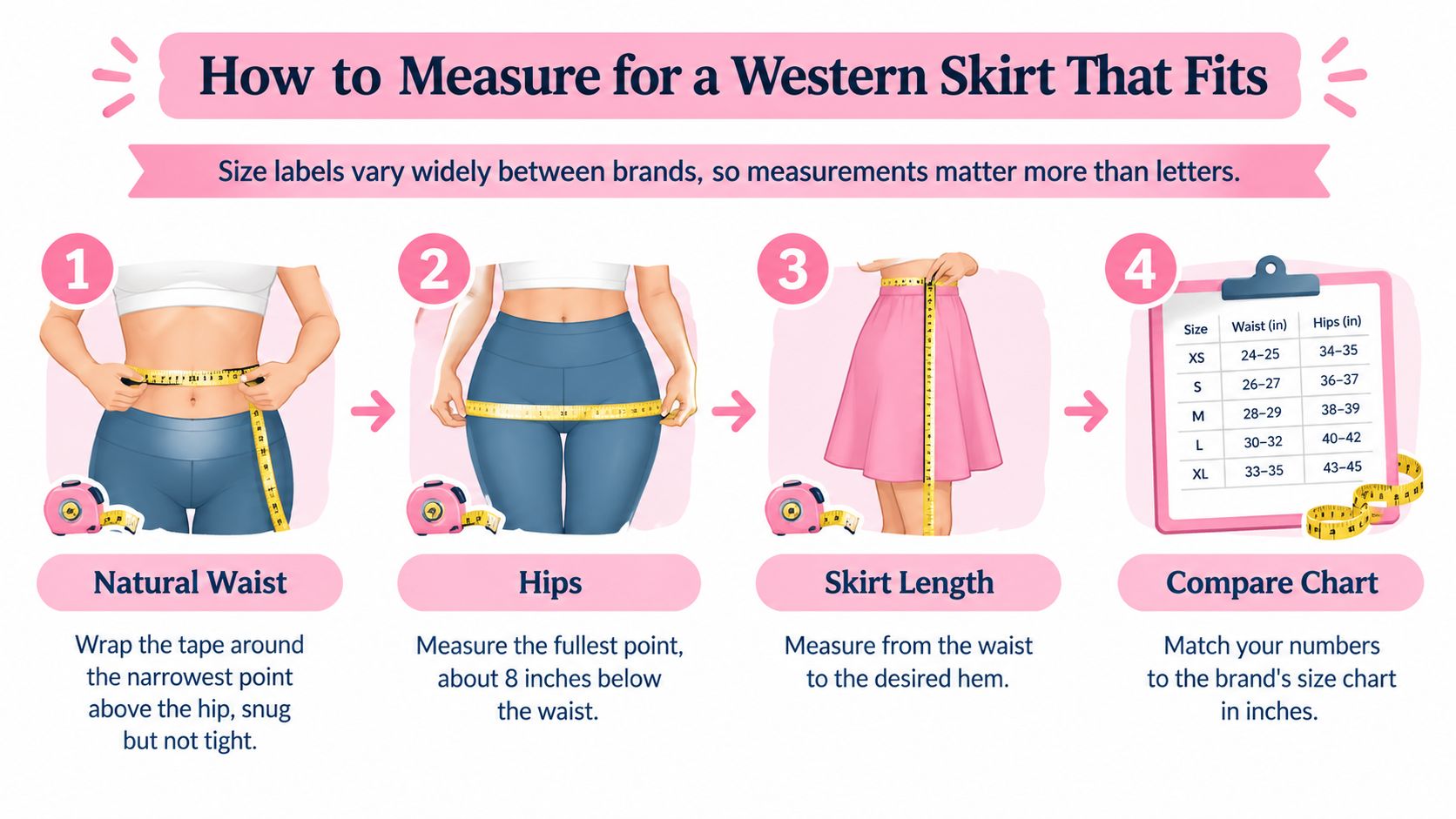
Measure in this order
- Natural waist: wrap the tape at the narrowest point above your hip, snug but not tight. This anchors fitted and high-rise styles.
- Fullest hip: measure around the fullest point, usually about 20 to 23 cm (8 to 9 inches) below the waist. This decides whether yokes and snaps sit flat.
- Desired length: measure from waist to hem, then sit down and recheck where that hem will land.
- Compare both numbers: match waist and hip to the brand chart. If your hip is more than about 10 cm (4 inches) larger than your waist, choose by hip and plan to take in the waist.
- Add ease: allow roughly 2 to 5 cm (1 to 2 inches) for rigid denim, less for stretch denim with good recovery.
- Check rise and yoke: compare yoke placement and rise with your own waist-to-hip distance so seams don't sit on a pressure point.
The variation is documented. Research comparing 120 brands found 2XL chest measurements ranging from 1,000 mm to 1,310 mm on tops, which shows why an XL label alone can't predict skirt fit.
Three questions shoppers ask most
- A-line, waist or hip? Size for the waist if the hip flares freely, unless the yoke is fitted through the high hip.
- How much room for sitting? You need enough ease to sit in a saddle or car without the waistband digging or seams pulling sideways.
- Rigid versus stretch? Rigid denim needs more built-in ease because it won't give for you.
Outfit Ideas for English and Western Looks
A knee-length denim skirt can read ranch-ready with snaps and boots, then quiet equestrian with a plain knit and the same boots. The skirt is the constant; the top, belt, and hem clearance decide the message.
Balance volume like packing a bag: keep the bulk on one half. A full, tiered, fringed, or stiff A-line skirt needs a fitted or tucked top so your waist stays visible when you reach, bend, or mount. A slimmer skirt can take a looser shirt, but tuck or half-tuck it so the fabric does not balloon over the hips.
Outfit pairings for English and Western looks
| Look | Skirt | Top | Footwear and details |
|---|---|---|---|
| Western everyday | Medium-wash denim A-line, knee length | Pearl-snap shirt or fitted tee | Tall boots, slim belt with buckle |
| English-leaning barn day | Dark wool or stretch denim, clean hem | Fitted knit or structured blouse | Tall or ankle boots, minimal jewelry |
| Prairie and festival | Tiered cotton maxi | Peasant blouse or tucked fitted tee | Ankle boots or sandals, fringe bag |
| Ranch to town | Rigid denim midi or knee length | Yoke shirt, tucked | Boots, belt, simple silver earrings |
| Dressy evening | Suede or leather knee skirt | Silk or satin blouse | Heeled booties, statement buckle |
Before you copy a row, test it in the positions you use most. Sit in the car and check whether the hem rides high enough to catch on the seat edge. Climb stairs and see if a long tiered hem steps under your boot. If you ride, swing a leg over or mimic the motion: a skirt that looks calm while standing can pull tight across the thigh or trap extra fabric at the knee.
- Tuck with purpose: use a belt to mark the waist on fuller skirts, and keep the tuck flat so snaps do not gape when you sit.
- Choose one focal detail: fringe, embroidery, or a large buckle can lead the outfit; two or three compete for attention.
- Match your metals: keep jewelry and buckle finishes in the same family so the waist reads intentional.
- Watch boot height: tall boots shorten the visible leg under midi hems, while ankle boots leave a clearer break under knee lengths.
If you need help keeping a pearl-snap shirt smooth through a full tuck or a neat half-tuck, use this guide to wearing a Western shirt. For the quietest English-leaning option, pair a plain navy or dark denim skirt with a fitted knit and tall boots; you will read equestrian without looking dressed for a costume.
Caring for Denim and Western Skirts
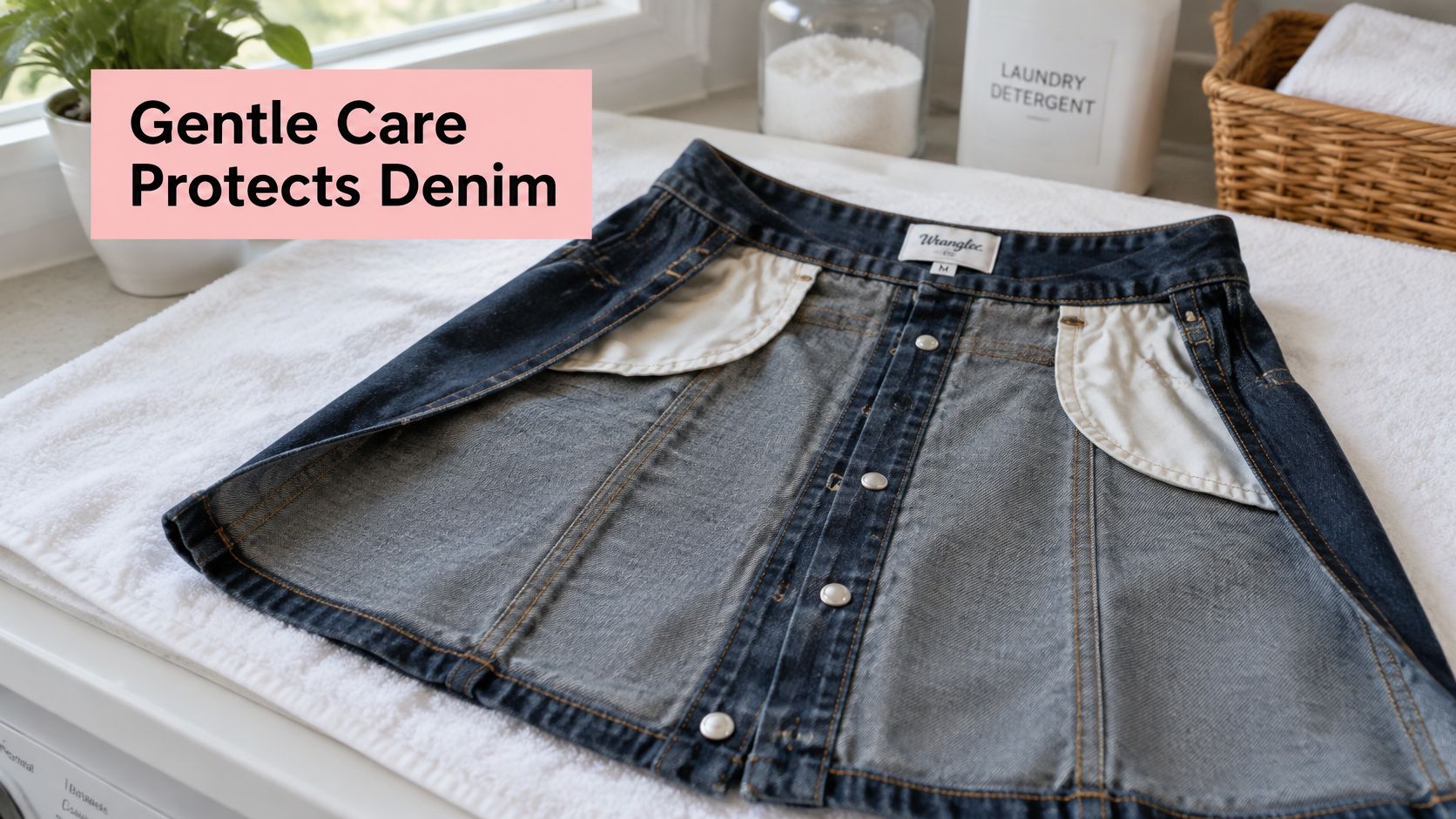
Most damage comes from three sources you can control. Heat drying weakens fibers and elastane. Harsh detergents strip color and finishes. Friction from saddles, car seats, and rough rails wears hems, seats, and belt loops first.
Wash and dry
- Turn inside out: wash in cold water on a gentle cycle to reduce fading and shrinkage.
- Use mild detergent: skip bleach on prints and embroidery, where color loss shows fastest.
- Air dry: lay flat or hang to dry, never in a hot dryer, because heat can distort the waistband and reduce stretch recovery.
- Iron on the reverse: use a medium setting and keep the iron off fringe and raised embroidery.
Materials that need separate handling
- Fringe: brush gently with your fingers and let it dry separately so strands don't tangle or kink.
- Suede: spot clean with a suede brush and a damp cloth rather than soaking it.
- Leather: use a conditioner made for leather and keep the skirt away from prolonged damp storage.
Store, rotate, repair
- Hang or fold at the waist seam: don't stretch the skirt over a narrow rail.
- Rotate wear: don't wear the same skirt daily if you can avoid it, so fibers can rest.
- Repair promptly: restitch a loose belt loop or opening seam before strain turns it into a tear.
Denim fades with each wash. That's normal, not a defect, so expect the color to soften over the first months and wash it only when it needs it.
Choosing Your Skirt by Task
It's 6:45 on a Saturday. You have stalls to clean before noon, a feed run after, and dinner in town at seven. One skirt has to cover all three, and that is exactly how to shop: pick for the hardest job on your calendar. A skirt that survives chores, stairs, and a long drive will handle dinner comfortably.
Generic style guides stop at "does it look good." The two questions that decide whether you reach for a skirt again are the ones those guides skip: will the hem catch on something, and will the waistband still feel right after three hours in a truck seat. Hem clearance works like headroom in a parking garage. Nobody thinks about it until the day they run out.
Barn and riding-adjacent checklist
Test each item while moving, because standing still in a mirror hides every catch point.
- Hem clearance: the hem clears boots and stirrups seated and standing, with the knee fully bent.
- Recovery at the hip: the fabric gives when you mount or squat, then returns instead of bagging out by evening.
- Secure closure: a button fly with a second fastening, or snaps that hold under tension when you lean over a gate.
- Usable pockets: your phone sits fully inside and stays put when you bend.
- Nothing loose near tack: no wide tier or long fringe hanging near a saddle, stall gate, or latch.
For casual wear, reorder the same list. Prioritize lighter fabric in heat, a silhouette that stays comfortable across a car seat, cloth you can wash without fuss, and finishes that still look tidy after repeated wear. If you're weighing dressier barn-ready pieces, this guide to Western riding apparel for women helps sort what belongs near horses and what belongs in town.
Match the situation to the skirt
- Barn chores and trail days: knee-length stretch or medium denim with reinforced seams and a clean hem.
- Barn visits without chore work: a fitted dark skirt with minimal decoration that won't snag.
- Hot-weather days: a rayon or cotton blend in knee or midi length, with shorts underneath if the fabric moves in wind.
- Festivals: a tiered maxi or embroidered skirt with ankle boots, provided you can lift the hem on stairs.
- Work and errands: medium denim at knee length, which sits well through a desk day and washes easily.
Watch the edge cases. A sturdy ranch skirt feels heavy in a packed festival crowd. A romantic tiered skirt needs an underlayer on windy days and patience on crowded stairs. Each skirt is right somewhere and wrong somewhere else.
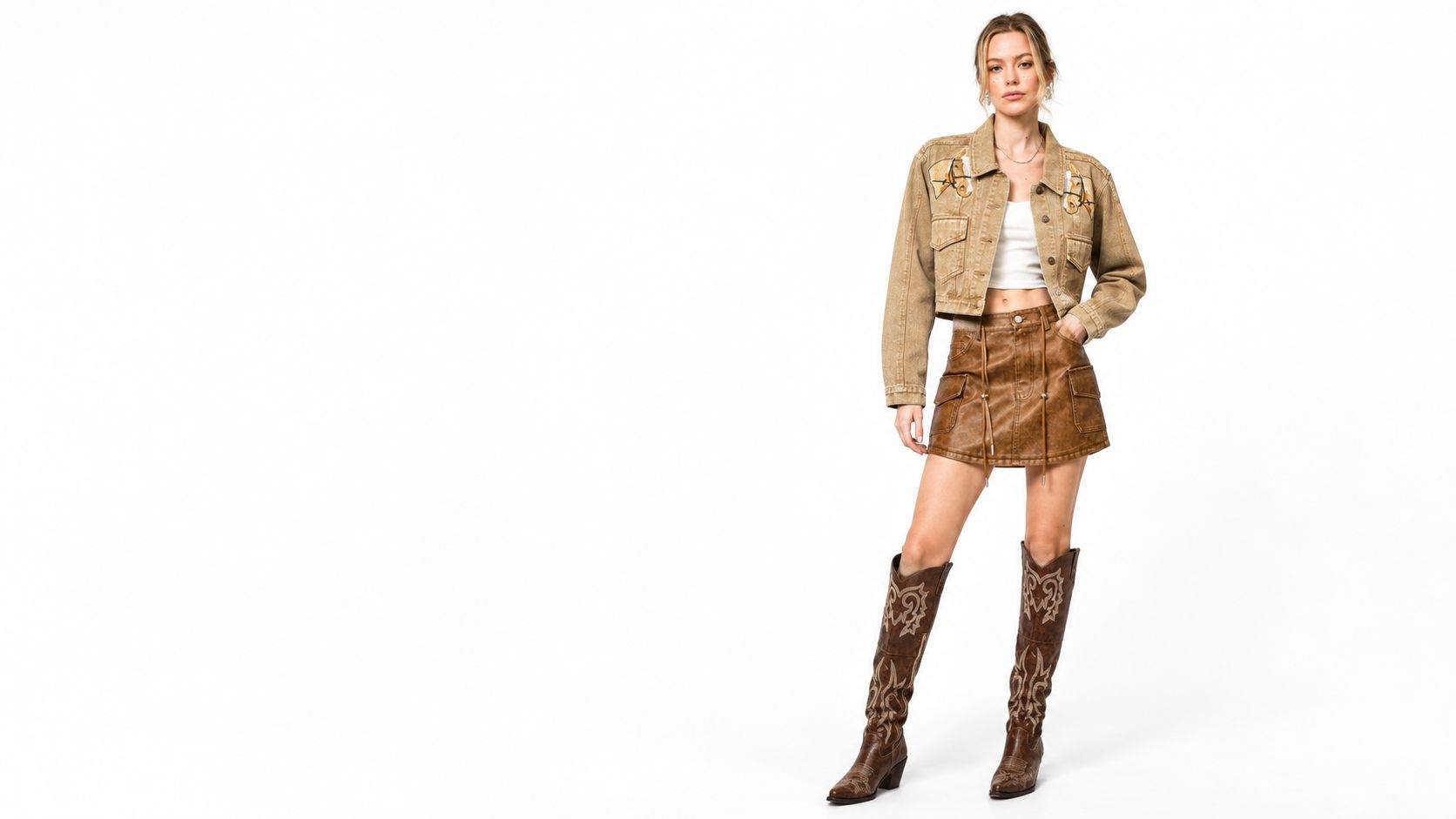
The same base-plus-details logic shows up in the Horseshoes & Horses Embroidered Denim Jacket, which carries horse embroidery on the front and floral horseshoe embroidery on the back and comes in 3 variants. Layered over a tucked top, it still has to pass the seat test: sit down and check that the jacket hem doesn't grind against a stiff skirt waistband.
Make the pick in four steps
- Name the hardest task in one phrase, such as chores, driving, or festival stairs.
- Choose the fabric from the fabric table based on heat, stretch, and care.
- Choose the length from the snag-risk table based on boots and clearance.
- Measure, then check the brand chart for waist, hip, length, and ease, where ease is the extra room cut into the skirt beyond your body measurement.
Compare the women's dresses and skirts at shop.bridleuphope.org against your measurements before you commit. The shop offers free shipping on U.S. orders over $99 to all states and territories, plus an optional Redo add-on at checkout for unlimited, free 30-day returns with shipping protection for a small fee, which takes the risk out of ordering when fit is uncertain.
Pick one use, one fabric, and one length, then buy the skirt that matches the hardest task.
Browse Western and English apparel, boots, accessories, and horse-themed gifts at Bridle Up Hope Shop, where your purchase supports the Bridle Up Hope foundation for girls and women. Bring your measurements, pick the fabric and length for your hardest task, and choose a Western style skirt you'll wear on repeat.
Leave a comment