


You're at a market, holding a pair of vintage leather boots that look as if they've already lived a good life. The leather has a rich patina, the shape is right, and the price feels tempting. Before you buy, look past the romance: check the flex points, stitching, sole attachment, and whether the construction can be repaired. A handsome pair can still be cracked, structurally weak, or cemented in a way that makes a practical repair unlikely.
Vintage boots reward a careful buyer, not an impulsive one. The right pair can offer character and sound construction; the wrong one can turn into an expensive display piece. Judge the boot by condition, construction, and repairability, then decide whether it suits the way you'll wear it.
Table of Contents
- Why Vintage Leather Boots Deserve a Closer Look
- How Vintage Leather Boots Became a Collectible Category
- Decoding Construction, Leather Types, and Hardware
- Inspecting a Pair Before You Buy
- When to Buy Vintage and When to Walk Away
- Breaking In and Wearing Vintage Boots Well
- Caring for Vintage Leather Boots Without Damaging Them
- Restoration, Resoling, and When to Call a Cobbler
Why Vintage Leather Boots Deserve a Closer Look
The appeal of vintage leather boots isn't hard to understand. Older leather often carries a distinctive patina, and a well-made pair can show the traces of work, riding, or military use without looking like a new boot dressed up to appear old. But surface character tells you little about what's happening inside the leather or beneath the sole.
Start with the areas that take stress. Deep cracks across the vamp or ankle flex points can signal more than ordinary creasing. Loose stitches, a sole separating from the upper, a softened heel counter, or leather that sheds reddish powder are reasons to pause. Those problems affect whether the boots can be worn safely and whether a cobbler can repair them without turning the job into a costly rescue.
Patina is not proof of condition
Patina is the change in color and surface that develops with age and use. It can be attractive, but it doesn't prove that the leather remains flexible or that the boot was cared for properly. A pair may look gently worn in photographs while its lining has deteriorated or its sole is beginning to detach.
Ask the seller for clear views of the soles, welt, inside lining, heels, and areas where the leather bends. If you're shopping in person, handle the boots gently. Don't force a stiff or cracked pair to bend just to test it.
Buyer's rule: Buy the boot you can inspect, not the story attached to it.
A seller's description of military, Western, or workwear origins can add context, but it can't replace a condition check. Original hardware and honest wear may be appealing. Structural damage is still structural damage.
The useful question isn't whether a pair is old or attractive. It's whether the boots remain sound enough for your intended use and whether their construction gives you a realistic repair path. That standard separates a wearable find from an attractive risk.
How Vintage Leather Boots Became a Collectible Category
The boots collectors prize today grew out of industrial systems built to supply dependable footwear and equipment at scale. That history helps explain why vintage pairs often combine sturdy leather uppers with practical soles and hardware. Their value isn't only visual. Many designs reflect the demands of work, military service, and riding.
Industrial production changed the product
During the American Civil War, military orders for leather boots, cartridge belts, and harnesses helped expand leather manufacturing in Milwaukee. In 1860, the city had at least nine tanneries employing more than 100 workers each, processing about 70,000 hides annually. Within a decade, those figures had more than doubled. Mechanization and chemical innovations shortened tanning time, and Milwaukee's recorded hide production rose from 232,219 hides in 1875 to 568,393 in 1885, 912,847 in 1895, and more than 1.7 million in 1905, as documented in the Encyclopedia of Milwaukee's account of the leather industry.
Those changes helped move leather from small-scale craft toward mass production. The durable, structured boots associated with vintage workwear and military style emerged from factories organized to supply large customers with consistent goods.
Wartime orders normalized practical features
During World War I, the British Army required at least 1.2 million pairs of Wellington boots for flooded trenches. That demand reflected a basic need for waterproof footwear, and it helped make the form familiar beyond specialist use. World War II extended the pattern in the United States. The Naugatuck Footwear Plant employed more than 1,000 people when the country entered the war and ultimately supplied more than 1.2 million boots of various types to the military, including 650,000 leather-top overshoes for infantry, according to the history of the Naugatuck Footwear Plant.
The shift toward vulcanized rubber soles mattered because rubber offered waterproofing and wear resistance. That's why many vintage boots pair a leather upper with a rubber sole: the combination answered practical demands as manufacturing evolved. Later wartime demand also pushed leather prices sharply upward and encouraged cheaper synthetic substitutes, leaving a lasting mark on footwear materials.

That background gives you a useful lens, not a guarantee of quality. A boot associated with a military or workwear style may be collectible, but its individual construction and current condition still decide whether it's a smart purchase.
Decoding Construction, Leather Types, and Hardware
A listing can make a boot sound sturdy without telling you whether a cobbler can take it apart and repair it. Learn to identify the basic construction before you decide that a pair is worth the asking price.
Start with how the sole is attached
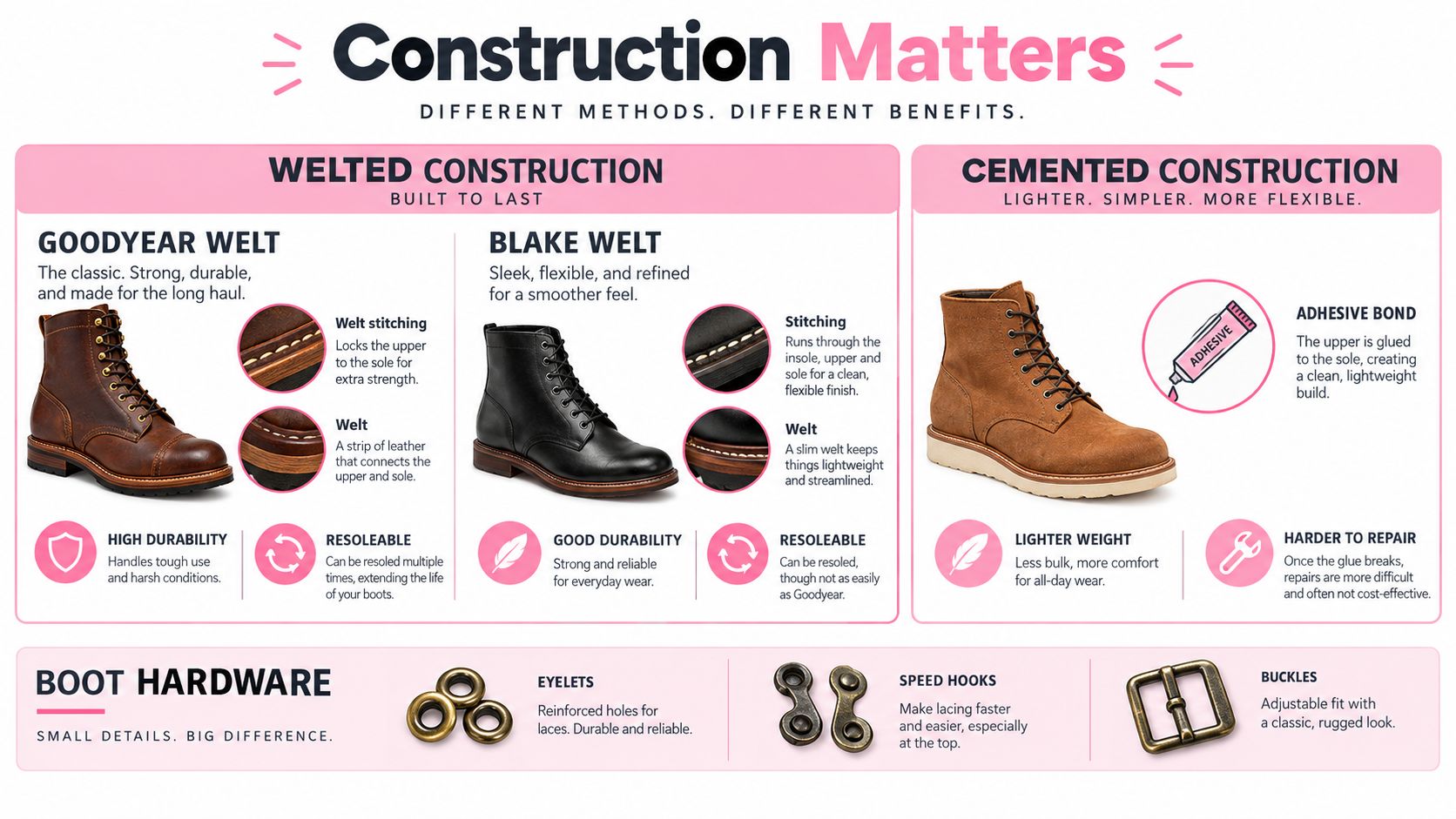
In welted construction, stitching joins the upper, insole, and a strip of material called the welt. A Goodyear-welted boot uses a welt that helps make resoling practical. Blake construction stitches through the sole and insole, creating a different profile and repair process. Neither term is a magic stamp of quality, but both tell you more than “leather sole” alone.
A cemented boot relies on adhesive to attach the sole. It may feel light and comfortable, but a worn or separated sole can be harder to repair, and the repair may not be economical. Think of welted construction as a shoe assembled in layers that a skilled cobbler can work through; cemented construction is more like a bonded assembly that may resist clean disassembly.
Read the leather and hardware
Full-grain leather keeps the natural grain surface and can develop a pronounced patina when it's been maintained. Top-grain leather has had its surface altered, while corrected-grain leather is treated to create a more uniform appearance. Those labels alone don't tell you whether an old pair is healthy. Look for flexible, intact leather rather than trusting a product description.
Inspect eyelets, speed hooks, buckles, zippers, and laces. Original hardware can support a boot's history, while replacements may reflect sensible maintenance. Ask whether the lining, heel stack, and sole have been replaced, and whether the seller knows the sole material. These details help you judge both originality and repair history.
When comparing construction details across footwear, a product listing such as Loake Ghillie brogues with a welted sole can help you see how a seller describes a repairable construction. It's a reference point, not a substitute for checking the vintage boot itself.
Inspecting a Pair Before You Buy
Treat an inspection as a practical sequence, whether you're holding the boots or studying seller photos. Ask for close-ups in good light, especially if the listing only shows side views. A careful seller should be willing to show the sole, stitching, lining, heel, and flex zones.
Check the structure first
Look at the welt where the upper meets the sole. Check for gaps, loose stitching, or sections lifting away. Examine the heel and counter, the stiffened area that supports the back of the foot. If it's crushed or collapsed, the boot may no longer hold the heel securely.
Next, compare the soles. Uneven wear can be normal, but separation, deep cracks, or a badly compressed heel stack need a repair estimate. Look inside for a flattened insole, torn lining, or signs of moisture damage. A musty smell can point to poor storage or mold exposure; don't assume it will disappear with polish.
Inspect the leather without forcing it
Study the bends across the vamp and around the ankle. Fine creasing is expected. Deep cracks, powdering, or leather that flakes when handled suggest deterioration, not just use. Red-brown powder can be a warning sign of red rot, a form of chemical breakdown that weakens the leather fiber structure, as described in this conservation study of leather deterioration.
If the pair is in front of you, flex it only gently. Don't soak it, twist it, or repeatedly bend a damaged section to see what happens. If you're assessing a listing, request a short video showing the soles and uppers from several angles.
| Red Flag | What It Means | Action |
|---|---|---|
| Powdering or deep flex cracks | Leather may be breaking down | Walk away or seek specialist advice |
| Sole lifting from the upper | Attachment has failed or is failing | Ask a cobbler for an assessment before buying |
| Loose stitching at stress points | The boot may need repair | Price the repair and check the surrounding leather |
| Crushed heel counter | Support may be compromised | Avoid for regular wear unless a cobbler confirms a viable repair |
| Musty odor or damaged lining | Possible moisture or storage damage | Request more information and inspect carefully |
Good signs include intact lining, even sole wear, clean stitching, and leather that remains flexible without flaking. When the evidence doesn't add up, keep your response simple: “Thanks, but I'm going to pass because of the condition.” A collectible boot will come along again.
When to Buy Vintage and When to Walk Away
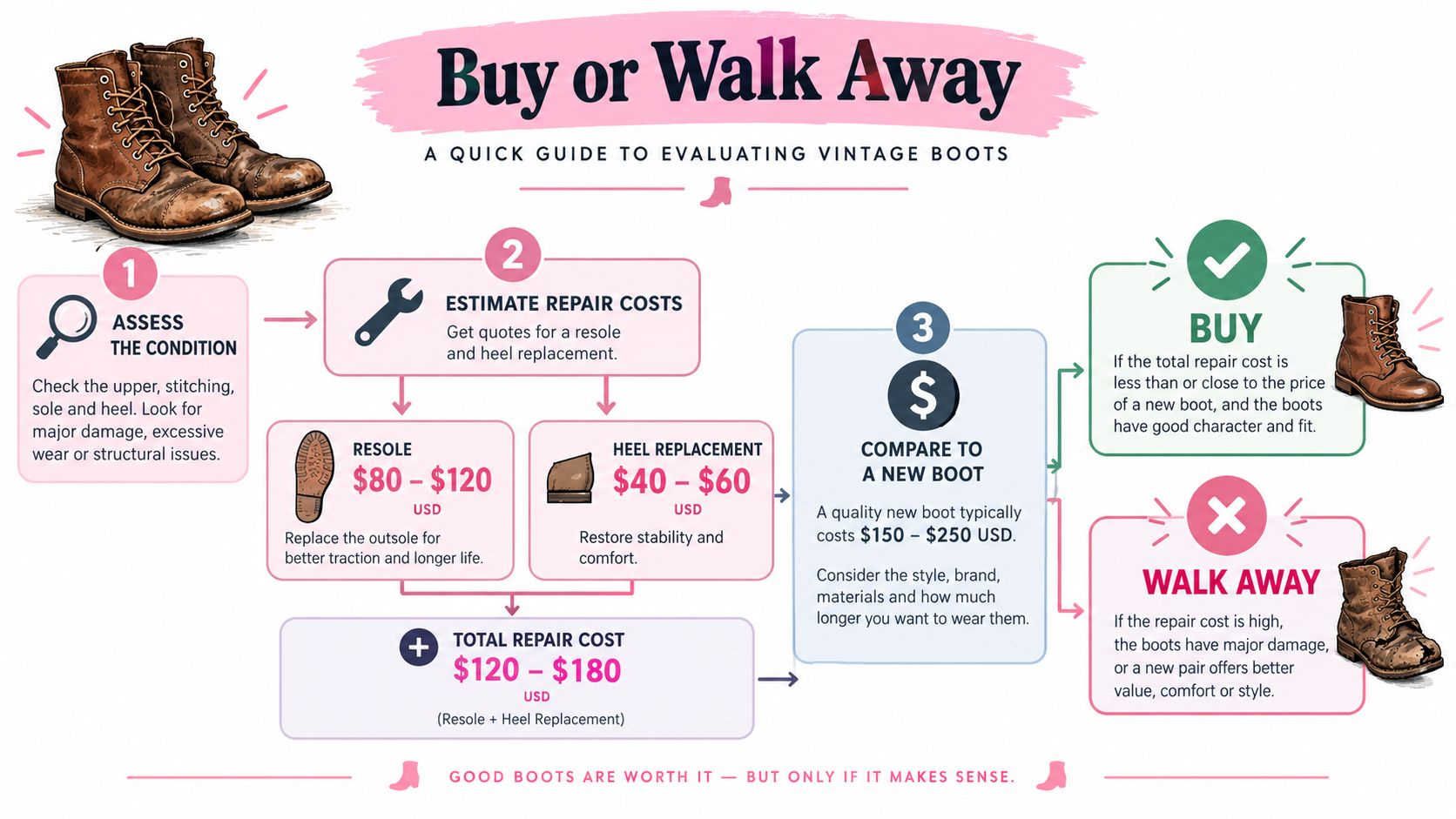
Don't let a low asking price make the decision for you. A vintage boot is a good buy only when its condition, construction, repair cost, and intended use make sense together. An older boot with hidden damage can cost more to own than a newer, repairable pair.
A repair guide estimates professional resoling and heel replacement at $80–$140, compared with roughly $250–$600 for new quality leather boots, while noting that actual prices vary by region and construction in its leather shoe and boot repair guide. Use those figures as a rough comparison, not a promise of what your local cobbler will charge. Ask for an estimate before you commit.
Make the decision by repairability
Buy confidently when the upper is sound, the welt is intact, the soles show manageable wear, and the fit works for your foot. A replaced sole isn't automatically a drawback if it's a competent repair and the rest of the boot is healthy.
Negotiate when flaws are cosmetic or a repair is straightforward. A scuffed toe or replaced lace is different from cracking across a flex point. Don't pay a collector's premium for originality if the boots need substantial work to become wearable.
Walk away from powdery leather, deep structural cracking, a collapsing counter, or a cemented sole that's separating from a weakened upper. A newer, well-built welted boot may be a better long-term choice than a romantic-looking pair that can't be repaired economically.
If you're weighing riding style against everyday wear, use a practical comparison like this guide to the best Western riding boots to clarify what shape and function you want. Then return to the vintage pair's condition. Style should help you choose between sound options, not excuse a bad one.
Breaking In and Wearing Vintage Boots Well
Don't assume an old pair is already broken in for you. The previous owner's foot shape may be different, and years in storage can leave leather stiff. Start with a short, controlled wear rather than a full day on your feet.
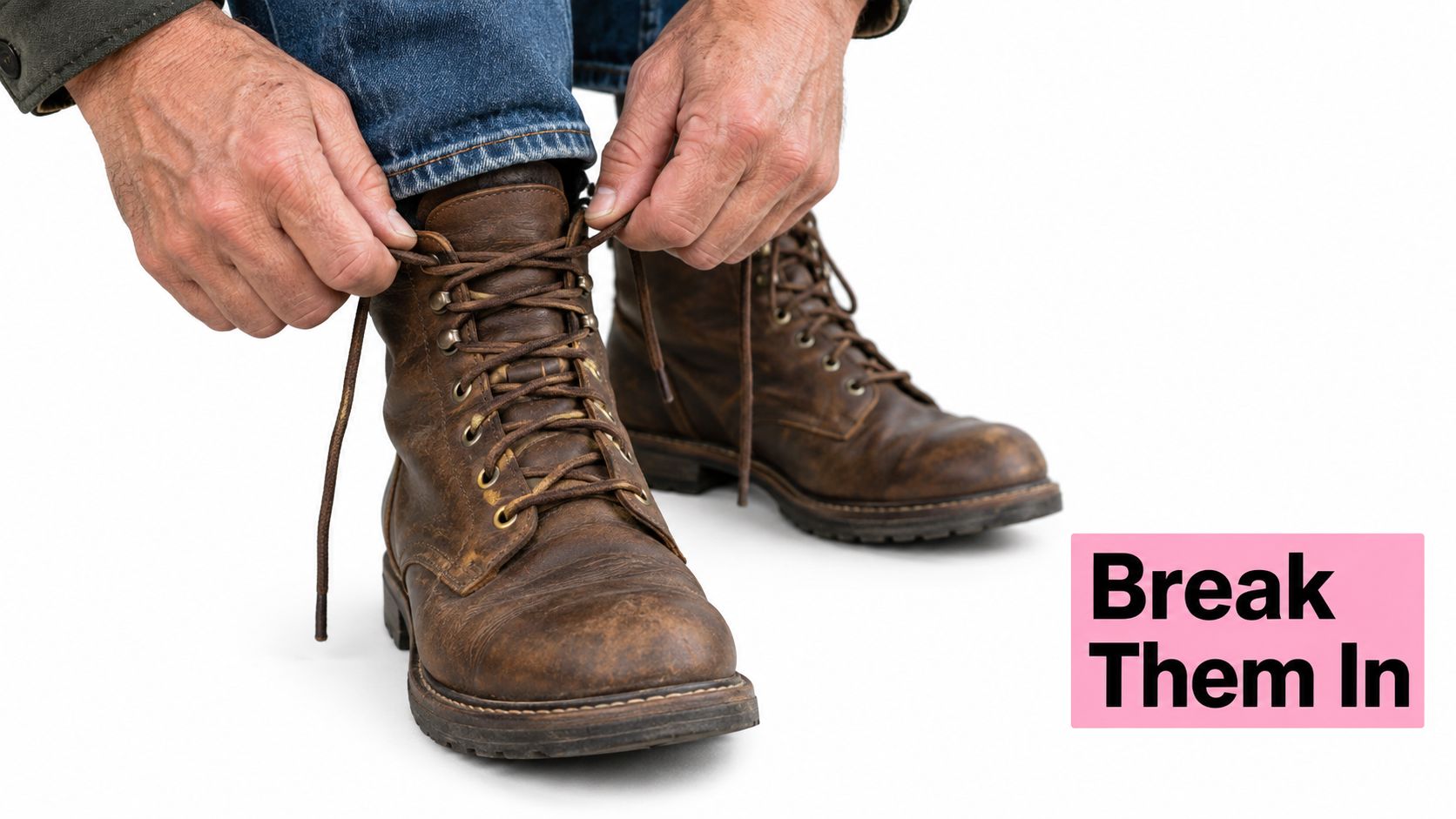
Wear thick socks and check for rubbing around the heel, ankle, and seams. Lace the boots securely without cranking down on the eyelets. If the leather feels sound, gently flex the sole and ankle by hand. Don't force stiff, cracked, or powdery leather; that kind of pressure can turn a warning sign into a break.
Let fit problems guide the fix
If the boot feels loose but structurally sound, a thin insole may improve the fit. Replace stretched or damaged laces if they prevent you from holding the foot securely. If the heel slips because the counter has collapsed, don't mistake the problem for ordinary break-in. Have a cobbler assess whether the counter can be reinforced.
For boots that need stretching or more involved shaping, use a cobbler rather than an improvised method that applies pressure unpredictably. Vintage leather can respond unevenly, and a repair professional can focus the adjustment where the fit problem occurs.
After wear in wet weather, wipe off surface dirt and let the boots dry at room temperature. Keep them away from radiators and direct heat, which can dry out old leather. A protective product may help sound, wearable boots, but test it on a discreet area first because it can darken or alter the finish.
For a rider choosing between styles for different uses, this overview of English riding boots for women can help put fit and function in perspective. Wear vintage boots gradually and deliberately. Patina earned through ordinary use is appealing; damage caused by rushing the break-in isn't.
For a visual reference on lacing and wear, watch this boot-focused video.
Caring for Vintage Leather Boots Without Damaging Them
Care advice changes depending on whether the boots are sound and wearable or fragile enough to be treated as artifacts. Routine oiling and saddle soap aren't automatic fixes. On aged or weakened leather, repeated applications can alter the surface or leave the material too soft. The Museum of Florida History's leather artifact care guidance cautions that continued oiling and saddle soaping can shorten the life of historic leather.
Keep storage steady and breathable
For wearable boots, brush away surface dirt with a soft brush and use a suitable conditioner sparingly, only when the leather is dry and still structurally sound. Don't apply heavy dressings to cracked, powdery, or weak leather. Conditioning can't rebuild damaged fibers, and excess product can make a fragile upper harder to preserve.
Leather conservation guidance recommends storing footwear around 45–60% relative humidity. Below about 35–40%, leather can become dry and brittle; sustained levels above 65–70% increase mold risk. Use a hygrometer if the storage area tends to swing between damp and dry, and keep boots away from radiators, damp basements, and unconditioned vehicles. The Museums Galleries Scotland guidance on temperature and humidity also recommends limiting short-term humidity changes to less than 5 percentage points within 24 hours.
Support the shaft and toe with acid-free tissue, and keep storage breathable. Never seal damp boots in plastic. After wear, let them dry naturally at room temperature before putting them away.
For fragile pairs: If you see red-brown powder, deep cracks, or leather that breaks under gentle handling, stop home treatment and ask a leather conservator for advice.
Protect boots from prolonged strong light and polluted air. For displayed or collectible pairs, prioritize stable conditions and minimal handling over making the leather look freshly polished. For wearable pairs, focus on gentle cleaning, controlled drying, and avoiding unnecessary treatments. If you're caring for horse-themed belongings alongside boots, horse saddle decor can offer a related styling reference, but the same cleaning treatment shouldn't be assumed suitable for every leather object.
Restoration, Resoling, and When to Call a Cobbler
A cobbler can often address worn soles, heel wear, and some stitching problems if the upper and attachment points remain sound. The hardest repairs are the ones that start with deteriorated leather: advanced red rot, a crushed counter, or a cemented sole separating from a weak upper may not be practical to restore.
Ask a cobbler to identify the construction before authorizing work. Find out whether the boot can be resoled, which sole materials suit its original design, and whether the lining and markings can remain intact. A leather, rubber, or hybrid sole may each make sense, depending on how you plan to wear the boots. For collectible pairs, discuss how a replacement could affect originality before the work begins.
Use this quick checklist after purchase:
- Clean gently: Brush off dirt before considering products.
- Condition selectively: Apply a modest amount only to dry, sound leather, and test first.
- Dry without heat: Let wet boots air-dry at room temperature.
- Store with support: Use breathable materials and preserve the boot's shape.
- Get expert help: Stop wearing boots with spreading cracks, powdering, or failing construction.
There's no universal conditioning schedule for vintage leather. Treat the material you have, not the calendar. Waterproof only when the leather and finish are suitable for the product, and ask a cobbler or conservator if the boots are historically significant or visibly fragile. A beloved pair is ready to retire when its structure can no longer support safe wear or repair would do more harm than good.
Bridle Up Hope Shop offers equestrian and horse-themed apparel, riding attire, accessories, gifts, and home goods in English and Western styles. If you're shopping for equestrian-inspired pieces alongside your vintage-boot search, visit Bridle Up Hope Shop, where annual net profits support the Bridle Up Hope foundation.

Leave a comment