


You've probably seen it without thinking much about it, a flash of metal at a friend's waist, a belt that looks a little more polished than the rest of her outfit, and then the small surprise of realizing the buckle isn't just decorative. It's a snaffle bit shape, borrowed from horse tack and turned into a fashion detail that riders notice right away.
That recognition is what makes a snaffle bit belt feel different from an ordinary novelty belt. For someone who's spent time around horses, the buckle carries a bit of history and a lot of visual shorthand. For everyone else, it just looks clean, equestrian, and slightly more interesting than a standard buckle. The difference is worth understanding because it helps with the questions shoppers end up asking, like fit, material, styling, care, and whether the belt can also be a thoughtful gift.
Table of Contents
- The Moment You Notice the Buckle
- What a Snaffle Bit Belt Actually Is
- From Bronze Age Kazakhstan to Your Closet
- Materials, Hardware, and How They Feel
- Getting the Fit Right the First Time
- Styling a Snaffle Bit Belt Two Ways
- Care That Keeps the Buckle and Strap Looking New
- Gifting a Snaffle Bit Belt with Meaning
The Moment You Notice the Buckle
At a barn lunch, a horse show, or just standing in line behind a friend at coffee, the sightline is often the same. Your eye lands on the buckle before you notice the rest of the outfit, because a snaffle bit belt has a shape that reads as deliberate. It's not loud, but it isn't generic either.
That reaction usually starts a search. One person wants to know where the look came from, another wants to know whether it's supposed to feel English or Western, and a third just wants to know if the belt will work with jeans or a dress. Those are all fair questions, and they're the right place to begin.
A good way to think about this accessory is as part heritage piece, part styling tool. The buckle borrows a form that horse people already recognize, while the strap decides whether the belt feels casual, polished, sporty, or giftable. If you're browsing general mens belt collections like browse mens belt collections, the main thing to notice is how quickly hardware changes the tone of an outfit.
Practical rule: if the buckle looks like a real piece of tack, the rest of the belt should stay simple.
That's why this style gets noticed so quickly. It carries a barn-world memory, even when it's worn far from the barn.
What a Snaffle Bit Belt Actually Is

A snaffle bit belt is a fashion belt built around a buckle shaped like the snaffle bit, the simplest kind of horse bit. That shape comes from tack, but the belt's job is plain enough, it holds a look together while giving the eye a clear equestrian reference. For a shopper who wants to compare styles, browse mens belt collections can show how much the buckle changes the feel of an otherwise ordinary strap.
The familiar outline usually comes from a pair of rings joined by a center bar or a small jointed section. In horse gear, that structure is tied to direct pressure on the horse's bars and the corners of the lips, which is why the form is so recognizable in both saddlery and fashion. If you want to see the historical object behind the look, The Metropolitan Museum of Art's snaffle example shows the same basic shape in an art and museum context.
The parts you're actually looking at
When people talk about this belt, they are usually talking about two separate choices. The first is the buckle, which carries the snaffle shape. The second is the strap, which can be leather, web, elastic, or another material that changes how the whole piece wears.
That split matters because the same buckle does different work on different straps. Leather gives it a calmer, more polished feel. A softer or stretchier strap makes it read more relaxed and easier to wear every day. The hardware supplies the equestrian note, and the strap decides whether that note sounds crisp, casual, or somewhere in between.
Why the shape feels so familiar
The form is simple, centered, and easy to read at a glance. That is part of why it feels so natural in fashion, even for someone who has never handled horse tack. A snaffle bit does its work through direct contact, and the belt buckle borrows that same straightforward visual logic.
A helpful way to sort the style is to separate meaning from use. The buckle gives you the horse reference. The strap answers the practical questions a shopper usually has, such as whether the belt will feel dressy enough, relaxed enough, or balanced enough for a specific outfit. That is the difference between a novelty piece and a belt people reach for.
If you keep that in mind, the rest gets easier to judge. The buckle is the story. The strap is the everyday wear.
From Bronze Age Kazakhstan to Your Closet

A snaffle bit belt carries a buckle shape with a long working life, and that history is part of why the design still feels so natural on modern clothing. The earliest horse-management evidence is often placed in the Botai culture of ancient Kazakhstan, with later metal examples usually linked to Bronze Age contexts. Those first forms were made for control and riding, not for style, yet they established a visual idea that has stayed recognizable. Gateway Gazette's brief history of bits follows that early development in a clear way.
Archaeological examples from the Villanovan and Etruscan world show that the snaffle was already part of elite horse gear in the 8th–7th century BCE. The Met notes that horse equipment in that setting signaled wealth and high status, which helps explain why bit-shaped hardware still reads as polished rather than arbitrary. The Met's snaffle entry keeps that link between craftsmanship and status in view.
Xenophon, writing around 430–355 BCE, described spiky mouthpieces he called “hedgehogs,” a reminder that riders were already experimenting with control and severity in Classical antiquity.
For a shopper, the useful part is simple. The buckle's two rings, centered bar, and jointed look carry the same visual logic horse people have understood for centuries, while the belt itself translates that tack language into something easy to wear with clothes. The shape feels believable because it has stayed legible for more than 2,500 years.
That long line of use gives the belt a quiet credibility. It does not need extra ornament to explain itself, because the form already tells a story that moves from ancient horse gear into the modern closet.
Materials, Hardware, and How They Feel
The strap and the buckle do different jobs, and you feel that difference every time you wear the belt. A full-grain leather strap feels heftier and dressier, while web or canvas reads lighter and more casual. Elastic-blended construction adds give, which is useful if you want a friendlier fit or a belt that doesn't feel fixed in place all day.
Strap choices at a glance
| Strap Material | Typical Hardware | Best Wardrobe Match | Feel |
|---|---|---|---|
| Full-grain leather | Plated zinc or alloy, brass, or stainless | Dresses, blouses, tailored denim, riding-inspired looks | Structured, polished, supportive |
| Web or canvas | Plated zinc or alloy | Jeans, weekend wear, relaxed barn-day outfits | Light, easy, casual |
| Elastic-blended | Plated zinc or alloy with stretch construction | Gifts, changing sizes, all-day comfort | Flexible, forgiving, soft on fit |
On the hardware side, most fashion belts use cast zinc or alloy with a plated finish because it keeps the buckle decorative and affordable. If longevity matters more to you than price tier, solid brass or stainless steel is the sturdier direction. An antiqued finish or enamel detail can push the look Western, while a polished silver tone tends to feel cleaner and a bit more English.
The best way to choose is by wardrobe, not by the label on the buckle. A black leather strap with polished hardware will sit neatly with a blazer or a shirtdress. A tan web strap with a brass finish feels more at home with denim and boots. The buckle shape stays the same, but the finish changes the whole message.
If you want one clean rule, use this one. Pick the strap for comfort, pick the buckle for the statement. Everything else follows from that.
Getting the Fit Right the First Time
A lot of shoppers make the same mistake with a belt. They order by pants size, then wonder why the buckle sits too far off-center or the strap barely reaches the correct hole. Belts fit by length and overlap, not by the number on a jeans tag.
The most practical starting point is a belt that matches the way equestrian styles are commonly built. Retail examples often use widths from 1.125 in to 1.5 in, and waist ranges can run from 24 in to 40.5 in or beyond, depending on the construction. That range matters because the buckle itself is a scaled-down version of tack hardware, not a one-size-fits-all fashion token. A kids' snaffle bit leather belt example shows how width and fit are built into the design.
Three checks that save returns
- Measure a belt you already wear well. Lay it flat and measure from the buckle end to the hole you use most often. That gives you a realistic starting point instead of a guessed size.
- Add about 2 in for comfortable overlap. That keeps the tip from looking too short and gives the buckle room to sit naturally.
- Choose fixed-hole leather or elastic stretch based on the gift. Leather is better if you know the wearer's size. Elastic is easier if you're buying for someone else and want the belt to forgive a little variation.
If you're buying for a child, fit decides everything, because narrower 1 1/8 in straps and shorter waist ranges change the whole feel of the belt.
For equestrian outfits, buckle width matters too. Snaffle-style hardware is often scaled from tack norms, where mouth widths around 5 in and ring diameters around 2 1/2 in to 4 in are common in horse gear. A belt buckle doesn't copy those exact dimensions, but the proportions are what keep it looking believable instead of oversized.
If you want a deeper look at riding wardrobes that pair well with this kind of accessory, riding clothes for women offers a useful style context. The short version is simple. Measure the belt you'll wear, not the jeans you happen to own.
Styling a Snaffle Bit Belt Two Ways
A snaffle bit belt can lean English or Western without changing the buckle at all. The difference comes from the rest of the outfit, especially the color palette, the shoe choice, and whether the hardware is polished or antiqued. That makes this accessory unusually flexible for horse lovers who dress across both traditions.
English styling
- Fitted blouse with denim or a skirt. Keep the top clean and the lines close to the body so the buckle feels intentional rather than busy.
- Shirtdress in navy or hunter green. Those colors give the belt a crisp backdrop and let the metal finish stand out.
- Clean leather boots. A polished boot finishes the look without making it feel costume-like.
Western styling
- Denim skirt or bootcut jeans. Let the belt sit where it can be seen, especially if the buckle has a brass or antiqued finish.
- Chambray top. The fabric keeps the outfit relaxed and lets the equestrian hardware do the talking.
- Felt hat or bolo tie. Use one strong accessory, not both, if you want the look to stay balanced.
A helpful comparison point is the belt silhouette itself. skinny vs wide belt styling is a good reminder that width changes how formal or relaxed a belt reads, even before you notice the buckle. That matters here because a narrower strap can feel more refined, while a wider one can hold its own with denim and heavier layers.
If you want one quick mixing trick, use this. A polished silver buckle reads English even with jeans, while an antiqued brass buckle reads Western even under a blazer. The belt doesn't need to announce a category, it just needs to support the rest of the outfit.
To round out the idea, some shoppers like to pair their belt with smaller matching accessories, and a linked piece like snaffle bit bracelet can echo the same motif without making the outfit feel overdone.
Care That Keeps the Buckle and Strap Looking New
Leather, webbing, and metal all age differently, so care should be specific. A belt you wear to the barn will collect dust and sweat faster than one you only wear to dinner, and the hardware will show that wear if you ignore it. The fix is routine, not fuss.
For leather, condition the strap every few months with a neutral balm, and don't soak it. Water alone isn't the main enemy, but a soaked strap can stiffen or distort if it's not dried properly. If the belt has seen a muddy day, let it dry at room temperature before putting it away.
For web or elastic, wipe it with a damp cloth and a little mild soap, then let it air dry. Don't machine wash it, because agitation can weaken the shape and wear down the stitching or stretch. That's especially true if the buckle is heavy enough to tug on the webbing.
For the hardware, buff it with a dry soft cloth after wear. Don't use abrasive polish on plated finishes or antiqued metal, because you can scratch the surface or strip the look you bought in the first place. A little attention after use goes a long way here.
Hang it or roll it, don't fold a stiff leather belt in half.
If you're comparing how hardware ages across accessories, a useful parallel is clasp vs strap wear. The principle is the same, the visible hardware gets scuffed first, so storage and gentle cleaning matter more than people expect.
Gifting a Snaffle Bit Belt with Meaning
A snaffle bit belt makes sense as a gift because it's small enough to feel personal and specific, but useful enough that it won't sit in a drawer. It also carries the kind of equestrian symbolism that horse lovers recognize immediately, strength, connection, and a nod to the tack world without needing a long explanation.
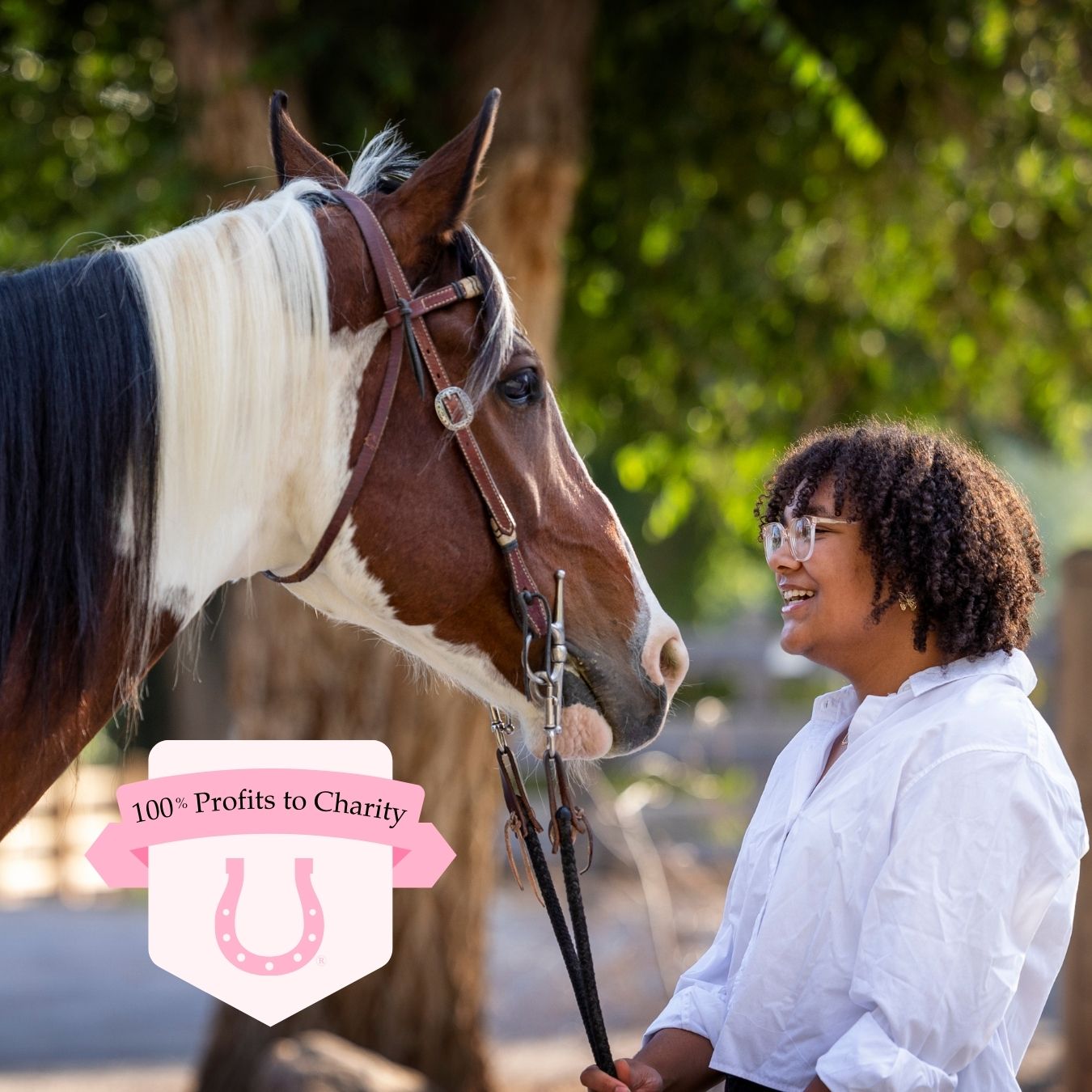
That's part of why it pairs well with a charitable purchase. At Bridle Up Hope Shop, 100% of annual net profits support girls and women through horses and habits, so the gift does more than land on a waist or in a closet. It supports a model tied to confidence, resilience, and equestrian connection. A practical companion item like the AWST International snaffle bit leather tote bag can make the gift feel complete without losing the horse motif.
For families, a belt can also be bundled with a book. 7 Habits of Happy Kids (Book 2) When I Grow Up fits naturally here, because it focuses on Habit 2, Begin With The End In Mind, and the story follows Allie as she learns that goals matter, but they happen one step at a time. It's a hardcover picture book for ages 2 to 8, written by Sean Covey and illustrated by Stacy Curtis, which makes it easy to gift alongside an accessory without overcomplicating the choice. For younger siblings or classrooms, the broader The 7 Habits of Happy Kids title can also work as a matching idea, since it speaks to ages 2 to 10 and reinforces the same barn-friendly values of planning ahead, staying organized, and working together.
Last-minute buyer questions
- Can a non-rider wear one without it feeling costume-like? Yes, if the strap is simple and the buckle finish matches the rest of the outfit.
- What width suits a petite frame? Narrower straps around 1 1/8 in usually sit more lightly than wider ones.
- How do I tell a quality buckle at a glance? Look for clean casting, even plating, and a shape that sits centered instead of wobbling or looking hollow.
A gift like this works best when it feels chosen, not random. The buckle gives it horse sense, the strap gives it wearability, and the charitable model gives it a reason to feel good long after the wrapping paper is gone.
If you're ready to turn that idea into something real, visit Bridle Up Hope Shop for equestrian belts, jewelry, books, and horse-themed gifts that fit both the wardrobe and the cause. You'll find pieces that speak to riders, families, and anyone who wants a gift with a little history behind it.
Leave a comment