


You've got the leggings, a sweater and a pair of boots ready, but the little loop under the foot feels less straightforward than it looked online. Should it sit against your heel? Go over your socks? Disappear inside your shoes? Before you build the outfit, check whether the leggings are long enough for that strap to sit comfortably.
Knowing how to wear stirrup leggings starts with fit, not footwear. Get the inseam and underfoot placement right, then choose between a practical riding setup and a more deliberate street look.
Table of Contents
- Choosing the Right Inseam and Strap Fit
- How to Put On Stirrup Leggings Without Distorting Them
- Choosing Shoes That Keep the Strap in Place
- Styling Stirrup Leggings for Everyday Looks
- Riding Days and Everyday Wear Need Different Setups
- Fixing Strap Pulls, Ride-Up and Wrinkles
- Confirm the Fit and Choose Your Pair
Choosing the Right Inseam and Strap Fit
Start with a soft measuring tape and leggings you already like wearing. A familiar pair gives you a useful length reference before you wrestle with a new garment.
Measure before trying them on
Lay your well-fitting leggings flat, without stretching them, and measure from the crotch seam to the hem edge. Compare that measurement with the inseam listed for each size you're considering. Check how the seller measures stirrup styles, because the foot loop shouldn't be treated as extra usable leg length.
Choose a size that accommodates your waist and hips as well as your leg length. Our guide to English riding pants helps distinguish riding-focused cuts from everyday leggings.
Before pulling the new pair fully on, inspect the loop and its attachment. Look for a flat, low-bulk seam, rather than a thick ridge that will sit beneath your foot.
Make the barefoot check
At the initial try-on, stand barefoot with the strap beneath your arch. The loop should lie flat, while the fabric immediately above the ankle stays smooth. The Fashionista styling guide provides useful outfit context, but foot comfort must come before the shoe choice.
- Hard pulling beneath the foot: Look for a longer inseam rather than stretching the loop.
- Folds around the ankle: Try a shorter leg length without making the waist too tight.
- Different arch shapes: Compare where the loop rests on a high arch versus a flatter foot. A high arch may need more usable length.
- Sideways pressure: Make sure the loop isn't twisted before deciding the size is wrong.
Tall wearers usually need more inseam length; petite wearers usually need less. The fix is the cut or size, not tighter shoes.
How to Put On Stirrup Leggings Without Distorting Them
The leggings look smooth in the mirror, then creep upward during the walk from the car. Pulling harder at the waistband won't solve that problem. The fix starts before the fabric reaches your knee, with even distribution rather than a single upward tug.
The controlled method in Avurer's stirrup leggings guide keeps tension spread through the garment instead of concentrating it at the waist or foot loop.
Roll, place and unroll
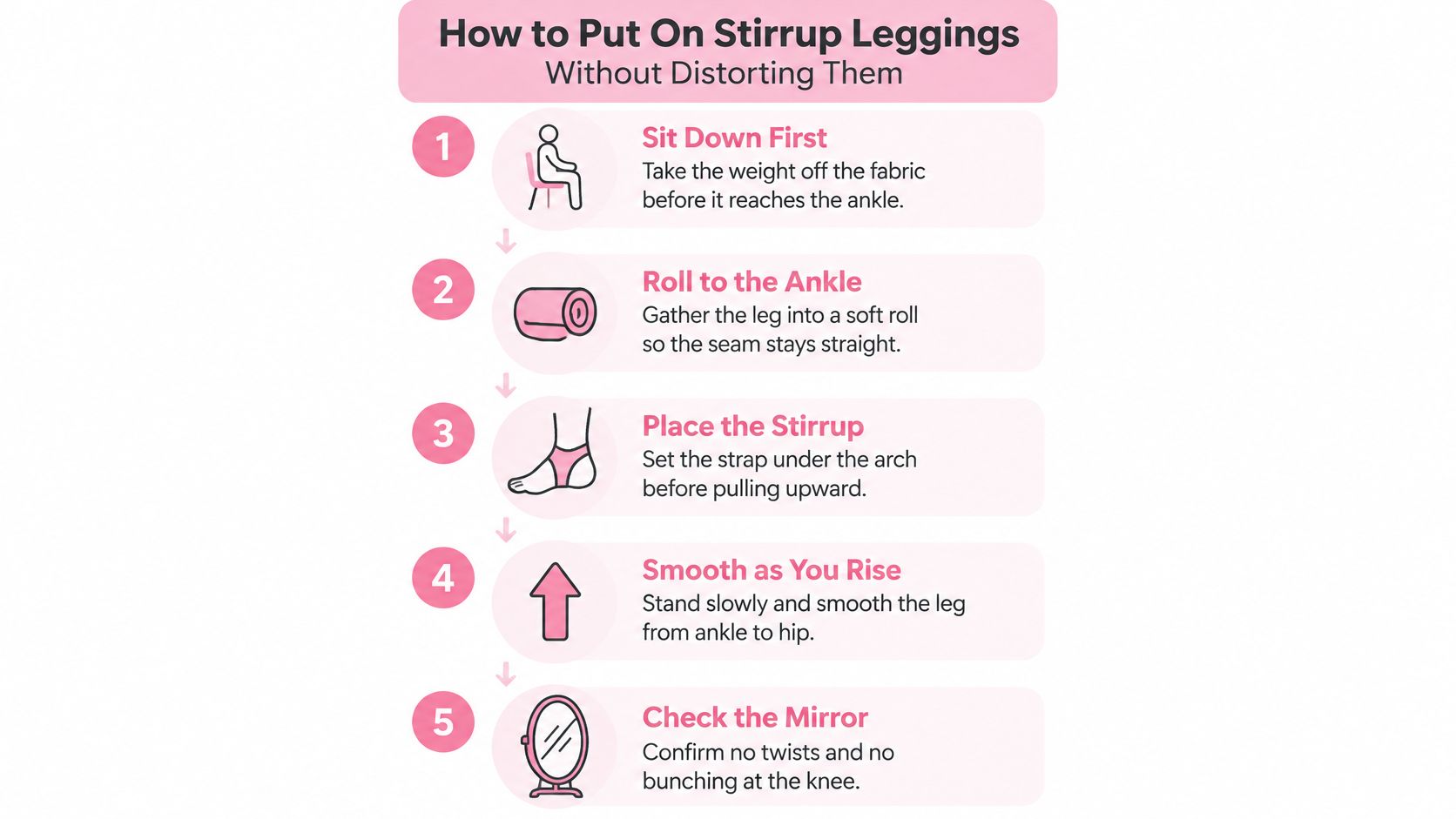
- Sit down and prepare the fabric. Turn the leggings partly inside out and gather each leg toward the ankle, as you would a sock. Keep the seams straight so you don't build a twist into the leg before it's on.
- Place your foot through the opening. Set the stirrup flat beneath the arch, not against the back of your heel. Check its edges with your fingers before adding tension from above.
- Unroll gradually up the leg. Work over the calf, knee and thigh, alternating sides as needed. Don't force your whole leg through or use the waistband as a handle, because that can leave the lower fabric stretched unevenly.
- Settle the hips and waistband. Stand slowly and smooth the fabric upward with open hands. Adjust the waistband into its intended position without pulling the strap harder against your foot.
The sequence below shows the placement and smoothing stages.
Test movement, not just appearance
- Check the waistband, ankle and arch. The waistband should stay flat when you stand, sit and squat; the ankle should hug without wrinkles. The loop should remain under the arch without digging or cutting across the heel.
- Walk, sit and squat before choosing shoes. Give yourself a brief movement check, including getting up from a chair. Then inspect the strap again rather than assuming its starting position held.
If the knee wrinkles, smooth the fabric from the ankle upward instead of yanking at the waist. If the strap feels increasingly tight as you straighten your leg, stop stretching it and reassess the inseam.
A smooth mirror view is only the starting point. Stable placement through movement is the real fit test.
Run those checks at home before leaving. It's much easier to change a pair in your bedroom than to keep adjusting a foot loop through a shoe during the day.
Choosing Shoes That Keep the Strap in Place
Put the strap under your foot before putting on the shoe. Then choose footwear whose upper, or vamp, lets the loop stay aligned. HELLO!’s stirrup leggings guide supports treating the loop as an anchor, not a decorative piece that can rescue a poor fit.
Boots conceal the strap and help keep the hem contained. Sneakers and loafers can leave it visible, while higher heels require more attention because the loop can migrate toward the heel.
Footwear and strap placement
| Footwear | Strap Placement | Best For | Watch Out For |
|---|---|---|---|
| Paddock or short riding boots | Under the foot, hidden by the boot | Riding and equestrian looks | Boot shaft must not press on the hem |
| Tall riding boots | Under the foot inside the boot | Riding lessons and boot-cut styling | Strap stays out of sight, so check it before pulling the boot on |
| Ankle boots | Under the foot, sometimes visible above the sole | Everyday and street looks | Thin socks keep the hem flat |
| Clean sneakers | Under the arch, visible at the sole | Casual days and errands | Chunky soles can push the strap forward |
| Loafers or ballet flats | Under the arch, visible | Polished or retro looks | Keep the vamp low so the strap does not twist |
| Pointed-toe shoes or modest heels | Under the arch, visible and elongates the leg line | Going-out outfits | High heels can let the strap slide behind the heel |
For socks, start with a thin, smooth pair beneath the strap, particularly under ankle boots. Flatten the sock before positioning the loop so you don't trap a fold beneath your arch. Thick socks aren't a good way to cushion an already uncomfortable seam; they can make the shoe feel tighter.
With tall boots, arrange everything before pulling up the shaft. Our guide to English riding boots for women can help you distinguish riding footwear from boots chosen mainly for appearance.
Shoe check: A concealed strap still needs checking. Don't assume a bulky sole or tall boot has kept it in place.
Take a short walk, then inspect the loop in a mirror and check underfoot comfort. If it shifts only in that shoe, try a lower-vamp option. If it pulls in every shoe, change the leggings rather than tightening your laces.
Styling Stirrup Leggings for Everyday Looks
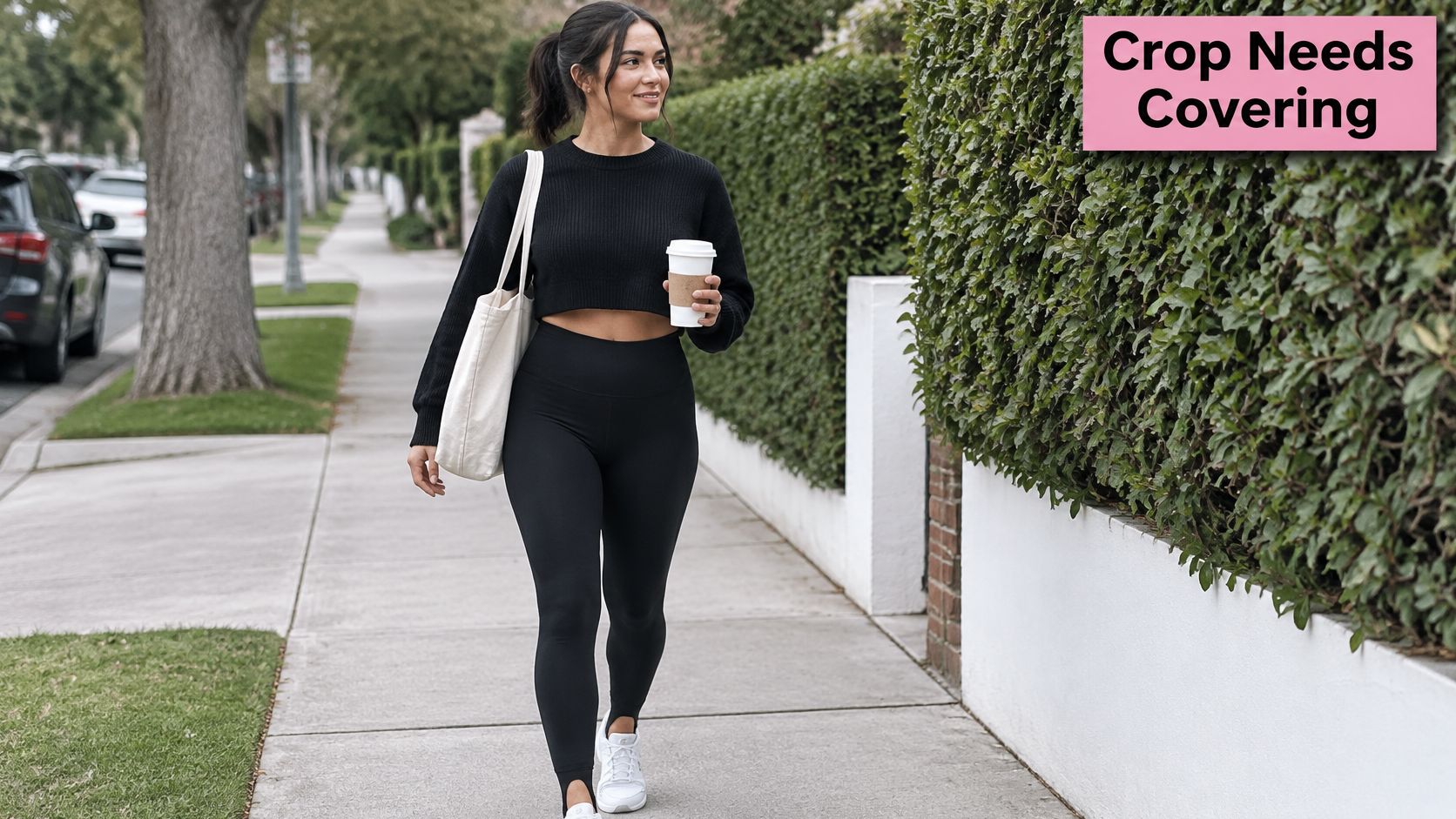
For weekday errands in black stirrup leggings, pair the close fit with a relaxed sweater that ends at the hip bone. The extra length balances the leg line without hiding the strap. A cropped sweater, by contrast, puts the fitted silhouette front and center.
Build around the top layer
Vogue's coverage of Marni's styling shows how fitted footwear and foot-anchored leggings can work beyond an exercise outfit. Use that proportion as a guide, then choose a top layer for the setting.
- Relaxed knit: An oversized sweater ending at the hip bone or a tunic falling to mid-thigh adds coverage. Pair either with simple flats.
- Untucked shirt: Choose a relaxed hem that falls below the seat seam for coverage without the bulk of a heavy sweater.
- Structured layer: Wear a blazer or wool coat over a fitted top, with loafers or modest pumps.
- Short jacket: For errands, layer a denim or quilted jacket over a longer shirt that falls below the seat seam.
Keep the leg line clean with an anchored hem. A visible strap and sleek shoes give the outfit a retro feel, while a boot-covered strap creates a more equestrian look. For more ideas on combining riding-inspired pieces with everyday layers, see this guide to equestrian-style clothing.
For another look at outfit proportions, use the video below.
For someone who prefers a looser silhouette, cozy cashmere trousers for gifting offer an alternative. With stirrup leggings, start with a top that falls below the seat seam, then adjust the length to suit the shoes and the amount of coverage you want.
Riding Days and Everyday Wear Need Different Setups
Stirrup leggings grew from functional riding clothing, with an underfoot strap intended to stop the lower leg riding up inside boots. The history of breeches explains that practical equestrian background, which is why the strap makes sense as more than a street-style detail.
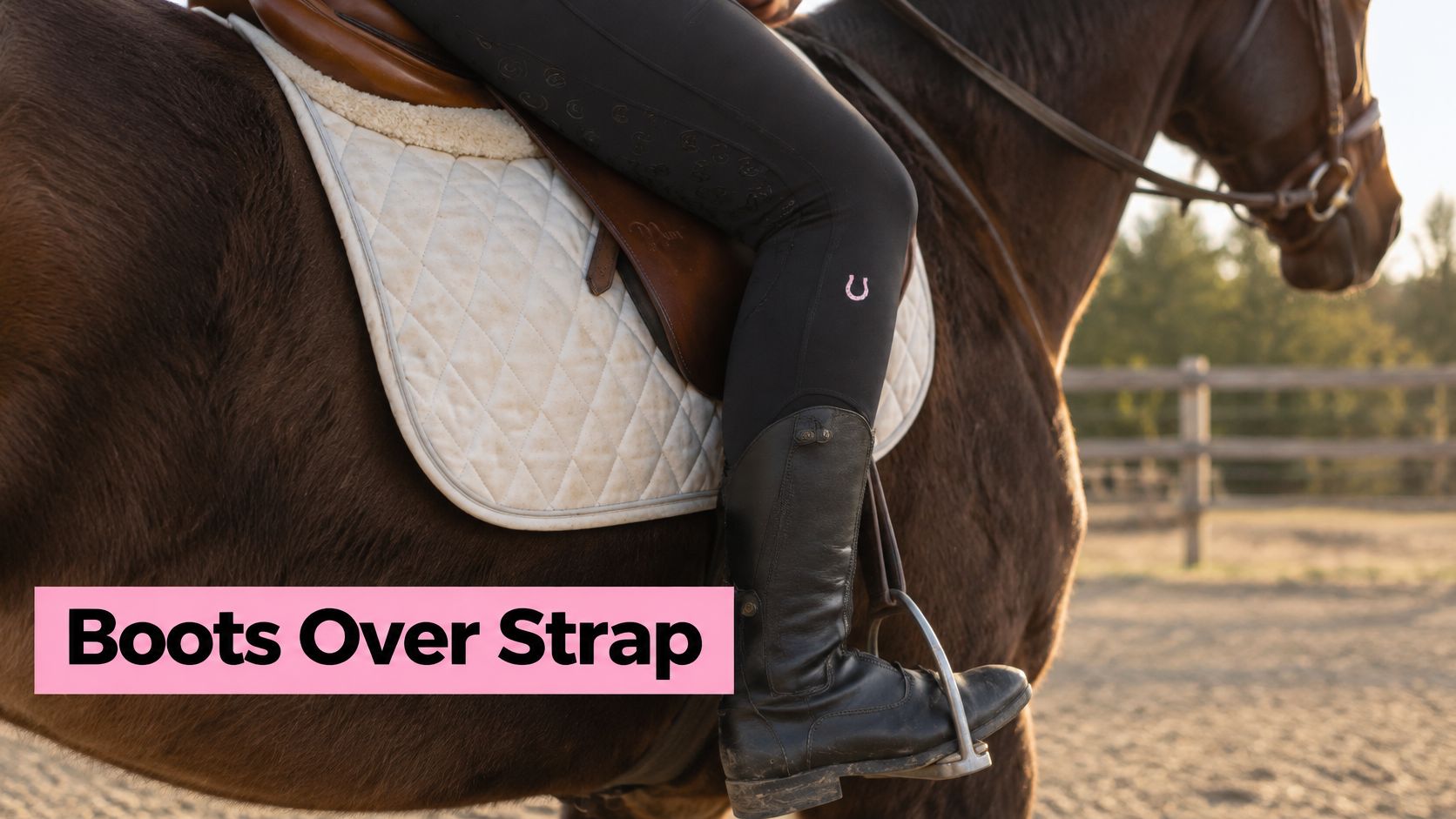
For riding, pull suitable boots on over the positioned strap, then check that the hem stays anchored and the fabric moves with your leg. Choose riding-specific construction, including a full-seat design with grip where you contact the saddle, rather than assuming fashion leggings are suitable because they have a loop.
The boot-and-legging interface deserves attention before you mount.
Riding setup
- Footwear: Use appropriate riding boots, not street shoes selected to display the strap.
- Hem: Check for folds before closing or pulling on the boot.
- Seat: Choose fabric and grip intended for saddle contact.
- Movement: Bend your knee and ankle without underfoot pulling.
Everyday wear has a different priority: comfort through walking, commuting and sitting. Clean sneakers, loafers or low boots work with a longer top, provided the waistband remains comfortable when you're seated.
A loop isn't automatically helpful for every sport. I'd avoid it for high-movement activities if it can catch on rough footwear or won't stay aligned during the activity's movements.
Errands setup
- Shoes: Pick smooth interiors that won't snag the loop.
- Top: Use a relaxed or structured layer with enough coverage.
- Waist: Check comfort in a seated position.
- Strap: Keep it flat, whether visible or concealed.
Fixing Strap Pulls, Ride-Up and Wrinkles
A strap that starts pressing under your arch may be twisted, caught on a bulky seam, or pulling because the fabric is under tension. Take off the shoe and run your fingers along the loop and attachment point before adjusting anything. A twisted loop feels uneven and changes thickness as you follow it; a bulky seam stays thick in the same spot, even when the loop lies flat.
Strap, hem and waistband problems and fixes
| Symptom | Likely Cause | Fix |
|---|---|---|
| Strap digs under the arch | Loop is twisted, or fabric is pulling through the leg | Flatten the loop, then check whether tension remains |
| Ankle wrinkles or bunches | Fabric is gathered at the ankle | Smooth the fabric upward and check the fit guidance above |
| Leggings ride up after walking | Strap has shifted, or fabric is catching at the shoe | Reposition the loop and check that the shoe lining is smooth |
| Strap slides behind the heel | Shoe shape or heel is pulling the loop back | Try a shoe with a lower heel or a more secure vamp |
| Waistband digs in after sitting | Waistband feels restrictive in a seated position | Reassess the waist fit or try a different cut |
| Wrinkles at the knee | Fabric has gathered while dressing | Smooth the fabric along the leg |
| Thick seam presses under the foot | Attachment seam creates a raised pressure point | Choose a pair with a flatter, lower-bulk attachment |
A twisted loop usually feels lumpy in one section and smooths out when turned flat. A raised attachment seam remains firm under your fingertip, even after you straighten the strap. That distinction helps separate a quick adjustment from a construction issue.
Separate quick adjustments from fit changes
Stand, sit cross-legged, squat and walk. Note where the loop shifts or pressure appears, then change one thing at a time.
- Quick adjustment: Flatten a twisted loop, smooth gathered fabric or try a different shoe.
- Different pair: Consider another construction if a flat attachment seam still presses underfoot.
- Waist adjustment: Reassess the cut if discomfort appears mainly while sitting.
If the strap is comfortable while standing but presses after walking, check for twisting or a shift at the heel. If the pressure stays in one spot after the loop is flat, the attachment itself may be the issue. Retest the waistband while seated, since standing alone won't show how it feels during prolonged sitting.
Confirm the Fit and Choose Your Pair
Check inseam length and strap placement before choosing a pair. The strap should sit under the arch without pulling the leg fabric down, and the inseam should let you move without persistent tension. A waistband that stays comfortable through movement completes the fit check.
Choose for the job you need
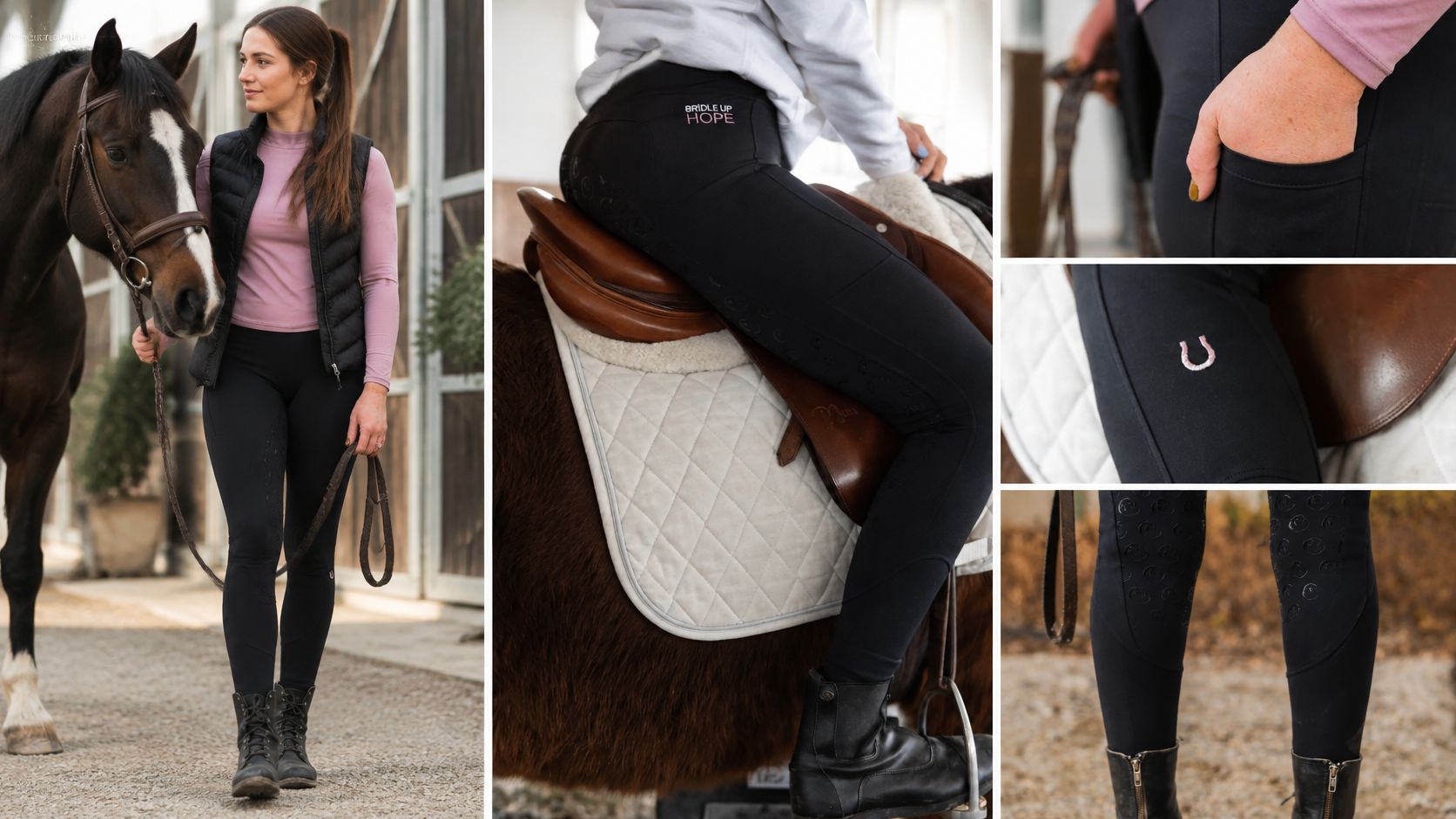
For riding-focused apparel, the Lucky Horseshoe Riding Leggings are described as stretchy, breathable and moisture-wicking. Check the product listing for the specific features you need, including whether the leggings have an underfoot stirrup strap.
The catalog image shows the riding-focused option.
Leave room to make the right decision
Bridle Up Hope Shop offers 30-day free returns via Redo. Check the applicable terms and Redo options before ordering, then assess the fit indoors before wearing the leggings for a full day.
Choose based on the construction and inseam that suit your activity. A flattering color or convenient pocket cannot compensate for a strap that shifts or a leg length that keeps pulling.
The strap decides the fit, and the top decides the look.
Bridle Up Hope Shop carries riding apparel and equestrian-inspired clothing. Browse the shop's collection for options to suit your fit, footwear and everyday routine.

Leave a comment