


Most advice about glass horse head bookends starts with style. Look for a beautiful mane, a rare color, or a convincing vintage finish. That's backwards. A bookend earns its place on a shelf by holding books upright without sliding, tipping, chipping, or stressing the shelf beneath it. The horse motif matters, but weight, base geometry, and shelf contact matter first.
The best pair feels more like quiet shelf hardware than a fragile ornament. It should have enough mass to resist the pressure of a row of books, a broad and flat base, and a finish you can maintain without treating the piece like museum glass. Once those requirements are met, the sculpted profile brings warmth, movement, and equestrian character to the room.
Table of Contents
- Why Weight Matters More Than Aesthetics
- The History Behind Glass Horse Head Bookends
- Understanding Glass Materials and Durability
- Choosing the Right Size and Weight for Your Shelf
- Styling Tips for English and Western Interiors
- Care and Maintenance Best Practices
- Gifting Glass Horse Head Bookends with Purpose
Why Weight Matters More Than Aesthetics
A glass horse head bookend isn't successful because it looks substantial in a product photograph. It's successful when you place it beside a row of books, push the books gently toward it, and the pair stays put. A dramatic silhouette with a narrow or rounded base can fail where a shorter, less theatrical design works perfectly.
Listings show a wide range of sizes and weights, from about 5.5 to 8 inches tall and from roughly 1.5 pounds per piece to 10 pounds for a set. That spread is documented in vintage Federal Glass bookend listings, and it tells buyers something important: the horse shape doesn't determine stability. Mass and the way that mass meets the shelf do.
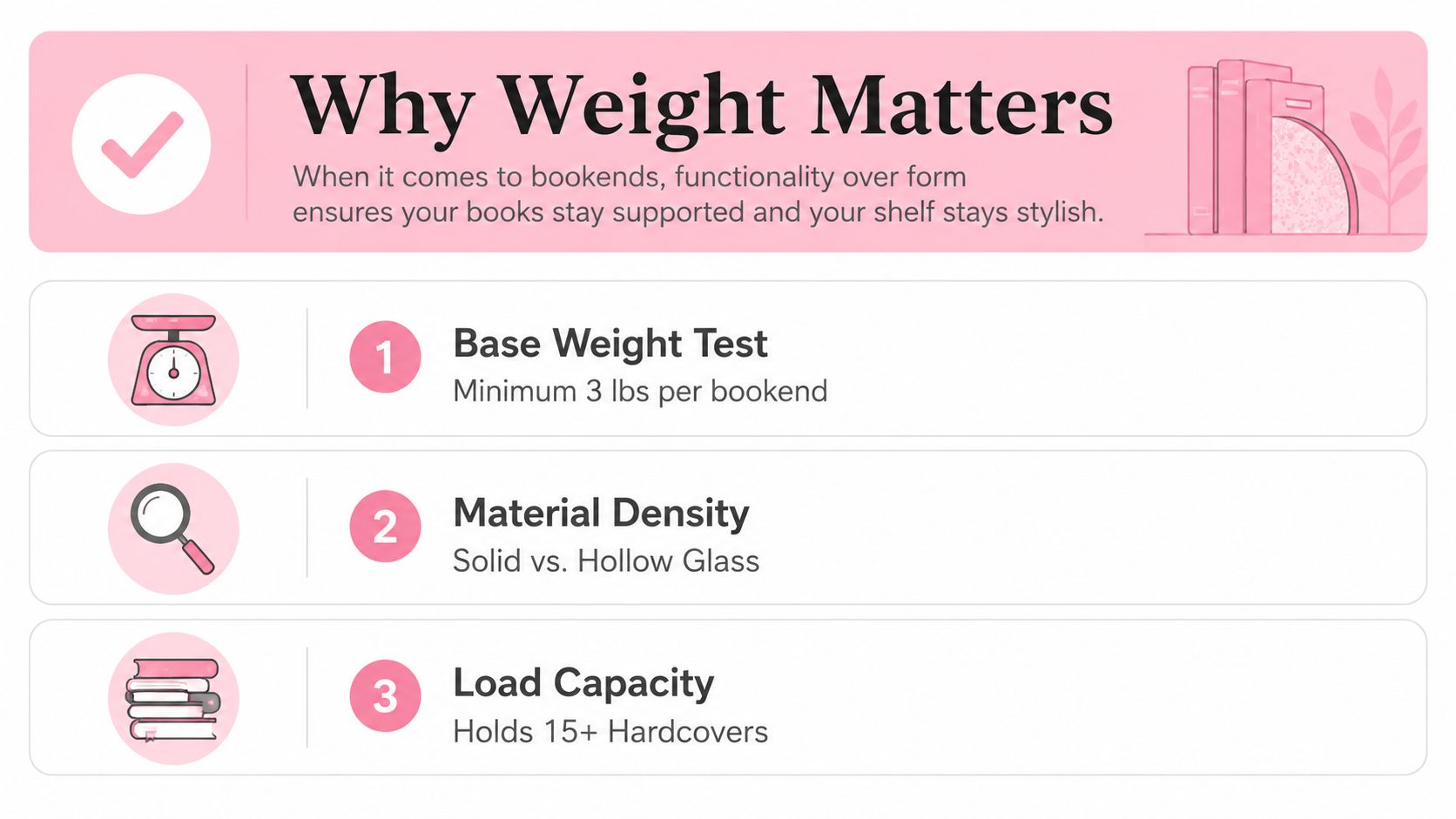
The three tests I use
- Weight: Pick up each piece separately. A dense, solid-feeling bookend is a better candidate than a hollow decorative replica.
- Base flatness: Set it on a hard, level surface. It shouldn't rock, wobble, or sit on a small central contact point.
- Contact area: Favor a broad rectangular or squared base over a hoof-shaped underside that touches the shelf only along a narrow edge.
Shelf material changes the result. Smooth laminate and painted MDF can offer less grip than unfinished wood, while dust, polish residue, and small irregularities reduce friction on any surface. Felt can protect a finish, but thick or slick pads may make a light piece easier to move. Use a thin, high-grip material only when the bookend has adequate mass and a stable base.
Practical rule: If the base rocks when empty, it won't become reliable once books press against it.
A pair that feels heavy but has a rounded bottom can perform worse than a lighter pair with a flat, ground base. I'd rather buy the dependable base and moderate weight than pay for a spectacular horse head that can't support the books it was meant to frame.
The History Behind Glass Horse Head Bookends
Bookends themselves are a relatively modern household object. An antiques marketplace places their emergence in the 1870s, with the term “book end” appearing in printed material in 1907. Horse bookends then developed as one decorative expression within that newer category, joining an established equestrian vocabulary that already appeared in sculpture, furniture, prints, and riding memorabilia. The broader history is outlined in the 1stDibs horse bookends marketplace.
Glass horse head bookends appear in vintage records from the 1930s and 1940s, which shows that the form was already established by the middle of the twentieth century. Independent resale records identify French Art Deco molded glass examples from circa 1930 and Federal Glass horse head bookends as a 1940s product, placing the design between geometric Art Deco styling and the softer sculptural language associated with mid-century interiors.
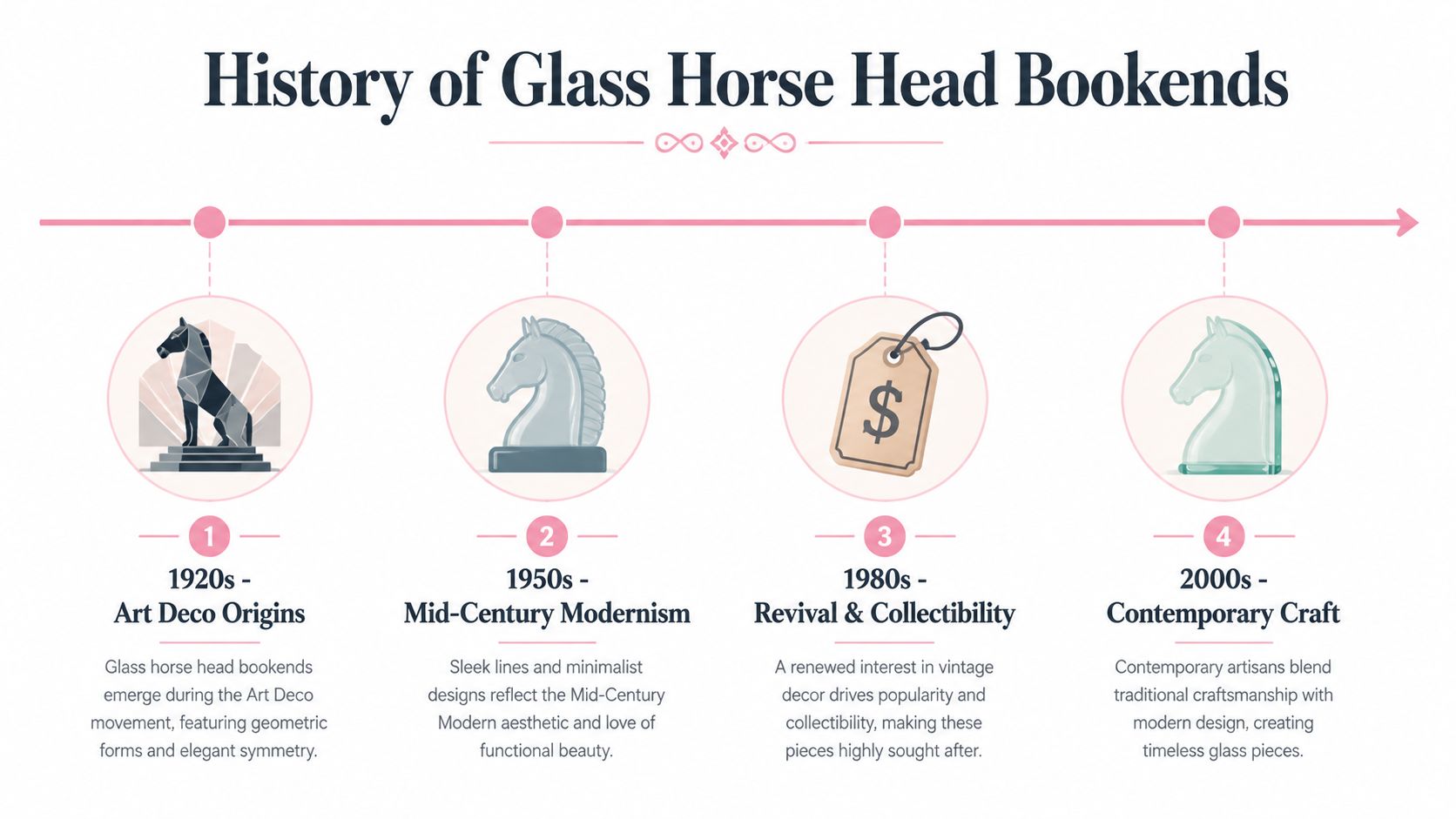
A design that kept adapting
One particularly useful production trail comes from L.E. Smith. An antiques source records related glass horse bookends as No. 36 in crystal from 1944–1958, followed by No. 6200 in many colors during the 1960s–1980s. That span shows how manufacturers could preserve the same horse theme while changing color and finish to suit new interiors.
Clear pressed glass belongs naturally in formal studies and traditional libraries. Colored reissues can feel more at home in relaxed mid-century rooms, Western interiors, or eclectic shelves. The design's staying power comes from that flexibility. It can read as a symbol of speed and freedom, a nod to riding culture, or a sculptural counterpoint to rigid rows of books.
The category also has a documented production history lasting at least four decades, based on the recorded L.E. Smith issue dates and later reissues in the Federal Glass listing record. That's more convincing than vague claims about timelessness. Makers, dates, molds, colors, and reissues give collectors something concrete to investigate.
Understanding Glass Materials and Durability
The most common material in major consumer markets is likely soda-lime glass, the workhorse glass used for many practical and decorative objects. Its typical density is about 2.44–2.52 g/cm³, with a Young's modulus around 68–72 GPa, Mohs hardness around 6–7, and thermal expansion near 8.5–9.5 × 10⁻⁶/°C, as listed in this soda-lime glass technical data sheet.
In plain terms, soda-lime glass has useful heft, good stiffness, and a surface that resists ordinary scratching reasonably well. It also fractures rather than bending when a sharp impact reaches an edge. That's why a base corner or horse-ear tip deserves more attention than the broad face of the sculpture.
| Glass Type | Density (g/cm³) | Mohs Hardness | Chip Resistance | Typical Era | Best For |
|---|---|---|---|---|---|
| Soda-lime glass | 2.44–2.52 | 6–7 | Moderate, but vulnerable at edges | Common in vintage and modern consumer pieces | Everyday shelf use with careful handling |
| Lead crystal | Not specified in the verified data | Not specified in the verified data | Finish and edge condition require close inspection | Common in crystal-era decorative production | Formal display and collectors who value brilliance |
| Borosilicate glass | Not specified in the verified data | Not specified in the verified data | Better suited to thermal variation than ordinary soda-lime glass | Less typical of vintage horse-head bookends | Specialized contemporary applications |
What durability looks like in practice
Soda-lime glass is chemically stable and optically clear, which helps it keep a polished, light-transmitting appearance. Its thermal-shock resistance is relatively low, however, so rapid temperature changes can create stress. Keep a cold bookend away from very hot water, radiators, direct heaters, and abrupt changes between storage and display conditions. The material guidance is consistent with this engineering overview of lime glass.
Tempering can improve break resistance. The verified material data places annealed glass flexural strength at roughly 30–70 MPa, compared with about 120–200 MPa for tempered glass. That distinction doesn't make a bookend indestructible, and vintage pieces may not be tempered, so inspect the base, mold seams, corners, and narrow projections for chips or stress lines before purchase.
Glass can look pristine across its broad surface while remaining vulnerable at its edges. Inspect the places that touch the shelf or could meet a wall.
For a useful comparison with another horse-themed glass object, see this glass horse-head butter dish. The same inspection habit applies: look beyond color and clarity, and examine the areas most likely to experience contact, pressure, or cleaning damage.
Choosing the Right Size and Weight for Your Shelf
Don't choose a bookend by height alone. A tall horse head creates visual drama, but its usefulness depends on whether the base stays fully supported and whether the silhouette fits beneath the shelf above. Measure the shelf depth, the available vertical clearance, and the width of the book row before you shop.
Available listings document horse-head bookends around 5.5 to 8 inches tall, with substantial differences in total weight. Those measurements make comparison possible, but they don't create a universal minimum. A lighter piece may work with slim paperbacks and a grippy shelf, while a heavier, flatter pair is the safer choice for dense hardcovers or oversized books.
Match the object to the shelf
| Shelf Depth | Ideal Bookend Height | Base Footprint | Min. Weight Per Piece | Best For |
|---|---|---|---|---|
| 6 inches | Low to moderate profile | Compact, fully supported base | Choose the heaviest stable option available | Narrow shelves and small paperbacks |
| 8 inches | Moderate profile | Broad base without overhang | Prioritize solid construction | Standard book rows |
| 10 inches | Moderate to tall profile | Wider footprint encouraged | More mass for heavier collections | Hardcovers and mixed-format books |
| 12 inches | Tall profile can work | Broad, deep base | Favor substantial pairs | Large shelves and statement displays |
The table is a buying framework, not a promise that every piece will support the same load. Base geometry outranks height. A rectangular base spreads pressure and gives more shelf contact. A tapered or hoof-like base can look elegant but may need a discreet non-slip pad, especially on polished laminate or painted MDF.
Measure the book gap
Place your books upright exactly as they'll live on the shelf. Measure the total width of the row, then decide whether the bookends will sit directly against the covers or leave a small breathing space. Don't force the pair into a gap that makes the horse heads overhang the shelf edge or press against neighboring objects.
For oversized art books, choose stability before spectacle. For a small office shelf, a moderate pair with a clean base often looks more intentional than a towering design crowded beneath the shelf above. I'd also avoid hollow-cast replicas for serious use. They may suit a decorative vignette, but they lack the reassuring density that makes a bookend dependable.
Styling Tips for English and Western Interiors
Start with the room's riding language, not the object's label. Clear or lightly colored glass suits an English-style study because it echoes polished wood, leather, brass, and traditional library furniture without adding visual heaviness.

Build an English-style arrangement
- Choose the shelf backdrop. Dark wood or painted shelving gives clear glass enough contrast to read as sculpture.
- Create a disciplined book block. Use leather-bound volumes or books with restrained spines, then place the horse heads symmetrically.
- Add one metal note. A brass magnifying glass, small candlestick, or frame can reinforce the traditional study without competing with the horses.
- Leave open space. The pair should frame the books, not disappear into a crowded equestrian collection.
For broader principles on spacing, balance, and visual rhythm, the Tyner Furniture shelf styling guide offers useful context. I'd apply its organizing logic selectively here, because glass horse heads already provide a strong focal point.
A Western room needs more relaxed texture. Smoked, amber, or cobalt glass can sit comfortably beside tooled leather, reclaimed wood, wrought iron, and books with rugged covers. Let the arrangement feel slightly less formal, but keep the pair functionally aligned with the books.
Use restraint in a Western vignette
One vertical book stack, the bookend pair, and one small accent object are enough. A spur, small leather box, or understated ceramic piece can support the theme, but adding several horse figurines turns the shelf into a display of objects rather than a considered interior.
Avoid direct sunlight when possible. Transparent and colored glass can cast bright reflections or prismatic shadows that distract from the shelf, while finishes may also be more vulnerable to prolonged exposure. For more equestrian room ideas, browse this guide to a horse-themed living room.
The accompanying video offers another visual reference for arranging equestrian décor:
Care and Maintenance Best Practices
Glass horse head bookends need less complicated care than many materials, but they punish careless handling. Dust can be removed with a soft microfiber cloth or a clean, soft brush. Support the base with both hands when moving a pair, and never lift a tall piece by the ears, muzzle, or mane.
For routine cleaning, use lukewarm water with a small amount of mild dish soap. Wipe with microfiber, rinse sparingly, and dry thoroughly with a soft towel. Avoid abrasive sponges, gritty powders, and aggressive rubbing, which can leave fine scratches on the surface or disturb applied finishes.
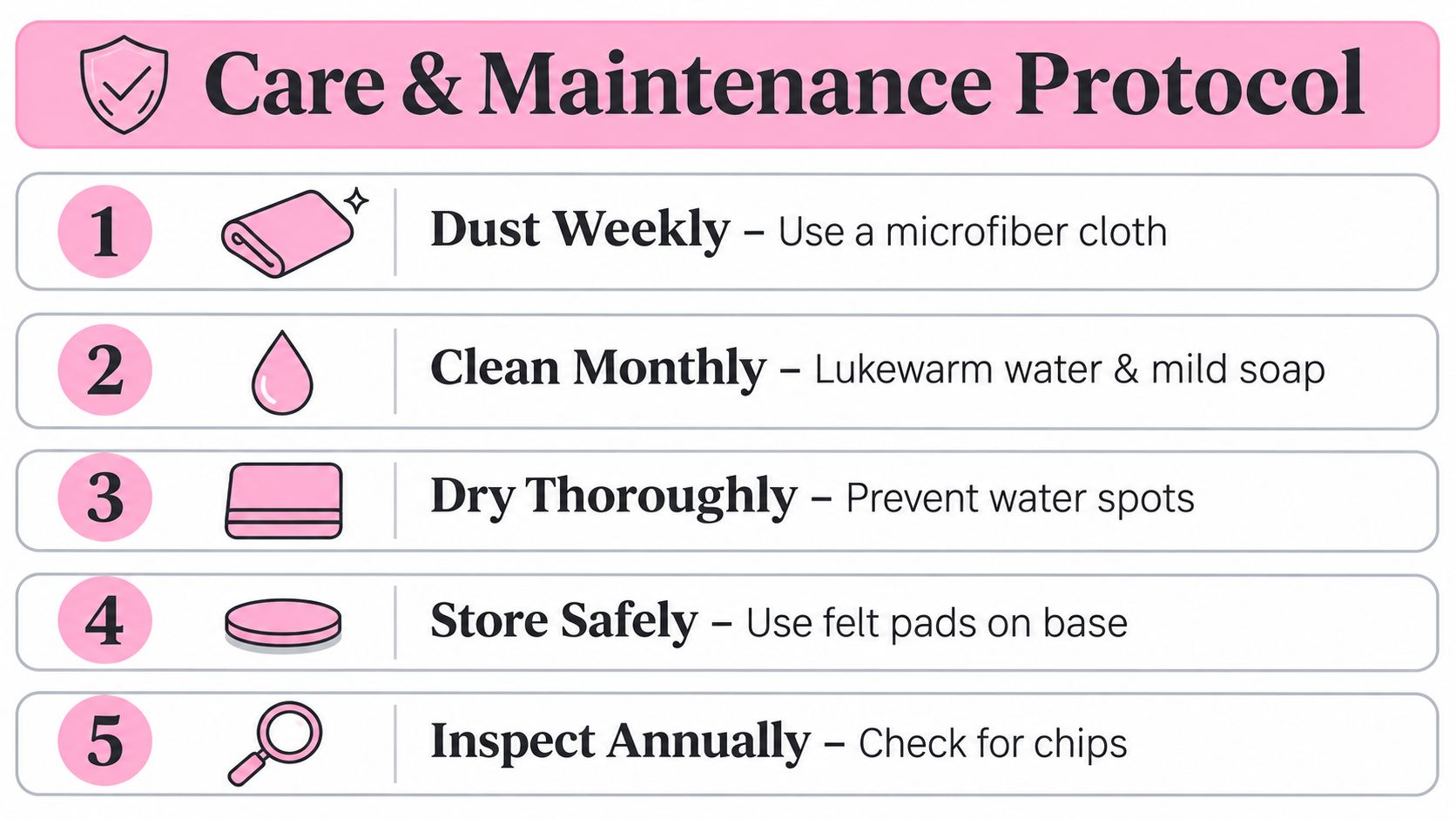
Prevent the damage that buyers overlook
- Avoid thermal shock: Don't rinse cold glass with hot water or place it beside a radiator or direct heater.
- Protect painted details: Gold-finished versions can flake. Dry-dust them with a soft brush instead of using ammonia-based cleaners or repeated wet wiping.
- Inspect before moving: Check the base edges, mold lines, ears, and narrow projections for chips or cracks.
- Store each piece separately: Wrap each bookend in acid-free tissue paper, add cushioning, and keep the pair upright in a rigid box.
Water spots can sometimes be reduced with a diluted white vinegar solution applied sparingly to unpainted glass. Test an inconspicuous area first, and keep vinegar away from gold accents, labels, or uncertain surface treatments.
Handling rule: Clean the glass, not the finish. A clear pressed-glass piece can tolerate more routine wiping than a vintage pair with painted or gilded details.
Condition deserves the same attention as style. Listings mention chips, cracks, vintage wear, and paint flaking, and those defects can affect both appearance and usability. Treat an older pair as a functional collectible, not as indestructible shelf equipment.
Gifting Glass Horse Head Bookends with Purpose
Glass horse head bookends make a strong gift because they connect a useful object with a meaningful identity. Riders, trainers, barn owners, and lifelong horse enthusiasts don't need another generic ornament. They're more likely to appreciate something that supports a real collection while reflecting the animal that shapes their daily life.
Match the finish to the recipient's room. Clear glass works for a modern English-style home or a polished office. Amber, smoked, or colored glass can feel warmer in a Western ranch setting. If you're unsure, choose a restrained silhouette with a stable base and let the horse form provide the personality.
Give the object a personal context
A bookend pair becomes more memorable when it arrives with a companion that explains the thought behind it. Pair it with a leather-bound journal for a rider who keeps training notes, an equestrian print for a new-home gift, or a carefully chosen horse book for someone building a study. For broader inspiration beyond home décor, this guide to custom pet portrait gifts shows how animal-centered presents can carry personal meaning.
Good occasions include a new home, retirement from competition, a milestone in riding, or a memorial tribute to a beloved horse. The most successful gift doesn't pretend the glass is rugged. It acknowledges the recipient's care and gives them an object worth placing somewhere visible.
Charitable purchasing can add another layer of purpose. Bridle Up Hope's mission connects horses with support for girls and women, so equestrian gifts can represent more than a decorative preference. Explore additional ideas in this collection of unique gifts for horse lovers.
Pack glass individually, protect the base edges, and keep the pieces from touching inside the shipping carton. A beautiful gift that arrives chipped has already missed the point.
Bridle Up Hope Shop offers horse-themed home décor, gifts, apparel, jewelry, books, toys, and accessories in both English and Western styles. Visit Bridle Up Hope Shop to find an equestrian gift with genuine meaning, while supporting a charitable model that donates 100% of annual net profits to the Bridle Up Hope foundation.

Leave a comment