


The necklace was small enough to disappear under a show shirt, but the girl wearing it touched it every time she thought about her mare. To anyone else, it looked like a simple silver horseshoe. To her, it held the smell of hay, early mornings, and the kind of courage horses teach without ever speaking.
Table of Contents
- A Symbol of Hope Worn Close to the Heart
- The Enduring Meaning of the Horseshoe
- How to Choose a Quality Silver Horseshoe Necklace
- Styling Your Equestrian Necklace
- Simple Care for Lasting Shine
- Give the Gift of Hope and Horses
-
Your Horseshoe Necklace Questions Answered
- Is sterling silver a good choice for everyday wear?
- Will silver tarnish if I wear it often?
- Can I wear a horseshoe necklace while riding?
- Should I choose a polished or hammered finish?
- Is there a correct direction for the horseshoe?
- What makes a small pendant look high quality?
- Is a horseshoe necklace a good gift for someone who isn't a rider?
A Symbol of Hope Worn Close to the Heart
Horse people understand that some objects carry more than their weight. A bit from a first pony, a faded show number, a photo from a lesson that changed everything. A silver horseshoe necklace often belongs in that same category. It isn't just jewelry. It's a quiet reminder of grit, trust, and the bond between horse and rider.
That's why choosing a horseshoe necklace silver piece can feel surprisingly personal. Shoppers often start with style, then quickly run into deeper questions. What does the horseshoe mean? Does the direction matter? What kind of silver holds up well? Which details indicate a necklace is made to be worn often, not just admired in a box?
For equestrians, those questions matter because jewelry gets woven into daily life. You might wear it under a sweater at the barn, with a denim shirt at a rodeo, or with a dress when you want one small nod to the life you love most.
A meaningful necklace does two jobs at once. It looks beautiful, and it says something true about the person wearing it.
That second part matters even more at Bridle Up Hope. A horseshoe necklace can celebrate a rider, encourage a friend, or mark a new chapter. It can also point beyond the wearer. At Bridle Up Hope Shop, purchases support a mission centered on hope and healing for girls and women through horses and habits. That gives the piece another layer of meaning, especially for anyone who wants a gift to carry heart as well as style.
The Enduring Meaning of the Horseshoe
The horseshoe has lasted because its meaning is easy to feel and rich enough to grow with the wearer. Even if someone buys one because it's pretty, they usually sense that it stands for more than decoration.
From practical tool to personal talisman

Historically, the horseshoe began as something practical. It protected the horse. Over time, that practical object became a symbol people connected with luck and protection. According to this history of horseshoe jewelry symbolism, medieval people believed horseshoes could repel evil because they joined two powerful ideas of the time: horses and iron. Iron was thought to withstand fire and dark forces, and horses themselves carried strength and importance in daily life.
That history helps explain why a horseshoe pendant still feels different from a generic charm. It doesn't borrow meaning from a trend. It carries an old story into modern form.
The symbol also resonates strongly with riders because it bridges both worlds. It's grounded in real horsemanship, yet it also works as a personal emblem. A rider may wear it for courage before a competition. A parent may give it to a daughter as a reminder to stay brave. A friend may choose it after a hard season, hoping to mark protection, resilience, or a fresh start.
Should the horseshoe face up or down
Many shoppers pause at this point. They want to get it right, especially if the necklace is a gift.
Some traditions say an upturned horseshoe holds luck like a small vessel. Other traditions treat the inverted shape as a way to pour luck onto the wearer or into a home. A listing for an upturned silver horseshoe amulet for luck reflects one side of that tradition, but the broader takeaway is that symbolism varies by culture and personal belief.
Here's the simplest way to decide:
- Choose upward-facing if you love the idea of holding luck close.
- Choose downward-facing if you connect with the image of luck flowing outward.
- Choose by feeling if one shape looks more like you.
Practical rule: There isn't one universally correct direction. The meaningful choice is the one that matches the story you want the necklace to carry.
That answer may feel less tidy than a hard rule, but it's more honest. Jewelry with symbolism works best when the wearer sees themselves in it.
How to Choose a Quality Silver Horseshoe Necklace
A lovely symbol deserves solid craftsmanship. This is the part many shoppers skip, then regret later when a pendant flips awkwardly, a chain feels flimsy, or the silver loses its appeal too quickly.
Start with the silver itself
For a silver horseshoe necklace, the most common quality baseline is sterling silver. In product specifications gathered from the market, horseshoe pendants are often listed in sterling silver rather than pure silver, with examples including a 16-inch chain and a 1" x 0.5" pendant or a hand-forged pendant around 13 x 17 mm in size, as described on this horseshoe necklace product page. Those details matter because they place the necklace in the small-pendant category, where shape and finish do a lot of the visual work.
A quick comparison helps:
| Silver Type | Composition | Best For | Care Level |
|---|---|---|---|
| Sterling silver | Silver alloy commonly used in quality jewelry | Everyday wear, meaningful gifts, durable small pendants | Moderate |
| Fine silver | Higher silver content, softer feel | Shoppers focused on softness and bright silver tone | Higher |
| Silver plated | Base metal with a silver-colored outer layer | Budget-conscious fashion wear | Higher |
If you're shopping for a piece you'll wear often, sterling silver is usually the practical middle ground. It offers brightness and workability, which is especially useful in a curved shape like a horseshoe.
Read the details like a label
Think of jewelry specs like reading a food label. The small print tells you whether the necklace only looks appealing in photos or whether it was built thoughtfully.
Look closely at:
- Material wording. If a listing clearly says sterling silver, that's more informative than a vague "silver tone" description.
- Pendant size. Small pendants can be elegant, but they need crisp edges so the horseshoe shape reads clearly from a normal viewing distance.
- Chain length. A 16" to 18" adjustable chain gives more flexibility for layering and for different neck sizes, a design approach reflected in this hammered horseshoe necklace example.
- Clasp style. Functional details like a toggle clasp can improve ease of wear and reduce strain where the chain meets the pendant area.

You may also want to compare one actual option while you shop. The Dainty Mini Horseshoe Pendant Necklace is one example of the delicate small-pendant style many buyers prefer for everyday equestrian jewelry.
Construction matters more than most shoppers realize
Small horseshoe pendants are deceptively hard to make well. If the curve is uneven or the joins are sloppy, the design looks soft instead of intentional.
One silversmithing approach highlighted in product-related material is sweat soldering, where the horseshoe element is attached to a back plate in a way that reduces visible joints and strengthens stress points. That's helpful in daily wear because pendants experience movement every time the chain shifts against your skin, shirt collar, or jacket zipper.
A few signs of strong construction:
- Clean silhouette. The horseshoe should look balanced from side to side.
- Smooth edges. Small pendants should feel comfortable, not sharp.
- Secure attachment point. The place where pendant and chain connect should feel stable, not delicate in a worrying way.
If the pendant is small, precision matters more than metal weight. A crisp shape often signals better finishing and more thoughtful craftsmanship.
Finish also changes how the necklace ages. A hammered or hand-forged surface tends to hide tiny scratches better, while a mirror-polished finish shows wear more quickly. Neither is wrong. It depends on whether you want a bright polished look or a softer texture that forgives everyday life.
Choose a chain that fits your real life
Riders don't live still lives. We pull hay nets, zip jackets, toss saddle pads, and hug horses with our whole upper body. A necklace has to work with motion.
For everyday wear, ask simple lifestyle questions:
- Do you want the pendant to sit high under a collared shirt?
- Will you layer it with another chain?
- Do you prefer a lighter look for daily wear, or a slightly more visible pendant?
A shorter chain often gives a neat, close-to-the-heart feel. An adjustable length gives more freedom, especially if you wear turtlenecks in winter and open necklines in warmer weather.
The best choice isn't always the flashiest one. It's the necklace you'll find yourself wearing on ordinary Tuesdays.
Styling Your Equestrian Necklace

A silver horseshoe necklace works because it doesn't need a special occasion. It can belong to a rider in fitted breeches and tall boots just as easily as it belongs to someone in jeans, a knit sweater, and dusty paddock shoes.
For the barn and beyond
On a barn day, keep it simple. A delicate horseshoe pendant tucked under a quarter-zip or henley adds a personal touch without feeling fussy. With Western style, it pairs naturally with denim, turquoise accents, or a crisp button-down. With English-inspired outfits, it looks polished against clean lines, especially under a collared layer.
The charm of this piece is that it reads as equestrian without becoming costume-like. Non-riders see a graceful silver necklace. Riders see the story immediately.
If you like a more classic tack-inspired look, a stirrup necklace from Bridle Up Hope Shop can sit beautifully alongside a horseshoe piece in the same jewelry wardrobe.
How to layer without losing the charm
Layering works best when the horseshoe remains the emotional focal point. Pair it with one finer chain, not several competing pendants. That keeps the outfit intentional and helps the symbol stay readable.
A few easy combinations:
- With an open neckline. Let the horseshoe sit on the shorter chain and place a second, longer chain below it.
- With a crewneck sweater. Wear the horseshoe just above the fabric line so it doesn't disappear.
- With a dress shirt. Let it rest inside the open collar for a subtle nod to your riding life.
This short video gives a feel for how a delicate silver necklace can move from everyday wear into more dressed-up styling.
Keep the rest of your jewelry quiet when the necklace carries personal meaning. The horseshoe doesn't need help telling its story.
Simple Care for Lasting Shine
Silver rewards a little consistency. You don't need a complicated routine, but you do need to remember that sterling silver can tarnish as it reacts with sulfur compounds in the air, and a polished surface will show wear differently than a hammered one.
A short routine that works

After wearing your necklace, wipe it gently with a soft cloth before putting it away. That simple habit helps remove skin oils and everyday residue.
Store it with intention too. A lined jewelry box or airtight bag helps limit exposure to the air that encourages tarnish. If your necklace has a hammered or hand-forged finish, you'll likely find that small signs of wear blend in more softly than they would on a mirror-polished piece.
What to avoid
The fastest way to dull silver is careless exposure. Keep your necklace away from perfumes, lotions, and household cleaners when possible, and don't toss it loose into a bag where it can rub against hard objects.
For stubborn tarnish or a piece with sentimental value, a jeweler's polish is worth considering instead of aggressive home scrubbing.
- Wipe after wear so residue doesn't sit on the surface.
- Store separately so the chain doesn't tangle and the pendant doesn't scratch.
- Take it off around chemicals to protect the finish.
- Treat polished silver gently because it shows marks faster than textured silver.
Give the Gift of Hope and Horses
Some gifts are lovely for a moment. Others stay with someone for years because they carry a story. A silver horseshoe necklace belongs in the second category.
It's an easy gift for birthdays, graduations, encouragement, Mother's Day, or a quiet "thinking of you" moment after a hard season. Horse lovers rarely need the symbol explained. They feel it right away. It speaks of steadiness, luck, protection, and the life lessons horses leave on the heart.
That symbolism also makes the gift flexible. You can give it to a young rider after her first show, to a friend starting over, or to a mother who spent years at the rail supporting everyone else. The necklace says something warm without requiring a long speech.
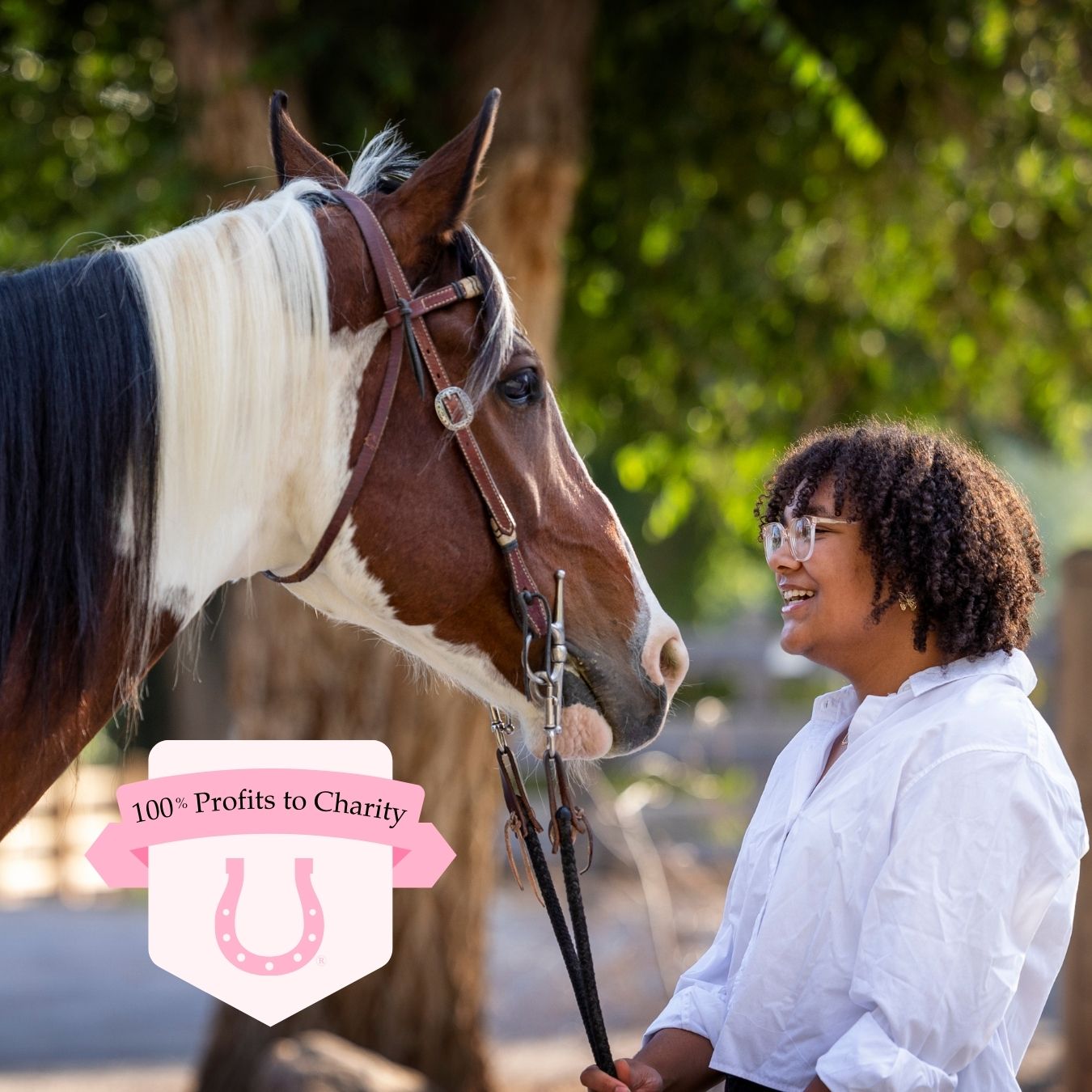
A piece like the Lucky Horseshoe Necklace also carries charitable meaning. Modern horseshoe necklaces preserve the old associations of fortune and protection, and Bridle Up Hope adds another layer by donating 100% of profits to its foundation, as noted in this discussion of horseshoe necklace meaning and gifting. That means the gift reaches beyond the box. It supports hope and healing for girls and women.
The most memorable jewelry doesn't just mark an occasion. It reflects the values of the person giving it.
For many equestrians, that's where the beauty lies. You aren't only giving silver. You're giving a symbol with roots, a wearable reminder of horses, and a purchase connected to a mission that serves others.
Your Horseshoe Necklace Questions Answered
Is sterling silver a good choice for everyday wear?
Yes. For horseshoe necklaces, sterling silver is the most common quality baseline in the market, especially for small pendants meant for regular wear. It offers a practical mix of brightness, workability, and durability in this style.
Will silver tarnish if I wear it often?
It can tarnish over time. That's part of how sterling silver behaves in air. Regular wiping and thoughtful storage help a lot, and textured finishes usually disguise small wear marks better than highly polished finishes.
Can I wear a horseshoe necklace while riding?
Many riders do, especially if the necklace is light, sits comfortably, and doesn't swing too much. A shorter or adjustable chain often feels easier to manage under riding layers.
Should I choose a polished or hammered finish?
Choose polished if you love a bright, clean shine. Choose hammered or hand-forged if you want a surface that hides tiny scratches more gracefully over time.
Is there a correct direction for the horseshoe?
Not one universal one. As noted earlier, cultural traditions differ. Some people prefer the horseshoe facing up to hold luck. Others prefer it facing down to pour luck onto the wearer. Personal meaning is the best guide.
What makes a small pendant look high quality?
Balance, crisp edges, smooth finishing, and a secure connection point matter a lot. In a small pendant, those details are what keep the shape readable and the necklace comfortable to wear.
Is a horseshoe necklace a good gift for someone who isn't a rider?
Absolutely. The symbol reaches beyond riding culture. It can stand for hope, protection, resilience, or good fortune, which makes it meaningful even for someone who loves the message.
If you'd like a piece that reflects the equestrian life and supports a larger purpose, browse the Bridle Up Hope Shop. You'll find horse-inspired gifts and jewelry that let you wear what you love while helping extend hope and healing to girls and women through the Bridle Up Hope mission.
Deje un comentario