


You've chosen your first riding lesson, found a pair of breeches, and now you're standing in front of a wall of tall black boots that look almost identical. One pair has laces, another has a perfectly smooth front, and a third has a chunky sole that seems practical for the barn. The labels mention field boots, dress boots, paddock boots, calf sizes, regular shafts, and stretch panels. It's easy to wonder whether you're choosing riding equipment or decoding a new language.
The right English riding boots for women should make you feel secure in the stirrups, comfortable around the horse, and confident on the ground. Their sleek appearance isn't separate from their function. The heel, sole, shaft, and close-fitting silhouette work together as a practical system, unlike ordinary fashion boots, hiking footwear, or Western boots designed for different riding traditions.
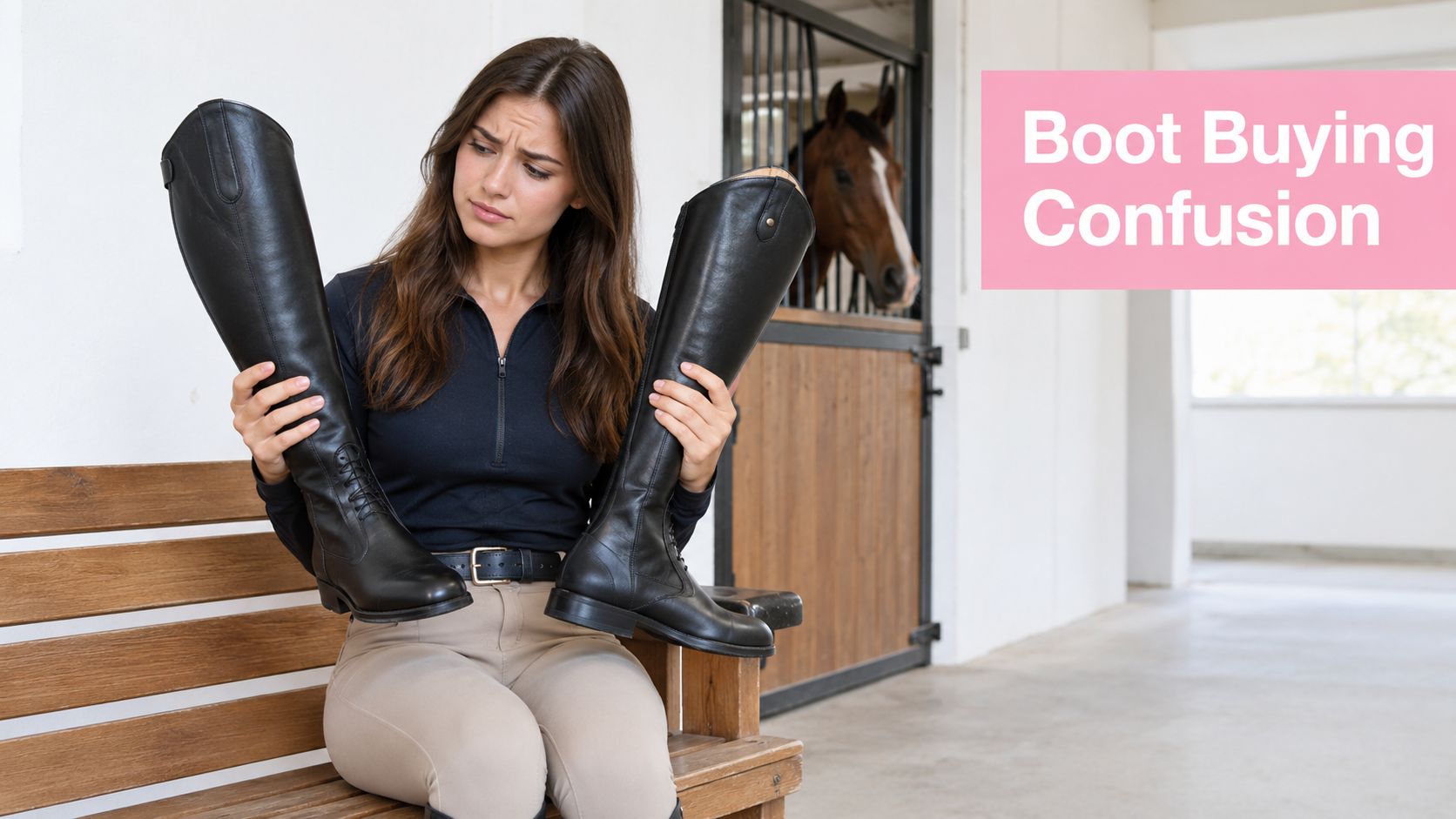
This guide will help you move from purpose to boot type, then from measurements to materials, construction, care, and everyday styling. You'll learn what each detail does, which compromises make sense for your riding life, and how to avoid buying a beautiful pair that pinches, slips, or feels wrong in the saddle.
Table of Contents
- Introduction to English Riding Boots for Women
- What Makes an English Boot English
- Field Dress and Paddock Boots Explained
- How to Nail Fit and Sizing the First Time
- Leather Versus Synthetic and What Construction Really Means
- Breaking In Caring For and Styling Your Boots
- Choosing With Confidence and Gifting With Heart
Introduction to English Riding Boots for Women
A first pair of English riding boots can feel like a surprisingly serious decision. You may be shopping for weekly lessons, preparing for a show, replacing an old pair, or buying a thoughtful gift for someone who spends every spare hour at the stable. The boots may look elegant, but they also need to support a rider's position and interact safely with the stirrups.
That's why ordinary footwear rarely makes a good substitute. Trainers don't provide the same defined heel, while hiking boots and heavily lugged outdoor shoes can bring too much tread into the stirrup. Fashion boots may have a suitable-looking shaft but lack the foot shape, flexibility, or sole design intended for riding.
English riding boots are built around close contact and controlled movement. A tall shaft supports the lower leg and creates a clean line from breeches to ankle. A short boot gives freedom for walking and barn work, especially when paired with half chaps. In both cases, the boot should feel purposeful rather than bulky.
A useful starting question: Are you buying primarily for riding, for stable work, for competition, or for a mixture of all three?
Your answer will narrow the field quickly. A rider who spends most of her time jumping may appreciate the ankle movement of a field boot. A dressage rider may prefer the uninterrupted front of a dress boot. Someone attending occasional lessons and doing chores may find paddock boots more practical.
The history behind the style also explains its enduring appearance. Women's English riding boots have roots stretching back more than 1,000 years, became firmly established as preferred footwear of the English military in the 1600s, and were associated with sport riding by the 18th century, according to this history of boots and riding footwear. By the 1790s, women's versions had developed a distinctly feminine character, including tight lacing, high heels, and pointed toes.
Today's safer riding boot is more restrained than that early fashion silhouette. Its elegance comes from proportion, clean lines, and fit, not from adding details that interfere with riding.
What Makes an English Boot English
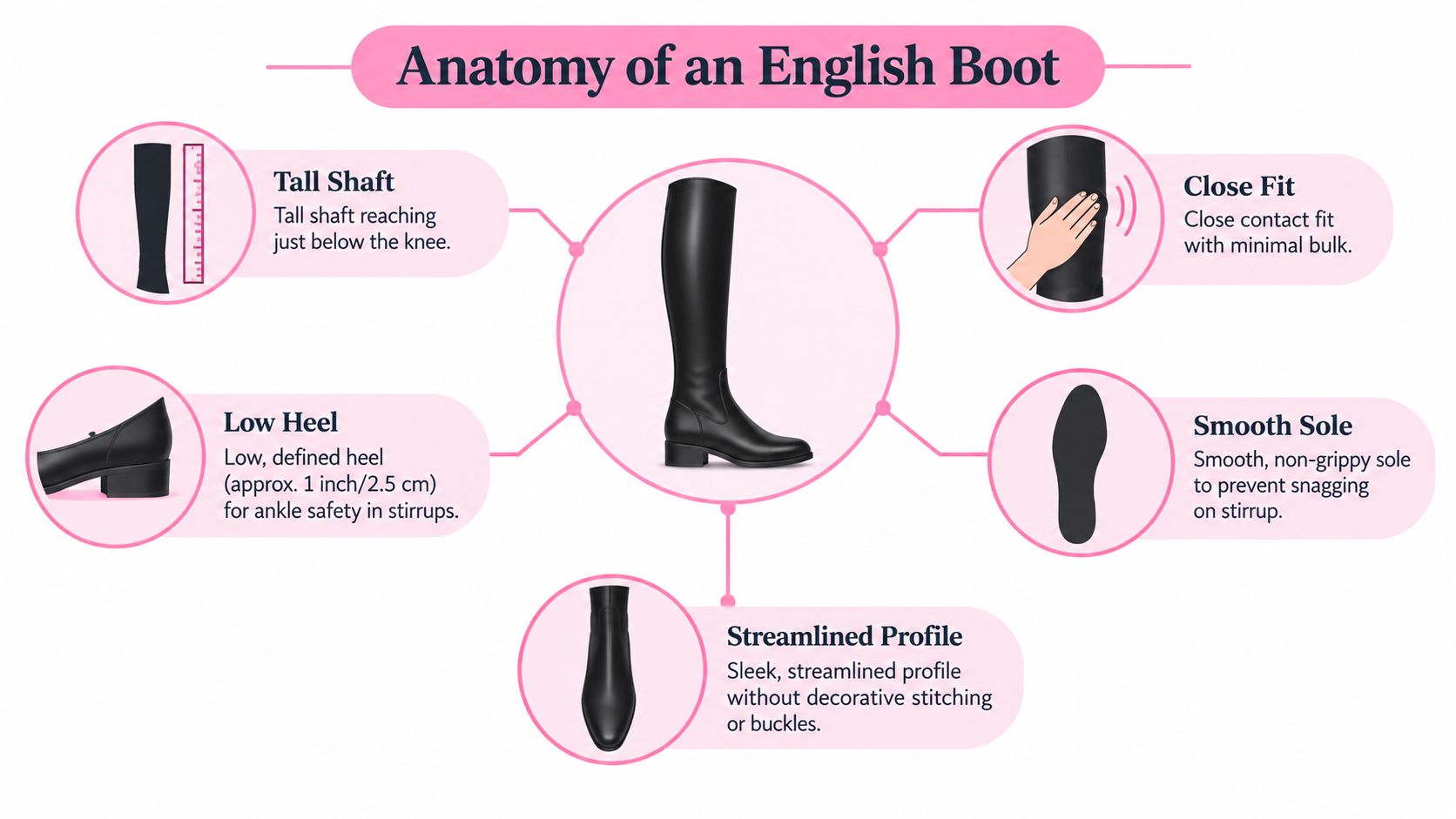
An English boot should feel more like a second skin than a work boot. It follows the leg closely, keeps excess material away from the saddle and stirrup, and creates a smooth visual line beneath the rider's breeches. That shape is not just traditional. It helps the rider maintain clear contact and avoid unnecessary bulk.
The silhouette carries a purpose
Tall English boots generally reach just below the knee, creating a continuous surface beside the horse. The shaft shouldn't flap around the calf, but it also shouldn't press painfully into the back of the knee. A close fit helps the rider feel leg position without making the boot feel like a rigid brace.
The toe is usually neat and understated. The heel is low and clearly separated from the sole rather than blending into a heavy outdoor tread. Those details distinguish English riding footwear from Western boots, which often use a different heel shape, decorative stitching, and a broader riding aesthetic.
Heel and sole form a safety system
The heel and sole deserve more attention than their small size suggests. Equestrian guidance describes a defined heel of about 2–3 cm, roughly 1–1.5 inches, and recommends avoiding heavy tread because the heel helps stop the foot from sliding too far through the stirrup, while a chunky outsole may catch and raise entrapment concerns. You can review the practical explanation in this beginner's guide to choosing riding boots.
Think of the heel as a small ledge that helps keep your foot in a safer relationship with the stirrup. The smooth sole then allows your foot to move when you need to adjust it, rather than gripping the stirrup like a hiking shoe grips mud.
This doesn't mean the sole should be dangerously slippery on every surface. It means the riding portion should avoid deep, aggressive lugs and excessive bulk. For general flatwork, jumping, and stable use, prioritize a modest defined heel and a relatively flat outsole over fashion-heavy tread.
Small details change the feel
A full-length zipper makes tall boots easier to put on, while elastic panels can accommodate natural calf movement. A lace-up field boot adds adjustability around the ankle and instep. A dress boot usually keeps the front visually uninterrupted, creating the formal appearance associated with dressage and showing.
When you examine a boot, ask what each feature contributes. If a buckle, seam, or thick overlay doesn't improve adjustment, support, or durability, it may add visual noise. English style works best when the construction stays quiet and the rider's position remains the focus.
Field Dress and Paddock Boots Explained
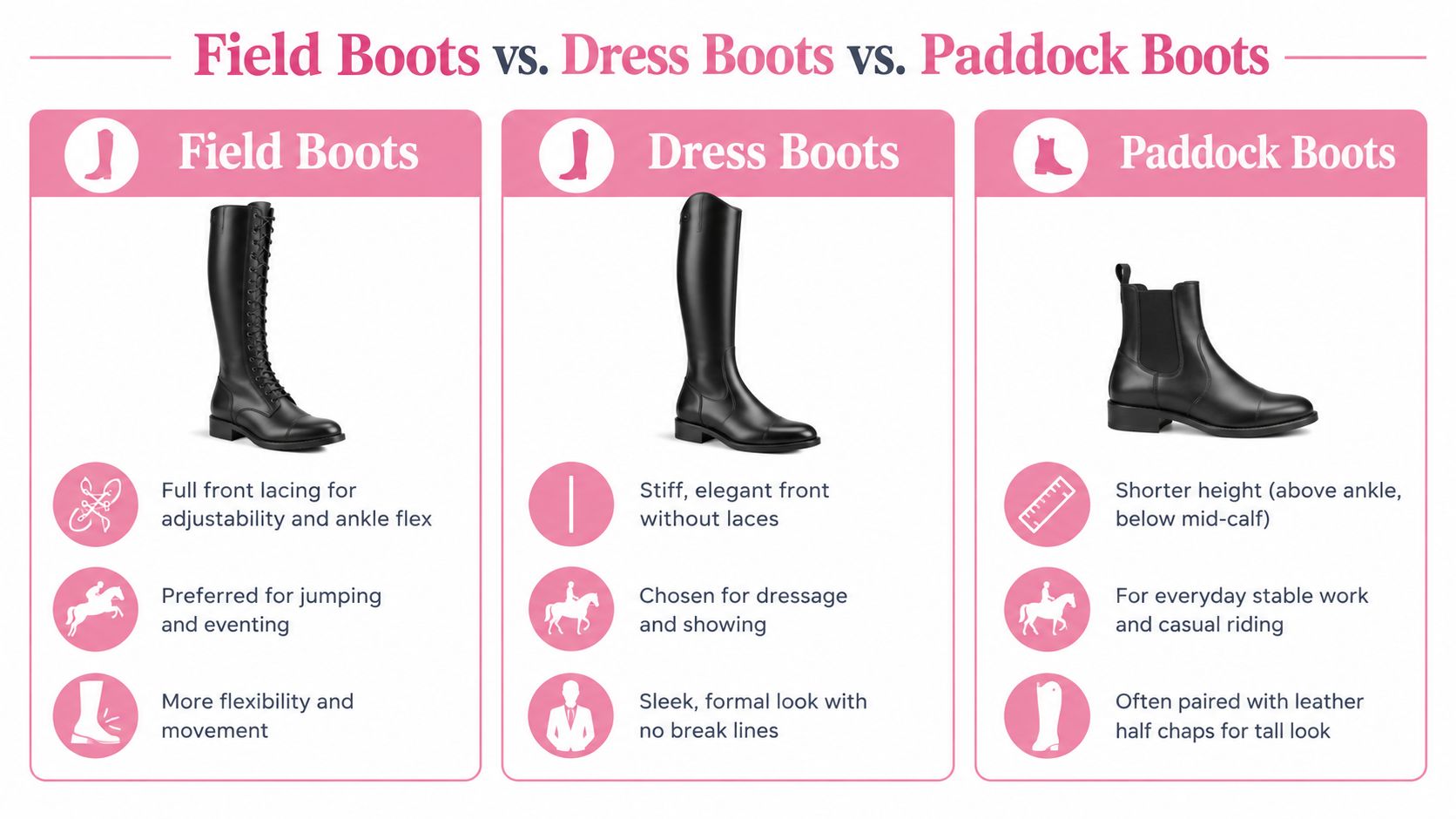
Most riders eventually choose among three practical English boot families: field boots, dress boots, and paddock boots. They share a riding-oriented shape, but they don't serve the same job. Choosing correctly starts with the activity you do most often, not with whichever boot looks most polished in a product photo.
Field boots
Field boots have lacing across the front of the ankle. That lacing gives the rider more control over how the boot follows the foot and ankle, which can be helpful when the ankle needs to flex actively. The result is a more mobile feel than a stiff, uninterrupted tall boot.
Jumping and eventing riders often choose field boots because the flexible ankle suits a forward, changing position. They're also useful for riders who dislike pressure across the instep and want a little more adjustment. The laces should still be tied securely and kept tidy, particularly when working around tack and horses.
Dress boots
Dress boots have a smooth front without visible laces. Their structure tends to feel more formal, with a clean line that works especially well for dressage and showing. They may feel stiffer at first, so the rider needs to judge comfort during movement rather than deciding based only on how elegant the boot looks while standing.
Dress boots make sense when presentation matters and the rider's discipline rewards a refined, uninterrupted silhouette. They're less appealing if you spend most of your time doing muddy chores or need a boot that adapts easily to changing ankle positions.
Paddock boots
Paddock boots stop around the ankle or lower calf and are often chosen for lessons, schooling, stable work, and everyday use. They're easier to pull on and off, less demanding to fit around the entire calf, and usually more convenient for walking between the barn, arena, and car.
Many riders pair paddock boots with half chaps to create a taller feel while retaining the flexibility of a short boot. If you're considering that combination, this guide to horse riding half chaps offers useful context on how the pieces work together.
Match the boot to your routine
| Boot Type | Best For | Key Features | Style Note |
|---|---|---|---|
| Field boots | Jumping, eventing, and active schooling | Front lacing, ankle flexibility, adjustable fit | Sporty and traditional |
| Dress boots | Dressage, equitation, and showing | Smooth front, formal structure, clean lines | Sleek and polished |
| Paddock boots | Lessons, stable work, and casual riding | Short shaft, easy movement, simple entry | Practical and adaptable |
A new rider who attends lessons and helps with light barn tasks may get more value from paddock boots. A committed jumper may prefer field boots from the beginning. A dressage-focused rider who expects to show can choose dress boots once she's comfortable with the feel and knows her calf measurements.
The best choice isn't the most expensive or formal option. It's the one that supports the work you do.
How to Nail Fit and Sizing the First Time
Riding boot size involves more than your usual street shoe size. A tall boot can fit your foot perfectly and still fail because the shaft pinches your calf, gaps at the top, or cuts behind your knee. Treat the fitting process as a set of separate checks, starting at the floor and moving upward.
Start with your foot
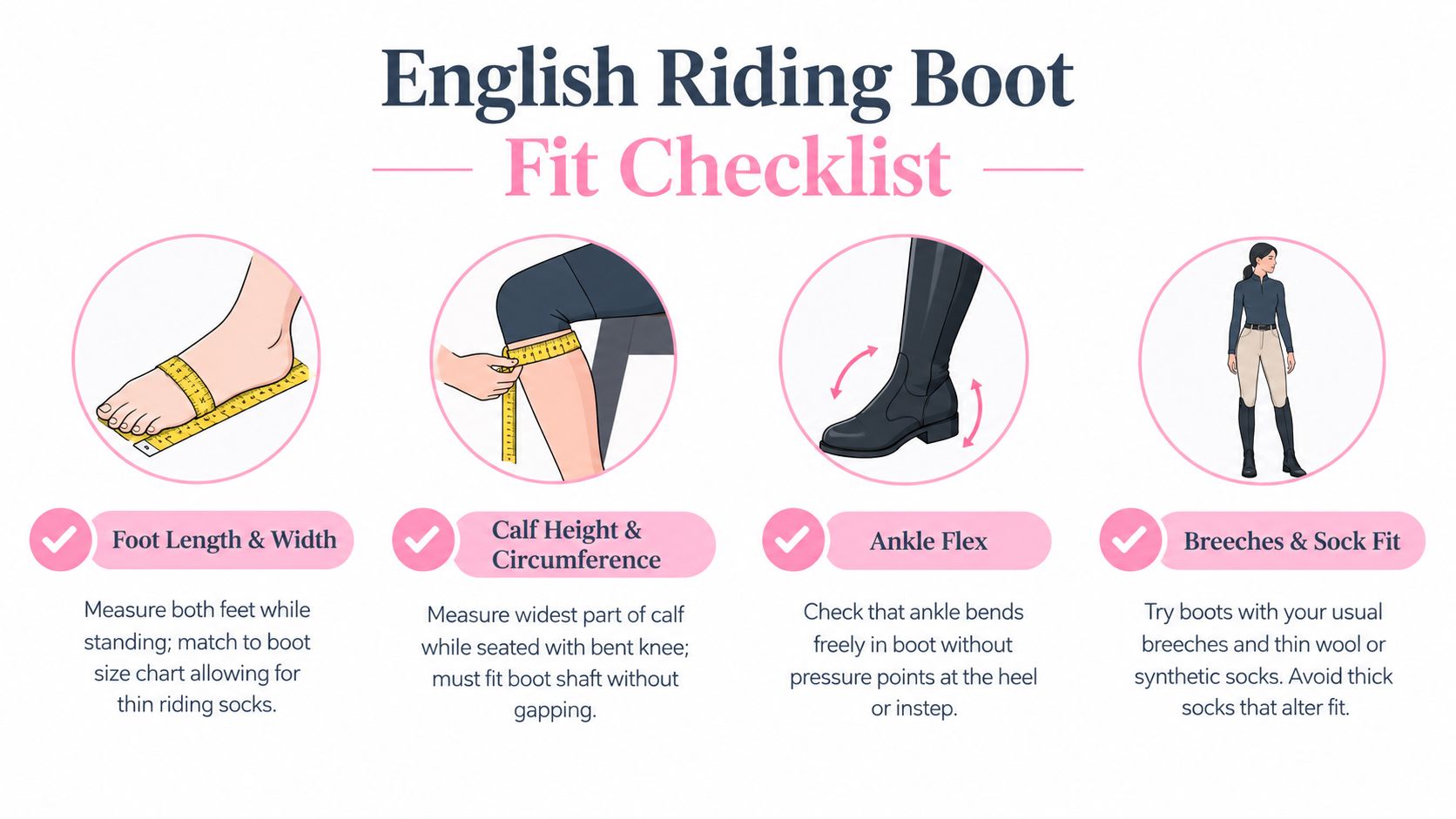
Measure both feet while standing, preferably when your feet have reached their normal working size. Record length and width, then compare those measurements with the manufacturer's chart rather than assuming your everyday shoe size will transfer directly.
Wear the socks you normally ride in. Thin riding socks are usually more useful for fitting than thick winter socks because bulky fabric can disguise pressure points and make the boot seem too small.
Your toes should have room to lie naturally, but your heel shouldn't float dramatically with every step. Some movement is normal during leather break-in. Persistent heel lift, numbness, sharp instep pressure, or compressed toes are reasons to try another size or shape.
Measure the tall shaft
Measure calf circumference at its widest point, then measure the height from the floor or heel area to the point where the boot should finish below the knee. Take the calf measurement while seated with your knee bent if that reflects how your leg sits in the saddle.
Wear your normal breeches for this check. Fabric thickness changes the space inside the shaft, and a pair that fits over bare legs may feel restrictive over riding clothes. You want the boot to sit close without forcing the zipper, crushing the calf, or leaving a conspicuous gap.
Test movement, not just appearance
Walk, sit, bend your ankle, and imitate a riding position. The ankle should flex without a hard crease digging into the front or a seam pressing into the heel. When seated, check that the top edge doesn't jab sharply behind your knee.
Practical rule: A new leather tall boot may feel firm, but it shouldn't create pain, numbness, or a circulation problem while you're standing still.
Leather can soften and adapt with use, but it can't reliably correct an incorrect shaft height or an unsuitable foot shape. Synthetic boots may feel comfortable sooner and often hold their original shape more consistently, so don't assume discomfort is a necessary part of buying riding footwear.
If a tall boot refuses to fit your foot and calf at the same time, choose paddock boots with half chaps instead of forcing the issue. For clothing that affects the final try-on, use your usual breeches for women as part of the measurement routine.
Leather Versus Synthetic and What Construction Really Means
Material choice is a lifestyle decision. Leather offers the traditional feel and appearance many riders want, while synthetic materials can reduce maintenance and make an accessible first pair for lessons, growing riders, or wet conditions. Neither material automatically makes a boot safe or comfortable. The pattern, sole, heel, lining, and fit still determine how the boot behaves.
Leather rewards attention
Quality leather tends to soften and mold gradually around the rider's foot and lower leg. It can develop a rich polish and an individual shape, which is part of the appeal of classic English riding boots. That adaptability comes with responsibilities, including regular cleaning, suitable conditioning, and careful drying.
Leather isn't a reason to ignore a poor fit. A boot may soften around mild stiffness, but it won't become the correct size if the toes are compressed or the calf is substantially wrong. Ask whether you're willing to maintain the material before choosing it.
Synthetic favors convenience
Synthetic leather, rubber, and other modern materials are often easier to wipe clean after ordinary barn use. They may handle damp conditions with less concern than untreated leather and can suit riders who want an uncomplicated pair for regular lessons.
The trade-off may be a less natural break-in feel or a shape that doesn't adapt as much to the individual leg. That isn't necessarily a flaw. For a rider who values easy care, consistent structure, and quick comfort, synthetic construction can be the sensible choice.
Look beneath the finish
Examine the zipper, elastic, stitching, lining, and footbed before you buy. A rear zipper should move smoothly without forcing the calf into place. Elastic gussets can improve mobility and accommodate small changes in leg shape, while a well-supported footbed helps reduce fatigue during time spent standing in the stable.
Inspect the sole attachment and the edges around the heel. Loose stitching, uneven bonding, or a sole that feels detached at the flex point suggests poor construction. A tidy interior matters too. Rough seams and exposed edges can create rubbing even when the outside looks refined.
| Construction Detail | What It Affects | What to Check |
|---|---|---|
| Zipper | Entry and removal | Smooth travel, secure closure |
| Elastic gusset | Calf flexibility | Stretch without excessive looseness |
| Lining | Comfort and moisture feel | Soft finish, no abrasive seams |
| Footbed | Support underfoot | Stable feel and useful cushioning |
| Sole attachment | Durability | Even stitching or bonding |
If you're comparing labels and styles, browsing a guide to equestrian apparel brands can help you identify the design language and material approach you prefer. Use the brand name as a starting point, not as a substitute for examining the individual boot.
Breaking In Caring For and Styling Your Boots
A new pair should earn its comfort gradually. Start with short periods of wear at home, then walk around the barn before committing to a long lesson. This lets you find pressure points while you can still remove the boots easily.
Leather benefits from gentle movement and appropriate care, not aggressive stretching. Flex your ankles naturally, walk on clean surfaces, and avoid soaking the boots to force them to soften. Synthetic boots usually need less break-in, but you should still test ankle movement and zipper comfort before riding.
Keep the routine simple
- Remove surface dirt first: Use a soft brush or damp cloth rather than grinding grit into the finish.
- Clean leather carefully: Apply products made for leather and follow the manufacturer's directions.
- Condition sparingly: Too much conditioner can soften areas that need structure, while too little care can leave leather dry.
- Wipe synthetics promptly: Mild cleaning helps remove arena dust and stable residue without unnecessary scrubbing.
- Dry slowly: Keep wet boots away from direct heat, which can damage finishes and encourage leather to stiffen or crack.
Care principle: Clean boots last longer when you remove dirt before storage and let moisture leave them gradually.
Tall boots should be stored upright so the shaft doesn't collapse into permanent creases. Boot trees or suitable boot shapers can help preserve the calf shape. Keep boots in a cool, dry place away from direct sunlight, and don't leave damp footwear sealed in a bag after riding.
Wear the English look beyond the arena
Tall black or brown boots pair naturally with breeches and a fitted jacket at the barn. Off the horse, balance their structured shape with simple clothing. Leggings, a soft sweater, and a casual coat create an understated equestrian outfit, while a skirt with opaque tights can make the boots feel intentional rather than costume-like.
Choose one riding-inspired element and keep the rest relaxed. A clean tall boot works with denim and a quilted vest, but multiple overt horse motifs, technical layers, and show-style accessories can overwhelm an everyday outfit.
Paddock boots are especially versatile with jeans, casual trousers, or a barn jacket. Their shorter profile feels practical for errands while retaining the low-heel character that makes English footwear recognizable.
Choosing With Confidence and Gifting With Heart
A confident purchase follows a clear order. Start with your riding discipline and daily routine, select field, dress, or paddock boots, measure your foot and calf, then compare leather or synthetic construction according to the care you're prepared to provide. Finish by checking the heel and sole as carefully as you check the color.
Before ordering, ask yourself:
- Purpose: Will these boots mainly serve lessons, jumping, dressage, stable work, or everyday wear?
- Silhouette: Do you need a tall shaft, or would paddock boots offer more flexibility?
- Fit: Have you measured both feet, calf circumference, and shaft height while wearing your usual riding clothes?
- Safety: Does the boot have a clearly defined heel and a relatively smooth riding sole?
- Maintenance: Will you clean and condition leather, or would synthetic material better match your schedule?
The women's riding boots segment remains a sizable niche. One market benchmark estimates its value at about USD 3.0 billion in 2023 and projects USD 4.74 billion by 2031, at a 5.9% CAGR, as reported in this women's riding boots market overview. That range of choice can help shoppers, but it also makes personal requirements more important than general popularity.
Gifting requires a little more care because tall boots depend on precise measurements. If you don't know the recipient's foot size, calf circumference, and preferred discipline, consider a gift card, paddock boots with a flexible return policy, or an accessory that complements riding gear without requiring a technical fit. A thoughtful note about lessons, barn time, or a shared horse memory can make practical equipment feel personal.
For creators or horse-focused communities looking for a structured way to explore gifting partnerships, an application for an influencer gifting program can be a useful resource when the arrangement fits the audience and the product serves its needs.
Bridle Up Hope Shop offers equestrian apparel, accessories, boots, gifts, books, toys, and home goods for women, children, babies, and horse-loving households. Visit Bridle Up Hope Shop to explore English-inspired options and choose a thoughtful item that fits your rider's style, whether you're equipping yourself or celebrating someone else's connection with horses.

Deje un comentario